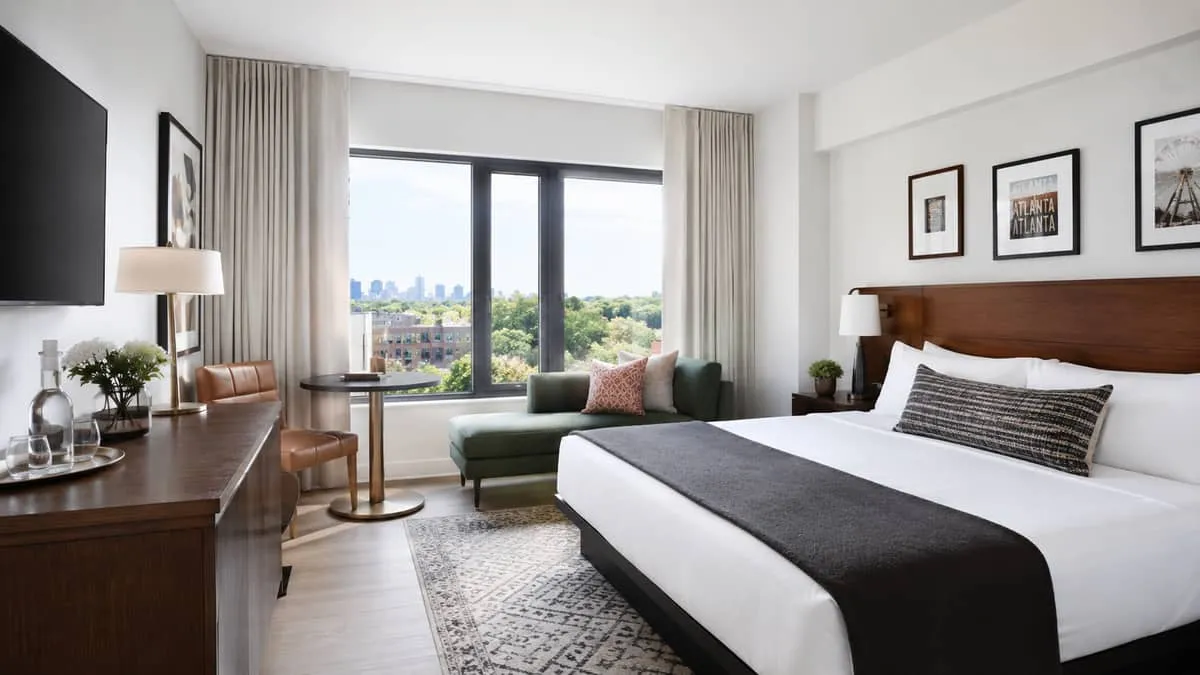
St. Louis has become a genuine boutique hotel market over the last decade, built largely on the strength of its historic building stock. Downtown, former warehouses and office towers near the riverfront and the America's Center have been converted into independent and lifestyle-branded properties that trade on exposed brick, tall windows, and the city's industrial heritage. The Central West End pulls a design-conscious guest base drawn by Forest Park and the neighborhood's restaurant scene, expecting a look that feels curated rather than pulled from a big-box catalog. Grand Center, the city's arts and theater district, anchors a smaller but growing boutique segment tied to performance and gallery traffic. If you are sourcing boutique hotel furniture St. Louis style, the challenge is matching that range, contract-grade construction, smaller order quantities, and a design point of view that still holds up to nightly commercial use.
The Design and Durability Balance
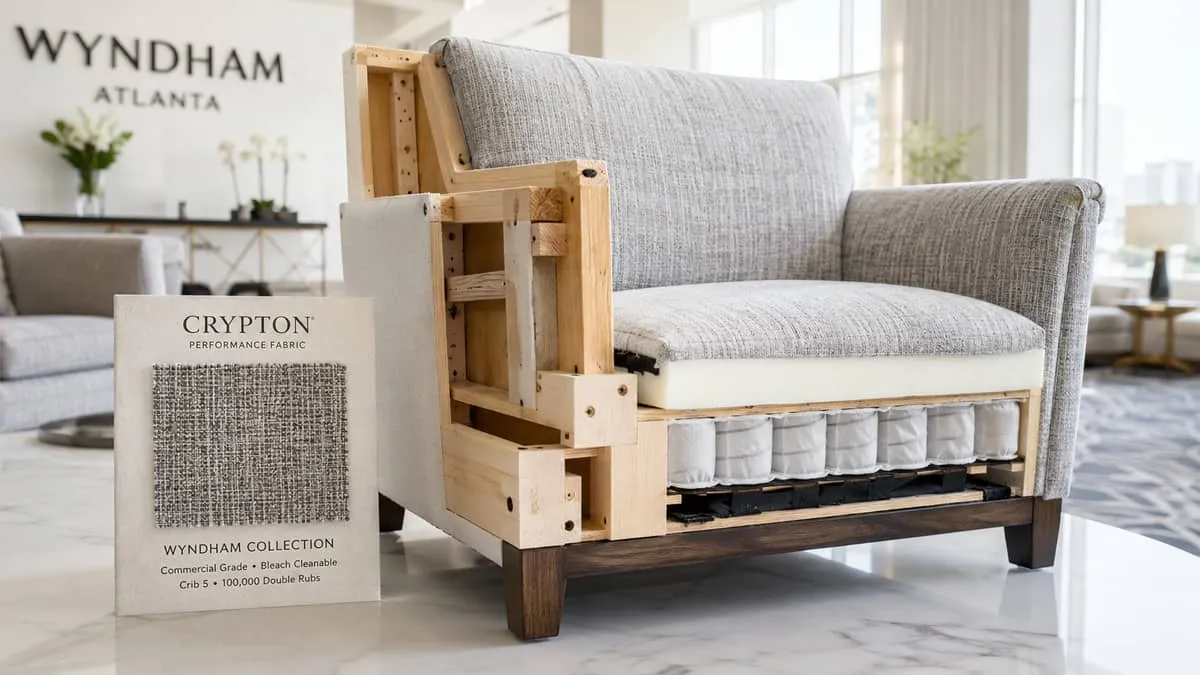
Boutique hotel furniture lives at the intersection of two demands that pull in different directions. Ownership and design teams want pieces that feel distinctive, custom finishes, unusual silhouettes, fabric choices that would never show up in a branded select-service property. Operations teams need those same pieces to survive daily housekeeping, guest wear, and a multi-year replacement cycle without falling apart. A supplier who only understands one side of that equation, style without durability data, or durability without design range, is going to leave your project short.
Ask for BIFMA compliance documentation on every upholstered piece regardless of how custom the finish is. A distinctive fabric or a non-standard frame silhouette does not exempt a piece from commercial-grade construction requirements. The best boutique furniture programs pair a strong design point of view with frame construction, foam density, and joinery that meets the same standards as a branded property's back-of-house casegoods.
Sourcing for a Historic Building Conversion
Downtown St. Louis boutique properties built into converted warehouses or historic office towers often carry constraints that new-build hotels do not, narrower service elevators, load-in restrictions tied to landmark status, and floor plans that were never designed around modern hospitality furniture dimensions. Work with a supplier who has handled historic conversion projects before and can advise on furniture sizing and delivery logistics before you are deep into procurement, not after a piece will not fit through a doorway.
Planning for the Next Refresh
The time to plan for a future refresh is during the original procurement, not after the fact. Specify frames and case goods built to last through multiple upholstery cycles. Treat fabric as the variable you replace on a shorter rotation, not the frame underneath it. Require COM-ready construction on every upholstered piece so reupholstery later is straightforward rather than locked behind a proprietary fabric program. Keep clear records of your original specifications, frame construction, foam density, fabric weight, and finish codes, so the next sourcing round moves faster.
Lead times on custom upholstery programs typically run 10 to 16 weeks. If you are targeting an opening ahead of the spring convention season or a specific event date tied to the arts calendar in Grand Center, place orders early enough to absorb both the manufacturing lead time and any shipping delays without compressing your install schedule.
Sourcing boutique hotel furniture in St. Louis is a narrower problem than general commercial procurement, shaped by a strong historic building stock, a design-literate guest base in neighborhoods like the Central West End, and an arts and culture identity that runs through Grand Center. Getting the specification right before the order ships is the least expensive decision you will make on the project.