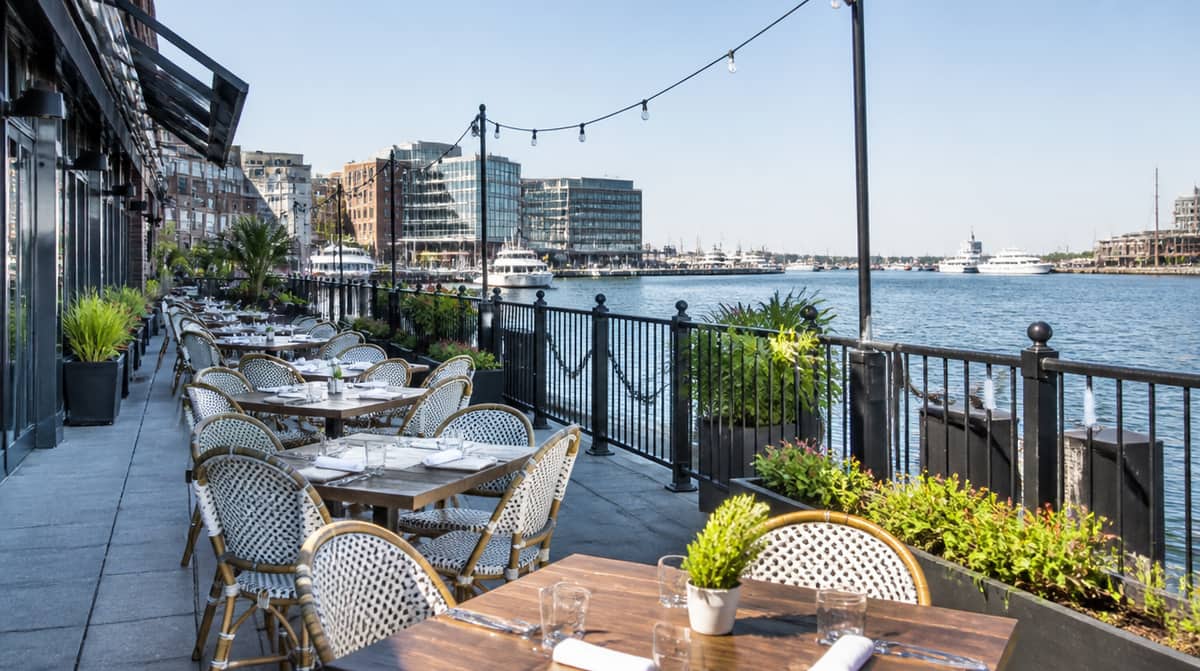
Portland has a patio season, not a patio year, and that changes almost everything about how furniture should be specified. Memorial Day to Columbus Day is roughly the working window for outdoor hospitality seating in this city, and inside that window the furniture needs to earn back its entire annual cost. Outside that window, most of it sits stacked in storage or lashed down against a coastline that sees genuine nor'easters, ice, and salt spray for the other seven months of the year. Operators running programs in the Old Port, on Munjoy Hill, and along Commercial Street's working waterfront have learned that Portland's patio problem isn't heat, it's the combination of a brutal off-season and a harbor that corrodes cheap metal faster than almost any inland market in the country.
The operators who get commercial patio furniture in Portland, Maine right are not buying for a beach town's mild weather. They're buying for a coastal New England climate with real freeze-thaw cycles, salt-laden air rolling off Casco Bay, and a compressed season where every seat has to perform at full capacity from the first warm weekend through the last foliage-season tourist wave. Getting the specification wrong here doesn't show up as a slow fade over a decade, it shows up as visible corrosion and failed finishes within two seasons.
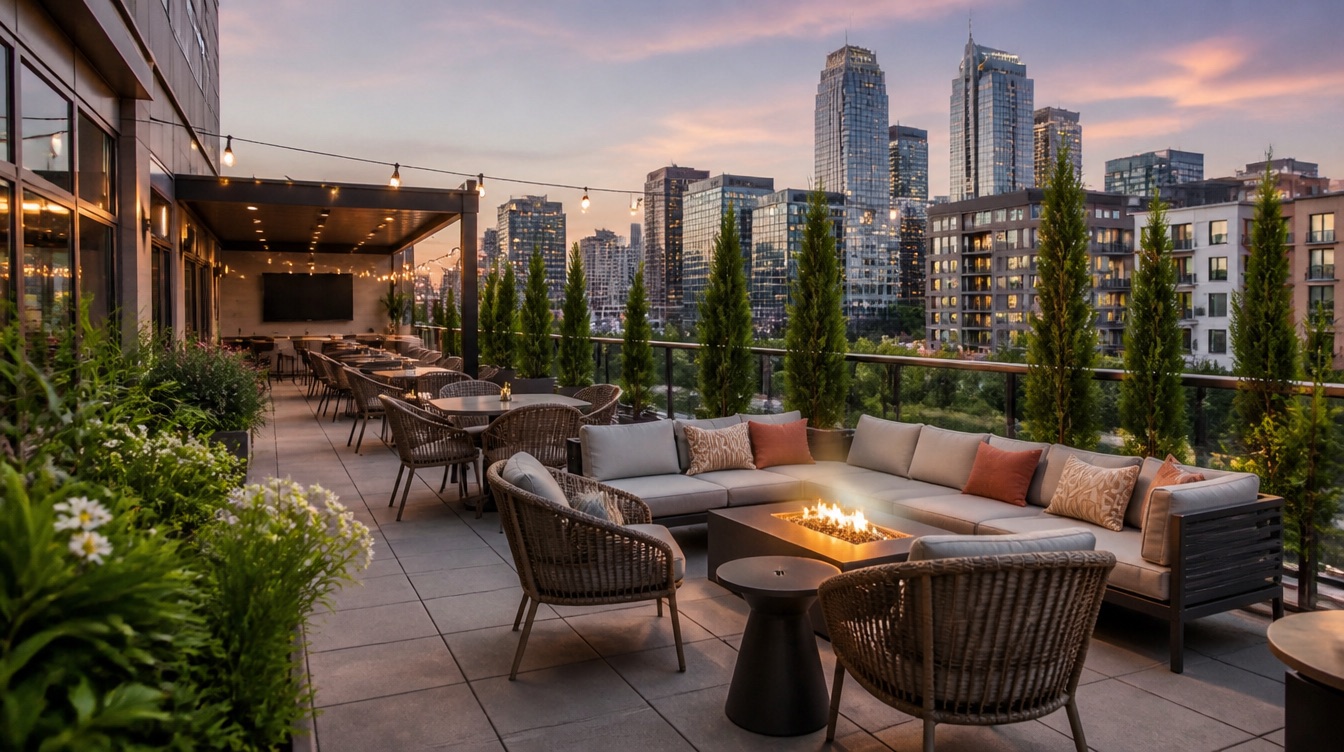
Salt Air and Freeze-Thaw Are the Real Threats, Not Heat
The standard assumption in a northern coastal market is that furniture built for Florida or Georgia heat is more than enough for Maine. That assumption misses the two conditions that actually break down outdoor furniture in Portland. The first is salt air. Casco Bay pushes a steady marine layer over the peninsula, and any patio within several blocks of the waterfront, which in a city this compact is most of downtown, takes on a level of airborne salt exposure that inland furniture specs simply aren't built for. Salt accelerates corrosion at any point where a finish is compromised, at weld seams, at hardware fasteners, at the edges of a powder coat that wasn't applied with a marine-grade pretreatment. Furniture that would last a decade in Burlington or Manchester can show pitting and rust bleed in three seasons on a Commercial Street patio if the frame wasn't specified for coastal exposure.
The second condition is the freeze-thaw cycle itself. Portland doesn't get the extreme cold of inland Maine, but it gets a long stretch of temperatures that swing above and below freezing repeatedly through late fall and early spring, exactly the shoulder-season stretch when furniture is being staged, stored, or brought back out. Moisture that gets into a hairline crack in a finish, freezes, expands, and repeats that cycle dozens of times over a winter does more structural damage than a single hard freeze ever would. Furniture stored improperly, or furniture with a finish that wasn't rated for this cycle in the first place, comes out of winter storage already compromised, and it shows by midsummer.
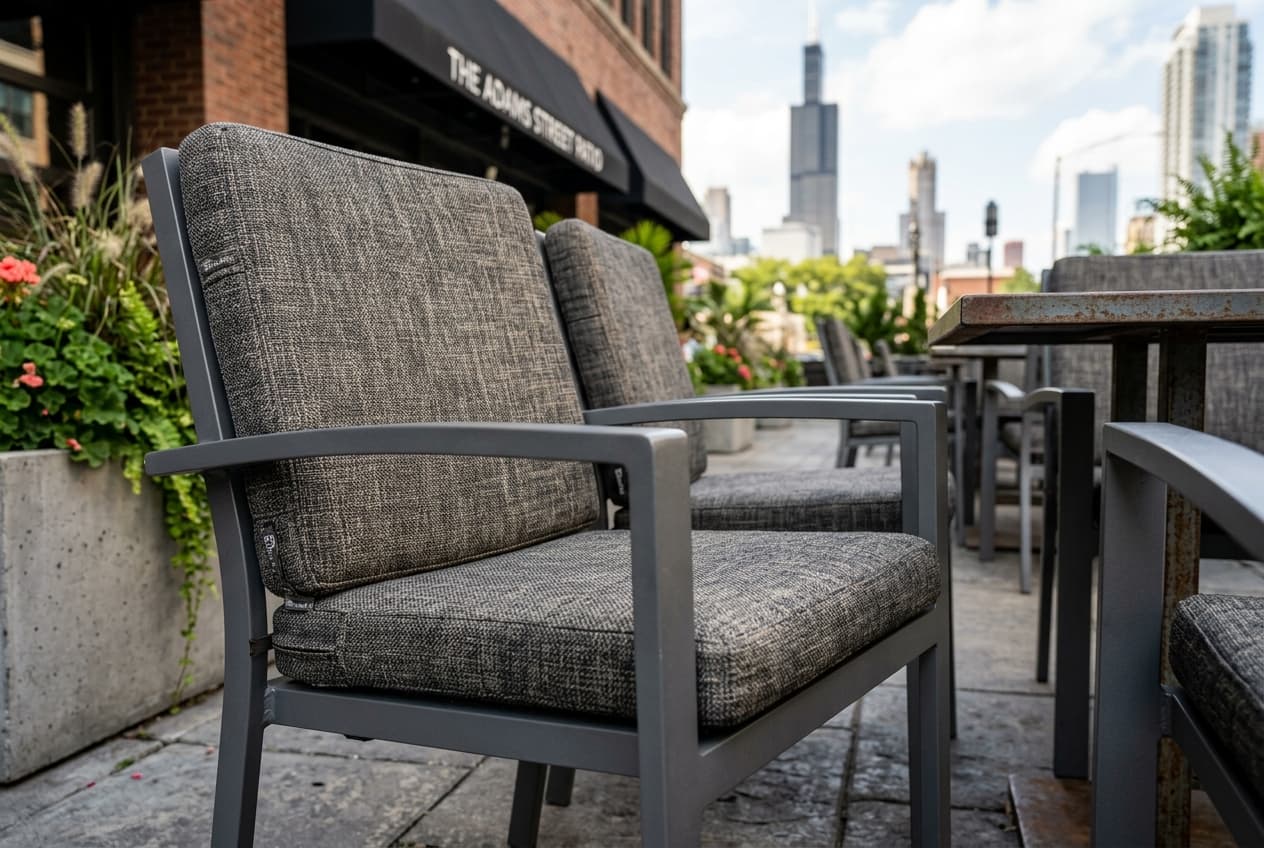
What the Old Port, Munjoy Hill, and the Waterfront Actually Require
Portland's patio market is small in footprint but split clearly by neighborhood character, and matching furniture to that character matters as much as matching it to the climate. The Old Port's brick and cobblestone streetscape, with its historic building facades and narrow sidewalk cafes, rewards furniture with visual weight and a finish that reads as considered rather than off-the-shelf. Polished resort aluminum in white or champagne looks imported and out of place against Fore Street's brick and granite. Matte black, bronze, or dark charcoal frames sit correctly in this district, and stackability matters because Old Port patios are often working with a few feet of sidewalk clearance and need to reset quickly for foot traffic and deliveries.
Munjoy Hill and the East End have a different character entirely, more residential, more neighborhood restaurant and brewery patio than tourist corridor, and the furniture programs here can afford to be a little more relaxed and mixed in material without reading as disorganized. This is where a lot of Portland's newer brewery and taproom patios have gone with a warmer, more casual aesthetic, pairing aluminum-frame seating with wood-look tabletops that hold up to the coastal humidity without the maintenance burden of real teak.
The working waterfront along Commercial Street, and the venues around Thompson's Point that pull convention and event traffic, are a volume game. These spaces see cruise ship passengers during the season, event crowds spilling out from concerts, and a broader mix of guests than the Old Port's dinner crowd. Furniture here needs to handle high turnover, frequent repositioning by staff, and direct salt exposure from being steps from open water. This is also where hotel properties near the Portland waterfront and the convention-adjacent corridor near the Portland Regency and the Eastland Park area put their outdoor programs to the hardest test, since a strong cruise or convention week means the patio is at full capacity from lunch through last call.
Getting the Frame and Fabric Spec Right for a Coastal Maine Market
Frame material should be marine-grade aluminum, not just commercial-grade aluminum, for any Portland property within reach of harbor air. The distinction matters: marine-grade specifications call for a proper pretreatment and powder coat process designed to resist salt corrosion specifically, not just general UV and moisture resistance. Wall thickness at 1.5mm minimum remains the right baseline for a commercial hospitality application, but the coating process is where a Portland spec needs to differ from what would be adequate in a drier inland market. It's worth asking suppliers directly whether their finish has been tested for salt spray resistance, since a general "outdoor rated" claim without that specific testing isn't sufficient this close to open water.
Fabric specification follows the same logic as frame specification. Solution-dyed acrylic is still the right base material, with the fiber-embedded dye resisting the fade that comes from a full Maine summer of direct coastal sun. What changes in a Portland spec is the priority on mildew resistance, since the combination of salt humidity and a compressed storage season, where cushions often get bagged and stacked through a long winter, creates real risk of mildew developing in fabric that wasn't rated for it. Foam density in the 2.0 to 2.5 lb range holds its shape through the concentrated high-traffic season that Portland compresses into about eighteen weeks rather than spreading across eight or nine months the way a warmer market would.
The Revenue Math on a Compressed Maine Season
Portland's tourist economy runs hard and fast, driven by cruise ship arrivals, a strong summer visitor season, and a well-documented foliage rush that brings a second wave of demand before the season closes. A well-positioned Old Port or waterfront patio generates the bulk of its annual outdoor revenue inside a window measured in weeks, not months, which means furniture failures during that window carry an outsized cost. A chair that fails in July in Portland doesn't just cost a replacement, it costs peak-season seats during the only stretch of the year when those seats are earning anything close to their full potential.
Commercial-grade aluminum seating, correctly specified for coastal exposure and properly stored through the off-season, holds up for eight to ten years of Portland's compressed use pattern. Furniture bought without the marine-grade finish, or stored carelessly through a Maine winter, often needs partial replacement within two or three seasons, and that replacement inevitably happens mid-season when lead times are longest and the cost of a mismatched patio is highest. Operators who have run outdoor programs through several Portland winters understand this rhythm and buy, store, and maintain accordingly.
The right approach to commercial patio furniture in Portland, Maine is to specify for the coastal exposure the city actually has, match the aesthetic to the neighborhood, whether that's the Old Port's historic brick or the working waterfront's harder-use character, and store furniture through the off-season with the same discipline used to select it in the first place. The patio programs that treat the Maine winter as part of the spec, not an afterthought, are the ones still looking sharp for their tenth foliage season.