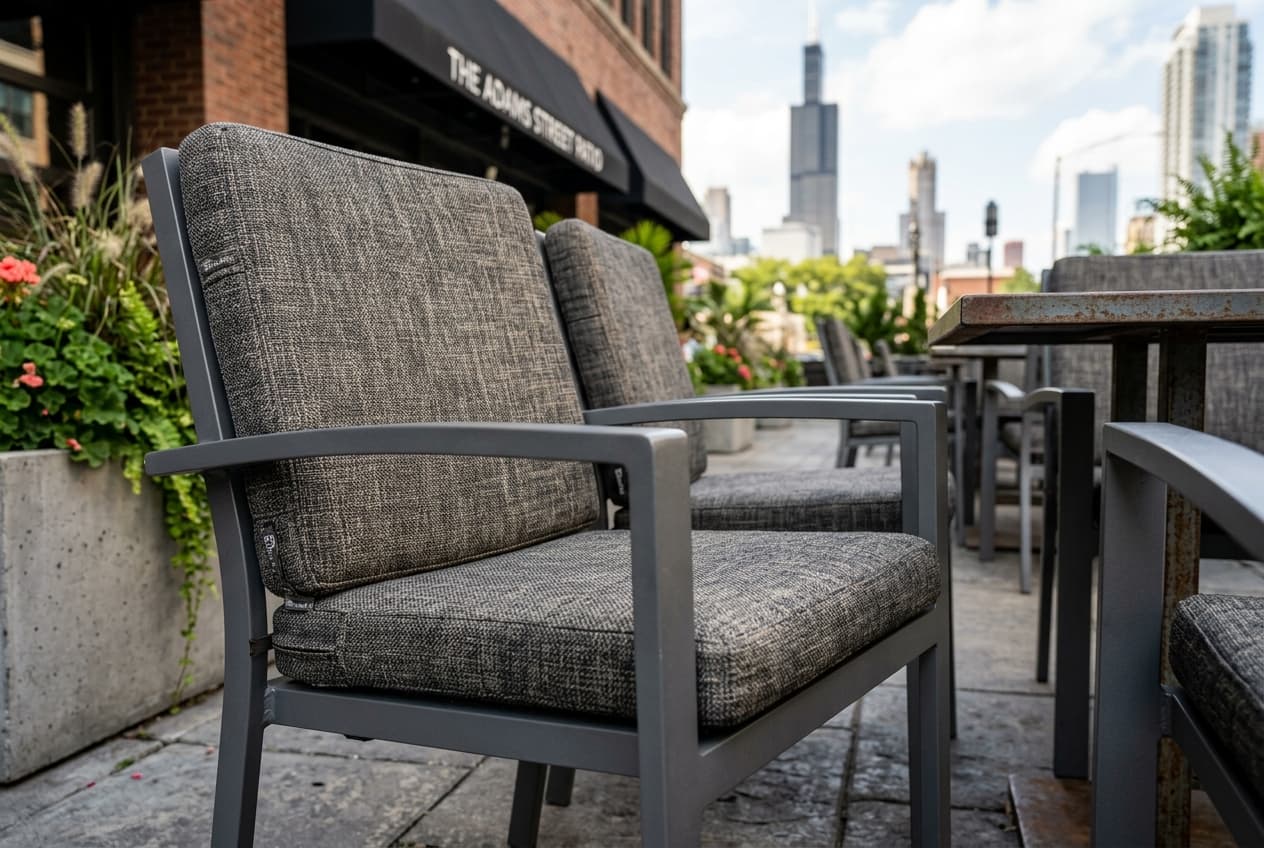
Lincoln's outdoor season is shorter and more demanding than operators from milder climates tend to expect. Prairie wind runs strong and steady through much of the year, summer heat and UV exposure are real, and the same furniture that sits out through a hot July afternoon has to survive sudden spring storms and the first hard freeze of the fall. Commercial patio furniture in Lincoln needs to be specified for that full range, not just the handful of ideal-weather weekends everyone pictures when they plan a patio program.
Lincoln's Climate Actually Requires More, Not Less
Operators sometimes assume that because Nebraska is not a year-round outdoor market like a coastal city, patio furniture here can be a lighter investment. The opposite is closer to the truth. A patio set that only needs to survive four or five months a year still needs to survive genuine temperature extremes within that window, intense summer sun and heat, high wind loads that can tip lightweight furniture, and the freeze-thaw cycling that comes with a fall shoulder season stretching later than most operators plan for.
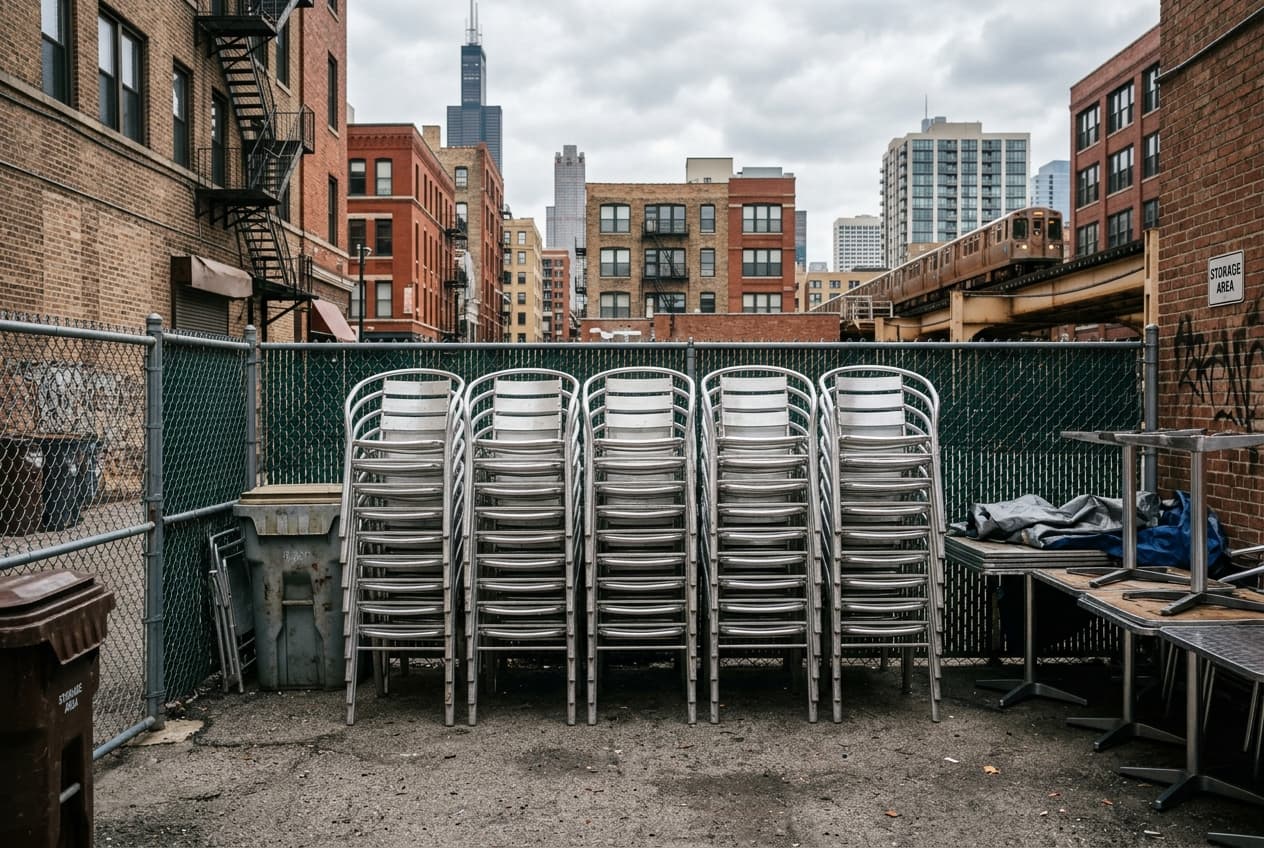
Powder-coated aluminum remains the strongest baseline material for Lincoln patio programs. It resists rust, holds up under UV exposure without chalking or fading prematurely, and its lighter weight is manageable for storage transitions between seasons, an important factor given how many Lincoln operators bring patio furniture indoors or into covered storage for winter rather than leaving it exposed year-round.
What Downtown, the Haymarket, and the Campus Corridor Actually Require
Downtown and Haymarket patio programs compete for outdoor seating on some of the highest-traffic sidewalks and courtyards in the city, particularly during football weekends and warm-weather evenings when outdoor seating becomes the most requested table in the house. Furniture in these settings needs a design language that fits the district's industrial-meets-modern character while meeting full commercial durability standards, since a Haymarket patio can go from a quiet weekday lunch to standing-room-adjacent volume within the same week.
Campus-corridor patios serving a university-adjacent clientele see a different traffic pattern, heavier daytime and early-evening use tied to the academic calendar, with real gaps during summer session and breaks. That pattern argues for furniture that can handle intensive seasonal use without needing full replacement between academic years, since the wear a campus patio absorbs during a fall semester needs to hold up through the following year's return of students.
Wind, UV, and Fabric: Getting the Spec Right in Nebraska
Wind is the variable operators most often underestimate when specifying Lincoln patio furniture. Lightweight chairs and umbrellas that perform fine in a sheltered courtyard can become genuine hazards on an open sidewalk or rooftop patio exposed to sustained prairie wind. Weighted bases, wind-rated umbrella systems, and furniture with enough mass to resist tipping are not optional extras in this market, they are baseline requirements for any exposed outdoor seating area.
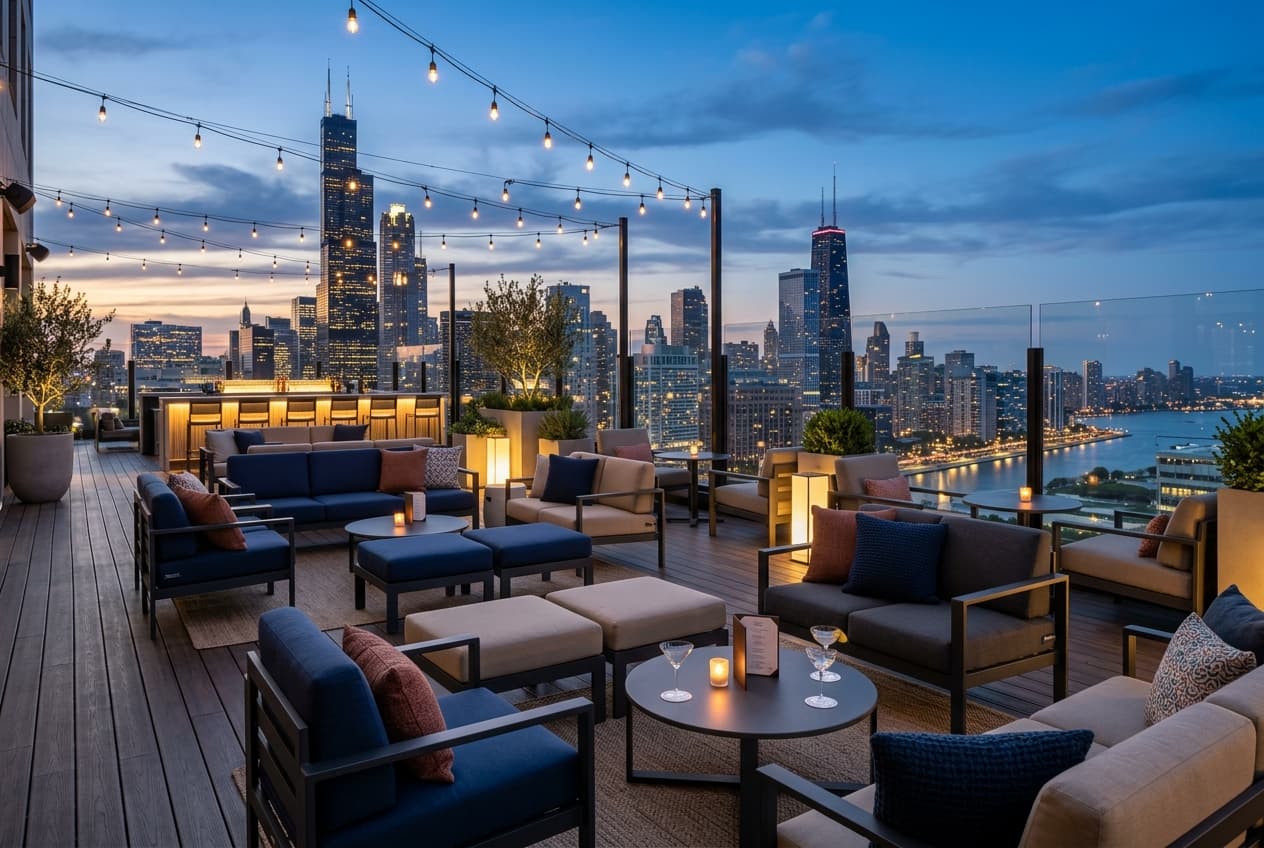
Cushion and fabric selection matters just as much as frame material. Solution-dyed acrylic fabric resists fading far better than standard printed or piece-dyed fabric under sustained sun exposure, and it dries faster after Nebraska's sudden spring and summer storms, reducing mildew risk and keeping cushions usable sooner after a rain event. Commercial-density foam holds its shape through a full season of use rather than compressing prematurely, an important consideration given how much use a Lincoln patio absorbs in a compressed window of good weather.
The Revenue Math on Quality Commercial Patio Furniture in Lincoln
Outdoor seating consistently commands premium demand during Lincoln's warm-weather months, particularly around football weekends and summer evenings when guests actively seek patio tables over indoor seating. That demand only translates into revenue if the furniture is actually usable, stable in wind, comfortable in direct sun, and clean enough to seat guests immediately rather than requiring a wipe-down or repair before every use.
Cheap patio furniture creates a hidden cost that rarely shows up in the initial purchase decision. Frames that rust or pit within a season, cushions that fade or lose shape, and umbrellas that fail in the first strong wind event all become recurring replacement costs that exceed the savings from a lower upfront price. A quality commercial patio program, specified correctly for Lincoln's climate, typically pays for itself within two to three seasons through reduced replacement costs and a patio that stays fully bookable through the entire season rather than losing tables to damaged furniture. Talk to a supplier who understands Great Plains outdoor conditions and request a quote built around your actual seating count and exposure.