
West Virginia's Ohio Valley climate gives Huntington operators a narrower outdoor season than a Sun Belt city, and it comes with real seasonal swings, humid summers, hard freezes in winter, and enough rain and wind variability in between to punish furniture that was never engineered for it. Add the Ohio River corridor's moisture exposure for anything on a riverfront patio, and you have a market where patio furniture needs a specification approach that accounts for the whole year, not just the handful of warm months when the patio actually earns revenue.
Why Retail Patio Furniture Fails Fast in This Climate
Big-box retail patio furniture is built for occasional residential use, moved into a garage or covered when weather turns and used a few dozen times a season. Commercial patio furniture at a Huntington restaurant, hotel terrace, or riverfront bar gets used every day the weather allows, left outside through humidity swings, rain, and UV exposure, and often stored quickly and imperfectly at season's end by staff without time for careful handling. That mismatch between retail-grade construction and commercial-intensity use is why so many operators find themselves replacing patio furniture every year or two instead of getting a real service life out of it.
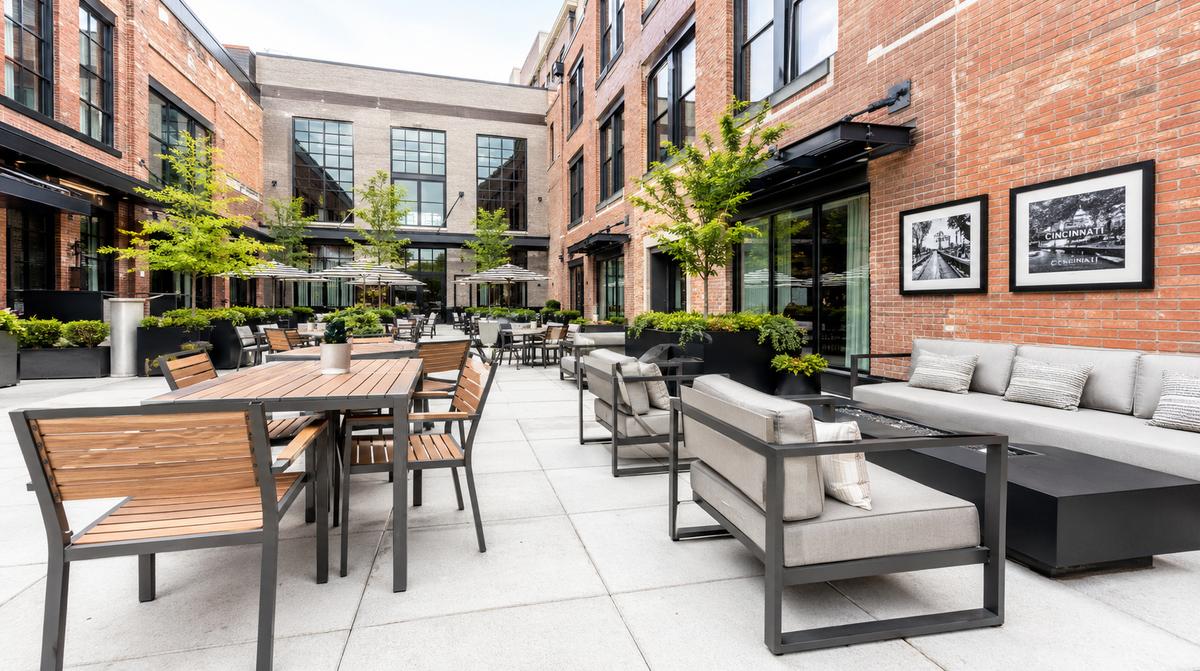
Commercial-grade outdoor furniture uses frame materials, powder-coated aluminum, marine-grade polymer, or properly treated teak, chosen specifically to resist corrosion and UV degradation over years of exposure, not months. Cushions and slings use solution-dyed acrylic or similar outdoor-rated fabrics that resist fading and mildew growth in the humidity swings common to the Ohio Valley. The frame joinery is engineered to stay tight through repeated stacking and moving as staff bring furniture in and out between shifts and seasons.
Specifying for Huntington's Actual Weather Pattern
The wind and moisture exposure on a riverfront patio near downtown is different from a more sheltered courtyard further from the water, and your furniture spec should reflect that difference rather than treating all outdoor seating in the metro the same way. Heavier bases and wind-rated umbrella systems matter more on open riverfront terraces. A more sheltered hotel courtyard has more flexibility on lighter furniture and a broader material palette.

End-of-season storage is a practical concern that shapes purchasing decisions as much as the furniture's material spec. A patio program with 40 or more pieces needs a realistic storage plan before the first hard freeze, and stackable or foldable furniture that a lean staff can move and store efficiently is worth paying for even at a modest premium over furniture that looks similar but takes twice the labor to bring in each fall.
Planning Around Huntington's Short Season and Peak Windows
Huntington's outdoor hospitality season compresses most of its revenue into a handful of months, with Marshall home football weekends and warm-weather riverfront traffic driving the heaviest use. That means patio furniture needs to be durable enough to survive the off-season in storage or exposed, and ready to perform at full capacity the moment the season's first warm weekend arrives. A supplier who understands that compressed cycle will help you plan lead times so your order arrives well ahead of opening weekend, not scrambling to source replacement pieces after a spring surge has already exposed gaps in last year's inventory.
The right approach to commercial patio furniture in Huntington is to specify for wind and moisture exposure honestly, match the aesthetic to the setting, whether that is a downtown terrace near Pullman Square or a quieter riverfront courtyard, and buy for the full multi-year lifecycle rather than the opening day cost. The patio programs that get this right turn a short season into a durable competitive advantage. The ones that don't spend their off-season budgets replacing what the weather already took.