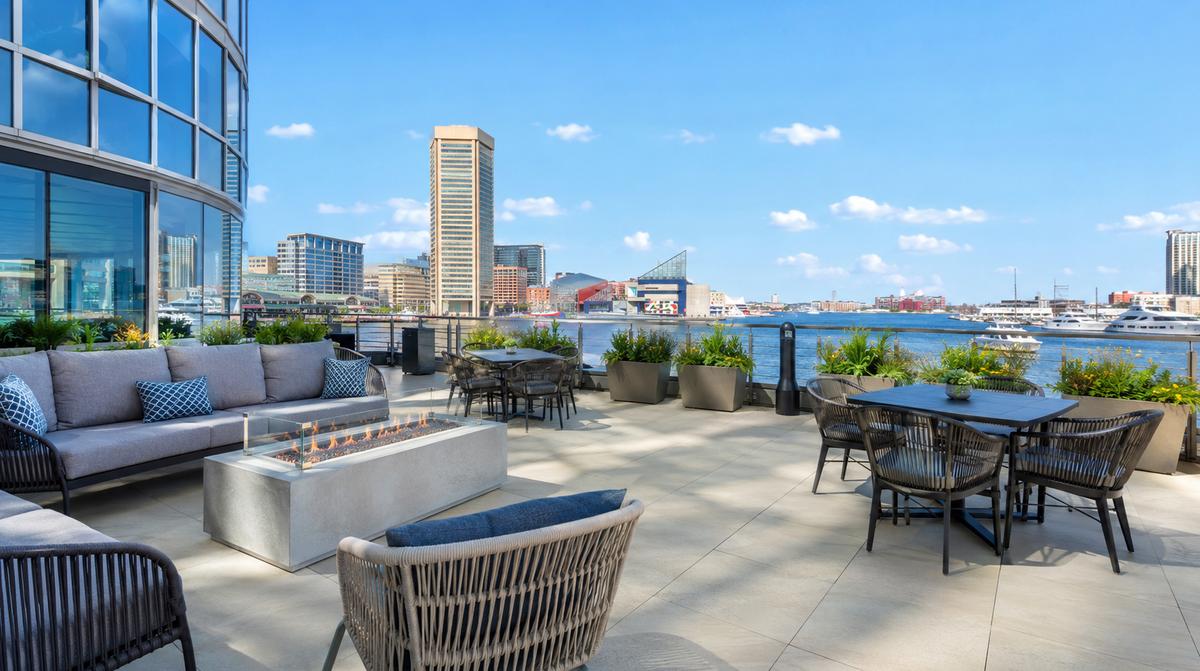
Honolulu has a furniture problem that operators on the mainland rarely have to think through, and it is not sun exposure, though that matters too. The assumption walking into a Honolulu project is that a warm, mild climate with no winter means outdoor furniture should last longer than it would in Chicago or Denver. The operators who have been running serious lanai, pool deck, and rooftop programs in Waikiki, along Ala Moana, and out in the Ko Olina resort corridor know the opposite is often true: salt air, constant trade wind exposure, and near-daily UV load put a different kind of stress on furniture, one that a frame built for a temperate mainland market is not designed to survive.
The operators who get commercial patio furniture in Honolulu right are not treating outdoor seating as an amenity that happens to sit outside. On Oahu, the lanai, the pool deck, and the open-air dining room often are the primary seating area, not a seasonal add-on. Getting the material specification correct from the start is the difference between a program that runs a full eight to ten years and one that shows corrosion at the welds within eighteen months.

Salt Air Is the Real Adversary, Not the Sun
The standard industry logic says tropical and coastal climates are gentle on furniture because there is no freeze, no ice, no snow load. Honolulu's track record says otherwise. The island sits directly in the path of the northeast trade winds nearly year round, which means furniture on an oceanfront property or even several blocks inland is under constant airborne salt exposure. Salt is more corrosive to standard metal furniture than cold weather is. It settles into micro-scratches in a powder coat finish, works into fastener threads, and accelerates pitting at weld points in a fraction of the time it would take on a property in Phoenix or Austin.
An operator who buys furniture rated for "outdoor use" without confirming a marine-grade or coastal-rated finish learns this within the first year, usually when a chair that looked fine in the showroom starts showing rust bleed at the leg welds. The correct specification for any Honolulu property, whether it sits on Waikiki Beach or several miles inland in Kakaako, is a frame built from marine-grade aluminum or 316 stainless steel with a powder coat system specifically rated for salt spray resistance, not just general UV resistance. That distinction matters enough that it is worth asking a supplier for actual salt spray test data rather than accepting a general "coastal" label.
UV load compounds the problem. Oahu sits close enough to the equator that daily UV exposure runs high across the entire year, with no off season the way a mainland market has. A powder coat finish that holds its color for six years in a northern climate can show visible chalking or fading in Honolulu within three if the UV inhibitor package in the topcoat was not specified correctly. Fabric specification follows the same logic. Solution-dyed acrylic is the only reasonable base fabric for an uncovered or partially shaded Honolulu lanai, since the dye is locked into the fiber rather than sitting on the surface, and it holds up to the cycle of afternoon showers, direct sun, and salt-laden humidity without fading or mildewing the way a surface-coated fabric would within a single season.
What Waikiki, Ala Moana, and Ko Olina Actually Require
Oahu's hospitality furniture market is not uniform, and specifying commercial patio furniture in Honolulu without matching the program to the property's guest profile and location is how operators end up with furniture that survives the climate but reads as wrong for the setting. A Waikiki beachfront hotel pool deck, an Ala Moana restaurant terrace, and a Ko Olina resort lanai each carry different design expectations even though all three are fighting the same salt air and UV exposure.
Waikiki's hotel and resort corridor serves a guest base that has stayed at resort properties across the Pacific Rim and expects a cohesive, elevated outdoor program. Furniture here needs to read as a complete set: matching frame finishes across dining chairs, loungers, and side tables, shade structures that are built into the program rather than added later, and a finish quality that photographs well, since a meaningful share of Waikiki's guest base is documenting the property for social media the moment they sit down. A mismatched frame finish or a visibly corroding chair leg undercuts a five-star rate in a way that guests notice immediately.
Ala Moana and the urban Honolulu dining corridor run at high volume with restaurant and hotel terraces that need to perform under continuous foot traffic while still looking intentional to guests walking in off the street. Stackability and quick reconfiguration matter here because open-air dining space is limited and properties turn tables for private events regularly. Ko Olina and the West Oahu resort corridor operate at a different pace, a slower, resort-style rhythm where loungers and lanai seating see extended dwell time from guests spending entire afternoons poolside, which puts a premium on foam density and frame comfort over rapid turnover.

Getting the Spec Right for an Island Climate
Foam density is where many Honolulu patio programs fail quietly. Standard 1.8 lb density foam compresses fast under a climate where guests spend hours at a time in lounge seating rather than the shorter dining cycle common on the mainland. Commercial seating foam in the 2.0 to 2.5 lb range with a higher ILD rating holds its shape through the kind of continuous, extended use a Ko Olina pool deck or Waikiki lanai sees every day of the year, not just during a seasonal peak.
Frame material is where the coastal environment makes the biggest difference relative to a mainland spec. Commercial-grade marine aluminum at 1.5mm wall thickness or better, or 316 stainless steel for high-corrosion beachfront applications, is the appropriate baseline. Consumer-grade frames in the 0.8mm to 1.0mm range, even ones marketed as weather resistant, are not built for a property where the furniture sits within a few hundred yards of open ocean and salt spray hits it daily regardless of season. Weld quality matters as much as wall thickness, since salt air finds the weakest point in a joint first, and it is worth asking suppliers directly how their frames are tested for coastal corrosion rather than accepting frame weight or a general warranty as a proxy for quality.
The Revenue Math on Quality Commercial Patio Furniture in Honolulu
Oahu is one of the most consistently booked resort and convention markets in the country, and the Hawaii Convention Center along with the Waikiki hotel corridor drives a steady flow of high-spend visitors year round with no true off season. On a strong week, a well-positioned Waikiki oceanfront terrace or Ko Olina pool deck generates significant per-seat revenue, and the lifecycle math on furniture quality shifts entirely once it is measured against that revenue rather than against the sticker price of the furniture itself.
A marine-grade aluminum or stainless chair correctly specified for Oahu's salt air, properly maintained, lasts eight to ten years in active resort service. A mainland-spec chair that looks identical on delivery but was not built for coastal exposure often needs replacement within two to three years, and that replacement cycle costs more annually while also creating the operational headache of mismatched finishes and mid-season sourcing. Properties competing at a rate point where guests expect resort-quality poolside and lanai seating cannot afford furniture that shows rust bleed or fading within its first year on the island.
The right approach to commercial patio furniture in Honolulu is to specify for the actual coastal and UV environment, match the aesthetic to the neighborhood, whether that is Waikiki's resort polish, Ala Moana's urban pace, or Ko Olina's slower resort rhythm, and buy for the full lifecycle rather than the delivery day price. The programs that get this right hold up through years of trade winds and salt spray. The ones that don't spend their maintenance budgets replacing chairs that should still be in service.