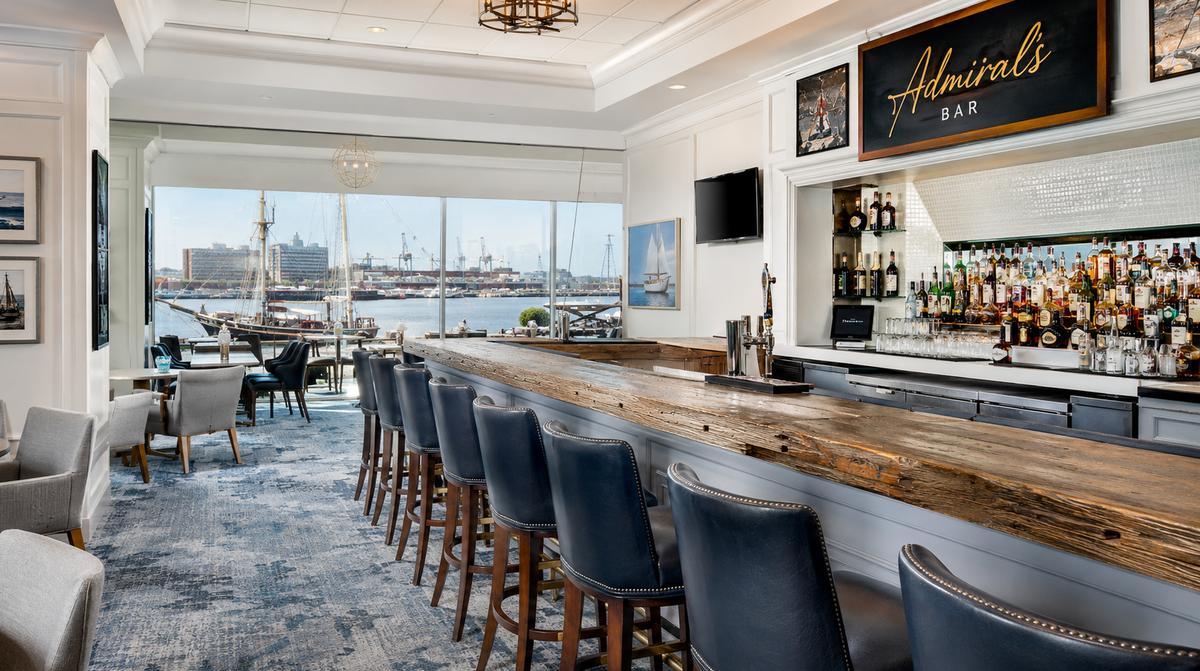
Honolulu's bar and lounge market carries a different set of pressures than a mainland city its size. Between the Waikiki beachfront hotel corridor running pool bars and oceanfront lounges through salt air and near-constant sun, the Kakaako and Ala Moana cocktail scene that has grown into a genuinely design-forward hospitality district, and the Hawai'i Convention Center anchoring a business travel and tourism calendar that keeps downtown and Waikiki bars busy across every season, the demands on furniture here are specific and unrelenting. Sourcing bar lounge furniture Honolulu operators can depend on means understanding each of these environments because a stool that survives a Waikiki pool deck is not the same stool that belongs in a Kakaako design district lounge.
Waikiki and the Oceanfront Hotel Bar Standard
Waikiki is where Honolulu's hospitality furniture demands are highest. The hotel bars lining Kalakaua Avenue and the beachfront properties behind it are not simply amenities, they are the first impression a visitor forms of the islands, and the furniture has to hold up to that scrutiny while surviving one of the harshest coastal environments in the country. Operators sourcing bar lounge furniture for Waikiki properties are dealing with salt air corrosion, direct UV exposure nearly every day of the year, and guest volume that never really slows down.
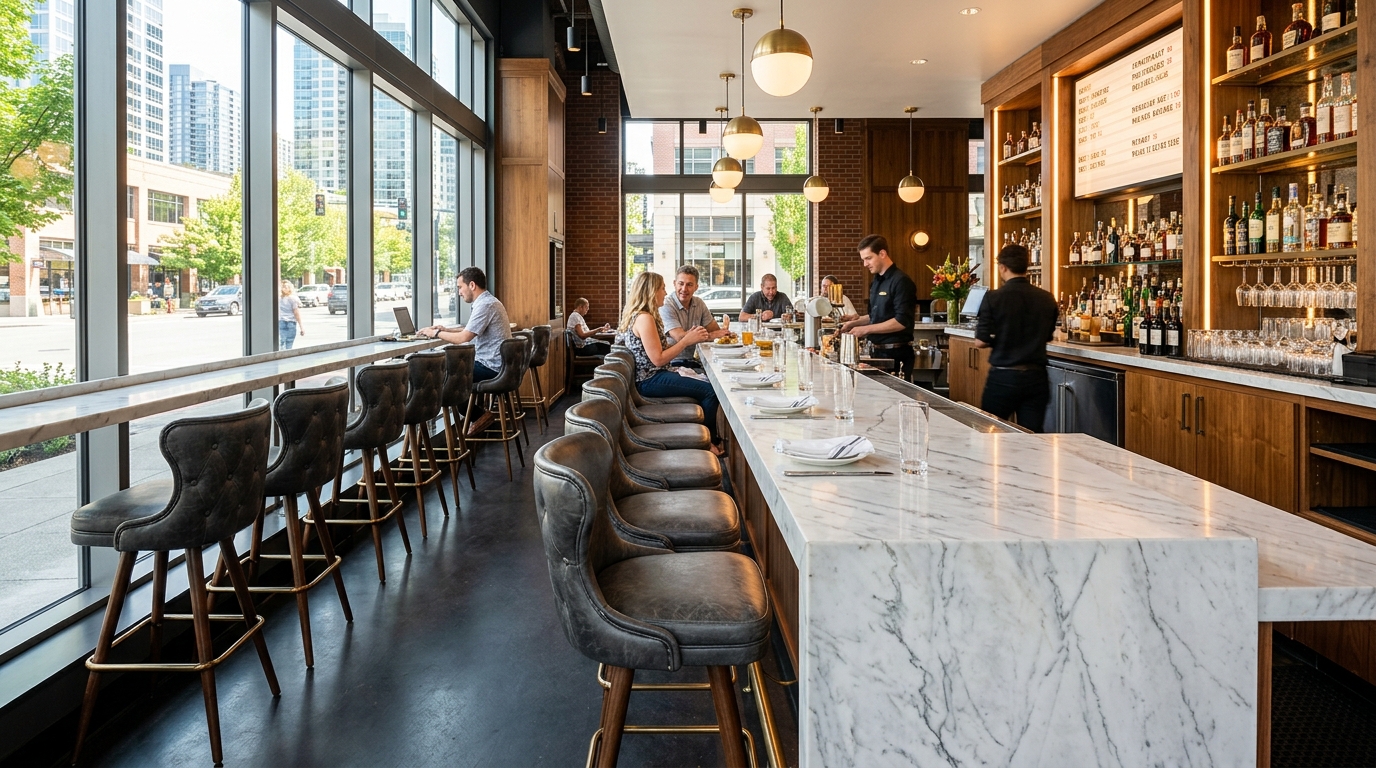
For oceanfront and pool-deck settings, the material spec has to start with corrosion resistance. Powder-coated aluminum or marine-grade stainless steel is the correct choice for outdoor bar seating anywhere within a few blocks of the water in Honolulu, and standard steel frames rated for typical mainland outdoor use will show rust within a single season here. Avoid hollow footrests on any barstool specified for a beachfront program. Solid bar stock footrests hold up to the constant pressure of guests resting and shifting their weight, while hollow tube footrests dent and corrode from the inside out faster than most operators expect.
Upholstery on Waikiki oceanfront seating needs to be solution-dyed acrylic or marine-grade vinyl, never a fabric intended for interior contract use. Salt air and direct sun will fade and break down standard upholstery within months, not years. For the indoor-outdoor transition zones common in Waikiki properties, the lobby lounge, the mezzanine bar, the covered lanai seating that opens to the pool deck, specify performance fabrics rated at a minimum of 50,000 double rubs Wyzenbeek with a moisture barrier under the cushion. Waikiki hotel bars run at volume from early afternoon through last call most nights of the week, and foam that absorbs sunscreen and spilled drinks needs to be replaced far ahead of schedule if the moisture barrier is missing.
Seating height is a recurring problem on new Waikiki builds. Confirm your actual bar counter height before placing any barstool order, since renovated hotel bars and newly built pool bars are not always built to the same specification as the original property. A standard bar-height counter is 42 inches and pairs with a 28-to-30-inch seat height. Counter-height surfaces at 36 inches need a stool in the 24-to-26-inch range. A two-inch mismatch is uncomfortable for every guest and cannot be fixed without replacing the furniture.
Kakaako and Ala Moana: A Design-Literate Market
The Kakaako district, with its murals, converted warehouse spaces, and the SALT at Our Kakaako development, along with the Ala Moana corridor that connects it to Waikiki, represents Honolulu's most design-conscious hospitality market. These are the venues where operators are building a visual identity, not just filling seats. A cocktail bar opening in Kakaako in 2026 is competing for social media presence and word of mouth in a neighborhood that has become the center of Honolulu's independent dining and drinking scene. The furniture is part of that competition.
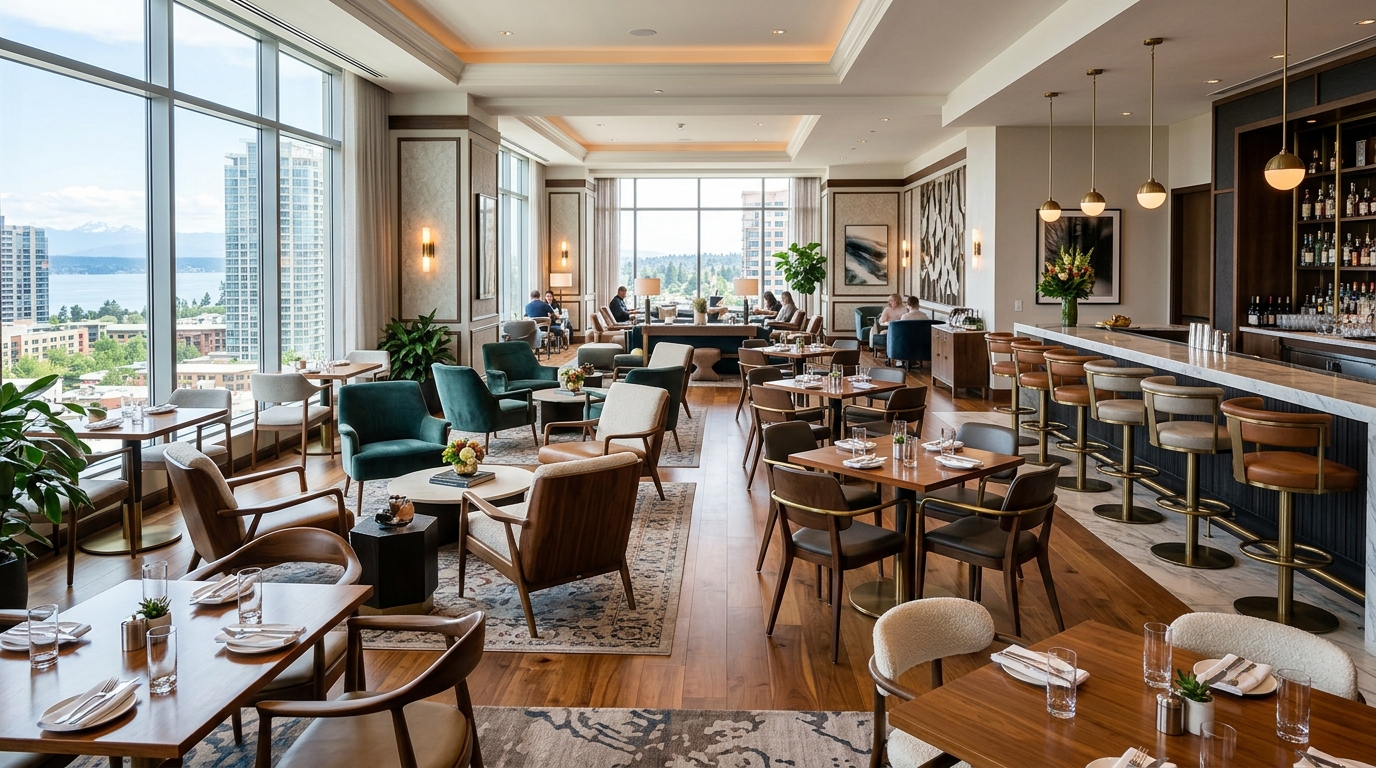
Current preferences in this corridor lean toward curved lounge silhouettes with generous cushioning, warm-toned upholstery in terracotta, olive, sand, or deep teak brown, and mixed-material combinations that pair metal frames with wood tones that echo the islands without leaning into overt tropical cliche. The rattan-heavy, plantation-style aesthetic that once defined Honolulu bar design is giving way to something more restrained and design-literate. Operators opening now are sourcing bar lounge furniture Honolulu design firms would sign off on, which means pieces that read as intentional up close and hold up to a design-savvy crowd.
COM programs are worth raising early in this context. A custom order-material program through your contract furniture supplier lets your designer specify proprietary fabric on a commercially proven frame, which is how independent Kakaako bars achieve a distinct look without giving up the structural rating a hospitality environment requires. It is a sourcing conversation that belongs at the start of the design process, not a last-minute request once the floor plan is locked.
For high-top and communal table configurations in Kakaako and Ala Moana venues, specify cast iron or heavy powder-coated steel bases with adjustable leveling glides. Many of the converted industrial buildings in this district sit on older concrete slabs that are rarely level, and a rocking table in a premium lounge is the kind of detail guests notice and remember for the wrong reason.
The Convention and Tourism Corridor: Downtown and the Hawai'i Convention Center
The stretch from the Hawai'i Convention Center through Waikiki and into the downtown and Chinatown bar district operates on a calendar shaped by conventions, business travel, and tourism arrivals that keeps demand steady in a way few mainland cities can match. When a major conference or trade show fills the convention center, the surrounding bars and hotel lounges see foot traffic that pushes furniture harder than a typical weeknight crowd, and this happens on a schedule that repeats throughout the year rather than in a short seasonal window.
The specification priorities here are structural weight, weld quality, and replaceability. Bar stool frames for high-volume Honolulu venues near the convention center should be minimum 16-gauge steel on all structural members, with fully welded joints at the footrest and every leg-to-seat connection. Bolted frames loosen faster under sustained high turnover, and shipping replacement parts to Oahu takes longer than it does on the mainland, so a frame that fails early becomes a bigger problem here than almost anywhere else. Ask your supplier for documentation on weld construction if you are buying in volume.
Replaceability matters more in Honolulu than in most markets because freight to the islands adds real time to any reorder. Specify a primary collection and confirm your supplier carries stock of that collection on the mainland with reliable ocean or air freight scheduling to Hawaii, not just made-to-order availability with an unclear shipping timeline. The ability to order replacement barstools in the same finish without waiting on a fresh production run and a multi-week ocean crossing is worth far more here than a marginally better price on a collection with a longer supply chain.
Table bases in this context should have commercial-grade nylon or felt glides rather than plastic caps, since these tables are repositioned constantly across tile and polished concrete floors in high-turnover venues. Plastic glide caps wear through quickly in this kind of daily use and start damaging floors within a season.
Sourcing Bar Lounge Furniture for Honolulu Projects
Honolulu's hospitality construction market moves on its own rhythm, shaped by shipping schedules that mainland cities never have to think about. A hotel brand commits to a Waikiki renovation, a restaurant group signs a lease in Kakaako, and the furniture order lands on a timeline that has to account for ocean freight in addition to the standard 8 to 12 week production window for custom orders. Underestimating shipping time to Oahu is one of the most common and most avoidable mistakes in Honolulu hospitality projects.
This means the practical sourcing strategy for most Honolulu bar and lounge projects is a combination of in-stock contract inventory that can ship quickly once freight is arranged, and custom or COM orders placed early enough to absorb the extra transit time. Build supplier relationships before an urgent need arises. Know which vendors carry in-stock bar stools in the finishes you use most, which suppliers have realistic COM turnaround times once shipping to Hawaii is factored in, and which can fulfill partial replacement orders without a full production cycle.
Lead time transparency from your supplier is the variable that determines whether your Honolulu project opens on schedule. Get confirmed availability and delivery windows in writing, inclusive of ocean or air freight to Oahu, before finalizing your specification. In a market where every order carries an extra leg of shipping that mainland projects never see, the difference between a confirmed delivery window and a verbal estimate is the difference between opening on time and opening with rented folding tables in the dining room.
If you are in the early planning stages of a bar or lounge build anywhere in Honolulu, Waikiki, Kakaako, the Ala Moana corridor, or the downtown and Chinatown venue market, request a specification consultation from your supplier before your layout is finalized. It will surface the seat height mismatches, material incompatibilities, and freight timing problems that are far cheaper to fix on paper than after the furniture has already crossed the Pacific.