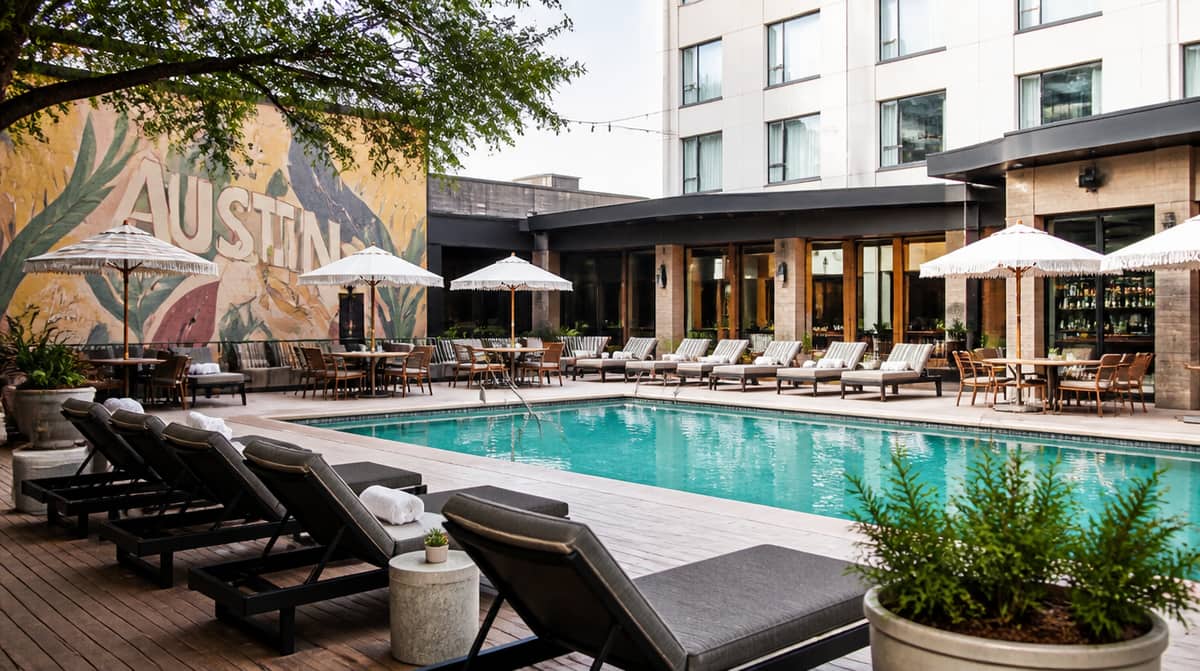
Cheyenne has a patio problem, and it has nothing to do with cold. Walk into a furniture project here and the assumption is that Wyoming winters are the challenge to design around. They matter, but the operators who have been running serious outdoor programs at Depot Plaza, along Dell Range Boulevard's hotel corridor, and near Frontier Park know the real adversary is wind. Cheyenne sits at just over 6,000 feet on the open High Plains with almost nothing to slow the air moving off the Front Range, and it consistently ranks among the windiest cities in the country. Add sustained gusts, intense high-altitude UV, freeze-thaw cycles that can happen twice in the same week, and a patio season that compresses into about five months, and commercial patio furniture in Cheyenne needs a specification that most catalog programs were never built for.
The operators who get this right are not treating outdoor seating as a warm-weather afterthought. They're treating it as a revenue program that has to survive genuinely punishing wind loads, hold its finish under some of the strongest UV exposure in the lower 48, and still look sharp for the one week a year when the entire city fills up. Getting that specification right from the start is the difference between a patio program that earns its keep for a decade and one that's chasing tipped-over chairs and faded cushions by year two.
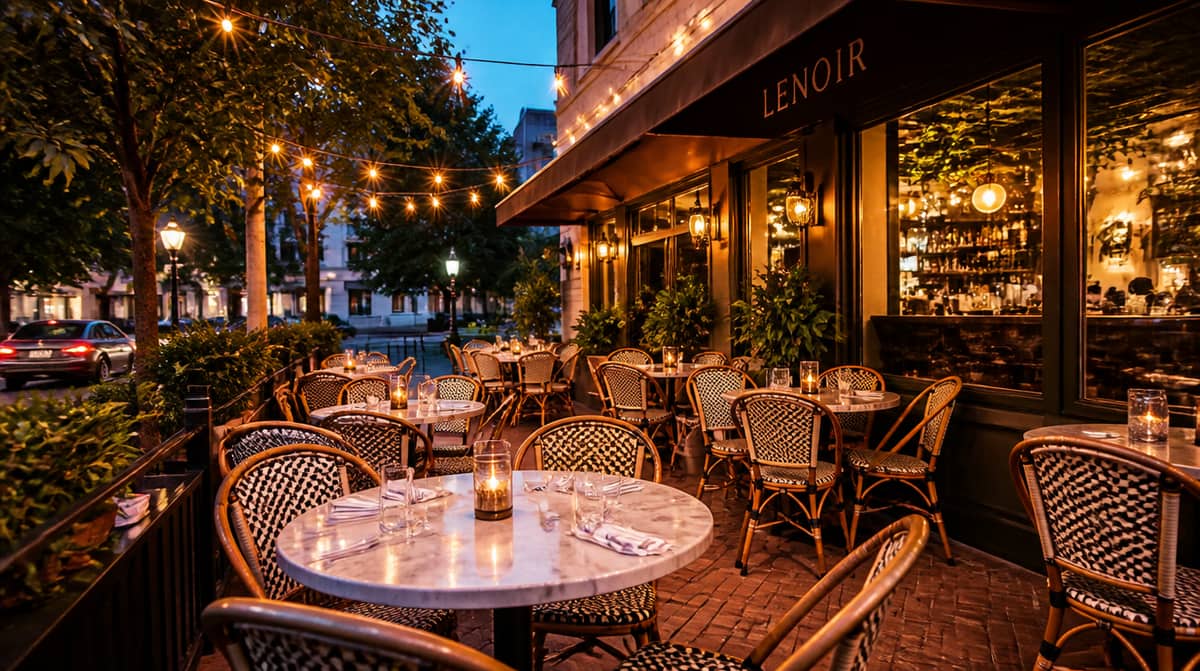
Cheyenne's Climate Actually Requires More, Not Less
The standard assumption is that a dry, high-plains climate is easy on outdoor furniture because it skips the humidity problems that punish southern and coastal markets. Cheyenne's track record says otherwise, just for different reasons. Average sustained wind speeds here run close to 13 mph across the year, with winter and spring gusts regularly topping 40 to 60 mph. A standard-weight patio chair or an umbrella base sized for a sheltered courtyard in a calmer market will not survive a single Cheyenne spring. Furniture that isn't specified for wind resistance ends up airborne, damaged, or scattered across a parking lot, and that's before anyone accounts for the liability exposure of a chair blowing into a guest or a window.
Elevation changes the UV math as well. At 6,062 feet, Cheyenne receives meaningfully more ultraviolet exposure than a city at sea level, even accounting for its lower average temperatures. Powder coat finishes and cushion fabrics that would hold their color for six or seven years in a lower-elevation market can show visible fading in three here if the UV inhibitor package wasn't specified correctly. "Weather resistant" without a documented UV rating is not a sufficient spec at this altitude.
Then there's the freeze-thaw cycle. Cheyenne can swing from a 70-degree afternoon to a hard freeze overnight, sometimes within the same 24-hour window, particularly in shoulder seasons. That kind of thermal cycling stresses welds and finishes in ways that a steadier climate never does, and it's a major reason operators around the Wyoming State Capitol and the downtown hotel district have learned to ask pointed questions about frame construction rather than accepting frame weight alone as a quality signal.
What Depot Plaza, Dell Range Boulevard, and Frontier Park Actually Require
Cheyenne's patio market is small relative to a coastal metro, but it is not uniform. The historic Depot Plaza district, anchored by the restored Union Pacific depot, has a design vocabulary rooted in western heritage architecture: brick, dark metal, and materials that read as substantial rather than resort-casual. Furniture programs here work best with matte charcoal or bronze powder coat finishes and a frame profile that feels grounded and intentional, matching dining chairs and side tables into a cohesive set rather than mixing whatever was available.
The Dell Range Boulevard and I-25 corridor hotel market is a different animal. These are extended-stay and business-travel properties serving state government traffic, energy sector visitors, and I-80/I-25 through-travelers, and the patio expectation here is functional comfort that can be reconfigured quickly rather than a design statement. Stackability and weighted bases matter more in this corridor because staff are managing wind exposure daily and turning over seating for groups of varying size.
Frontier Park and the surrounding event district operate on an entirely different scale for one stretch of the calendar. Cheyenne Frontier Days, the "Daddy of 'em All" and the largest outdoor rodeo and western celebration in the world, brings roughly a quarter-million visitors through the city over ten days each July. Restaurants and hotel patios anywhere near the grounds see traffic multiples of a normal week, and furniture that looks fine under everyday use gets tested hard during that stretch. Programs built for Frontier Days season need genuine commercial durability, not furniture that was adequate for a quiet Tuesday in April.
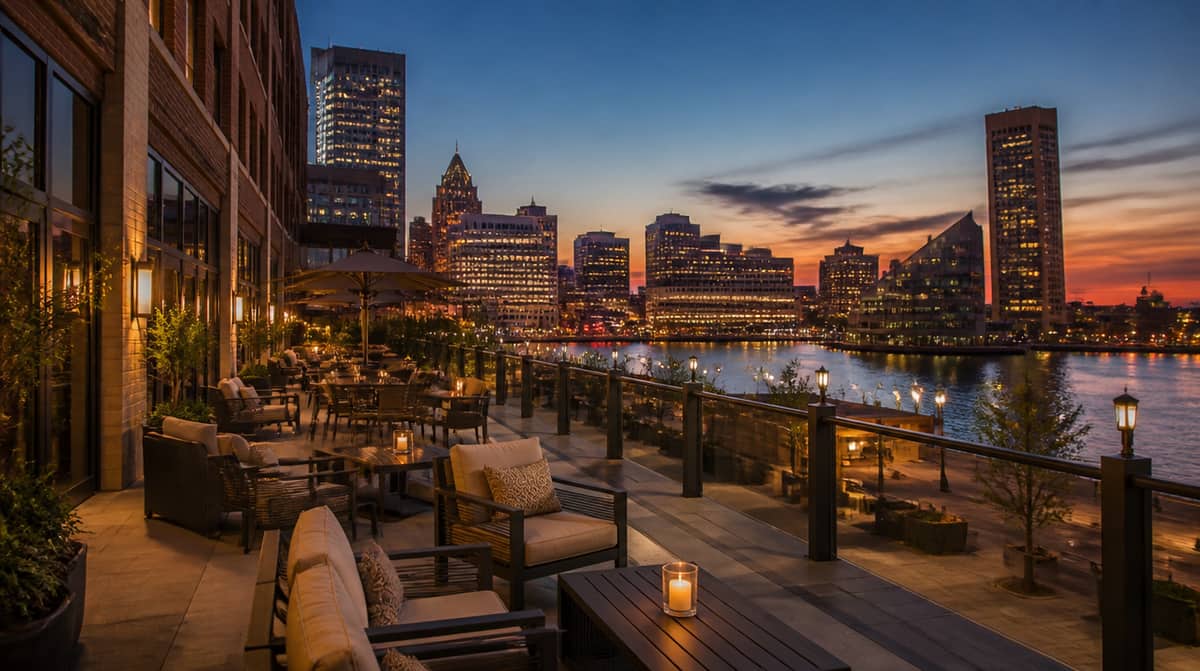
Wind, UV, and Fabric: Getting the Spec Right at Altitude
Frame material is the first place Cheyenne programs succeed or fail. Commercial-grade aluminum at 1.5mm wall thickness minimum, paired with weighted bases or ballast options on any freestanding piece, is the appropriate starting point. Lighter consumer-grade frames in the 0.8mm to 1.0mm range may perform fine on a sheltered residential deck, but on an exposed Cheyenne patio they become a wind hazard rather than a seating solution. Ask suppliers specifically about wind-load ratings and ballast options rather than assuming a heavier-looking chair is automatically wind-stable.
Fabric specification needs to account for the UV load first and the dry climate second. Solution-dyed acrylic, with Sunbrella as the industry benchmark, is the correct base spec for any uncovered Cheyenne patio, because the color is embedded in the fiber rather than applied to the surface, and it resists the fading that surface-dyed fabrics show within a season or two at this elevation. The dry climate is actually an advantage here compared to humid markets: mold and mildew are less of a concern, which means the maintenance conversation shifts almost entirely toward UV fade resistance and wind-driven abrasion rather than moisture management.
Foam density matters as much here as anywhere. Commercial seating foam in the 2.0 to 2.5 lb density range with a higher ILD rating holds its profile through a Frontier Days week of continuous rotation in a way that standard 1.8 lb foam cannot. A cushion that's already compressing by August was under-specified from the start.
The Revenue Math on Quality Commercial Patio Furniture in Cheyenne
Cheyenne's economy runs on state government, a growing logistics and energy sector, and a tourism calendar that peaks hard around Frontier Days. Hotels and restaurants near the Capitol, the Depot Plaza district, and the Dell Range corridor depend on a compressed but intense season to generate the bulk of their outdoor seating revenue, and furniture that fails mid-season, whether from wind damage, UV fade, or foam collapse, costs far more than the line item on the original invoice.
A commercial aluminum chair correctly specified for wind resistance and high-altitude UV, properly maintained, lasts eight to ten years in active Cheyenne service. A lighter-duty or consumer-style chair bought to save money upfront often needs partial replacement within two seasons, and replacing furniture mid-cycle means mismatched finishes, disrupted service during the exact week the patio needs to perform, and a bill that ends up higher per year than the quality program would have cost. The operators running established Cheyenne patio programs through multiple Frontier Days seasons have already learned this. They spec for the wind and the altitude once, and they get a decade of service out of it.
The right approach to commercial patio furniture in Cheyenne is to specify for the actual wind and UV conditions, match the aesthetic to the district, whether that's Depot Plaza's western heritage character or the Dell Range corridor's business-traveler practicality, and buy for the full lifecycle rather than the opening week's budget. The patio programs that get this right hold up through wind, sun, and a quarter-million Frontier Days visitors. The ones that don't spend their maintenance budget replacing what should have lasted a decade.