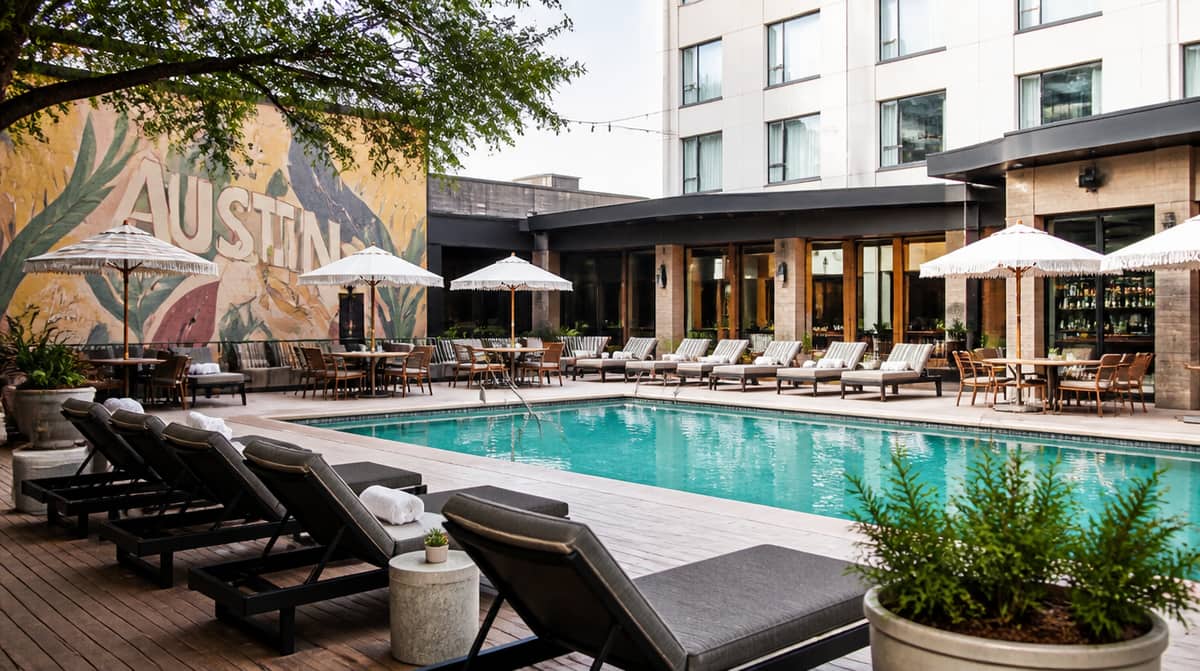
Charleston has a corrosion problem that most furniture buyers underestimate until they've lived through a season with it. The instinct walking into a Charleston project is to plan around heat and humidity, and those matter, but the operators who have run serious outdoor programs on King Street, along the Battery, and out toward Mount Pleasant and the barrier islands know the real variable is salt. Charleston sits on a peninsula between two rivers with the harbor and the Atlantic close on every side, and that proximity to salt water changes what "commercial grade" needs to mean for any patio, rooftop, or pool deck furniture program in the market.
The operators who get commercial patio furniture in Charleston right are not treating salt air as a minor inconvenience to be managed with extra cleaning. They're specifying frame materials, hardware, and finishes that are rated for a coastal corrosion environment from the outset, because the alternative is a furniture program that pits and rusts at the welds within eighteen months while the invoice still says it was rated for outdoor use.
Salt Air Changes the Whole Spec, Not Just the Finish
The standard assumption is that a warm coastal city is an easy climate for outdoor furniture because there's no snow or ice to worry about. Charleston's maintenance logs say otherwise. Salt-laden air off the harbor and the Atlantic settles on every exposed surface within a few blocks of the water, and that includes most of the peninsula, all of Mount Pleasant's waterfront corridor, and the entirety of Sullivan's Island, Isle of Palms, Folly Beach, Kiawah, and Seabrook. Salt accelerates galvanic corrosion at any point where dissimilar metals meet, which means the hardware and fastener specification matters as much as the frame material itself. A stainless fastener in an aluminum frame, correctly rated, prevents the kind of pitting that shows up around bolt holes within a single humid season on furniture that used the wrong hardware.
Humidity compounds the problem. Charleston runs at 70 to 80 percent average relative humidity for long stretches of the summer, with a hurricane season that brings sustained wind-driven rain and, in bad years, storm surge that reaches waterfront properties directly. That combination of moisture and salt is harder on furniture finishes than either factor alone, and it means the powder coat topcoat needs a documented salt-spray rating, not just a UV rating. Operators running large outdoor programs at the hotels near the Charleston Area Convention Center in North Charleston, and at the historic inns downtown that host wedding and event traffic, have learned that asking a supplier for their ASTM B117 salt-spray test results is a reasonable question, not an unusual one.
What the Peninsula, Mount Pleasant, and the Islands Actually Require
Charleston's outdoor furniture market is not one market. The design expectations on a King Street restaurant patio in the historic district are different from a rooftop bar overlooking the harbor, and both differ from a resort pool deck on Kiawah or Isle of Palms serving vacationing families. Specifying commercial patio furniture in Charleston without matching the program to the property's setting and guest profile produces furniture that works but reads as out of place.
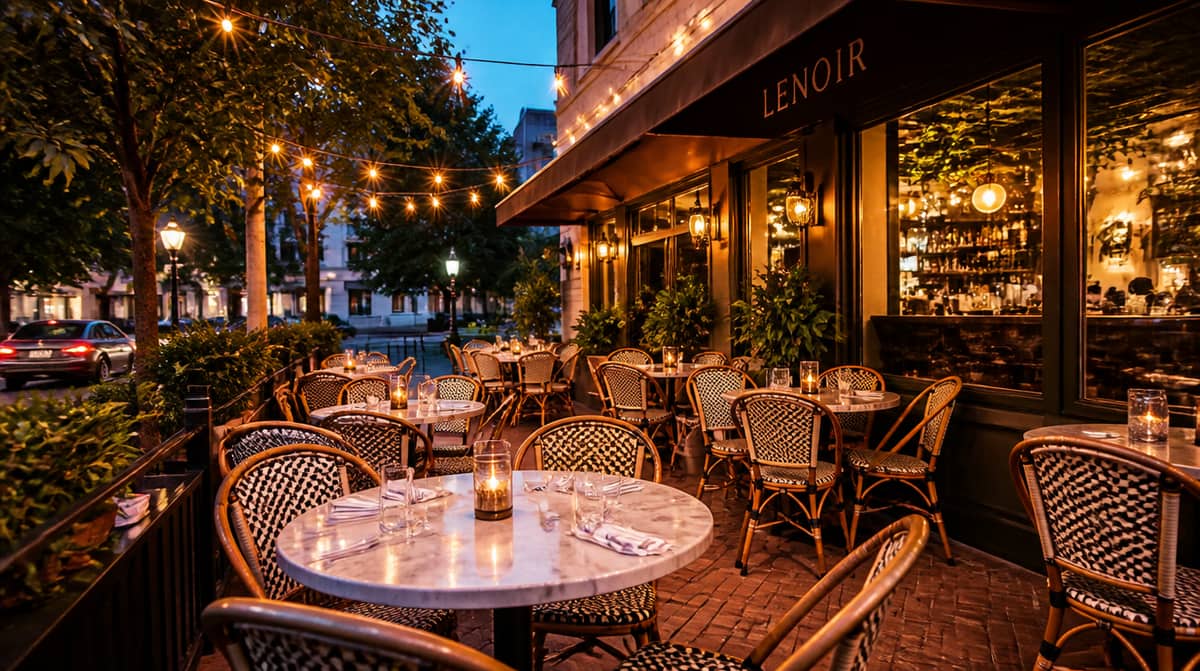
The historic district, from the French Quarter down through South of Broad, is unforgiving about aesthetic mismatch. This is a neighborhood of cobblestone streets, wrought iron, and single-house piazzas, and a patio program in matte bronze or aged black reads correctly against that backdrop in a way that bright white resort aluminum does not. Restaurant and inn patios on King Street and along Meeting Street need furniture that photographs well against brick and stucco, stacks or folds for the narrow courtyards common to Charleston's historic building stock, and holds its finish through the foot traffic of a tourist season that runs nearly year-round rather than seasonally.
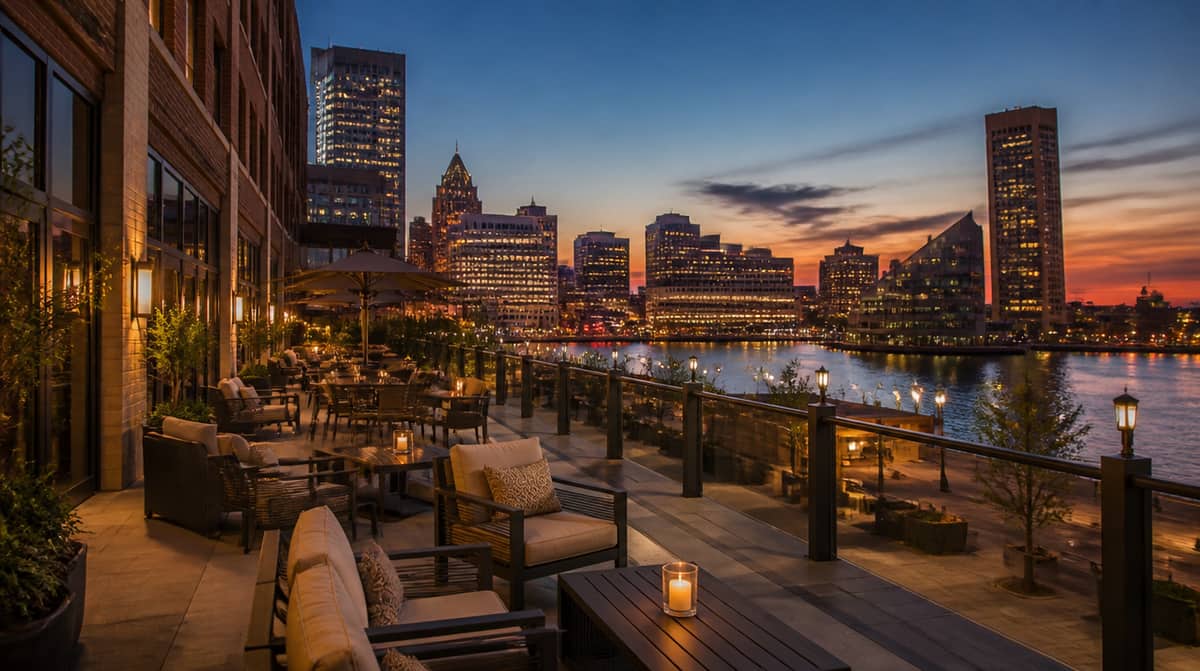
Rooftop and hotel bars downtown, the kind overlooking the harbor or Marion Square, operate at high volume with sightline expectations that matter more than in a quiet courtyard restaurant. These spaces reward a cohesive program across dining chairs, lounge seating, and bar-height tables, with finishes that hold up under near-constant sun exposure off the water. Mount Pleasant's waterfront corridor and the barrier islands, Isle of Palms, Sullivan's Island, Kiawah, and Seabrook, run on a different logic entirely: these are resort and residential-adjacent hospitality settings where guests expect pool decks and lounges built for extended beach-season use, with frame finishes able to withstand direct salt spray and daily rinse-down maintenance without breaking down within a few years.
Getting the Fabric and Frame Spec Right for the Lowcountry
Fabric specification in Charleston deserves the same attention operators give the frame. Solution-dyed acrylic, with Sunbrella as the industry benchmark, is the correct baseline for any uncovered or partially shaded Charleston patio. Because the color is embedded in the fiber rather than applied as a surface treatment, it resists the fading that comes from intense reflected sun off the harbor and holds through the mildew pressure that Lowcountry humidity creates on lesser fabrics. It also cleans with a diluted bleach solution, the correct protocol for salt residue and mildew in a coastal climate, without the fiber breaking down the way surface-coated fabrics do after a season or two.
Foam density matters just as much here as frame corrosion resistance. Standard 1.8 lb density foam compresses quickly under the extended-season outdoor use that Charleston's near year-round dining and event calendar produces. Commercial cushion foam in the 2.0 to 2.5 lb range, paired with a higher ILD rating, keeps its profile through a full hurricane-season-to-spring-festival cycle without the sag that shows up by the second summer on undersized foam.
For the frame itself, commercial-grade aluminum at 1.5mm wall thickness minimum, with marine-grade or 316 stainless hardware at every fastening point, is the correct starting specification for a Charleston coastal application. Consumer-grade frames in the 0.8mm to 1.0mm range, or commercial frames paired with standard-grade hardware, are where corrosion problems begin, usually at the joints first, regardless of how good the powder coat looks on delivery day.
The Revenue Math on Quality Commercial Patio Furniture in Charleston
Charleston consistently ranks among the top hospitality and wedding destination markets in the country, and its historic downtown, harbor-facing hotels, and resort islands all command rate points that depend on outdoor amenity quality. A downtown rooftop or a Kiawah pool deck generates meaningful per-seat revenue across a tourist season that runs most of the year, and the furniture lifecycle math changes completely once it's measured against that revenue rather than against the invoice total.
A correctly specified commercial aluminum chair, built for coastal corrosion resistance and properly maintained, holds up for eight to ten years of active Charleston service. A chair specified without salt-spray-rated hardware or finish, even one marketed as commercial grade, often needs replacement within two to three years once pitting starts at the welds. That replacement cycle costs more annually than the quality option, and it adds the operational headache of mismatched furniture generations on a patio guests are actively photographing. Operators who have run Charleston programs through a full decade understand this math and buy accordingly the first time.
The right approach to commercial patio furniture in Charleston is to specify for the actual coastal environment, match the aesthetic to the historic district or resort setting the property sits in, and buy for the full service life rather than the delivery-day price. Programs built this way become a quiet competitive advantage. The ones that skip the coastal spec spend their maintenance budget refinishing furniture that should have lasted a decade.