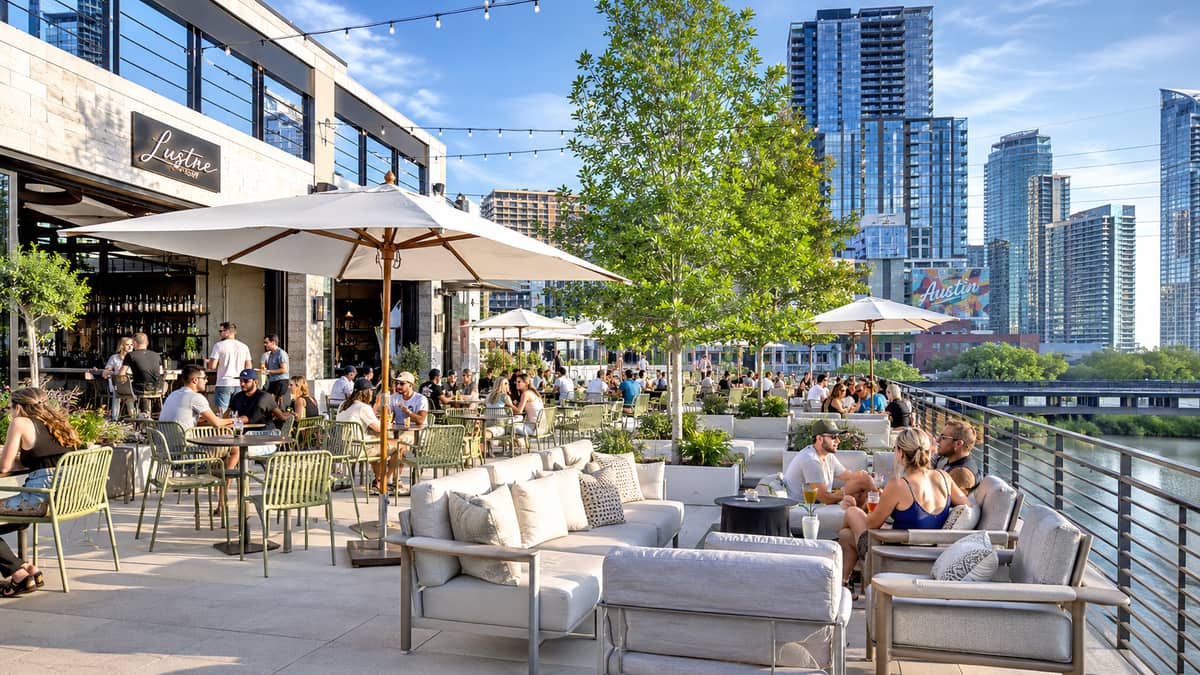
Anchorage has a patio problem, and it is not the one most operators expect walking into a project. The assumption is that a short outdoor season means furniture takes it easy: less sun, less wear, a shoulder-season amenity that gets stored most of the year. The operators who run serious patio programs downtown along 4th Avenue, in the brewery corridor near Ship Creek, and on the hotel decks facing the Chugach Mountains know the opposite is true. Commercial patio furniture in Anchorage lives through nearly 19 hours of direct summer daylight, temperature swings that can drop 20 degrees between a sunny afternoon and a cool evening, and a shoulder-season freeze-thaw cycle in May and September that is harder on frames and finishes than a straightforward cold winter would be.
The operators who get this right are not treating outdoor seating as a brief summer novelty. They are treating it as a compressed, high-intensity revenue window, five months if the season runs well, where every seat has to earn back its cost fast and hold up to storage and re-deployment year after year. Getting the specification right from the start is the difference between a patio program that performs for eight seasons and one that needs frame repairs by year three.
Anchorage's Season Is Short, But It Is Not Gentle
The standard logic is that a climate with real winters is easier on outdoor furniture because the pieces get stored indoors for most of the year. That is only true if the storage and re-deployment cycle is managed correctly, and it ignores what actually happens during the season the furniture is out. Anchorage sits close to 61 degrees north latitude, and from late May through late July the sun barely sets. That extended daylight means UV exposure accumulates over long days even though the season itself is short, and a powder coat finish without a properly documented UV inhibitor package can show chalking and color loss faster than an operator expects for a "cold weather market."
The freeze-thaw transition in shoulder season is the part that catches people off guard. Furniture that stays outside into late September, or gets set back out in April before the ground has fully thawed, goes through repeated freeze and thaw cycles while still exposed to moisture from melting snow and rain. That cycle finds any weak weld or micro-crack in a finish and works it loose over a few seasons. An operator who specs for "it snows here so furniture gets stored" without accounting for the actual shoulder-season exposure window ends up with frame failures that a properly rated commercial aluminum piece would have shrugged off.
Wind is the other factor that gets underestimated. Anchorage's bowl geography channels wind differently across downtown, the coastal trail area, and the hillside neighborhoods, and a patio near the Delaney Park Strip or facing Cook Inlet needs furniture with enough weight and a low enough center of gravity that a gust off the water does not send a chair or an umbrella base across the deck. Stackable pieces that are light for storage convenience can be the wrong call on an exposed site unless the base and frame design account for wind load.
What Downtown, Midtown, and South Anchorage Actually Require
Anchorage's patio market is not one thing. The design expectations at a downtown hotel deck serving conference and cruise-adjacent travelers are different from the brewery and taproom patios clustered near Ship Creek and Mountain View, and both differ from the South Anchorage and Midtown properties that lean on a more suburban, family, and business-travel mix.
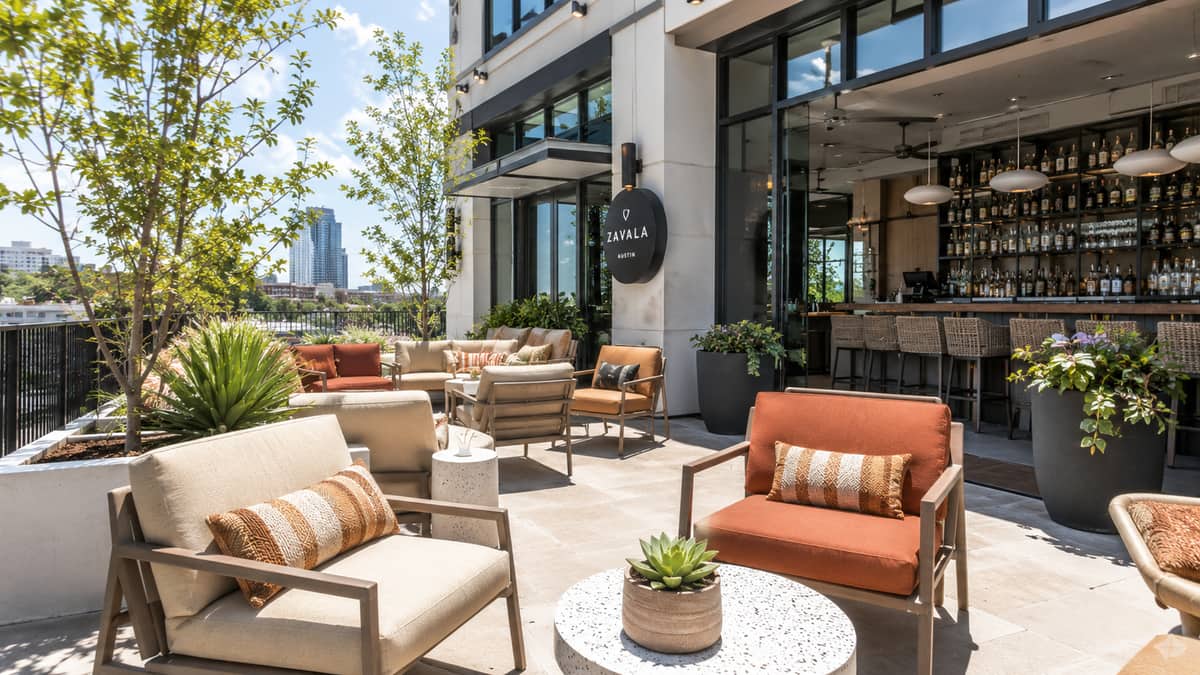
Downtown's hotel and restaurant patios, many of them within a few blocks of the Egan Civic and Convention Center, serve a guest base that expects a finished, cohesive outdoor program even on a short season. That means matching frame finishes across dining chairs, lounge seating, and side tables, specifying real shade structures rather than a patchwork of umbrellas, and treating the mountain and inlet views these patios often have as something the furniture program should complement, not compete with. A downtown deck that mixes leftover frame styles because the good ones were on backorder reads as an afterthought to guests who are comparing it to what they saw the night before at a comparable property.
The brewery and taproom corridor near Ship Creek and Mountain View runs on a different aesthetic entirely, industrial, communal, and built for volume rather than polish. Long picnic-style tables and darker matte frame finishes in charcoal or bronze fit this market better than resort-style white or champagne aluminum, which reads as imported and out of place. Durability matters more here than in almost any other segment because the turnover is constant, the crowd skews younger, and furniture gets moved, stacked, and reconfigured multiple times a shift during the peak summer weeks.
Midtown and South Anchorage properties, including the hotel and restaurant patios serving business travelers along the Old Seward and C Street corridors, want something in between: comfortable, presentable, and durable enough to handle a mixed crowd of business travelers and local families without needing a design statement. Stackability and ease of storage matter more in this segment because many of these properties break the patio down completely for the off-season and need pieces that go from deployed to stored quickly without damage.
Getting the Frame, Finish, and Fabric Spec Right
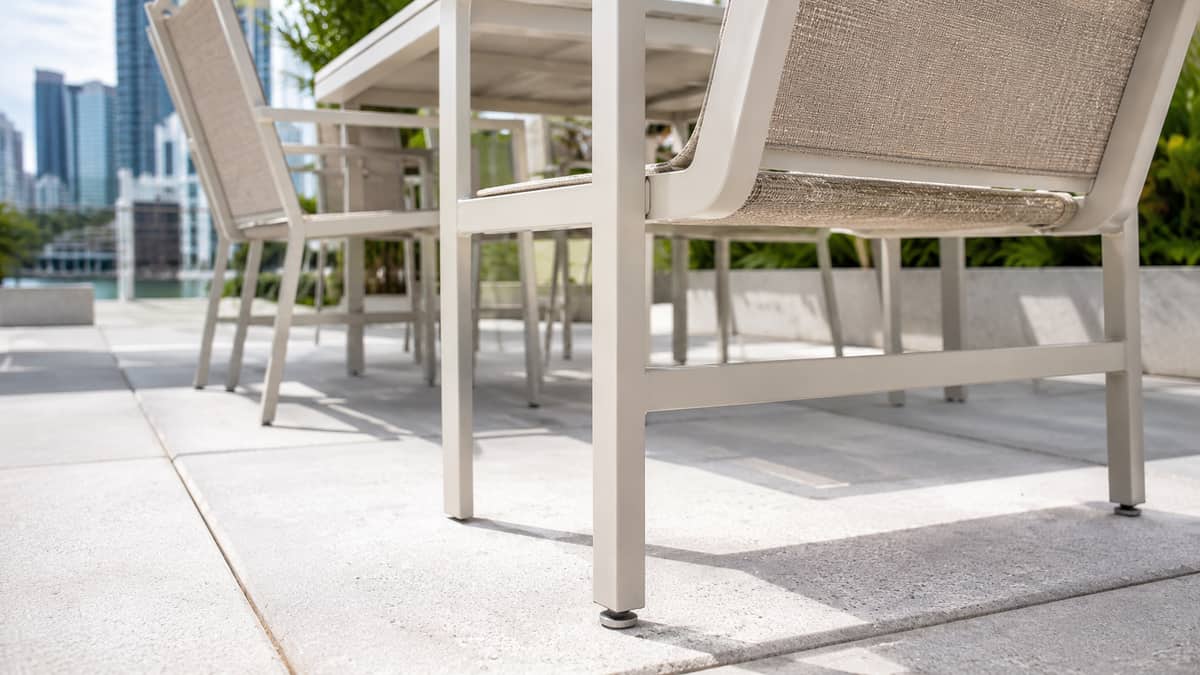
Frame material should start at commercial-grade aluminum with a minimum 1.5mm wall thickness for any Anchorage hospitality application. Lighter residential-grade frames in the 0.8mm to 1.0mm range are not built for a program where staff are moving and stacking chairs daily during a short, intense season, and where the frames sit in a storage shed or basement for seven months a year, often getting knocked around during the move. Weld quality at the joints matters as much as wall thickness, since it is the joints that fail first under repeated stacking and freeze-thaw stress.
Fabric specification should use solution-dyed acrylic, with Sunbrella as the industry benchmark, for any patio that sits in direct exposure during Anchorage's long summer days. The color is embedded in the fiber rather than applied to the surface, so it holds up under sustained daylight better than surface-coated alternatives, and it cleans easily after the mix of rain, wind-blown dust, and the occasional wildfire smoke haze that summer in Southcentral Alaska can bring. Foam density should run 2.0 to 2.5 lb with a higher ILD rating, since cushions in continuous use during a compressed, high-traffic season lose their shape fast if the foam spec is cut to save cost.
The Revenue Math on a Short, Intense Season
Anchorage's outdoor season is short, but it is also the season when the city's hospitality and convention business peaks, with cruise passengers, summer conference traffic, and the heaviest local dining and drinking calendar of the year all converging in the same five-month window. Every patio seat during that window is generating revenue at a rate the rest of the year cannot match, which changes the math on furniture quality considerably. A commercial aluminum chair correctly specified for the freeze-thaw and UV load of an Anchorage season, stored and maintained properly, lasts eight to ten years of active seasonal service. A lower-cost frame that needs replacement after two or three seasons costs more per year once you account for the mid-season scramble to source replacements and the mismatched look of a program with old and new pieces sitting side by side.
For hotel and restaurant properties competing for cruise and conference business, a patio that still looks sharp in year five signals investment in the guest experience during the exact window when that experience matters most. The right approach to commercial patio furniture in Anchorage is to specify for the real conditions, real UV load, real freeze-thaw cycling, real wind, real storage demands, match the aesthetic to the neighborhood, and buy for the full eight-year lifecycle rather than the cheapest option that gets through one season.