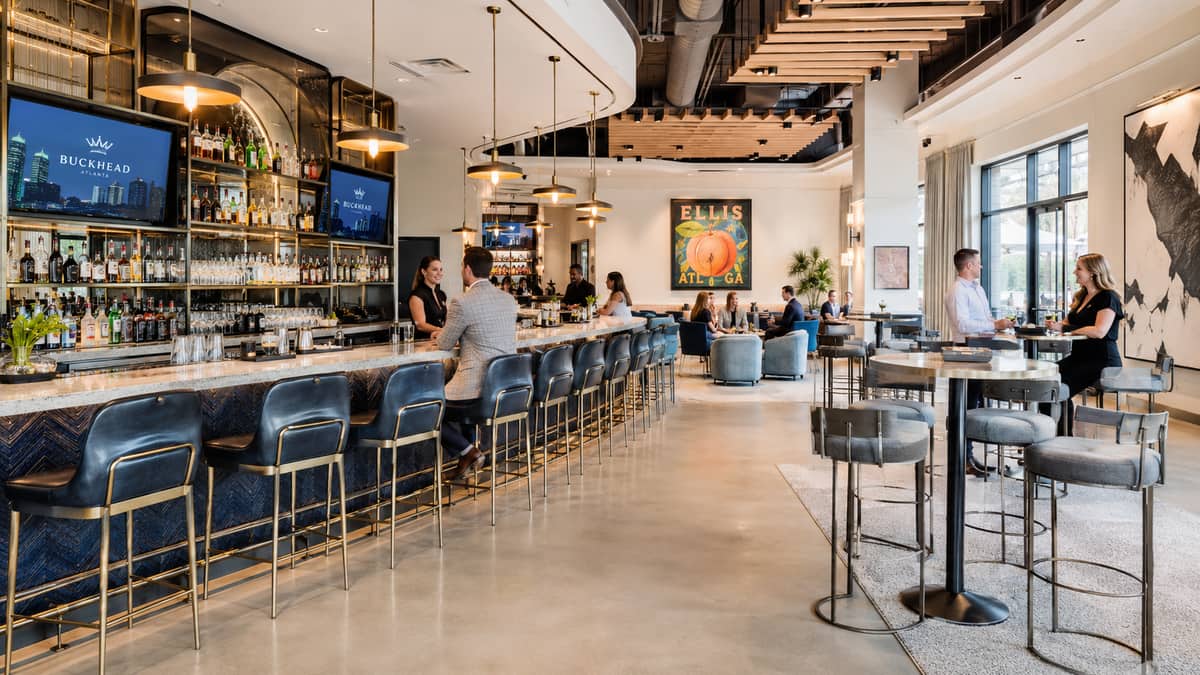
Anchorage's bar and lounge market runs on a different clock than most North American cities its size. Downtown hotels along 4th and 5th Avenue fill with convention traffic and cruise-transfer guests through the summer season, the Spenard corridor carries a dense, design-aware bar and restaurant scene that has grown up around Fireweed Lane and Spenard Road, and every furniture order has to account for a supply chain that runs barge and air freight through the Port of Alaska rather than a same-week truck delivery. Sourcing bar lounge furniture Anchorage operators can depend on means understanding each of these contexts, because a stool that performs in a downtown hotel lobby bar is not the same stool that belongs in a Spenard neighborhood taproom, and neither one can be reordered on the timeline a Seattle or Portland operator takes for granted.
Downtown and the Convention-Season Hotel Bar Standard
Downtown Anchorage, from the Delaney Park Strip up through 4th Avenue and the blocks surrounding the Dena'ina Civic and Convention Center, is where the city's hospitality market carries its highest volume. Hotel lobby bars and rooftop-adjacent lounges here see a compressed but intense season: cruise passengers moving through in the summer, convention delegates filling the Dena'ina Center's meeting floors, and a winter calendar of corporate travel and Iditarod-adjacent events that keeps the bars busy even in the dark months. Furniture specified for this corridor has to hold up to sustained volume packed into shorter windows than a year-round market would ever see.
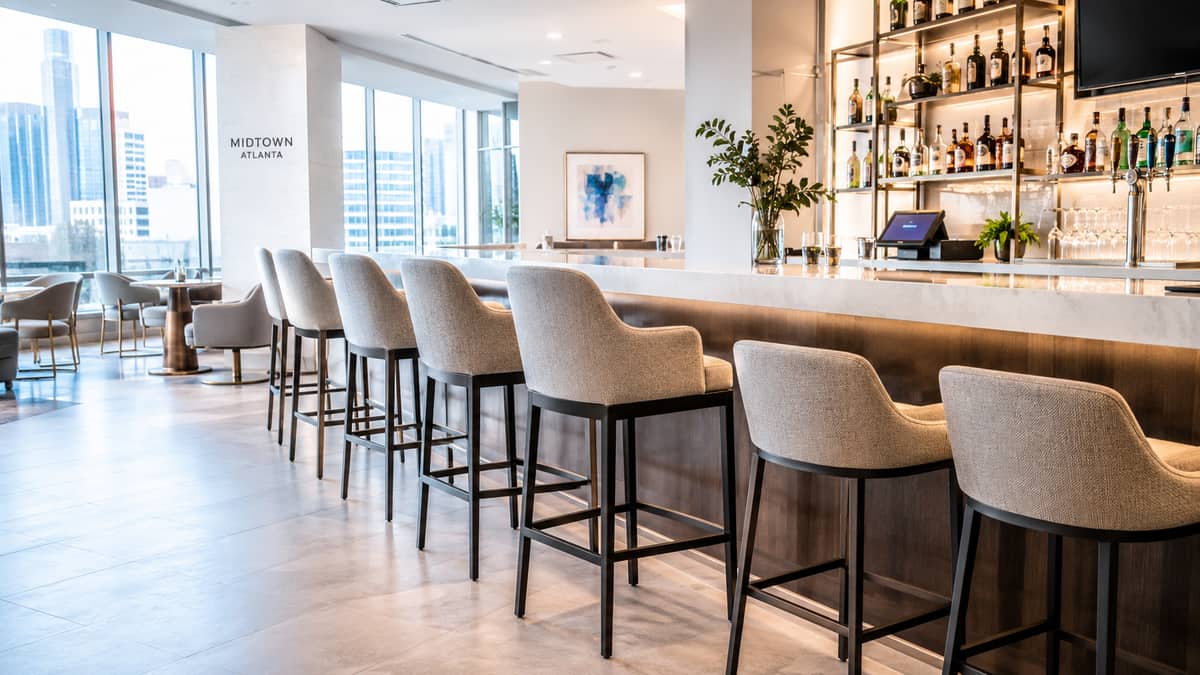
The material spec for downtown Anchorage properties starts with frame durability against a very different set of environmental stresses than a warm-climate city. Aluminum frames are still the right call for any furniture that moves between indoor lounge space and a semi-heated or transitional patio area, because they resist the corrosion that comes from de-icing salt tracked in on boots and cart wheels through a long winter. Avoid hollow footrests on any barstool ordered for high-traffic hotel bar programs. Solid bar stock footrests hold up to the constant weight shifting of guests bundled in winter layers pulling stools in and out; hollow tube footrests loosen and dent within a season of that kind of use.
Upholstery in downtown hotel bars needs to handle both moisture from tracked-in snow and the dry, static-prone air that indoor heating systems produce through an Anchorage winter. Specify performance fabrics rated at a minimum of 50,000 double rubs Wyzenbeek with a moisture barrier under the seat cushion, particularly in lobby lounges near entryways where boot traffic and dripping outerwear are a daily reality from October through April. Confirm your actual bar counter height before finalizing any order. A standard bar-height counter runs 42 inches and pairs with a 28-to-30-inch seat height, while counter-height surfaces at 36 inches need a stool in the 24-to-26-inch range. A two-inch mismatch is uncomfortable for every guest in that seat and cannot be fixed without replacing the piece.
Spenard and Midtown: A Design-Literate Neighborhood Market
The Spenard corridor along Spenard Road and Fireweed Lane, extending into the Midtown restaurant district near the Northern Lights Boulevard business strip, represents Anchorage's most design-forward hospitality scene. This is where independent bars and taprooms are competing on atmosphere and identity, not just capacity, and the furniture is part of how that identity reads to a first-time guest. A cocktail bar or taproom opening in Spenard in 2026 is drawing comparisons to Seattle and Portland programs its owners have visited, and the seating has to hold its own against that reference point.
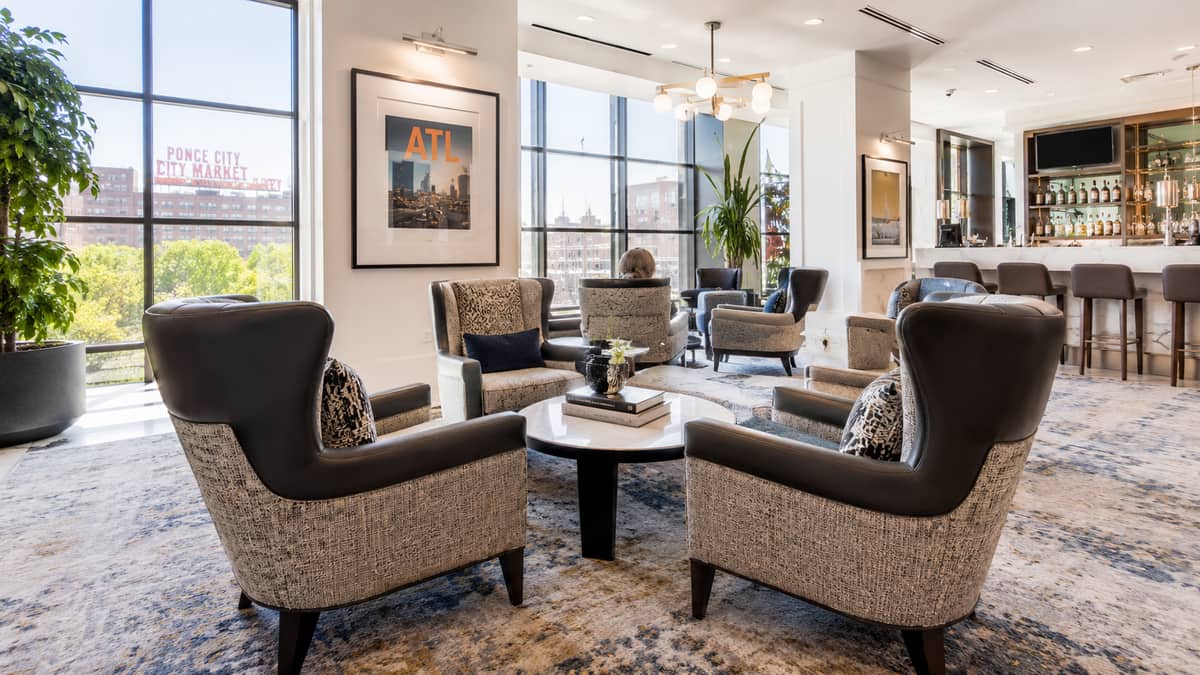
Current preferences in this corridor lean toward warm, layered interiors that counter the long dark season rather than lean into an all-black industrial look: curved lounge silhouettes with thick cushioning, upholstery in rust, amber, deep green, or warm charcoal, and mixed-material tables that pair blackened steel with reclaimed wood or stone. Operators sourcing bar lounge furniture Anchorage guests will actually want to linger in are choosing pieces that feel warm at the table level, not just photogenic from a distance.
COM programs are worth raising with your supplier early in this process. A custom order-material program lets your designer specify a proprietary fabric on a commercially proven frame, which is how independent Spenard and Midtown bars build a distinct look without giving up the structural rating a working bar environment demands. For high-top and communal table configurations in this corridor, specify cast iron or heavy powder-coated steel bases with adjustable leveling glides. Many of Spenard's buildings are older commercial stock with settled or uneven floors, and a rocking table is the kind of small failure a design-conscious guest notices immediately.
Freight, Lead Times, and Sourcing Bar Lounge Furniture for Anchorage Projects
The variable that separates Anchorage furniture sourcing from almost anywhere else in the country is freight. Furniture bound for Anchorage moves either by barge through the Port of Alaska, which runs on a weekly to biweekly sailing schedule out of Tacoma, or by air freight, which is fast but priced accordingly for anything beyond small accent pieces. A standard commercial furniture lead time of 8 to 12 weeks for custom orders needs an additional 1 to 3 weeks built in for Anchorage delivery depending on which mode your supplier uses, and that buffer has to be part of the project schedule from the first conversation, not discovered after the order is placed.
This makes in-stock inventory considerably more valuable for Anchorage operators than it is for a Lower 48 buyer with regional trucking options. Build supplier relationships before you have an urgent need, and confirm which vendors already stage inventory or run predictable consolidated freight to Alaska rather than quoting a one-off barge booking after the order is written. Ask specifically about replacement stock: a downtown hotel bar running convention-season volume will lose individual barstools and chairs to wear over a busy summer, and the ability to get six replacement barstools in the same finish onto the next scheduled barge sailing is worth more than a marginally better price on a collection with no Alaska shipping history.
Weld quality and structural weight matter here for a related reason: replacement and repair are slower and more expensive in Anchorage than almost anywhere else furniture ships. Bar stool frames for high-volume hotel and convention-corridor venues should be minimum 16-gauge steel with fully welded joints at the footrest and every leg-to-seat connection. Bolted frames that loosen under sustained use turn into a maintenance problem that cannot be solved with a same-week parts order the way it could in a city with same-day freight access.
If you are in the early planning stages of a bar or lounge build anywhere in Anchorage, downtown, Spenard, Midtown, or the growing restaurant scene near South Addition and the Chester Creek Trail, request a specification consultation from your supplier before your layout and freight timeline are finalized. It will surface the seat height mismatches, freight windows, and material choices that are far cheaper to correct on paper than after a barge shipment has already landed.