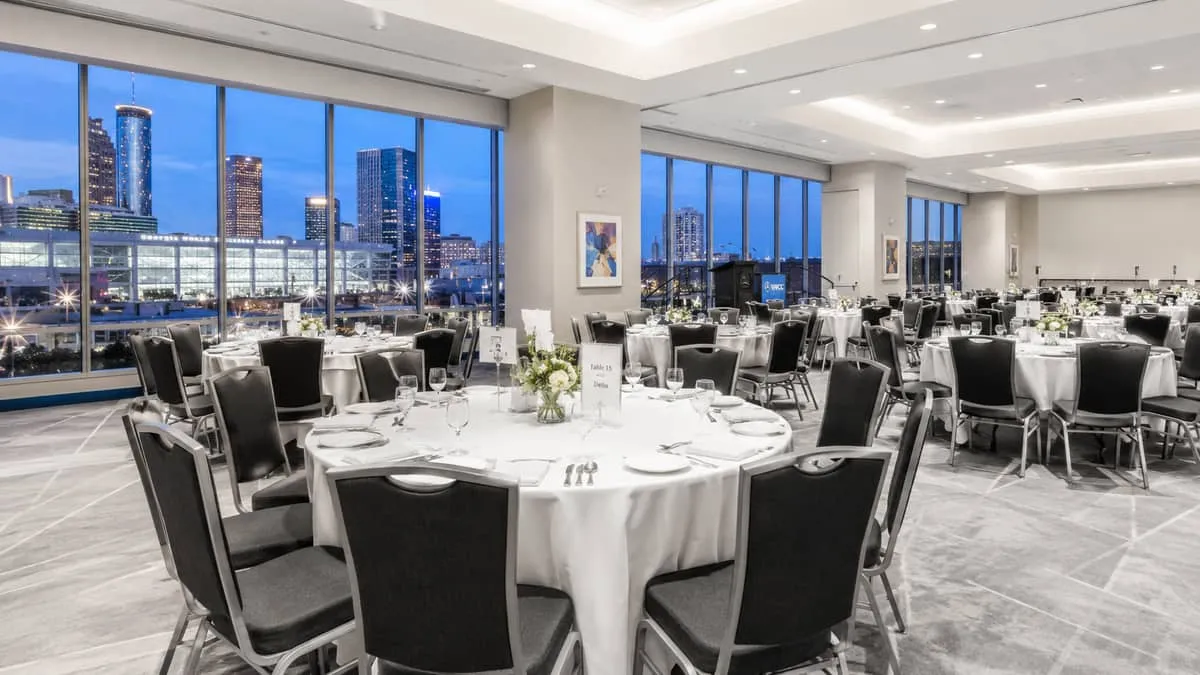
Anchorage runs its event calendar differently than almost anywhere else in the country. The Dena'ina Civic and Convention Center downtown anchors a summer season packed with statewide conferences, oil and gas industry gatherings, and the trade shows that follow the cruise ship crowds north from Seward and Whittier. The Egan Civic and Convention Center, a few blocks over, absorbs the overflow, along with a steady run of banquets, galas, and association meetings that book around the same short window. Hotel ballrooms along the Seward Highway and Midtown corridor turn over constantly between June and September, then shift into a slower, more corporate rhythm through the winter when oil companies, nonprofits, and the university community book the bulk of their annual dinners and holiday events. If you manage a hotel banquet department, a standalone event hall, or a restaurant with a private dining program here, your furniture inventory has to survive a season that is short, front-loaded, and unforgiving of downtime.
What Anchorage's Compressed Season Actually Requires
The compression is the part operators underestimate. A ballroom that might do one wedding a month in Fairbanks or a mid-size Lower 48 market can end up doing three events in a single weekend during Anchorage's peak summer stretch, when tourism season, wedding season, and the tail end of the conference calendar all overlap. That kind of density means your banquet chairs and folding tables get moved, stacked, and reset far more often per week than the calendar year would suggest, concentrated into roughly fourteen weeks instead of spread evenly across fifty two.
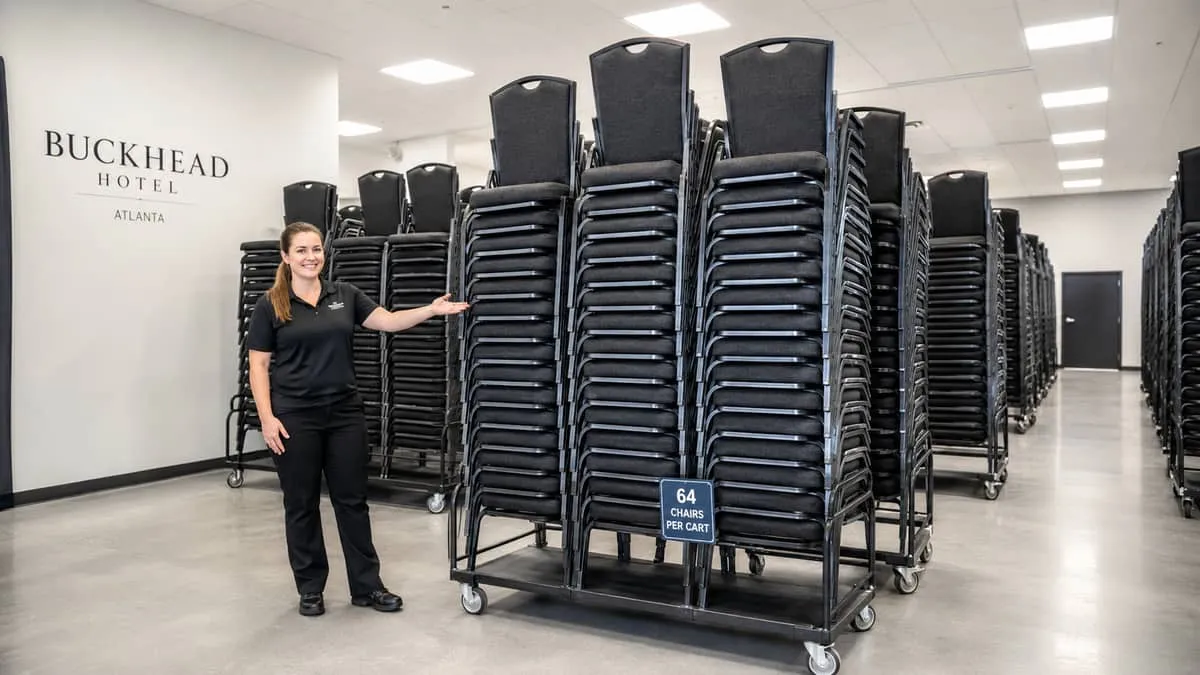
Stackable banquet chairs rated for eight to ten high are the right baseline for any Anchorage property running a real summer program, but the dolly system matters just as much as the stack rating. Freight into Alaska is slower and more expensive than almost anywhere in the continental United States, whether it moves by barge through the Port of Alaska or by air, so a broken cart or an undersized dolly can mean weeks of waiting on a replacement rather than days. Ordering chair carts sized correctly for your specific chair model at the same time as the chairs, not after the first frustrating reset, is not optional here the way it might be in a market with next-day freight.
Folding tables need to cover the actual range of events an Anchorage property books, not just the most common format. Round tables at 60 inch or 72 inch handle the plated dinners that dominate summer wedding season, while rectangular 6-foot and 8-foot tables get pulled for conference breakouts, buffet lines during a convention week, and cocktail configurations for corporate receptions. Because reorders take longer to arrive than they would in most cities, properties here tend to overbuy slightly on both formats rather than run lean and risk a shortfall mid-season.
Chair Spec for Properties from Downtown to Midtown
The banquet chair is the piece of furniture a guest sits in for three or four hours at a stretch, and it is also the piece your staff handles hundreds of times during a busy convention week. Those two demands do not always line up, and the chairs that hold up in Anchorage are the ones built with both in mind.
Frame material is the starting decision. Steel frames are heavier but absorb the impact of repeated stacking well, which matters when staff are breaking down a room quickly at the end of a long event night. Aluminum frames are lighter and easier on crews moving large quantities, but they need thicker gauge metal to match steel on durability. For downtown properties near the convention centers running back-to-back corporate business, a padded steel-frame stacker tends to win on cost and reset speed. For the wedding and banquet venues in the Turnagain and South Anchorage areas, where clients expect a more finished look for photos, a Chiavari-style chair or a padded contract chair with a cleaner profile is often worth the added cost.
Foam density in the seat and back pad matters more in Anchorage than the spec sheet suggests, and not just because of use volume. Indoor heating runs for eight or nine months of the year, and the dry, heated air that keeps a ballroom comfortable through an Alaska winter also accelerates the breakdown of low-grade foam and speeds up cracking in cheap vinyl upholstery. High-density foam and commercial-grade vinyl or fabric hold their shape and finish through that heating cycle far longer than budget materials, which matters if you expect a chair program to last seven to ten years rather than three.
Folding Tables and the Reality of Freight Lead Times
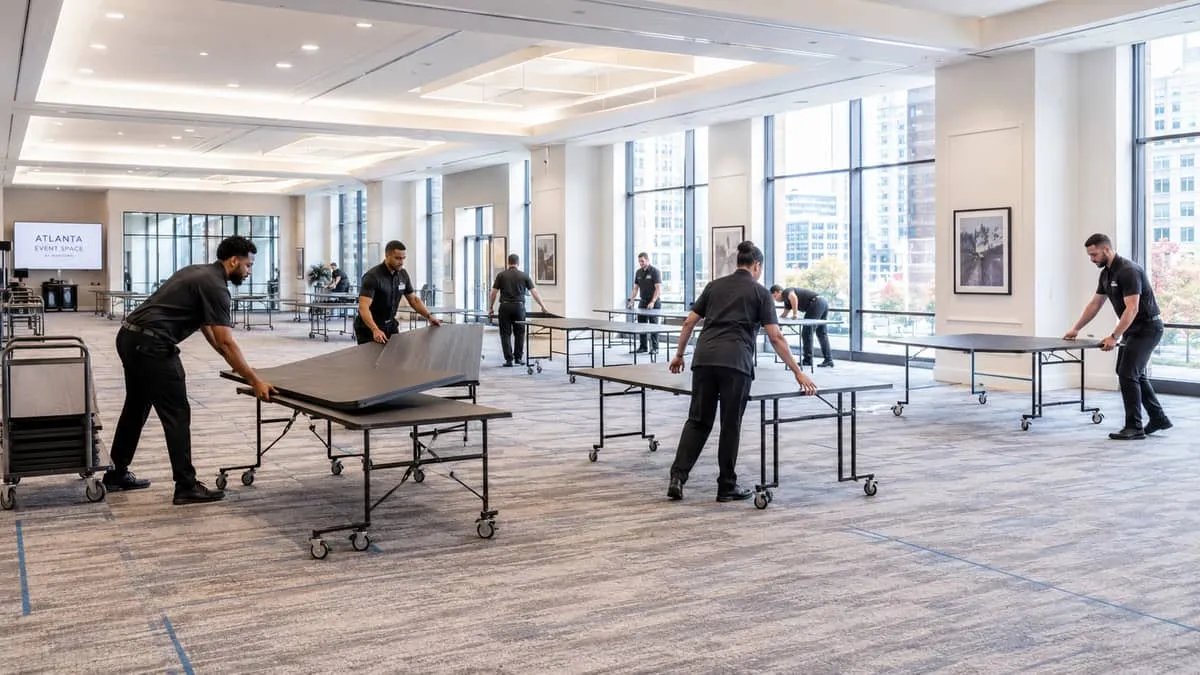
Folding tables are the unglamorous workhorse of any Anchorage event program, and they are where a room flip either runs smoothly or falls apart. A weak hinge develops wobble fast under repeated use, and a wobbling table under a centerpiece at a seated dinner gets noticed immediately. Commercial-grade folding tables use reinforced steel hinges and, on longer rectangular formats, a center support leg that keeps the table level when it is loaded with chafing dishes and full place settings.
Surface finish matters for a more specific reason in Anchorage than in most markets: once winter sets in, staff are hauling tables between a heated ballroom and a cold loading dock repeatedly, and that temperature swing is hard on lower-grade veneers over time. High-pressure laminate resists warping through those swings, cleans up fast between back-to-back events, and holds its finish through the kind of heavy catering rotation a downtown hotel runs during convention week.
Because getting a damaged or missing piece replaced can take considerably longer here than in a market served by regional freight, Anchorage properties benefit more than most from ordering a full program at once and keeping a modest reserve of chairs and tables in storage rather than ordering exactly to headcount. The math on lead time changes when a "we'll ship it next week" answer actually means several weeks on a barge.
Buying Volume, Managing Storage, and Working with the Right Supplier
Back-of-house storage is tight at most Anchorage properties, and industrial and warehouse space in general runs at a premium compared to larger Lower 48 markets. Newer hotel builds near the convention center corridor were designed with dedicated furniture storage bays, but older downtown properties and repurposed event spaces are often working with whatever square footage is left over. When storage is limited, the spec should reflect it directly: chairs that stack to twelve high take up meaningfully less floor space over a full inventory than chairs that top out at six or eight, and that difference compounds fast in a small storage bay.
Ordering commercial furniture in volume from a single contract supplier, rather than piecing together smaller orders from different sources, protects against the freight delays and mismatched product runs that are more disruptive in Alaska than almost anywhere else. A supplier who understands the hospitality contract space can walk you through realistic lead times before you commit to a date, help you plan a storage footprint that fits your actual bay, and make sure your order lands with enough runway before the summer season starts. In a market where the busy season is this short and this front-loaded, a program that arrives on time is worth more than a program that arrives cheap.
Event Tables and Chairs for Anchorage Venues
Buying event tables and chairs as one coordinated program, rather than sourcing them separately, is the practical move for most Anchorage venues. A ballroom or event space runs on a repeatable kit: stacking banquet chairs paired with 60-inch and 72-inch round folding tables for seated dinners, plus a run of 6-foot and 8-foot rectangular tables for buffets, registration, and back-of-house staging. Speccing the chairs and tables together means the seat height, table height, and knee clearance actually work as a set, and it puts the whole order on a single freight booking, which matters more in Anchorage than almost anywhere given the transit time and the short summer window.
For a venue building or refreshing its inventory, size the table mix to the room instead of buying one format across the board, and match the chair count to your largest recurring seated event with a margin of spares for breakage and simultaneous setups. Folding tables with locking legs and a stain-resistant top hold up to constant reset, and stacking chairs rated to twelve high keep a full event set inside the tight storage footprint most Anchorage properties are working with. Ordering the complete tables-and-chairs package from one contract supplier keeps the delivery on a single timeline and gives you one point of contact if a piece needs replacing before the season starts.
If you are sourcing banquet and event furniture for your Anchorage property, the fastest way to real numbers is to tell us what you need. Request a quote with your quantities and timeline.