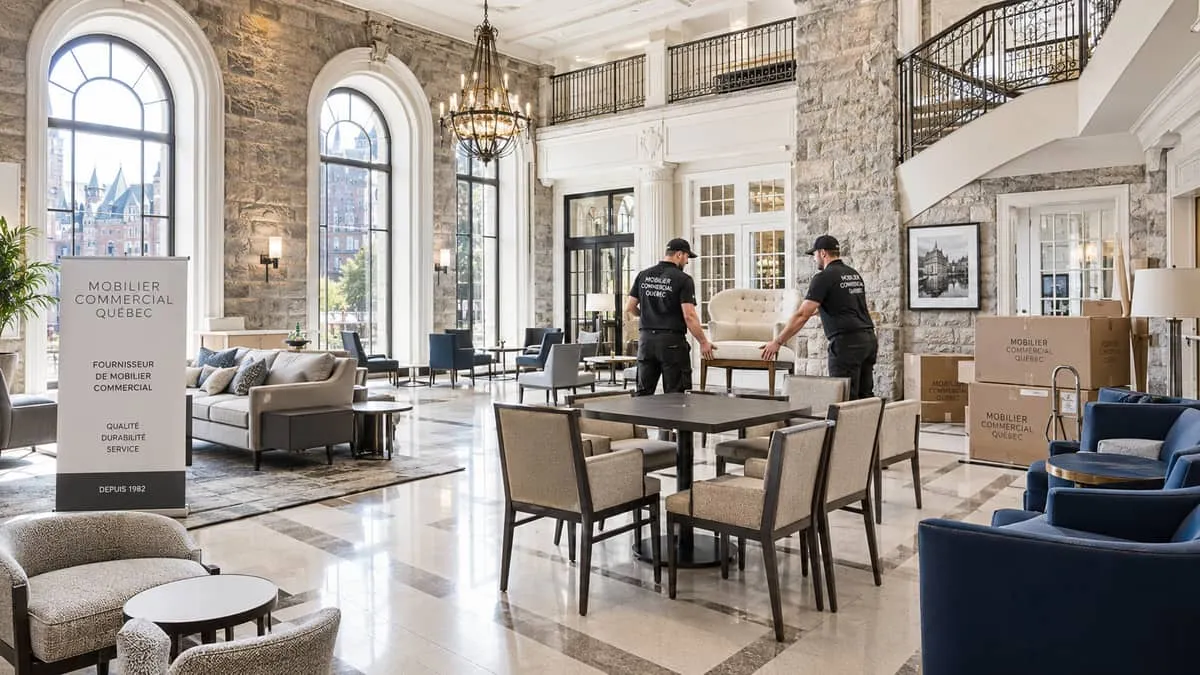
Quebec City is the most demanding commercial furniture market in Canada, and it is not close. This is a UNESCO World Heritage Site where guests arrive having already compared your property to European boutique hotels. The Fairmont Le Château Frontenac is not a curiosity, it is the standard against which every Haute-Ville inn, every Basse-Ville bistro tucked into the stone walls near Place Royale, and every brasserie along Grande Allée is silently judged. Add to that a procurement environment that is conducted almost entirely in French, heritage building constraints that disqualify most standard supplier approaches, and a seasonal intensity shaped by Winter Carnival and the summer festival corridor, and you have a market that requires a genuinely different caliber of supplier relationship.
If you are operating or opening a hospitality property in Quebec City and you are treating the furniture specification the same way you would in a newer, larger Canadian city, you are already behind.
The European Comparison Problem Every Quebec City Operator Faces
Quebec City draws a disproportionate share of European travelers relative to its population. Those guests have a frame of reference. They have stayed in Parisian boutique hotels, in converted Lyon townhouses, in stone-walled Bruges inns. When they book a room in Vieux-Québec, they are not lowering their expectations because they are in Canada. They are expecting that Quebec City's distinct European heritage will be reflected in every surface they encounter.
This creates a specific purchasing problem for operators. The furniture that reads as premium in a Toronto hotel lobby reads as generic in a Rue Saint-Louis heritage property. Pieces need to carry authenticity signals: natural materials that have visual weight, joinery that is visible and deliberate, upholstery in muted or historically resonant palettes. The Auberge Saint-Antoine in Basse-Ville has built an international reputation for exactly this caliber of interior detailing. The properties along Rue des Remparts that are competing for the same guest base understand the same imperative.
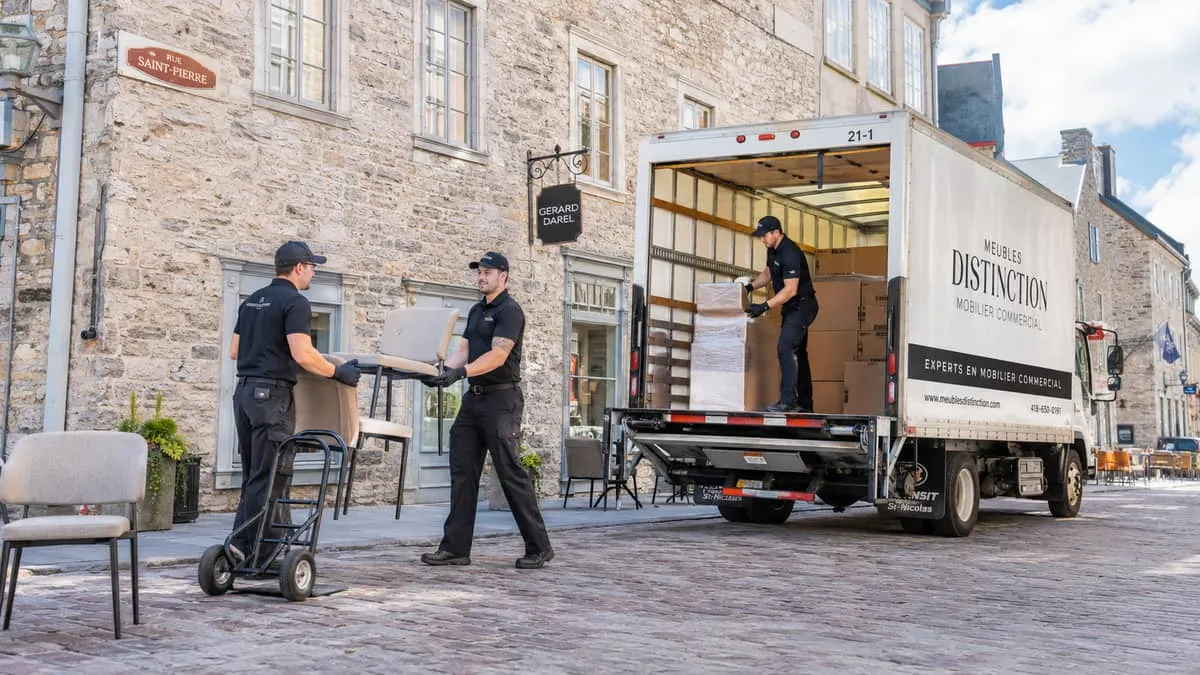
A commercial furniture supplier serving Quebec City has to understand this European hospitality comparison and source accordingly. They cannot pitch you a catalog of clean-lined modern pieces that would fit comfortably in a Burnaby extended-stay and expect you to build a coherent Vieux-Québec aesthetic from it. The specification has to begin with the guest's frame of reference, not the supplier's existing inventory.
This is the first qualification question: ask any potential supplier how they approach properties where the guest is comparing the experience to European boutique hospitality. Their answer will tell you whether they understand this market or whether they are treating Quebec City as a generic Canadian account.
Heritage Constraints Are Not a Design Preference, They Are a Procurement Condition
Old Quebec's designation as a UNESCO World Heritage Site is not symbolic. It carries real regulatory weight that shapes every renovation and fit-out project in Haute-Ville and Basse-Ville. Heritage buildings in these districts have protected facades, regulated interior modifications in many cases, and structural realities, including narrow stairwells, irregular ceiling heights, and load-bearing stone walls, that eliminate entire categories of furniture.
Pieces that arrive oversized because a supplier did not account for access constraints through a 19th-century doorway are not a minor inconvenience. They are a project failure. A supplier without direct experience in heritage-constrained environments will not have asked the right questions at the specification stage. They will not have flagged that a particular sofa configuration cannot be maneuvered up a curved stone staircase, or that a table base requiring anchor bolts is not compatible with a protected heritage floor.
The Hotel du Vieux-Québec and the boutique properties throughout the Quartier Petit Champlain area deal with these constraints on every project cycle. A supplier who has worked in these environments knows to request building access dimensions and site photographs before the first product recommendation. A supplier who has not worked here will send you a catalog.
Ask any supplier directly: have they completed a commercial furniture project in a heritage-designated building? Can they describe the access and installation approach they used? If the answer is vague or general, treat that as a disqualifier for a Vieux-Québec project.
The French-Language Requirement Is Non-Negotiable
Quebec City's procurement environment operates in French. This is not a courtesy preference or a regional sensitivity issue. For a Quebec City operator, working with a supplier who cannot conduct business in French, who cannot provide quotes, contracts, warranty documentation, delivery coordination, and after-sale support in French, is a practical liability.
This matters at every stage of the project. The initial specification conversation needs to happen in French to avoid miscommunication on finish names, material descriptions, and construction details. The quote needs to be readable by your comptable and your project manager, who are working in French. The delivery team coordinating with your property staff needs to communicate in French. If something goes wrong with an order and you are pursuing a warranty claim, that process needs to be in French.
Many national commercial furniture suppliers operating out of Ontario or British Columbia have a French-speaking sales contact for Quebec accounts. That is not the same as having French-language operational capacity. The contact may speak French, but if the order management system, the documentation, the freight coordination, and the warranty process are all in English, you are going to encounter friction at every stage.
When you are qualifying a commercial furniture supplier for a Quebec City project, ask specifically: are quotes and contracts available in French, is the primary project contact French-speaking throughout the engagement, and is after-sale support conducted in French. A supplier who genuinely works in this market will confirm all three without hesitation.
What Durability Means for a Quebec City Property Specifically
Quebec City's climate is not incidental to furniture specification. It is a core design parameter. The city averages close to 300 centimeters of snowfall annually. Winter Carnival in February is the property's peak demand period, which means your furniture is absorbing maximum guest volume during the coldest and most physically demanding weeks of the year. Guests are coming in from outdoor events, carrying moisture, wearing heavy layers. The transition between Quebec City's extreme winter and its warm, humid summers is dramatic and rapid.
For exterior and patio furniture serving the summer corridor from June through September on Grande Allée or in the courtyard properties of Vieux-Québec, UV resistance and drainage capacity are not optional specifications. Aluminum frames with powder-coat finishes built for genuine winter storage conditions, not just mild coastal damp, are the baseline. Sling or mesh surfaces that drain and dry without holding moisture through freeze-thaw cycles are the appropriate choice for properties that cannot keep outdoor pieces in conditioned storage year-round.
For interior pieces serving the peak winter season, upholstery durability is the operative concern. Restaurant chairs along the Rue Saint-Jean bistro corridor absorb two seatings a night across the full Winter Carnival and summer festival peaks. Contract-grade upholstery rated to 100,000 double-rub cycles or higher is not an upsell, it is the entry requirement for pieces that need to hold up through that occupancy pattern without reupholstering within the first three years.
The renovation window in Quebec City is predictable: the shoulder months between peak seasons, typically October through early December and the post-Carnival weeks in March and April. A supplier who understands this market will plan lead times around those windows. Custom upholstered pieces running 12 to 16 weeks from order to delivery need to be specified well ahead of any target installation date, and a competent supplier will flag that timeline clearly at the outset rather than letting it surface as a surprise.
Qualifying a Supplier: The Questions That Separate Experience From Positioning
Quebec City's scale works against operators in one specific way. Because the city is smaller by population than Montreal, Toronto, or Vancouver, many national commercial furniture suppliers have limited direct experience here. They may have completed one or two Quebec City projects, or they may be extrapolating from Montreal work, which carries some overlap but is a genuinely different market in terms of heritage concentration, French-language intensity, and boutique hospitality density.

The questions below are designed to surface whether a supplier has actual Quebec City depth or is approaching your project as a generic Canadian account.
Ask them to name properties they have furnished in Vieux-Québec or in the heritage districts specifically. General Quebec references do not count here. Ask what access and installation approach they used on the last heritage-building project they completed in the city. Ask how they handle the French-language documentation requirement from quote through warranty. Ask what their renovation window planning process looks like for properties with compressed shoulder seasons.
Then ask the question that reveals the most: what makes a commercial furniture project in Quebec City different from a similar project in, for example, Calgary or Ottawa? A supplier with genuine market knowledge will give you a specific answer that touches on heritage constraints, language requirements, and the European hospitality comparison. A supplier without that knowledge will give you a general answer about quality and service that could apply to any Canadian city.
The price conversation matters too, but in a specific way for this market. Quebec City's boutique hospitality operators are not primarily price-driven buyers. The properties competing for the Auberge Saint-Antoine guest, for the traveler who has also considered Relais and Chateaux properties in Europe, are making specification decisions on quality and authenticity first. A supplier who leads with price as the primary value proposition is misreading this market. The right conversation is about specification quality, material authenticity, lead time reliability, and French-language operational capacity. Price should be the output of that conversation, not the frame for it.
Contract Grade in the Context of Vieux-Québec's Aesthetic Register
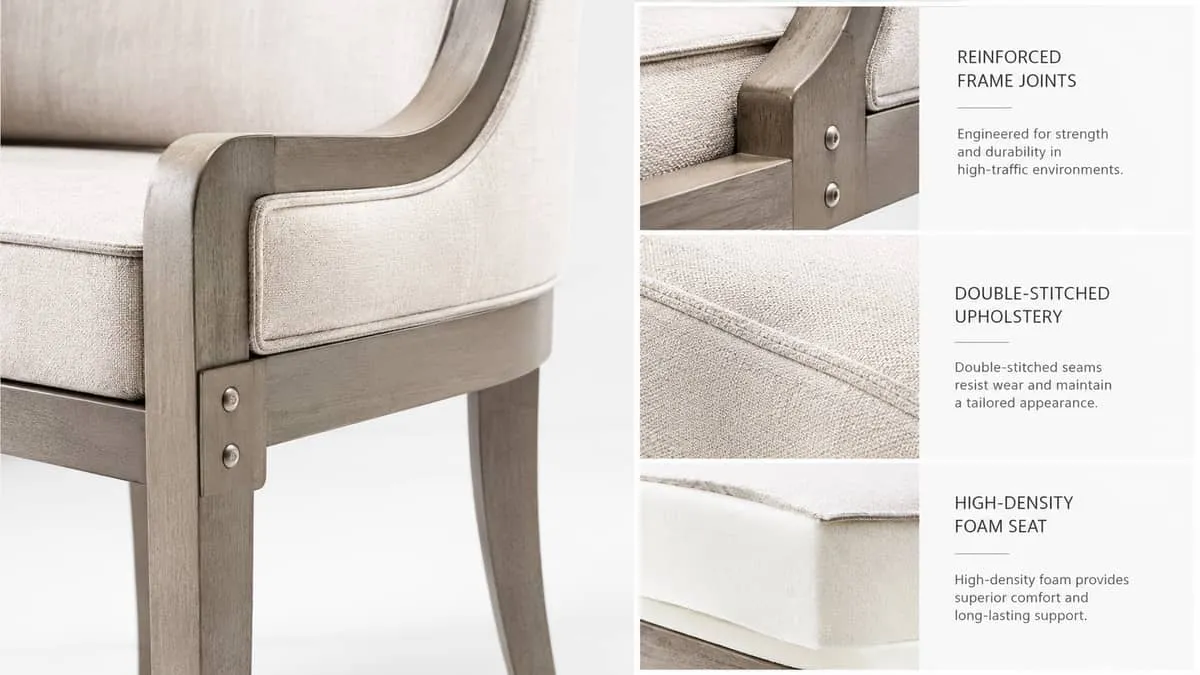
Contract-grade furniture is an engineering standard before it is an aesthetic one. Frame construction, joint reinforcement, upholstery rating, finish durability, these are measurable specifications that distinguish commercial pieces from retail equivalents. In most markets, the commercial specification conversation and the aesthetic conversation happen in parallel. In Quebec City, they are more tightly integrated.
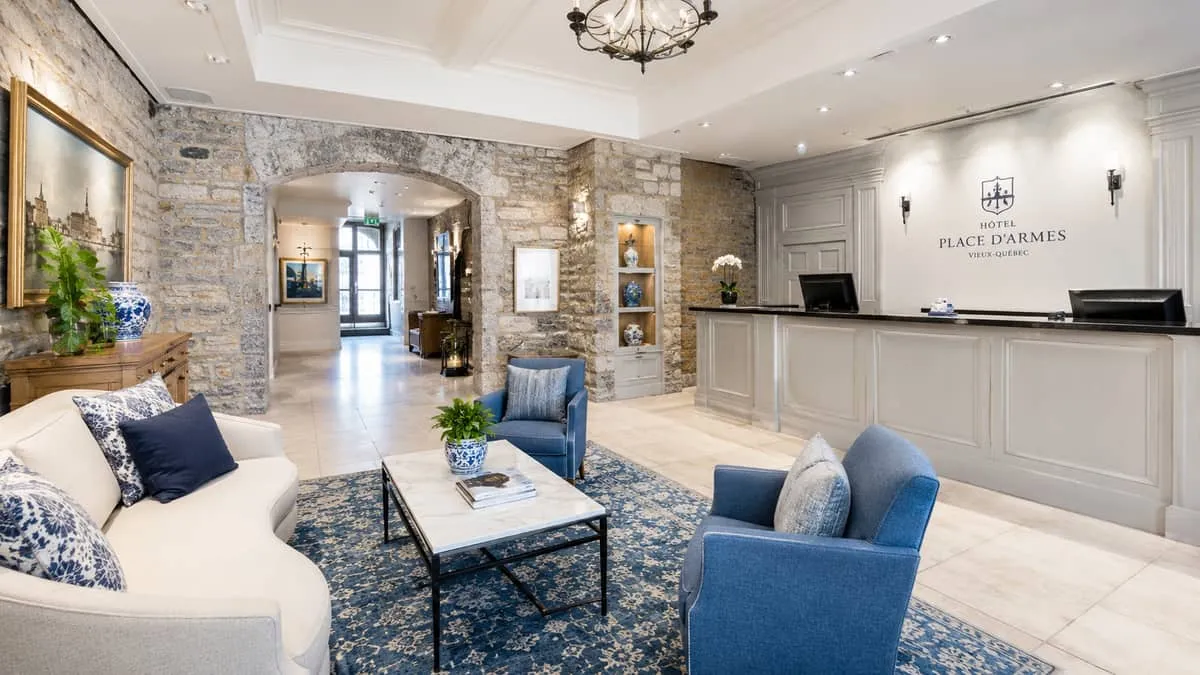
The properties in Haute-Ville and Basse-Ville that are succeeding with European and premium domestic guests are choosing contract-grade pieces that also carry the visual signals those guests associate with quality: solid wood or wood veneer over engineered composites where visible, upholstery in materials that photograph as rich rather than synthetic, hardware and metal details that read as deliberate and crafted. The durability requirement and the aesthetic requirement point in the same direction, toward natural materials, visible construction quality, and finishes that age with character rather than degrading visibly.
A wrought iron base on a bistro table in a Rue Saint-Jean restaurant is not a decorative choice separate from the durability specification. It is both at once. It signals authenticity to the guest and it holds up through the seating cycles of a busy festival-season dinner service without wobbling or corroding. That integration of function and aesthetic is what makes Quebec City specifications more demanding, and it is what good contract suppliers who know this market build into their recommendations from the start.
Building a Supplier Relationship That Serves This Market Long-Term
A single furniture project in Quebec City is rarely the last one. Properties refresh rooms on rolling cycles. Restaurant owners update dining rooms as the competitive landscape shifts along Grande Allée. The boutique inns that are maintaining a standard comparable to European peers are making ongoing specification and replacement decisions, not one-time purchases.
A supplier relationship that works for Quebec City over the long term is one where the supplier is retained as a reference point for those ongoing decisions: for replacement piece matching, for fabric reorders when a chair needs recovering, for additions when a property expands. That requires a supplier who maintains records of your previous specifications and can match or complement them on future orders, who has French-language support available for routine after-sale service, and who understands that a Quebec City boutique property's renovation decisions are shaped by heritage constraints and seasonal windows that do not apply in most other Canadian markets.
The investment in finding a supplier with genuine Quebec City depth is not primarily about the first order. It is about building a working relationship with someone who will be useful to you through every subsequent project cycle, in the language you work in, with an understanding of the constraints and standards that define this market.
Quebec City's hospitality operators are, property for property, competing at a higher level than their city's population would suggest. The furniture specification decisions they make reflect that level, and the suppliers they work with need to be capable of meeting it.
Every Quebec City venue has its own volume, layout, and turnaround demands, and commercial furniture pricing follows from those specifics. Request a quote and we will scope it to your project.