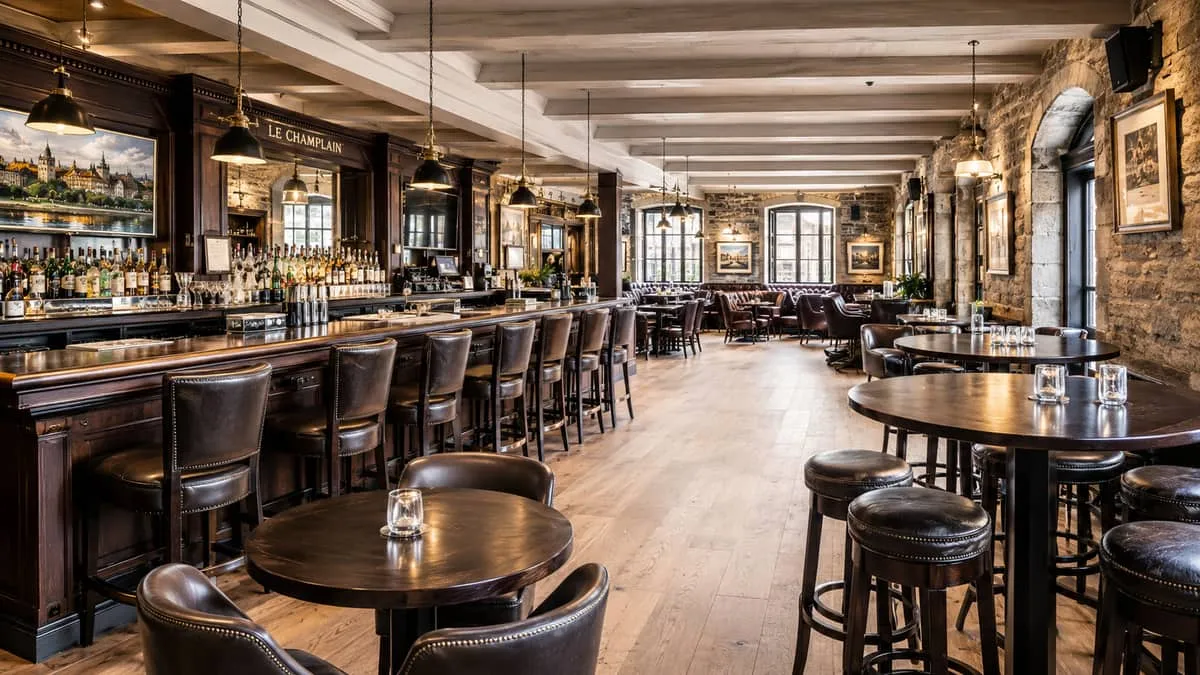
Quebec City operates on a split personality that no other Canadian bar market shares. From June through August, Grande Allée terrasses fill to capacity with festival crowds and international tourists who have come specifically to eat and drink in a UNESCO World Heritage setting. From November through March, those same venues shrink inward, serving the provincial government workers, Université Laval students, and local regulars who form the real year-round base. And then, for one week in February, the entire city flips back to summer-volume intensity in conditions that would shut down most outdoor hospitality programs entirely.
That seasonal structure is the defining fact of bar lounge furniture Quebec City operators need to plan around. A Grande Allée brasserie that seats 80 indoors and runs a 200-cover terrasse in July is operating two completely different businesses with different furniture requirements. Getting both right, within a budget and a renovation window that fits Quebec City's narrow shoulder seasons, is the actual challenge.
Grande Allée Terrasse Furniture: Serving 500 Covers on a Saturday in July
The Grande Allée corridor in summer is one of the most productive outdoor hospitality strips in Canada by revenue per linear metre. Brasseries and restaurants run terrasses from roughly 11am until midnight during peak festival weeks, turning tables continuously with a guest mix that skews heavily toward international tourists with high spend expectations but zero tolerance for discomfort.
That volume creates a specific furniture brief. Terrasse pieces need to handle continuous seating throughout a 13-hour service day, outdoor UV and humidity exposure across a four-month season, and the Grande Allée wind exposure that anyone who has set up a terrasse there knows makes lighter furniture a liability. A folding aluminum chair at a price point that looks attractive on a purchase order will spend every windy evening in July getting knocked over and dented. It reads immediately to guests as budget, which is a problem when the hotel bars visible from your terrasse include the Fairmont Le Château Frontenac.
Contract-grade terrasse furniture for a Grande Allée operation should be specced around commercial aluminum or powder-coated steel frames with genuine weight, not residential-grade extruded aluminum that bends under load. Look for frame joinery that is welded rather than screwed together, since screw-based joints on terrasse furniture fail within one to two seasons of daily stacking and unstacking. For seating surfaces, sling fabric or textilene mesh outperforms solid cushions in this application because they dry quickly after rain and don't retain heat during peak afternoon sun the way foam-core cushions do.
Table bases for Grande Allée terrasses need leveling feet as a baseline specification. The sidewalk terrasse zones along that strip have uneven pavers, and a table that rocks under a full round of drinks is a spill waiting to happen during a rush. Cast-iron or heavy steel bases in the 25 to 35 kg range anchor reliably against wind. Lighter bases require sandbag ballast or umbrella stands, which creates tripping hazards in crowded service lanes and looks makeshift in a setting where guests are paying heritage-city prices.
Stack capacity matters on this scale. A 200-cover terrasse that closes for the season in September and reopens in May needs furniture that stacks efficiently for winter storage. Chairs that nest or stack to eight or ten high take up a fraction of the storage footprint of chairs that stack to four. Over five seasons, that difference in storage density is meaningful for venues working with the basement footprint typical of Old Quebec buildings.
The Rue Saint-Jean Indoor Scene: Design Character Over Volume
Rue Saint-Jean and the surrounding Saint-Jean-Baptiste neighbourhood operates at a fundamentally different register. These are intimate bistros, cocktail bars, and wine-focused rooms where the guest is local, discerning, and has a very clear sense of what the neighbourhood should feel and look like. A bar on Rue Saint-Jean that installs obviously generic seating gets noticed by exactly the clientele it most needs to impress.
This is the part of Quebec City's bar market where furniture choice is closer to an editorial decision than a procurement decision. The stone walls, low ceilings, and warm lighting that define these spaces create a visual context that either coheres or doesn't, and contract furniture from a hospitality catalogue designed for mid-market hotel lobbies often doesn't. What works here is seating with genuine material quality, a clear point of view in its design, and construction that can handle the wear patterns of a small high-frequency bar without looking degraded after a year.
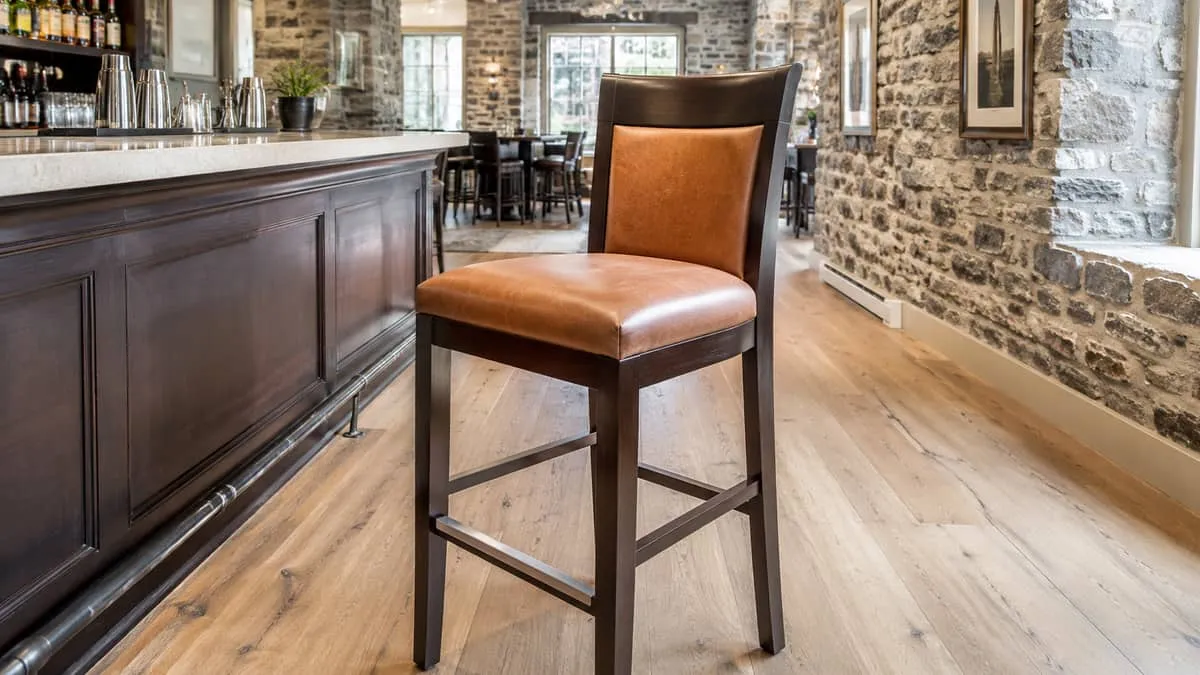
For bar stools in this context, solid wood frames with upholstered seats in performance leather or high-grade vinyl read correctly against the heritage interior character without requiring the maintenance overhead of genuine full-grain leather. The construction spec matters more than it might seem: commercial bar stools rated for contract use are engineered with corner-blocked frames, glued and fastened joints, and seat attachment hardware rated for repeated loading. A residential or semi-commercial stool can look nearly identical at the point of purchase and fail structurally within 18 months of bar-height daily use.
Lounge seating for cocktail-bar applications on Rue Saint-Jean should be specified with high-density commercial foam, minimum 1.9 lb density, in the seat cushion. Lower-density foam compresses visibly within six months of regular use, which signals neglect to guests even when the upholstery fabric is still clean. Double-stitched seams on upholstery are a baseline requirement for any piece seeing bar service, where spill cleaning with commercial sanitizers happens multiple times per shift.
The practical issue with the Saint-Jean-Baptiste bar market is that these are small venues, often under 60 seats, where every piece needs to earn its square footage. Furniture that is slightly oversized for the floor plan, or that can't flex between table service and standing-room for events, limits the operator's ability to manage capacity on a busy Friday. Pieces with a smaller footprint at the base, or chairs that move and stack without scratching reclaimed hardwood floors, perform better in this specific context than bulkier pieces that might look appropriate in a larger room.
Winter Carnival Week: The Furniture Stress Test No Other Canadian City Faces
Carnaval de Québec runs for roughly ten days in late January and early February. During that window, Quebec City's bar and restaurant scene operates at something close to August intensity, with one difference: it is doing so at temperatures that regularly drop to minus 20 Celsius or colder, with guests moving in and out of heated spaces continuously while wearing full winter gear.
That transition pattern, from outdoor activities in extreme cold directly into heated bar interiors, creates conditions that commercial furniture experiences nowhere else in Canada at anything like this volume. Upholstered seating absorbs moisture from snow and wet outerwear on every guest who sits down. Hard floors at entrances become slippery and get tracked with road salt that is abrasive to chair legs and table bases. The temperature differential between outdoor terrasse areas and heated interiors, where operators run heated structures or enclosed tent structures during Carnaval, can stress materials that are not rated for that kind of thermal cycling.
For any Quebec City operator who runs outdoor or semi-outdoor programming during Carnaval, terrasse furniture that saw summer use faces its hardest week of the year in February. Frames that have developed micro-cracks in welds over the summer season will sometimes fail structurally during the freeze-thaw stress of Carnaval week, which is a bad time to discover a structural issue in a chair that a guest is sitting in.
This is a practical argument for specifying furniture at a higher construction standard than the volume alone might justify. A Grande Allée brasserie that runs heated terrasse tents during Carnaval needs outdoor furniture rated for winter thermal stress, not just summer UV exposure. That means frame materials and finishes specified for temperature range, hardware that does not corrode under road salt exposure, and joint construction that holds through repeated expansion and contraction cycles.
Inside, the Carnaval week intensity argument is for seating that cleans fast and completely. Upholstered surfaces that absorb moisture and hold it create hygiene problems in a high-volume rush environment. Performance vinyl or solution-dyed synthetic fabrics that can be wiped between covers with commercial sanitizer and dry within minutes are the correct spec for Carnaval service conditions. Genuine leather and natural fabrics that require careful drying time between cleans are a liability during a 14-hour service day.
Heritage Interiors and the Aesthetic Brief: Auberge Saint-Antoine as a Reference Point
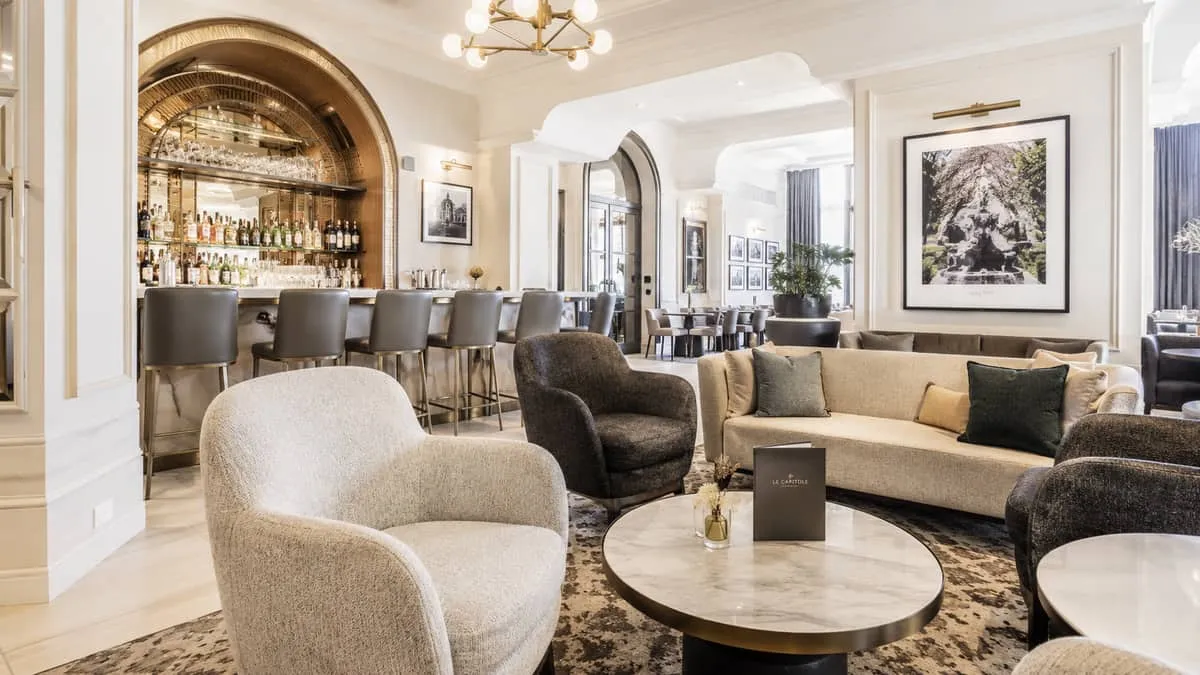
Quebec City's boutique hotel bar market, concentrated in Basse-Ville around the Place Royale area and in Haute-Ville adjacent to the Château Frontenac, operates at a price point and aesthetic expectation that shapes what the broader market reaches for. Auberge Saint-Antoine in Basse-Ville, consistently one of the best-regarded boutique hotels in the country, sets a visual standard for how heritage architecture and contemporary hospitality can coexist without either apologizing for the other.
The furniture brief in spaces like this, or in the independent bars and lounges that serve the guests of Hotel du Vieux-Québec and similar properties, is not about cost minimization. It is about material authenticity, appropriate scale, and construction quality that reads credibly to guests who are paying premium rates specifically because they want an experience that does not feel like any other hotel. That guest has seen a lot of lobby bars. They notice immediately when a chair does not feel right, when the padding is too thin, when the finish is the wrong wood tone for the stone walls around it.
For suppliers serving this segment of bar lounge furniture Quebec City, the relevant specification is contract-grade seating with a design that references European hospitality rather than North American chain hotel. Dark wood frames in walnut or black-stained oak, brass hardware, cognac or burgundy upholstery in performance leather-look vinyl. These choices read as intentional in a heritage stone interior in a way that lighter finishes or chrome hardware do not.
The Fairmont Le Château Frontenac is the visual anchor of the entire city's hospitality identity. Every hotel bar and cocktail lounge in Quebec City operates in its shadow, which is not a burden so much as a useful calibration. The question every operator should ask when making furniture decisions is whether the piece would look appropriate in a bar that guests expect to match the standard set by that building. It is a high bar, but it is the bar the market has set.
Renovation Timing and the Quebec City Calendar
Quebec City's renovation window is unusually constrained. The outdoor season runs from May through September and operators cannot afford to close during peak revenue months. Winter Carnival in late January and early February generates significant revenue. The actual workable renovation period is a narrow band in October and November, after terrasse season closes and before the Carnaval buildup begins in late January, and another shorter window in late March and April between Carnaval and spring tourism.
That constraint means lead times for furniture orders need to be built into the project plan first, not treated as a downstream detail. Standard in-stock commercial seating from a Canadian distributor typically ships in two to four weeks. Custom upholstery runs eight to fourteen weeks depending on the manufacturer and current production queue. If a brasserie owner decides in October to refit their indoor dining room for November reopening and orders custom banquettes, they are running a tight schedule at best.
The practical approach is to separate the order by lead time: stock pieces that can arrive within the renovation window, and initiate any custom or long-lead pieces well before the renovation start date. For a summer terrasse refresh, that means ordering new outdoor furniture in February or March, before the spring production rush at suppliers who serve the eastern Canadian market.
Choosing a Supplier for a Quebec City Operation
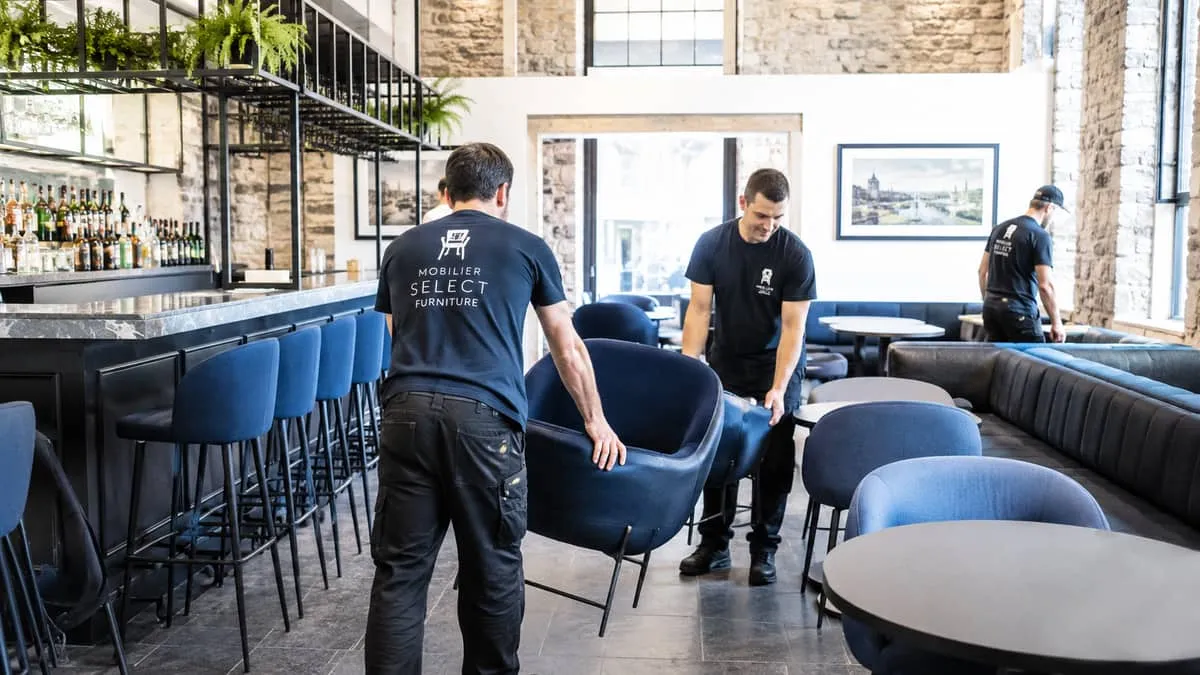
The logistics of furniture delivery in Vieux-Québec are genuinely different from a suburban commercial district. The narrow streets of the old city, the limited loading zones, and the building access constraints in heritage structures built in the 17th and 18th centuries require suppliers and freight partners who understand what they are getting into. A large terrasse furniture order that arrives on a standard freight truck expecting a loading dock will have a bad day in Basse-Ville.
Suppliers who have served the Quebec City hospitality market before understand this. Ask specifically about their delivery experience in the old city and whether they work with installation partners who know the area. If you are handling your own delivery coordination, communicate building access constraints clearly at the order stage, not after the truck shows up.
Beyond logistics, the right supplier for bar lounge furniture Quebec City is the one who can provide contract-grade specifications in writing, warranty coverage that is meaningful in commercial use rather than residential terms, and references from Quebec hospitality operators who have put the product through a full season. What happened when something arrived damaged or defective is more informative than any promise made during a sales conversation.
Quebec City's bar and lounge market runs on reputation. The city is small enough that operators know each other, guests return season after season, and a poorly furnished room gets noticed. The furniture you put in your space is not a background detail. It is part of what makes a guest decide whether to come back, or whether to recommend your place to the next traveler who asks where to drink in Old Quebec.
Tell us about your Quebec City bar and lounge furniture needs and we will turn your quantities, finishes, and timeline into a firm quote. Request a quote whenever you are ready to compare.