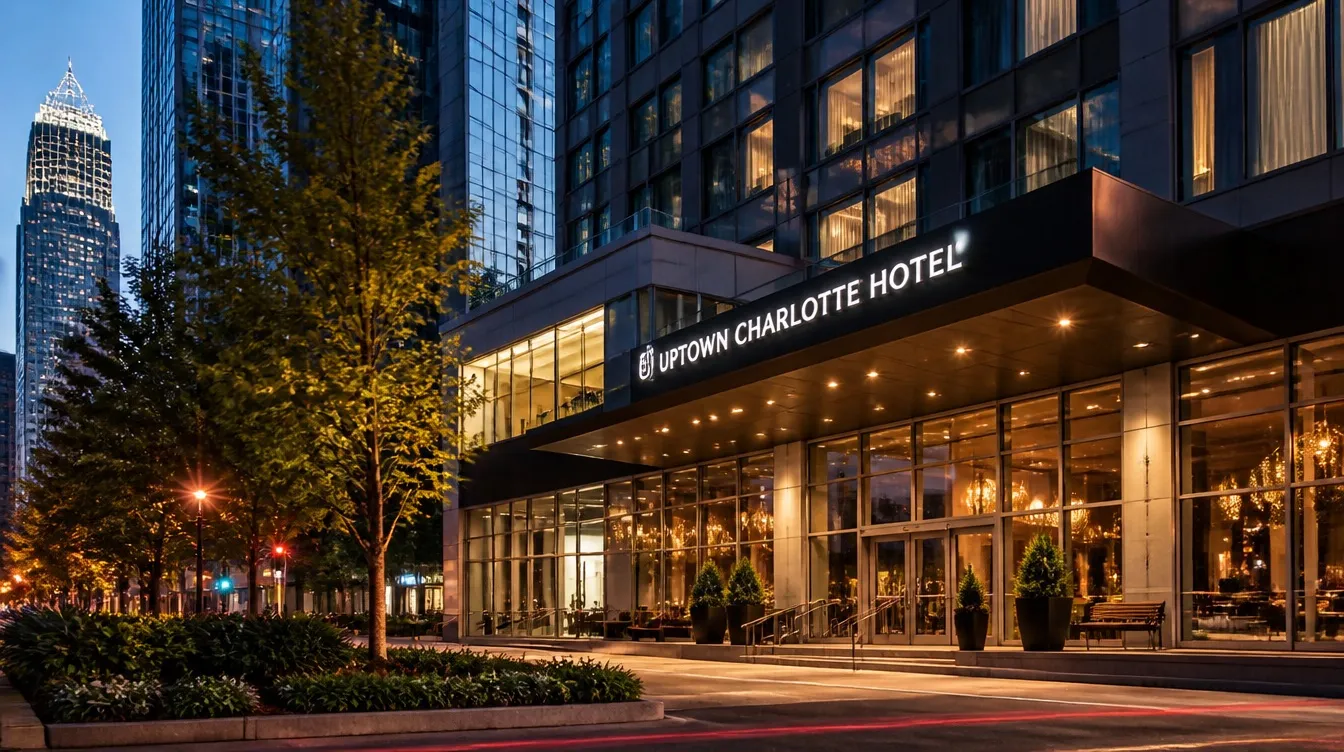
Charlotte's commercial real estate market is in sustained expansion mode. The Uptown banking district anchored by Bank of America headquarters, Wells Fargo regional operations, Duke Energy, Truist Financial, and Honeywell is one of the largest financial sector concentrations in the United States, generating commercial office, hospitality, and F&B demand that compounds year over year as the city grows. South End is adding mixed-use inventory at a pace that has made it one of the most active urban development corridors in the Southeast. University City, NoDa, and Ballantyne are each developing their own commercial identities around technology, arts, and corporate campus functions.
For commercial furniture suppliers, Charlotte represents a sustained demand market rather than a cyclical opportunity. The city is adding hotels, restaurants, corporate offices, co-working spaces, and mixed-use hospitality amenities continuously, and each addition requires a commercial furniture program that meets the design standards the market has set. Those standards have risen significantly over the past decade Charlotte is no longer specifying to a secondary market standard. The financial sector presence, the pace of development, and the growing sophistication of the local design and architecture community have pushed Charlotte's commercial furniture expectations to national competitive levels.
The Charlotte Commercial Market by Segment
Charlotte's commercial furniture demand breaks across several distinct segments, each with its own specification priorities and procurement patterns.
Hospitality. Hotels are Charlotte's most active commercial furniture procurement segment. New builds across Uptown, South End, and the suburban submarkets generate large-format FF&E programs. The renovation cycle for existing inventory is accelerating as new properties reset the competitive standard. The Charlotte convention market drives significant demand for banquet and event furniture programs at properties serving the convention corridor. The financial sector's corporate travel volume sustains year-round occupancy that keeps renovation cycles on schedule rather than deferred.
Restaurant and F&B. Charlotte's restaurant scene has grown from regional to nationally recognized, and the commercial furniture requirements have scaled with it. South End brewery taprooms, Uptown power dining, NoDa arts district independent restaurants, and the hotel F&B programs that anchor the hospitality corridor all require commercial-grade seating, tables, bar programs, and outdoor furniture that holds up under Charlotte's volume and climate.
Corporate and co-working. The banking sector's office presence and the professional services, technology, and corporate functions that orbit it creates steady demand for commercial office furniture. Co-working spaces serving the startup and creative class community in South End and NoDa have a distinct specification direction from the Uptown office market, but both require commercial-grade construction rather than residential alternatives.
Mixed-use amenity spaces. Charlotte's mixed-use developments residential towers with shared amenity floors, corporate campuses with hospitality-forward common areas, retail and restaurant clusters at the base of office buildings require commercial furniture programs that span multiple categories simultaneously.
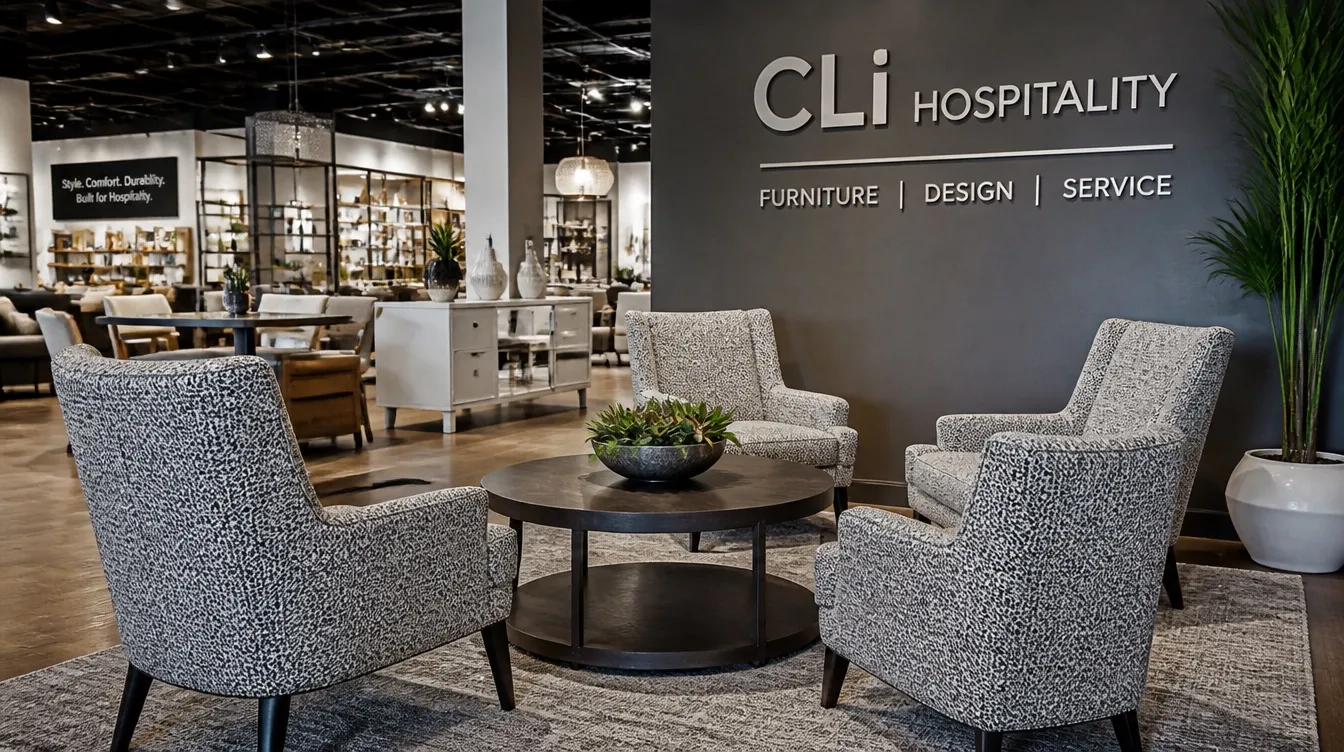
What Charlotte Operators Need From a Commercial Furniture Supplier
The commercial furniture supplier relationship in Charlotte needs to go beyond catalog access and product availability. The market's pace and design sophistication create supplier requirements that are about capability and partnership, not just inventory.
Design fluency. A supplier who can work with the New South contemporary aesthetic that dominates Charlotte's hospitality and commercial market who understands the warm wood and mixed metal vocabulary, the clean-lined confidence the market expects, and the difference between design-forward and generic adds value at the specification stage that changes the quality of the finished installation. A supplier who treats every specification as a product selection exercise without design context is a vendor, not a partner.
Lead time reliability. Charlotte's development pace creates procurement timelines that are often aggressive relative to what furniture manufacturing actually requires. A supplier who provides honest lead time guidance who tells clients what the realistic production and delivery schedule is rather than what they want to hear prevents the opening delays and installation crises that result from misaligned expectations.
Project management capacity. Large commercial furniture programs a 200-room hotel FF&E package, a full restaurant build-out, a corporate campus amenity furniture program require active management of the gap between order placement and delivery. Production status tracking, freight coordination, installation sequencing, and punch list management are real work that a capable supplier actively does rather than leaving to the client.
Local market knowledge. A supplier who understands Charlotte's specific submarkets who knows what a South End boutique hotel lobby should look like versus an Uptown convention hotel lobby, who understands the logistical constraints of Uptown delivery, who can reference comparable projects in the market brings contextual judgment that a generic national supplier without local experience cannot.
Commercial Furniture Categories for Charlotte
Commercial furniture for Charlotte's hospitality and F&B market spans several product categories, each with distinct specification requirements.
Hotel casegoods guestroom dresser/credenza, nightstands, desk, luggage bench are the largest single furniture spend in most hotel FF&E programs and the category where specification quality most directly affects the competitive positioning of the finished room. Charlotte's current market direction is warm walnut and oak veneer with clean profiles and brushed brass or matte black hardware.
Seating programs lobby lounge, restaurant dining, bar seating, banquet chairs are the category with the widest range of specification options and the most direct relationship to guest experience. Commercial-grade construction that holds up under real use is the baseline; the design character within that baseline determines whether the seating program contributes to or detracts from the property's competitive positioning.
Outdoor and patio furniture for Charlotte's restaurant patios, hotel terraces, and rooftop bars requires weather-resistant construction capable of handling the Southeast climate UV exposure, humidity, temperature variation without the maintenance demands that less appropriate materials create.
Banquet and event furniture banquet chairs, folding tables, cocktail tables, specialty event pieces are the operational equipment that hotel banquet and event operations run on. Specification quality determines both the visual standard of the events the property can host and the operational efficiency of the room setup and reset cycles that banquet teams execute daily.
Procurement Strategy for Charlotte Commercial Projects
Charlotte's commercial furniture market rewards procurement discipline. The projects that execute well that deliver on budget, on timeline, and at the design standard the competitive market requires are the ones where procurement decisions were made early and managed actively through production and delivery.
The most common procurement mistakes in Charlotte commercial furniture projects are:
Starting too late. Custom and semi-custom commercial furniture production typically runs 14 to 20 weeks from order to delivery. Projects that start the procurement process 12 weeks before opening are starting in a position where they cannot receive the furniture program they need on time, and where the compromises required to accelerate delivery are all negative.
Underspecifying for competitive context. A Charlotte restaurant or hotel that specifies to the minimum acceptable commercial standard rather than to the standard the competitive set is running at is creating a product that will underperform against its competition from day one. The specification brief should start from an honest assessment of what the best properties in the competitive set are doing and work backward to a specification that matches or exceeds that standard.
Fragmenting procurement across too many suppliers. Commercial furniture programs that are split across many different suppliers chasing the lowest unit price in each category typically produce installations with finish inconsistencies, delivery coordination problems, and accountability gaps when things go wrong. A single supplier or a small number of coordinated suppliers produces better results at lower total cost.
Commercial Furniture Depot supplies commercial furniture programs across Charlotte's hospitality and F&B market, from hotel FF&E programs and restaurant seating packages to banquet furniture and outdoor patio programs. We understand the Charlotte market's design standards, procurement timeline requirements, and logistical constraints.
If you are sourcing commercial furniture for your Charlotte property, the fastest way to real numbers is to tell us what you need. Request a quote with your quantities and timeline.