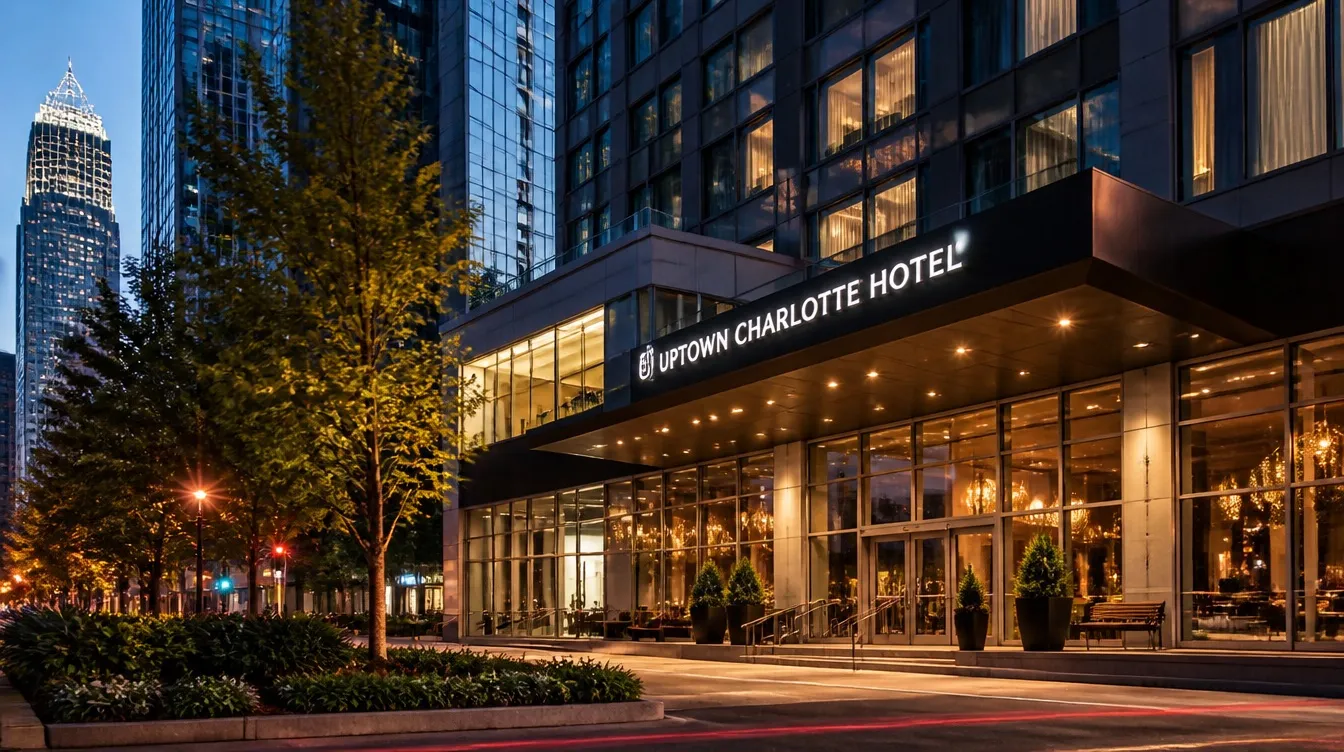
Boutique hotels in Charlotte are entering a market that is simultaneously one of the fastest-growing in the country and one of the most design-sophisticated in the Southeast. The travelers filling these properties are not just leisure guests looking for something interesting they are also the financial sector business travelers who circulate through the city's banking corridor and have strong opinions about what a well-executed room looks like. A South End boutique hotel catering to the creative class on weekends needs to hold its own on quality for the executive staying Monday through Thursday. Getting that balance right requires furniture that meets both audiences without compromising for either.
Charlotte's boutique hotel aesthetic has coalesced around what locals are starting to call New South contemporary: clean lines without coldness, warm wood tones American oak and walnut mixed with brushed brass and matte black hardware, soft neutral upholstery with occasional deep navy or charcoal as a punctuation color. It is a design language that is distinctly Southern in its warmth but nationally competitive in its execution, and it is the visual standard against which Charlotte's boutique openings are measured.
South End: The Emerging Boutique Corridor
South End is Charlotte's most active boutique hotel development zone. The neighborhood's rapid transformation from light industrial to mixed-use residential and retail has created the urban texture that boutique hospitality operators look for walkable streets, independent restaurants and breweries, a design-forward retail environment, and a guest who is choosing the neighborhood as much as the property.
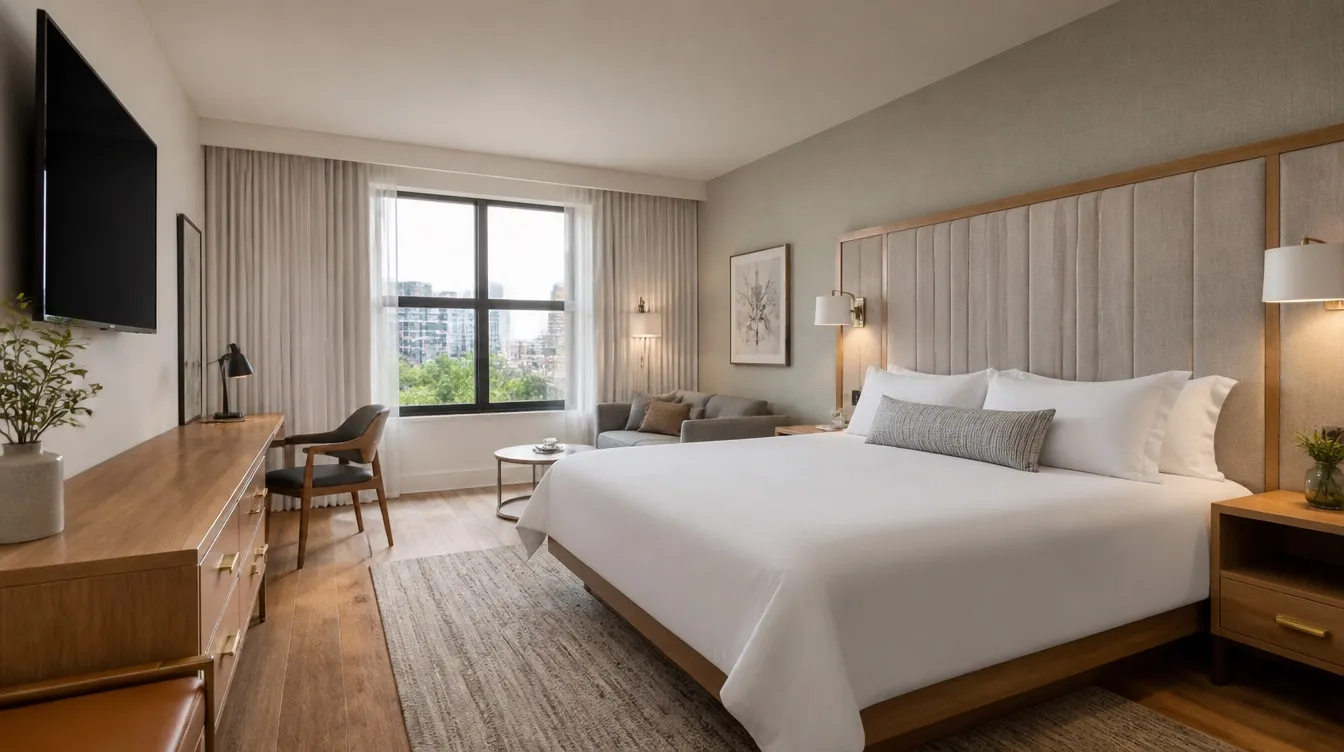
The furniture program for a South End boutique hotel has to earn its place in that environment. Guestrooms in this market trend toward a residential quality pieces that feel considered and individualistic rather than hotel-generic, but that are still built to the commercial durability standard that the occupancy rate demands. Hotel casegoods in warm walnut or oak veneer with clean profiles and minimal hardware are the dominant direction; the goal is a room that looks like it was designed, not furnished.
Bed construction matters significantly in the boutique context. A platform bed or upholstered headboard wall in a boutique guestroom is photographed constantly for the property's own marketing, for every travel publication that covers the opening, and by every guest who posts to social. The silhouette needs to be right: a headboard that is too thin reads cheap in photos, a frame that is too bulky reads dated. The construction needs to be right too: commercial-grade platform frames and headboard wall systems need to handle the weight cycling and cleaning demands of hotel occupancy without wobbling, creaking, or showing wear in the upholstery.
NoDa: Arts District Boutique Specifications
NoDa's arts district identity creates a different boutique hotel brief than South End. Where South End boutique hotels can be relatively contemporary and design-forward, NoDa properties tend to lean into the neighborhood's creative and arts-focused character warmer, more eclectic, more willing to mix periods and materials. The furniture program reflects this: a chair in NoDa boutique hotel lobby that would read as too rustic for a South End property might be exactly right for the NoDa context.
The practical challenge in NoDa is that the design latitude that makes the neighborhood interesting can lead to procurement choices that don't hold up operationally. An eclectic vintage-sourced lobby chair looks great in the press release and fails within a year under hotel use. The discipline is finding pieces in the boutique or semi-custom commercial furniture market that have the visual character the neighborhood demands but are built to the durability standard that hotel occupancy requires.
Lobby seating for NoDa boutique properties should prioritize frame construction and foam specification even when the design brief calls for something that looks artisanal. A chair with a kiln-dried hardwood frame, eight-way hand-tied spring construction, and high-density foam seat will serve the property for seven to ten years. The same silhouette in a cheaper construction will start showing problems in 18 months.
Ballantyne and University City: Corporate Boutique
Not every Charlotte boutique hotel is in an arts district. Ballantyne's corporate hotel market and University City's proximity to the university and the research corridor have created demand for boutique properties that serve business travelers who want something more distinctive than the chain hotel tier but need the amenities and reliability that corporate travel demands.
The furniture spec for corporate boutique properties in these submarkets runs more conservative than South End or NoDa still design-forward, still using the warm wood and mixed metal vocabulary of New South contemporary, but with a cleaner execution and less design risk. The priority in these rooms is function first: desk and task chair programs that support a full work day, reliable storage, lighting programs that work for both evening hospitality and morning emails.
Upholstery fabric selection is particularly important in corporate boutique guestrooms where the traveler is staying multiple nights per week. Performance fabrics with high rub counts and easy spot-cleaning properties are the baseline; the visual character of the fabric texture, weave, color should be chosen within the performance tier rather than sacrificing durability for aesthetics.
Public Spaces: Where Boutique Identity Earns Its Rate Premium
In a boutique hotel, the lobby, bar, and breakfast spaces do more work than the guestroom. They are the spaces that generate the social media content, the travel press coverage, and the word-of-mouth recommendation that drives occupancy at rate premium over the branded competition. The furniture program in these spaces is doing brand building work, not just seating guests.
Charlotte's boutique hotel public spaces typically combine a mix of seating typologies: some lounge seating for guests waiting for an Uber or finishing a working coffee, some higher stools or perch seating at bar or counter positions, possibly a communal table that functions as both breakfast and informal work space. The mix needs to be designed as a coherent program consistent finish vocabulary, compatible proportions, materials that read as selected rather than assembled.
Bar stools and lounge chairs for Charlotte boutique hotel public spaces should be sourced from the commercial contract tier rather than from the retail market, even when the boutique brief calls for pieces that look residential. A residential lounge chair that looks exactly right in the press photography will start failing within months under hotel lobby use. The commercial contract market has expanded significantly and now offers pieces with the design character boutique properties need, built to the durability standard the use demands.
FF&E Procurement for Charlotte Boutique Projects
Boutique hotel FF&E procurement in Charlotte has some specific logistical considerations. South End properties are often in buildings with challenging loading dock access, and delivery scheduling has to account for the neighborhood's street-level activity. NoDa projects sometimes have tighter back-of-house storage for staging. Ballantyne projects are more logistically accessible but often have tighter timelines driven by the corporate clients the property is trying to serve before opening.
A supplier with real project management capacity not just a catalog and a shipping estimate makes a measurable difference on boutique hotel timelines. The ability to stage delivery by floor or by room type, to hold product in a warehouse while construction catches up, and to coordinate with the general contractor's schedule rather than just delivering to the curb is the difference between a smooth opening and a chaotic one.
Commercial Furniture Depot works with boutique hotel projects across Charlotte's emerging neighborhoods, from South End and NoDa to Ballantyne and University City. We understand the design vocabulary the market is working with and can support projects from initial specification through delivery and installation coordination.
Planning boutique hotel furniture for your Charlotte project? Share your specs and quantities and we will build pricing around your actual program. Request a quote to get numbers for your space.
Related reading
- What is contract furniture
- Hotel furniture supplier Charlotte NC
- Hotel lobby furniture Charlotte NC
- Hotel FF&E procurement Charlotte NC
- Hotel casegoods
- Browse full catalog
- Commercial furniture in North Carolina
Our take
The dual audience this post describes carries a durability implication it never quite states. A South End boutique serving creative class weekenders and banking corridor executives Monday through Thursday is running seven day utilization, with no shoulder nights for furniture to rest or for housekeeping to do more than surface cleaning.
The bottom line: Strong neighborhood by neighborhood guidance for Charlotte. Buyers should add one refinement: specify desk chairs for true daily office duty, because the weekday corporate traffic the post describes uses them exactly that way.