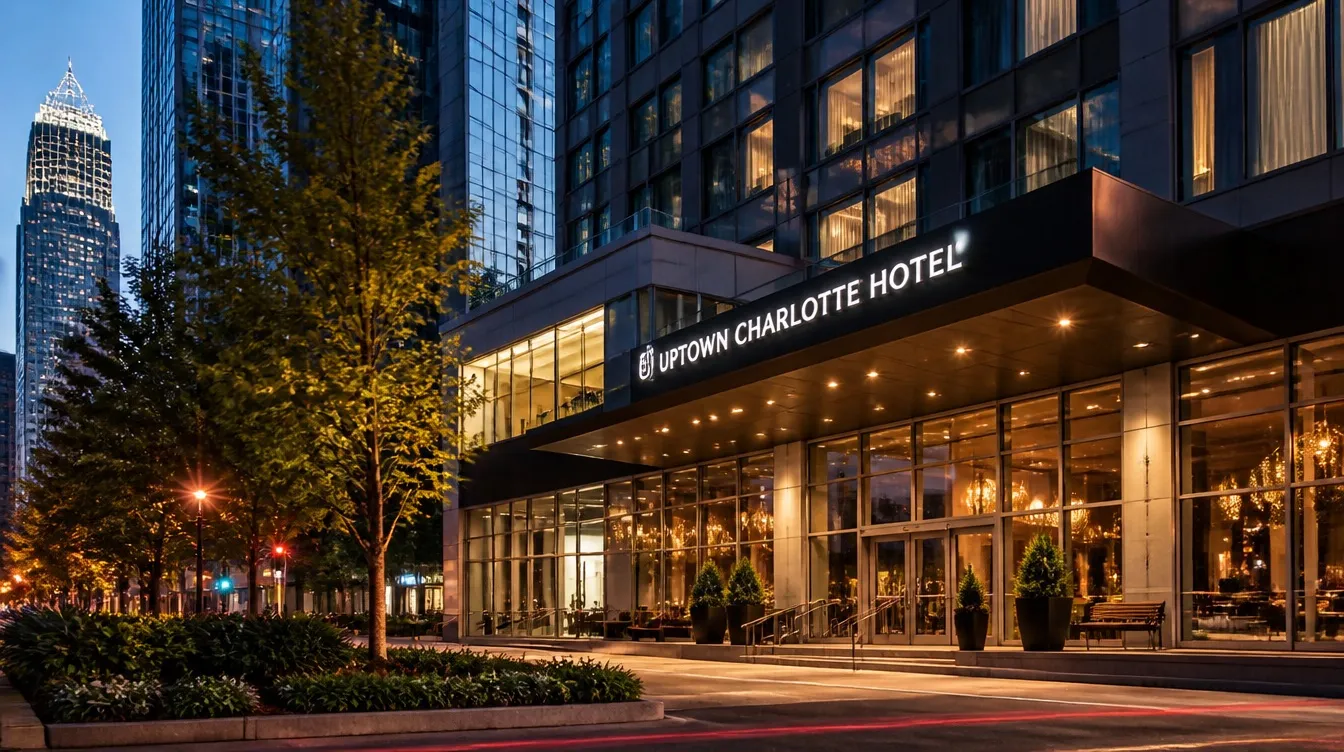
Charlotte does not feel like a secondary market anymore. The Uptown banking district home to Bank of America headquarters, Wells Fargo regional operations, Duke Energy, Truist Financial, and Honeywell generates a volume of corporate travel that rivals cities twice Charlotte's size. These are not occasional visitors. They are executives and deal teams with elevated quality expectations who stay in Charlotte hotels regularly and notice when a property hasn't been maintained. South End is adding boutique hotel inventory as quickly as the neighborhood can absorb it. NoDa, Ballantyne, and University City are filling in around the edges. The result is one of the fastest-moving hotel procurement markets in the United States, with a continuous cycle of new builds, renovations, and full rebranding projects requiring commercial furniture at scale.
If you are sourcing hotel furniture in Charlotte, you are operating in a market where quality signals matter. The financial sector traveler who spends Monday through Thursday in your property has a frame of reference for what good looks like and your guestroom furniture, lobby seating, and F&B environment all get evaluated against that standard whether you intend it or not.
What the Charlotte Market Demands From a Furniture Supplier
The Charlotte hospitality market has a specific aesthetic that has emerged over the past decade. Call it New South contemporary clean-lined and confident, warm American oak and walnut tones, brushed brass and matte black hardware, soft neutrals with the occasional deep navy or charcoal accent wall. It is Southern in its warmth but nationally competitive in its design execution. Properties that miss this aesthetic that go too rustic, too generic, or too cold stand out against the competition in the wrong way.
A hotel furniture supplier serving Charlotte needs to understand this context. It is not enough to offer a catalog of contract-grade casegoods and seating options. The supplier relationship needs to include design fluency the ability to help procurement teams and interior designers translate a brand standard or a local aesthetic vision into actual specifications that can be produced, delivered, and installed on timeline.
Charlotte's renovation cycle is particularly active right now. The rapid pace of new hotel development has put older Uptown properties under competitive pressure to refresh their rooms and public spaces. A guestroom that looked modern five years ago can feel dated compared to what is opening across the street. For these renovation projects, a supplier with the project management capacity to handle phased delivery keeping rooms in service while staging furniture floor by floor is far more valuable than one that can only do drop shipments to a staging area.
Guestroom Furniture: Spec for the Corporate Traveler
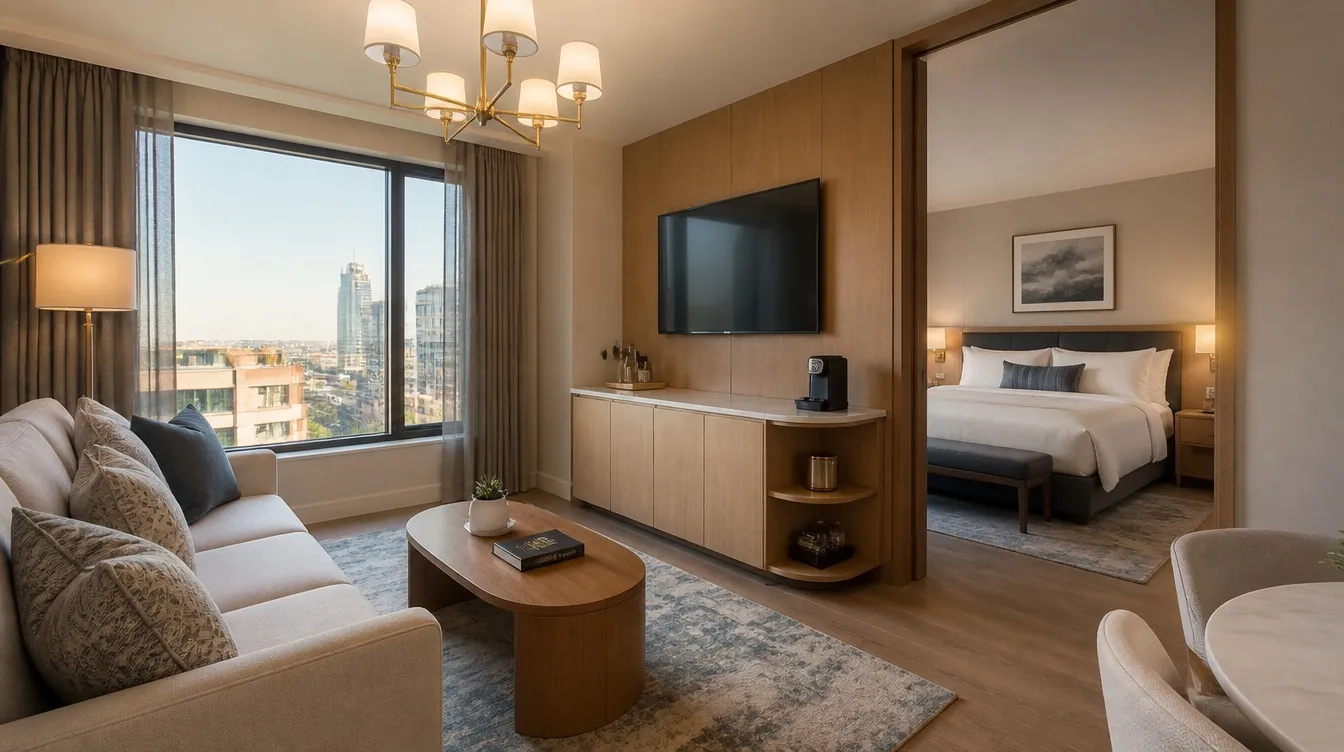
The Charlotte corporate traveler is not primarily interested in novelty. They want a room that works a desk that is actually usable for a full workday, a chair that supports sustained laptop work, a bed that reads well-made and comfortable, storage that makes a week-long stay manageable. These functional requirements have to be met before aesthetic choices matter.
Hotel casegoods in this market need to balance warmth with durability. American oak and walnut veneers on engineered wood cores are the dominant finish direction for Charlotte's upper-midscale and upscale segment, and they hold up well under the abrasion and moisture exposure of regular hotel use when properly finished. The hardware spec typically brushed brass or matte black should be consistent throughout the room, from drawer pulls to the lamp bases to any bathroom accessories, because it is the through-line that signals design intentionality to the guest who is paying attention.
Seating deserves more attention than it typically gets in guestroom procurement. The desk chair is the piece that most corporate travelers spend the most time in, and a chair that rolls poorly on carpet, sits at the wrong height for the desk, or lacks lumbar support will generate negative reviews. Contract seating options that meet ergonomic standards adjustable height, decent lumbar profile, appropriate rolling resistance for your carpet spec are not expensive relative to the total room package, but they disproportionately affect guest satisfaction for business travelers.
Public Spaces and F&B: Where Charlotte's Identity Shows
Charlotte's hotel lobbies and F&B spaces are where the New South contemporary aesthetic gets its clearest expression. The Uptown properties serving the banking corridor need spaces that feel serious without feeling cold places where executives can have conversations that matter, where the material quality signals that the property takes itself seriously. South End boutique hotels are working with a more relaxed version of the same vocabulary: the warm woods and mixed metals remain, but the atmosphere is less formal and the seating mix is more eclectic.
Lobby seating for Charlotte hotels should be specified with longevity in mind. A hotel serving the banking corridor might turn its lobby seating program every three to four years depending on wear, but the initial specification should still be built for durability commercial-grade foam that holds its profile through thousands of uses, frame construction that won't rack or squeak as upholstery ages, fabric grades that clean up after the daily traffic a hotel lobby absorbs.
Restaurant and bar seating for Charlotte's F&B programs has to balance the same aesthetic equation. Warm wood tones on chair frames and bar stools, upholstered seats in fabrics that can handle commercial cleaning chemistry, metal accents in brass or matte black that tie back to the room hardware. The detail that separates properties that look finished from properties that look assembled is whether the furniture program reads as a single coherent set of choices or as a collection of things that were bought separately.
Convention and Event Furniture for Charlotte's Growing Meeting Market
The Charlotte Convention Center anchors 280,000 square feet of meeting and event space in Uptown, and the surrounding hotel inventory has grown to match its draw. Charlotte is actively positioning itself as a top-tier convention destination, and the properties that capture convention group business need banquet and event furniture that performs at the scale those groups require.
Banquet chairs for Charlotte's convention hotel market need stack ratings of eight to ten high, dolly compatibility, and frames built for the handling that comes with constant room setup and teardown cycles. The aesthetic spec for Charlotte convention properties typically runs toward an upholstered padded stacker professional enough for a corporate general session, flexible enough for a gala, durable enough for an event that gets reset three times in two days.
The Charlotte market is growing fast enough that furniture procurement decisions made today will be running under significant volume within 18 to 24 months. Buying to a higher spec now commercial-grade durability, replaceable components, supplier relationships that can support reorders is consistently better economics than buying to a lower spec and replacing early.
Working With a Hotel Furniture Supplier in Charlotte
The right supplier relationship for a Charlotte hotel project is one where the supplier understands the local market context the aesthetic vocabulary, the competitive pressure, the operational demands of properties serving the banking corridor. It is also one with real project management capacity: the ability to coordinate delivery schedules, stage furniture against your construction or renovation timeline, and manage the logistics of getting product into an Uptown hotel without disrupting the street-level operations that the neighborhood depends on.
Commercial Furniture Depot works with Charlotte hospitality projects across guestroom casegoods, public space seating, F&B furniture, and banquet and event programs. We understand the spec requirements of the market and can support projects from initial specification through delivery and installation coordination.
For Charlotte properties comparing hotel furniture options, project-specific pricing tells you more than any published range. Request a quote and we will scope it to your space and volume.
Related reading
- Commercial hotel furniture: a sourcing guide for every space
- Boutique hotel furniture: specifying a distinctive, durable look
- What is contract furniture
- Commercial furniture vs retail
- Hospitality furniture supplier guide
- Hotel lobby furniture Charlotte NC
- Boutique hotel furniture Charlotte NC
- Browse full catalog
- Commercial furniture in North Carolina
Our take
A three to four year turnover cycle is the stated norm for Charlotte lobby seating, alongside a separate note that the market is growing fast enough for today's procurement decisions to run under meaningfully higher volume within eighteen to twenty four months. Those two timelines land close together. Seating specified only to the stated three to four year wear assumption will hit the replacement point right around the same window the post identifies as when Charlotte's traffic volume steps up, which means the furniture will have absorbed more use than the original specification accounted for by the time it needs replacing.
The bottom line: Charlotte lobby seating ordered now should be specified toward the higher end of the durability range the post describes, since the stated growth trajectory means the replacement cycle and the volume increase are likely to land in the same window rather than sequentially.