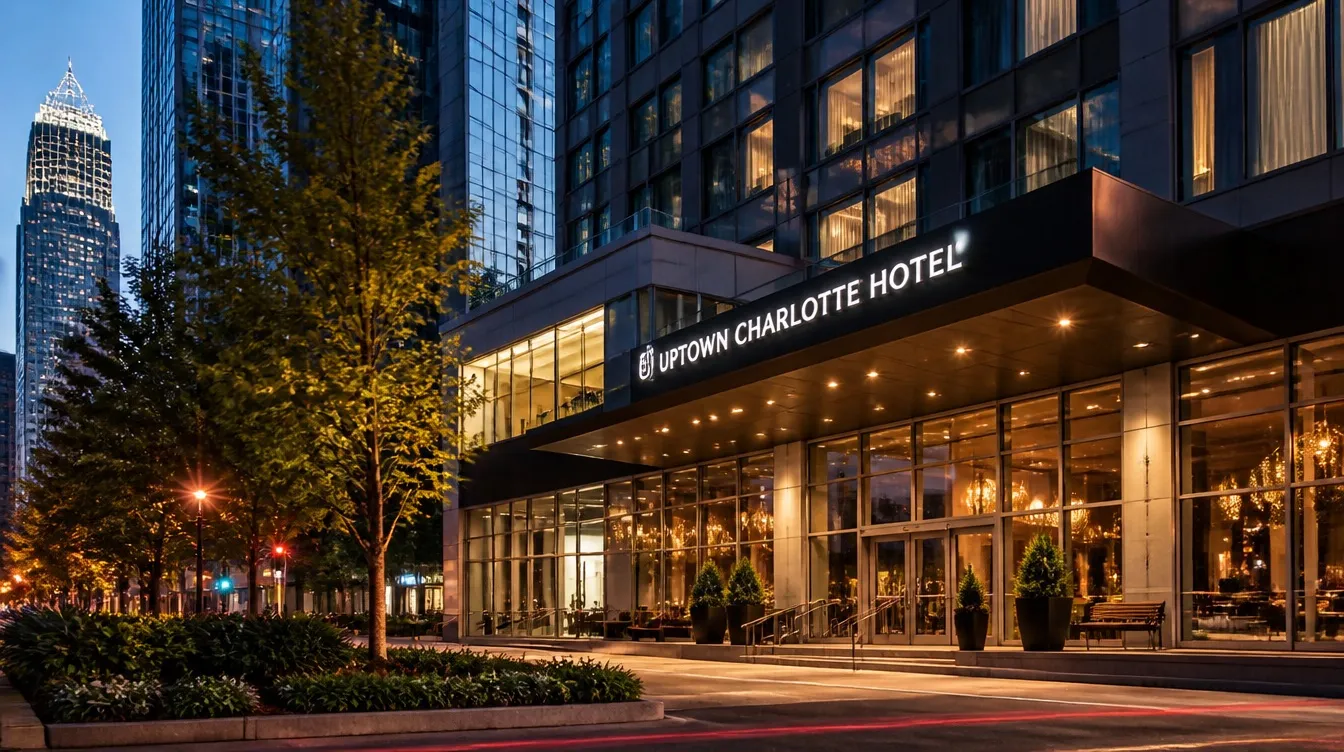
Charlotte's dining scene no longer needs the qualifier "for a Southern city." South End has a brewery and restaurant corridor that draws national food media attention. NoDa sustains a collection of independent restaurants with a consistent creative identity. Uptown supports full-service power dining anchored by the financial sector lunch and dinner trade. Plaza Midwood and Elizabeth have neighborhood restaurant ecosystems with loyal regulars and strong identities. What ties all of these markets together, from the operator's perspective, is the commercial pressure to run high covers, maintain a room that looks intentional, and hold up under the kind of volume that Charlotte's rapid population growth keeps generating.
Restaurant furniture in Charlotte has to serve two masters simultaneously: it needs to perform as commercial equipment under repeated daily use, and it needs to contribute to a designed environment that earns the price point the operator is trying to hold. These requirements are not in conflict when you specify correctly but they pull apart fast when you buy furniture that was designed for one without the other.
South End and the Brewery Corridor
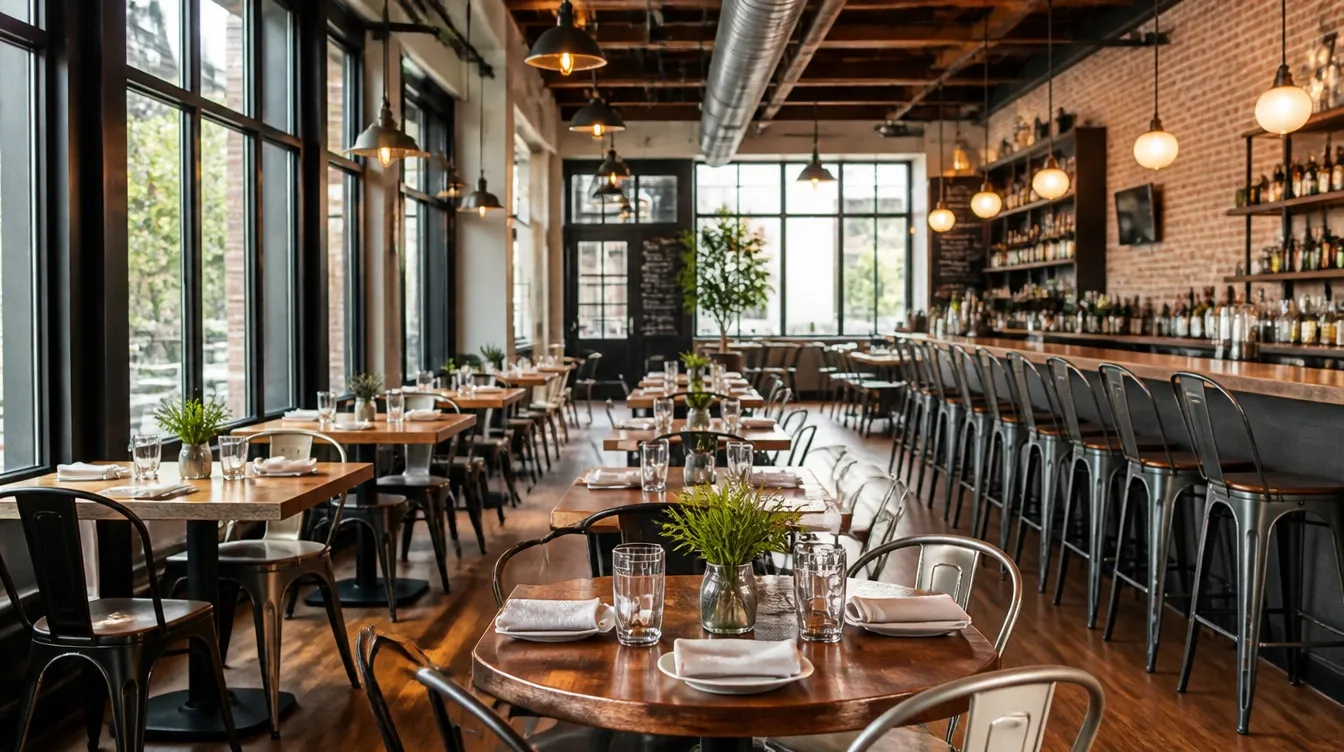
South End has become Charlotte's most active restaurant corridor, built around a mix of brewery taprooms with food programs, chef-driven casual concepts, and fast-casual anchors that survive on volume and turn. The aesthetic in South End runs toward warm industrial exposed brick and steel, reclaimed or raw wood, Edison bulb lighting programs, a mix of communal tables and traditional two-tops. The furniture has to read as considered rather than assembled, even in concepts where the price point suggests otherwise.
Restaurant chairs for South End concepts typically run toward metal frame or metal-and-wood combinations cross-back designs, hairpin-leg side chairs, wire-frame bistro chairs, industrial ladder-back formats. The material choice matters: solid wood back rails on steel frames hold up better than solid wood construction alone in high-humidity environments, which Charlotte's summers produce reliably. Welded steel frames with no loose connections are the durability baseline; chairs with poorly connected back rails are the source of most early failures in this segment.
Communal tables eight-foot or longer planks at counter or standard dining height are standard in South End brewery environments and need to be built to the commercial spec that the volume demands. A communal table that sees 200 covers a day, gets wiped down with commercial sanitizer multiple times daily, and has stools dragged along its base for hours needs a surface finish and edge treatment that will hold up for years. High-pressure laminate over a solid substrate, or properly finished solid wood with regular maintenance, are the durable options in this application.
Uptown: The Financial Sector Dining Standard
The Uptown Charlotte dining market is shaped by its banking sector clientele. Bank of America, Wells Fargo, Duke Energy, Truist Financial, and Honeywell each generate significant lunch and dinner traffic from executives and deal teams with a point of reference for what a well-executed dining room looks like. In this market, the furniture spec is a signal about the restaurant's ambitions and it gets read.
Full-service Uptown restaurants typically run toward a cleaner, more refined version of the New South contemporary aesthetic: warm walnut or dark oak on chair frames, upholstered seats and backs in commercial-grade fabric, brushed brass or matte black hardware on lighting and fixtures. The mix often includes a combination of upholstered dining chairs at table, banquette seating along walls, and bar stool programs at a bar counter or kitchen-facing rail. Getting these three furniture programs to read as a cohesive set consistent finish vocabulary, compatible scale is where design judgment matters.
Upholstered dining chairs for the Uptown segment need fabric grades in the 50,000 to 100,000 double-rub range at minimum for high-use positions. Seats that fail early in an Uptown restaurant do not just create a maintenance problem they signal to the financial sector diner that the operator's attention to detail is slipping. The seat construction underneath the fabric matters too: eight-way hand-tied spring seats hold their cushion profile under regular use in a way that sinuous spring or foam-on-plywood constructions typically don't.
NoDa Arts District and the Independent Restaurant Market
NoDa has a creative identity that its restaurant operators protect consciously. The furniture in these spaces needs to match the neighborhood's ethos eclectic, warm, not trying too hard, not bought off a generic restaurant supply site. This creates a sourcing challenge: operators want furniture that looks individualistic but needs to perform commercially.
The practical answer is to build the commercial durability into the structure and the identity into the finish selection and styling choices. A chair with a solid welded steel frame and a clear seat-to-frame connection can be specified in a powder coat finish matte black, warm charcoal, olive, terracotta that reads as distinctive without sacrificing the structural integrity. Solid wood seats with hand-sanded edges and natural oiling read warm and craft-oriented while being more durable than many upholstered alternatives in a neighborhood restaurant that runs a casual but high-volume service.
Patio and Outdoor Seating
Charlotte's climate warm springs and summers, mild falls makes outdoor seating programs economically important for restaurants across all neighborhoods. South End patios are often packed from April through October. NoDa's streetscape invites the kind of sidewalk café presence that generates pedestrian traffic. Uptown rooftop and terrace programs are part of the competitive stack for hotel F&B and standalone restaurants alike.
Commercial outdoor furniture in Charlotte needs to handle UV exposure, high humidity, and the mechanical wear of daily setup and takedown if the patio program uses portable furniture. Aluminum frame construction with powder coat finish is the dominant spec for Charlotte outdoor seating it doesn't corrode in humid conditions, resists UV degradation better than untreated steel, and is light enough for daily movement. Textilene fabric on sling chairs and resin weave on lounge seating are the weather-resistant upholstery options that hold up in the Southeast climate without requiring the maintenance program that other materials demand.
Outdoor table bases for Charlotte patios should be weighted to handle the wind exposure that comes with Uptown rooftop settings or open patio exposure a table that tips in afternoon wind during a busy lunch service is a liability, not just a nuisance. Cast iron or heavy steel bases on pedestal tables are the reliable spec for exposed positions.
Specifying for Volume and Longevity
Charlotte's restaurant market is growing fast enough that operators who opened two or three years ago are already running the kind of covers that were originally projected for year four or five. Furniture that was specified for moderate volume is often showing wear earlier than expected, and replacement decisions are happening on compressed timelines. The operators who are in the best position are the ones who bought commercial-grade construction upfront not because they anticipated the growth, but because they committed to a specification standard that could handle it.
The economics of restaurant furniture work out strongly in favor of commercial-grade construction over time. A dining chair specified to contract standards and bought at a higher per-unit cost will run five to seven years before it needs replacement. A chair bought at retail cost or from a non-commercial supplier may need replacement in eighteen months under high-volume restaurant use. When you multiply that difference across a dining room of 80 to 120 chairs, the contract-grade purchase is significantly less expensive over any five-year window.
Commercial Furniture Depot supplies restaurant furniture programs across Charlotte's neighborhood restaurant markets, from South End and NoDa to Uptown power dining and the suburban restaurant corridors in Ballantyne and University City. We stock commercial-grade dining chairs, bar stools, tables, and outdoor seating programs that meet the spec requirements of the Charlotte market.
Pricing for restaurant furniture in Charlotte depends on quantities, finishes, and your delivery window, so a project-specific quote beats any list figure. Request a quote to get yours.