
You find the commercial furniture you want. You contact the supplier. And then you find out there's a minimum order quantity and you can't just buy three chairs.
This surprises a lot of buyers who are used to ordering whatever quantity they want from online retailers. Here's why minimums exist, what they look like by product type, and what your options are if your quantity falls below them.
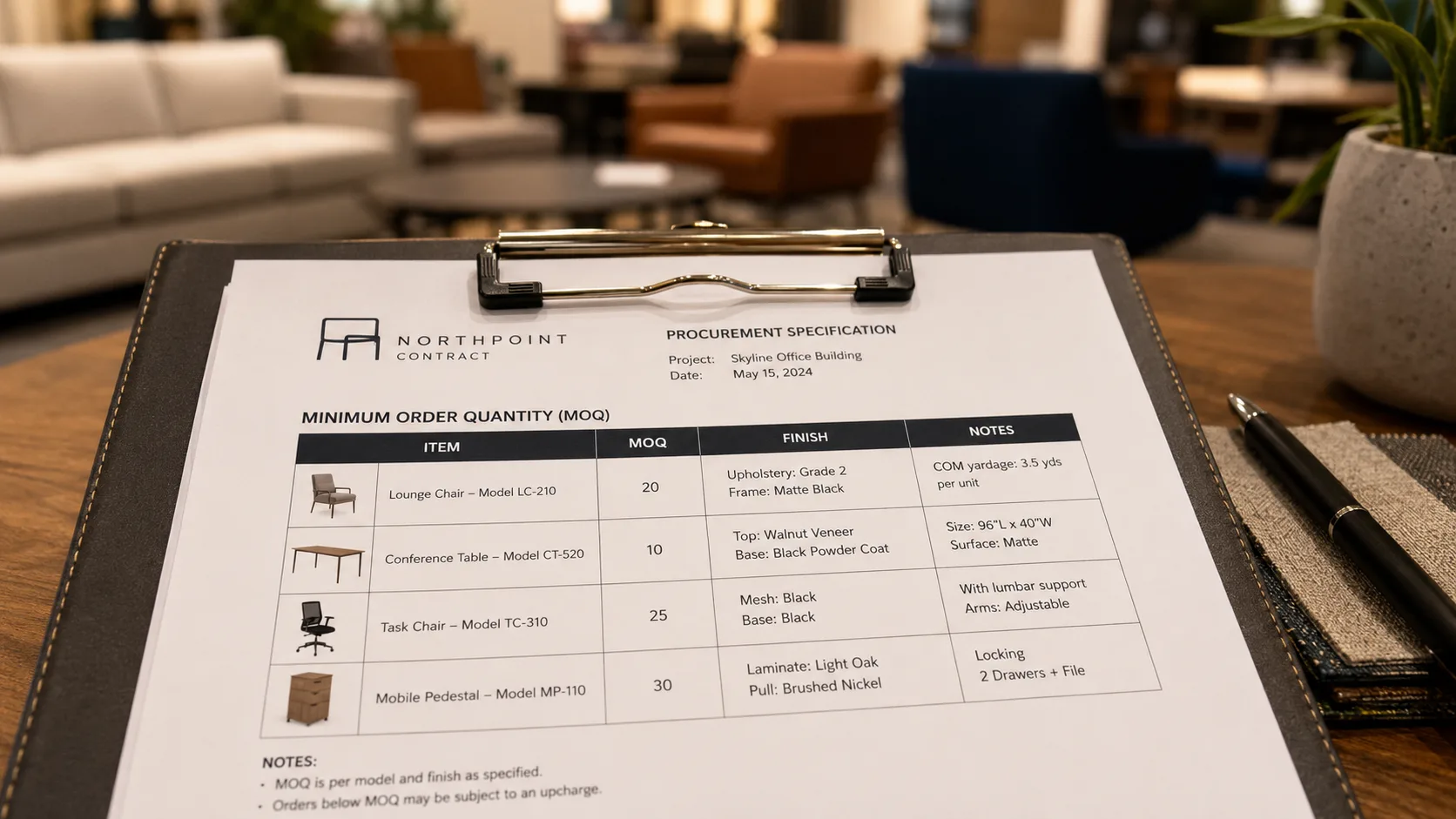
Why minimums exist
Some commercial furniture is stocked; other pieces are manufactured to order. A custom finish, fabric, or dimension may require a production run for the order. Setting up that run has a fixed cost regardless of how many units are produced: tooling configuration, material cutting, fabric preparation, finishing line setup.
The supplier spreads that fixed cost across a minimum number of units to make the per-unit price viable for both sides. Below that number, the setup cost dominates the economics and the pricing stops making sense for a custom order.
A minimum quantity describes the supplier's production or stocking terms. It does not establish the furniture's quality. A stocked commercial product may be available in small quantities, while a custom finish can require a larger run. Compare the product's commercial-use documentation and warranty separately from its order minimum.
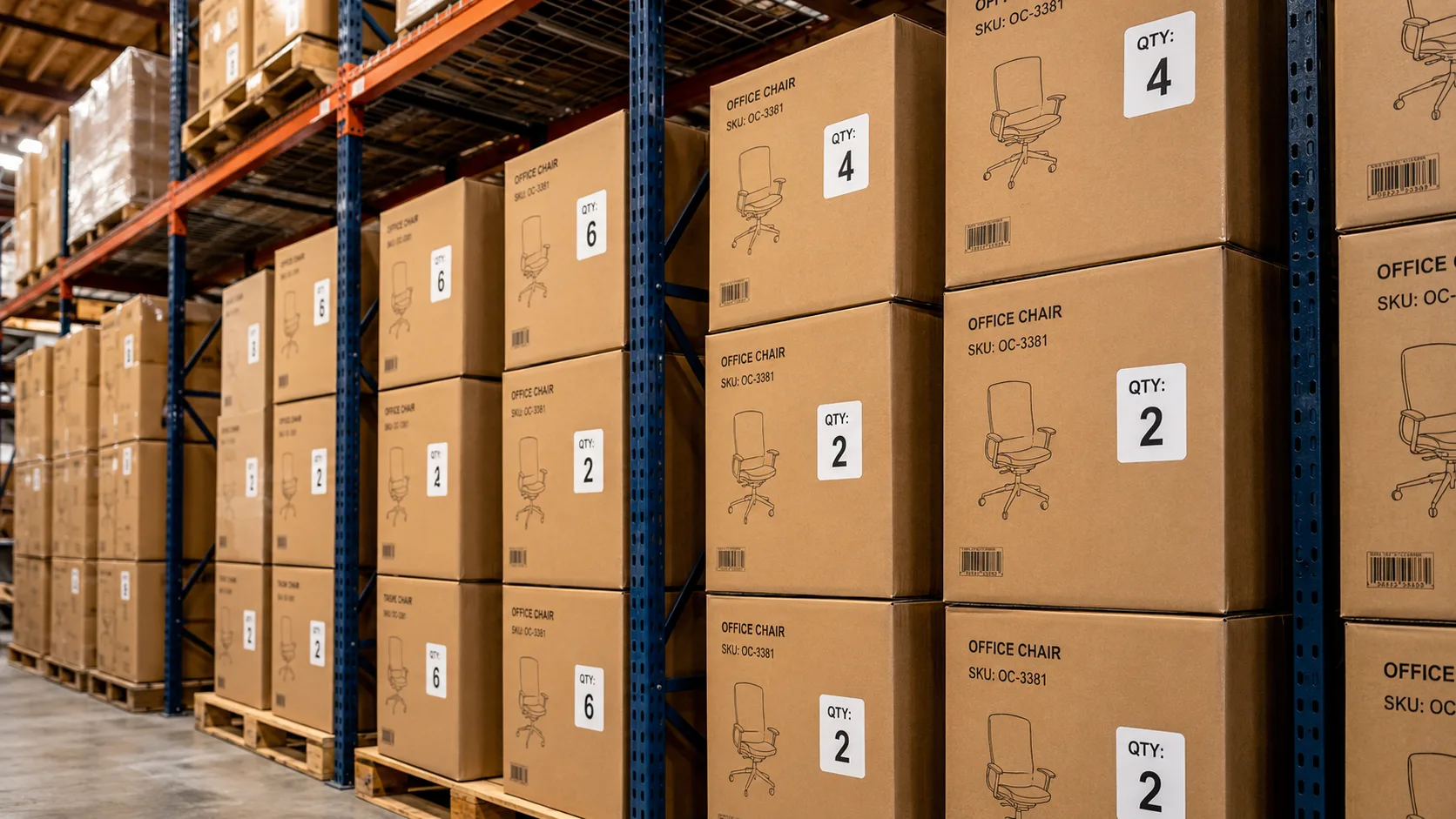
Typical minimums by product type
Use the quantities below as illustrative planning assumptions, then confirm the minimum for the selected model, finish, fabric, and supplier. Stocked and made-to-order configurations can have different terms.
Dining chairs: 10 to 20 units minimum. A 20-to-40-chair dining-room example would meet that assumed minimum; measure your own required count rather than buying to a generic room size.
Barstools: 20 units minimum. A bar section of 12 to 15 stools does not reach a 20-unit minimum by itself. Price the required quantity and any useful spares, then confirm whether the selected model has that minimum or an alternative small-order option.
Lounge seating: 4 to 6 units minimum. Lower than dining and barstool minimums, which works well for most operators since the lounge area is a smaller portion of the floor.
Tables: bases and tops may have lower minimums, sometimes 10 units. Ask specifically when you're quoting tables since the minimums often differ from seating.
Outdoor furniture: typically 10 to 20 units minimum. Same economics as indoor categories.
For non-standard finishes, fabrics, or dimensions, confirm a separate minimum and setup charge. Do not assume the illustrative quantities above apply to every custom configuration.
What to do if you're below the minimum
Three options, in order of how most buyers should approach them.
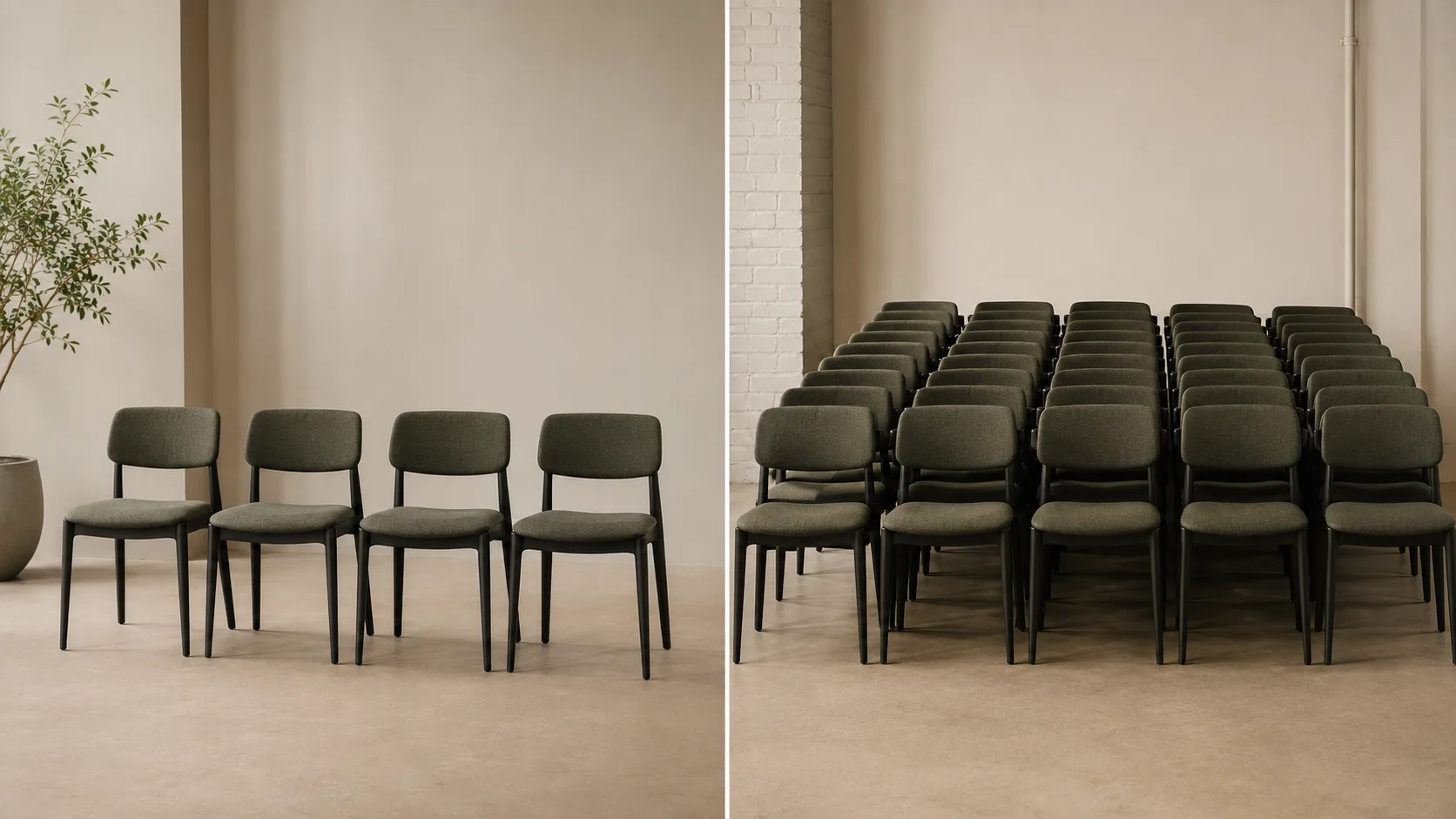
Ask about a small-order surcharge. Some suppliers will run below-minimum orders for a premium on the per-unit price. It's worth asking directly. The worst answer is no, and you've spent 30 seconds on the question.
Check whether spares are useful. Before buying more than the room needs, confirm storage capacity and a practical reserve requirement. Compare that plan with an available product that can be ordered in the required quantity.
Plan confirmed future phases. If another location is approved, include its schedule in the project brief. Account for storage, finish matching, and separate delivery charges before deciding when to purchase.
Confirm the complete order
A minimum quantity establishes whether a selected product or configuration can be supplied. It does not establish the final project price. Confirm the specification, quantity, delivery service, and any additional charges in writing.

What to have ready when you contact us
When you reach out to get a quote, have your quantities, timeline, and basic spec ready. The more specific you are upfront, the faster and more accurate the quote.
"I need 24 barstools, black metal frame, black vinyl seat, bar height, delivery by September 15th" gives a supplier concrete information to price. If you need a response within 24 to 48 hours, request and confirm that turnaround. Ask for the minimum, current availability, charges, and production and delivery dates in writing.

The bottom line
For a made-to-order specification, the minimum can cover the cost of setting up production. For stocked furniture, a different minimum may apply. Confirm it for each selected model, finish, and fabric, then compare a surcharge, useful spares, or an available alternative against the quantity your project needs.
Related reading: How to Order Commercial Furniture in Bulk · How to Get Wholesale Pricing · Commercial Furniture Lead Times