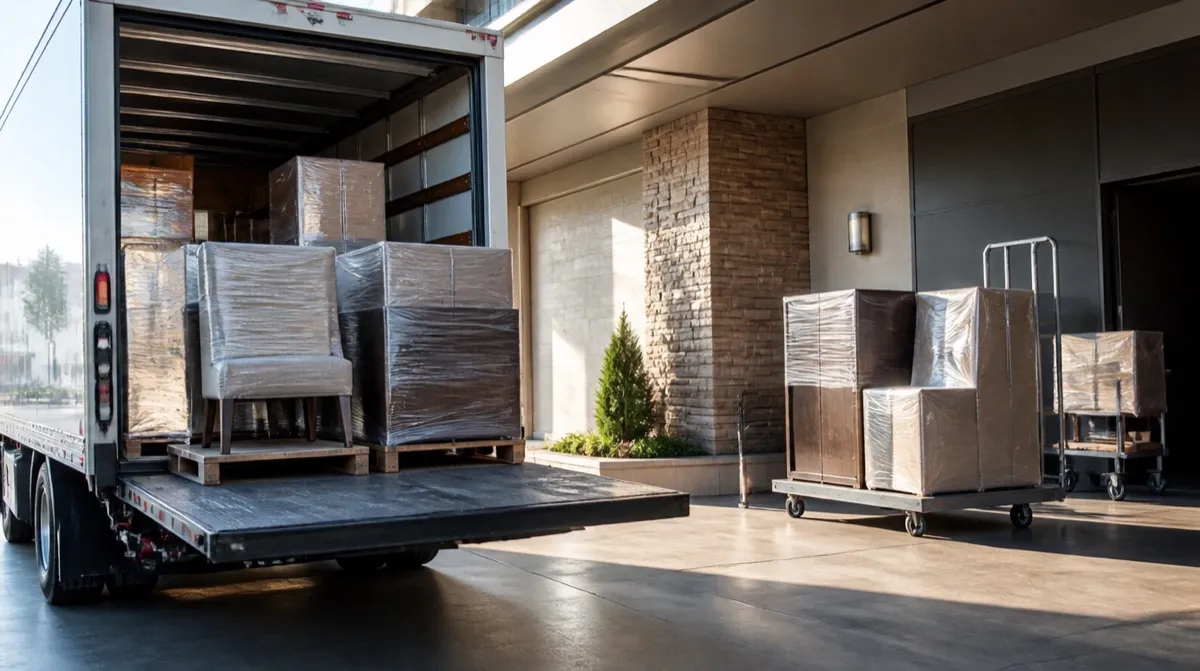
The furniture package is only half the job. Getting it from a factory or warehouse into a finished building, in the right sequence, without damage, is the part of FF&E that decides whether a project opens on time. Logistics and installation are where budgets slip and schedules break, because the moving pieces (freight mode, receiving, staging, install, and claims) all have to line up with a construction site that is rarely ready when the furniture is. This guide covers how FF&E logistics actually works and what a buyer needs to arrange to keep it on track.
Freight, LTL, and container: how furniture moves
Commercial furniture reaches a project in one of a few ways, and the mode drives both cost and timeline.
| Freight mode | Best for | Trade-off |
|---|---|---|
| Full truckload (FTL) | Large single-destination orders | Most efficient per unit, needs volume to fill a trailer |
| Less-than-truckload (LTL) | Partial or smaller orders | Shares a trailer, lower cost but more handling |
| Ocean container | Factory-direct import orders | Lowest unit cost at volume, longest transit and port handling |
| Parcel or small package | Small accessory quantities | Fast for a few items, expensive per piece at scale |
Full truckload is the cleanest path when an order is large enough to fill a trailer to one destination, because the freight moves without transferring between trucks. Less-than-truckload shares space with other shipments, which lowers cost on smaller orders but adds handling, and handling is where damage happens. Ocean container is how most factory-direct import orders travel, with the lowest unit cost at volume and a transit of several weeks plus port and drayage handling on the near end. The right mode depends on your order size, destination, and how tight the schedule is.
Receiving: dock delivery versus a receiving warehouse
Furniture has to land somewhere it can be checked and stored, and that is a decision to make before the freight ships. There are two common paths.

Direct-to-site delivery works when the building can receive and the space is ready. The truck arrives, the order is offloaded and inspected at the dock, and it goes straight into staging or install. This is the simplest path when the timing lines up.
A receiving warehouse is the alternative when the site is not ready. A third-party receiving and consolidation warehouse takes delivery, inspects each piece, stores the package, and then delivers it to the site on a scheduled window once construction is complete. On larger hospitality projects this is standard practice, because it decouples the furniture schedule from the construction schedule and gives one point to inspect and consolidate a package that may arrive from several suppliers. The receiving warehouse is arranged by the owner, the general contractor, or a purchasing agent, and its cost belongs in the FF&E budget alongside freight and installation. Factor it in early using the FF&E budget calculator so it does not surprise the budget late.
Staging and floor-by-floor installation
Installation is a sequencing problem as much as a labor problem. On a multi-floor property, furniture gets installed floor by floor as each area is released by the construction team, and the delivery has to match that release order. Staging is how this works: the package is broken into zones, and each zone is delivered and set in place when its space is finished, cleaned, and ready.
Getting the sequence right avoids two expensive problems. First, furniture delivered into an unfinished space has to be moved again, which adds cost and risk of damage. Second, furniture that arrives after a space is finished can hold up the opening. A staged plan built around the construction release schedule keeps furniture flowing in at the pace the site can absorb it. For a room-by-room order, seating and casegoods for guest rooms usually install ahead of the public spaces, while food-and-beverage seating like side chairs, barstools, and lounge chairs goes in as those outlets come online.
Punch lists and final walk-through
Installation ends with a punch list. As furniture is set, someone walks each space against the specification and the order, noting anything missing, wrong, or damaged: a chair with a scuffed frame, a table with the wrong finish, a short count on a line. The punch list is the formal record of what still needs to be resolved before the space is signed off.
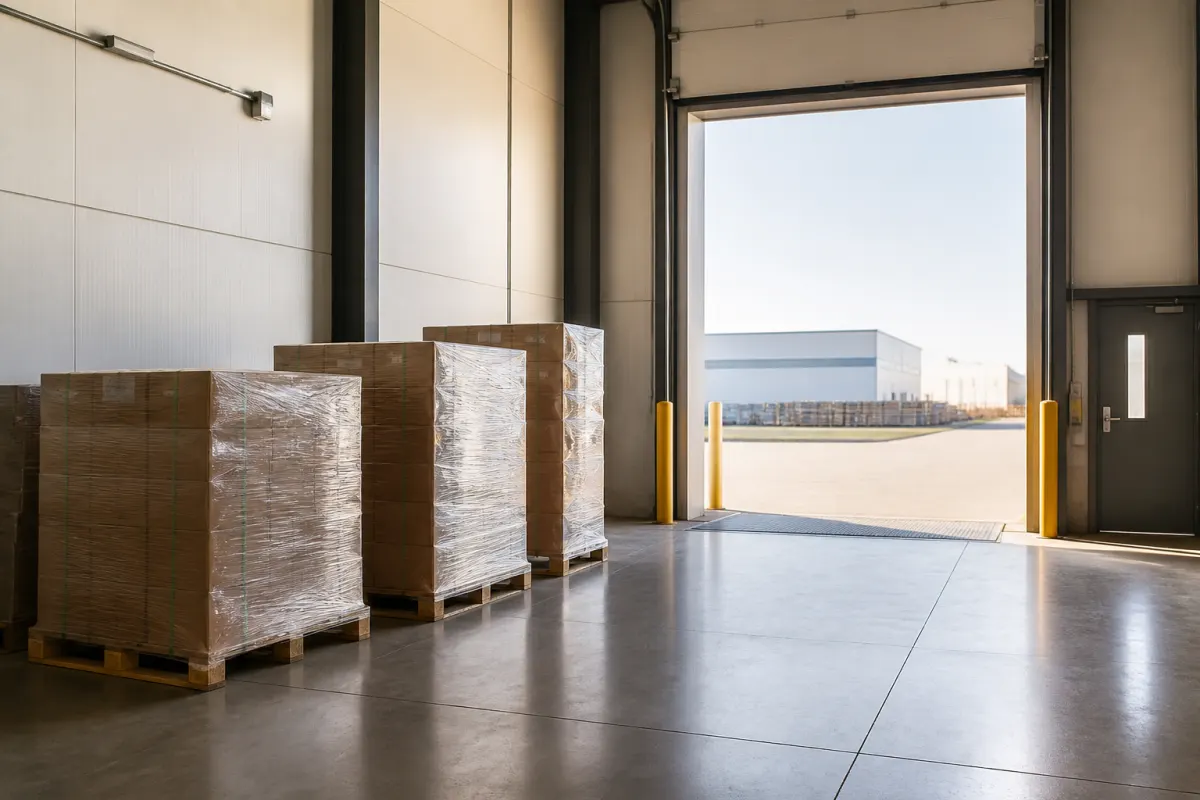
A clean punch list depends on inspecting at receiving, not just at install. If damage or a spec error is caught when the freight is offloaded, it can be flagged and a replacement started while the rest of the install proceeds. If it is not caught until the final walk-through, the fix lands right at the opening date, which is the worst time to discover it. This is why receiving inspection and the punch list work together: the earlier a problem is on paper, the more time there is to fix it.
Receiving records and damage reporting
Assign time to count the shipment, inspect its condition and record discrepancies against the packing list. Photograph affected goods, packaging and labels, and keep those records tied to the purchase order. Follow the supplier's and carrier's written receiving instructions, including how to record visible damage and report damage found during unpacking.
Confirm the reporting process and applicable deadlines before delivery. Claim handling and responsibility depend on the shipment and agreed terms; a receiving record supports the follow-up but does not guarantee a replacement or reimbursement.
Why FF&E projects need logistics coordination
A guest-room package, a restaurant, and a lobby can involve multiple product lines arriving on different lead times, sometimes from different suppliers, into a site that is finishing in phases. To see how those lead times differ by category and back-plan the order date from a target install date, use the Commercial Furniture Lead-Time Index. Without coordination, freight arrives before the space can take it, the receiving warehouse fills with an unsequenced package, and the install team works around gaps. Coordination is the discipline that keeps these pieces aligned: matching delivery windows to construction release, consolidating where possible, and inspecting at each handoff.
On smaller projects a single supplier can simplify much of this by consolidating the package and coordinating a delivery window, which reduces the number of handoffs and keeps freight priced and scheduled as one plan. On larger projects a purchasing agent or an owner-appointed logistics coordinator owns the sequence. Either way, someone has to own it, because logistics does not coordinate itself. For the full procurement picture around this, see the FF&E procurement guide and the FF&E overview.
Define delivery scope before comparing quotes
A freight rate and an installation quote may cover different parts of the same journey. Ask each provider to mark who is responsible for unloading, liftgate service, movement through the building, unpacking, assembly, placement and packaging removal. Do not assume that a service called white glove includes every task.
| Handoff | Information to agree before shipping |
|---|---|
| Carrier to receiving team | Appointment, truck access, unloading equipment, packing list and receiving contact |
| Receiving team to storage | Item identification, count, condition record and assigned storage location |
| Storage to installation crew | Released rooms, complete item sets, access route and delivery sequence |
| Installation crew to project owner | Placement check, outstanding items, photographs and named follow-up owner |
Measure the route as well as the furniture: dock access, door openings, turns, elevator space and the destination room. Give the provider packed dimensions and handling requirements. Assign one receiving lead to reconcile each shipment against its packing list and record shortages by item and project phase.
Choose a storage strategy and a release trigger
A delivery close to installation can reduce storage and handling, but it leaves less room for a construction delay. Receiving earlier can separate production from the site schedule, at the cost of warehouse space and additional handling. Compare both using the project's actual delivery windows and storage quote rather than assuming one approach is always cheaper.
For each phase, name the person who can release goods from storage and the conditions they must confirm: finished surfaces, a clear access route, available installation labor and permission to use the intended rooms. A calendar date by itself is not confirmation that a building can receive furniture.
Ask the warehouse to separate receiving, storage, retrieval and final-delivery charges. Confirm how charges change if the site slips, how goods will be protected, and which party arranges coverage while the furniture is held. Obtain the provider's written terms before releasing the shipment.
Track the package by room and item
Maintain one receiving register across suppliers and delivery dates. Include purchase-order number, item code, quantity expected, quantity received, condition, warehouse position, destination room and release status. Record a partial delivery as partial; do not mark a room ready simply because some of its cartons have arrived.
Keep inspection records and packaging information with the affected item. Obtain the applicable inspection and damage-reporting instructions from the supplier and carrier before delivery, and raise damage or shortages promptly. Do not assume that all providers use the same reporting deadlines or that identifying damage guarantees claim acceptance.
For crew selection, use the separate FF&E mover hiring guide. For the final room inspection, use the FF&E punch-list checklist.
Questions to ask a supplier about delivery
Before you commit to an order, pin down the delivery side with a few direct questions:
- What freight mode is this order shipping on, and what is the transit time?
- What does the quote include: dock delivery, liftgate, inside delivery, or none of those?
- Can delivery be scheduled to a specific window to match our site readiness?
- Can the order be staged or split-delivered to match a floor-by-floor install?
- What is the process and time window for reporting freight damage or a shortage?
- Can you deliver to a receiving warehouse rather than the site if we are not ready?
The answers tell you what you need to arrange yourself. As a supplier, we quote freight per project based on your destination, dock access, and delivery requirements, and we can coordinate a delivery window and staged shipments to match your schedule. Receiving warehouses, on-site installation labor, and the construction sequence are arranged by the owner, general contractor, or a purchasing agent, and the freight quote is built to hand off cleanly to whoever owns that side. City-level logistics vary by market, so see local guides such as Denver and Reno for how regional freight and receiving tend to work.
Plan your FF&E delivery
When you are ready to price freight for a specific project, request a quote with your item list, delivery zip or postal code, dock access, and target install dates, and we will build delivered pricing and lead times you can plan the logistics around. To size the freight and receiving budget before you order, start with the FF&E budget calculator.