
A useful furniture quote starts with the items, quantities and delivery location. Include your preferred dimensions, finishes and timing where you know them; say which choices still need a recommendation. You can start an inquiry before every specification is settled.
The example below shows how to turn an early restaurant furniture list into a request a supplier can price and clarify. Use the blank checklist for your own project, then compare proposals against the same furniture and delivery scope.
Worked example · sample project
A request a supplier can work with
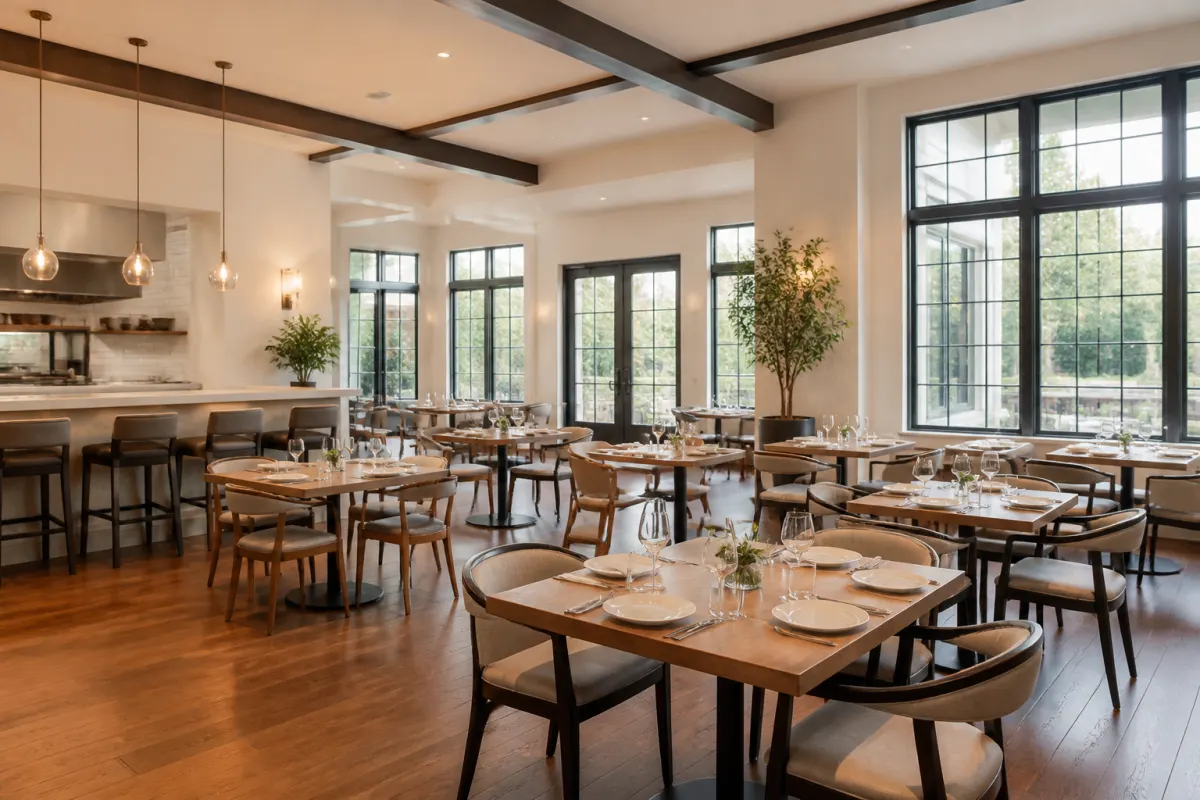
A 60-seat restaurant refresh, with the unresolved choices stated clearly. The quantities below describe an example brief, not a tested room capacity.
| Qty | Item | Requested specification | Why include it? |
|---|---|---|---|
| 60 | Dining chairs | Upholstered seat; model and dimensions to confirm | A quantity without a selected model is enough to start a shortlist. |
| 15 | Dining tables | 36 × 36 in top; compatible dining-height base | State whether you need tops, bases or complete tables. |
Read the completed example request
Use the checklist for your own project
The blank checklist carries into your inquiry. Fill in what you know and leave the remaining choices open.
Why a quote beats list pricing at volume
A displayed price may cover a particular model, finish and quantity. Check whether the proposed configuration and delivery service are included. When you order 80 dining chairs or a full guest-room package, compare the complete scope: furniture, upholstery, finishes, freight and any additional services. Two orders for the same chair can have different delivered costs.
Quotes also lock the details that list prices leave open. Fabric grade, wood species or finish, dimensions, and freight terms all move the number, and a formal quote states each one so there is no surprise at delivery. For a first-time buyer this is the difference between a budget you can take to a lender and a rough guess that falls apart at the loading dock. To rough out a starting budget before you request pricing, run your item list through the FF&E budget calculator or the furniture cost calculator.
What a complete request for quote includes
The more complete your request, the faster and more accurate the quote comes back. A supplier pricing your order needs to know quantity, spec, and destination at a minimum, and the strongest requests add dock and timeline details so freight can be priced in the same pass. Here is the full checklist.

| RFQ item | Why it matters |
|---|---|
| Quantities by product | Confirms the item counts for production and delivery |
| Product type and model | Identifies the base specification, or the shortlist you need help with |
| Dimensions or seating requirements | Helps check the piece against the room and its intended use |
| Fabric grade or COM | Identifies upholstery choices that affect cost and lead time |
| Wood species or finish | Identifies finish choices that need pricing and availability confirmation |
| Delivery ZIP or postal code | Identifies the destination for a freight estimate |
| Dock access and delivery details | Separates curbside, liftgate, inside delivery and other service needs |
| Target delivery date | Lets the supplier check the proposed schedule before an order is placed |
You do not need every field perfect to start. If you know the quantity and the destination, a supplier can give you a working number and flag what is still needed to firm it up. But the closer your request is to complete, the closer the first quote is to final.
Quantities and product mix
Start with a line-item list: how many of each piece, grouped by product type. A restaurant order might read as 60 dining chairs, 15 bar stools, 20 tables, and 4 booth units. A hotel package might separate guest-room casegoods from lobby and food-and-beverage seating. Grouping by type lets the supplier confirm each specification, unit price, and lead time separately. Browse the side chairs, barstools, and tables categories to confirm the product types before you list them.
Spec: fabric, finish, and dimensions
Spec is where quotes get accurate. Fabric grade is the big one on seating, since a heavier contract-rated fabric or customer-supplied material (COM) changes both the price and the lead time. Wood species or finish does the same on tables and casegoods. Include dimensions if the piece has to fit a defined footprint, and note any use conditions such as outdoor exposure or high-traffic seating that push the spec toward a more durable grade.
Freight destination and dock access
Freight is a real line on a commercial quote, not a rounding error, and it is priced by lane and by how hard the delivery is. Give the delivery zip or postal code, and say what the dock looks like: a real loading dock, a liftgate off a box truck, inside delivery, or a carry up a flight of stairs. Each of those changes the freight cost, so stating them up front means the quote you get is the number you pay.
What determines the quoted project price
A commercial furniture quote depends on the specific items, quantities, materials, finishes, and delivery requirements. Compare proposals against the same specification and scope; a different fabric, frame, or freight service can change the total even when the headline unit price looks similar.
What happens after you submit
A quote request is the start of a short, defined process, not a black box. Here is the typical sequence.
First, the supplier reviews your request and confirms the spec. If anything is missing or ambiguous, expect a quick follow-up to lock quantities, fabric grade, or freight details before pricing goes out.
Second, the order is priced against the production run and current freight lanes. For made-to-order lines this means pricing the factory run at your quantity and spec; for stocked items it means confirming availability and the freight to your destination.
Third, a formal quote comes back itemized: unit pricing by line, freight to your dock, and the lead time for each product. This is the document you can hold against your budget and take to a lender or partner if you need financing sign-off.
From there you approve the quote, place the purchase order, and the deposit starts the production clock. The lead time on the quote is the schedule to plan around, so confirm it lines up with your target opening or renovation date before you commit.
Common mistakes that slow a quote down
A few habits turn a one-pass quote into a multi-round exchange. The most common is leaving out the freight destination, which makes a delivered price impossible to give. Next is an unconfirmed spec, where fabric or finish is still undecided, so the supplier can only price a range. Third is an unrealistic timeline that does not match the production reality, which is better surfaced at quote time than discovered after the deposit clears. State your real constraints up front, including a tight deadline, so the quote reflects what is actually achievable.
Get your commercial furniture quote
When you are ready to price a real order, request a quote with your item list, quantities by product, fabric grade or finish, delivery zip or postal code, dock access, and target timeline. Our team will confirm the spec, apply volume pricing, and put together delivered cost and lead time across the whole order for the US and Canada. If you want a budget number first, start with the FF&E budget calculator, then bring the item list into your request.
First purchase: separate the price from the buying decision
An online price can be a useful starting point. Check which model, configuration, quantity and delivery service it covers before comparing it with a project quote. A missing price is not evidence of a better supplier, and an itemized quote still needs to match your actual order.
Ask for furniture, freight, installation and any specification or storage service to be identified separately. Mark an unpriced service as unresolved rather than treating it as included or free. Confirm the quote's validity period and which approvals or payments are needed before an order moves forward.
Keep two checks separate: whether the furniture is suitable and whether the proposal covers the project. Use the contract furniture verification guide for model documents, intended use and warranty scope. Use the quote to confirm counts, finishes, delivery responsibilities and dates. A favorable price cannot resolve a missing specification.
Before approving the order, identify who answers a damaged-delivery report and who handles a replacement-part request. Ask about the specific order's availability and schedule rather than relying on a general website lead-time claim.
Asking for wholesale pricing on a first order
State the actual order quantity and ask whether the proposed model has a minimum order or finish requirement. Record whether each line is available stock, made to order or subject to availability confirmation. A wholesale label alone does not tell you the delivered price or the services included.
Use the same quantity, materials and delivery scope for each supplier comparison. Separate confirmed amounts from allowances, and ask how long the quote remains valid. For a reusable item list, build an FF&E schedule and download its spreadsheet.