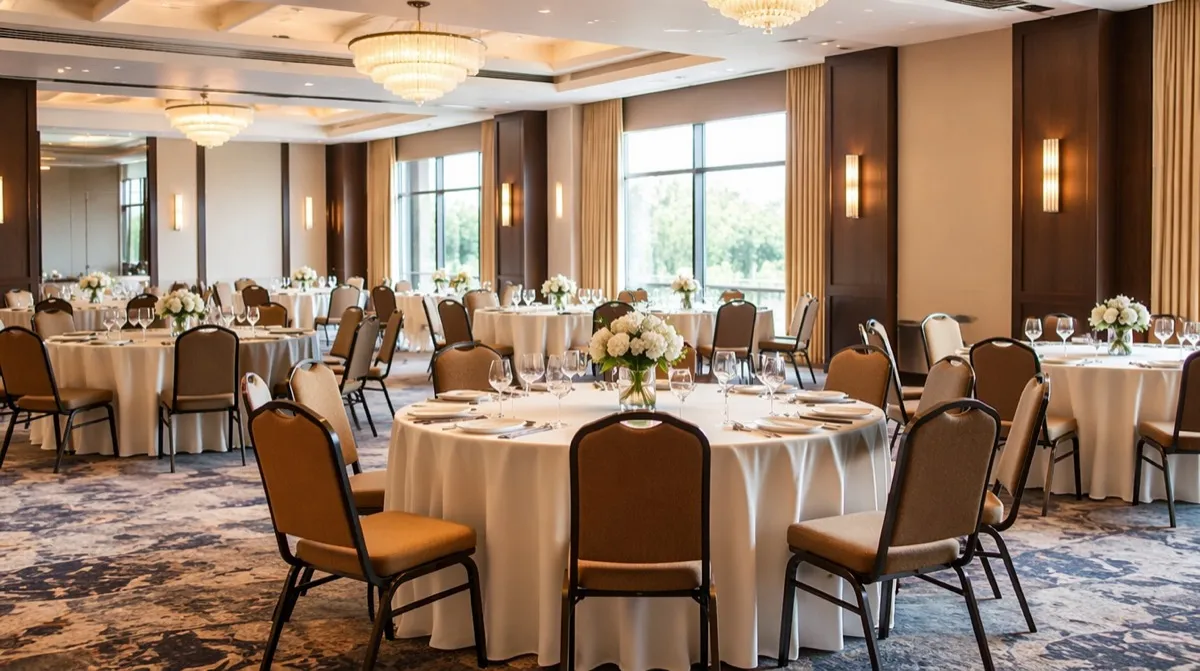
Commercial furniture cost is one of the first questions on any hospitality project, and one of the hardest to answer from a generic price list. The right number depends on what you are buying, how many units, the grade you specify, and how it ships. This guide retains illustrative budget ranges so you can identify line items before replacing assumptions with dated product and delivery quotes.
For your own project, our commercial furniture cost calculator estimates an undiscounted planning range from the selected categories and quantities. A formal quote confirms the actual products, finishes, and delivered cost.
What actually drives the cost
Compare the exact frame, joints, textile, cushion, finish, and warranty before comparing prices. The ACT abrasion criteria vary by textile type, and a test count cannot predict months of wear. A 35 to 40 ILD figure describes a firmness assumption rather than foam density, as the Polyurethane Foam Association explains. Ask for density units and cushion fatigue evidence separately; appearance alone does not establish either performance or a sixty-dollar price difference.
Price ranges by category
The following per-unit figures are illustrative article assumptions before freight and installation, rather than verified current prices paid by venues. The currency and actual pricing basis must be confirmed in your project quote.

For the article's illustrative per-unit planning inputs before freight, Steel-frame stacking banquet chairs run 45 to 90 dollars, aluminum stacking chairs 70 to 130, resin Chiavari chairs 40 to 80, and wood or aluminum Chiavari 90 to 180. Folding banquet chairs run 20 to 50. Commercial barstools run 110 to 320, and lounge chairs for lobbies and pre-function areas run 300 to 900.
The table figures use the same illustrative basis. Round 60-inch folding tables run 60 to 130, rectangular 6 to 8 foot folding tables run 50 to 120, and cocktail or highboy tables run 70 to 150.
Freight, tariffs, and installation
Furniture unit cost is only part of the delivered number. Freight depends on destination, quantity, and whether the site has a dock. Ask the responsible importer or customs adviser whether duties or other import charges apply to the actual origin and product, and identify the quoted assumptions. White-glove installation, which includes unpacking, placement, and debris removal, is quoted separately because access varies from a ground-floor restaurant to a high-rise hotel tower. A 14 to 26 percent freight-and-install allowance is an illustrative scenario, not a measured logistics average. Replace it with the actual freight lane, receiving, assembly, placement, and disposal scope; confirm any import charges and responsible party separately.

Stock versus custom
Compare dated stock and custom proposals on the same items, quantities, receiving scope and delivered date. Stock is not automatically the lowest-cost or fastest delivered option. A 20 percent custom allowance and 10 to 14 week duration are illustrative inputs only; confirm each change's feasibility, actual charge, approval and delivery milestones against the project needs.
How to budget your project
Start from a real item list rather than a lump sum. Count seats, tables, and casegoods by space, apply the ranges above, then account for custom specifications and a freight and installation allowance. Run the numbers through our commercial furniture cost calculator for an instant range, then request a quote with the actual destination and receiving conditions. Ask responding suppliers to confirm service coverage, currency, exact items, taxes or duties where applicable, and itemized delivery and installation terms.