
A classroom-wing example might include 30 tables and 150 chairs, while a district scenario can run into thousands of units. Confirm actual room counts, student fit and model documents, then compare full delivered/assembled quotes. Buying direct or at volume does not by itself establish lower unit cost or survival for a school year.
Here is what actually matters when you are sourcing classroom tables and chairs in bulk.
Bulk buying means contract-grade, not classroom-adjacent
Obtain each classroom model's school-use, loading, surface-care and repeated stacking/nesting documentation. Welded frames, laminate tops or a contract label alone do not establish durability or lower delivered cost than a retail alternative. Compare tested samples and complete quotes for the actual room quantities.
Sizing by grade level
Classroom seating is not one-size-fits-all, and getting this wrong means chairs and tables that do not match student ergonomics.
- Early elementary (K-2): 12 to 14-inch seat and 20 to 22-inch table heights are starting examples to verify.
- Upper elementary (3-5): 14 to 16-inch seats and 22 to 24-inch tables are illustrative fit ranges.
- Middle and high school: compare 16 to 18-inch seats with 25 to 29-inch tables using actual users.
- Adult training rooms and higher ed: an 18-inch seat with a 29 to 30-inch table is another starting combination.
Grade label alone does not establish fit. Check the selected manufacturer's sizing guidance, actual student stature, paired seat/table clearance and any required accessible positions; test a sample before ordering.
Mixed-age campuses often need two or three size tiers in the same order, so confirm your headcount by grade band before requesting a quote, not after.
Nesting, stacking, and storage footprint
Classrooms and training rooms get reconfigured constantly, so how furniture stores matters almost as much as how it holds up. Nesting tables (tops that tilt and roll together on a dolly) and stacking chairs both cut storage footprint dramatically compared to fixed-leg tables and non-stacking seating. Before ordering at volume, confirm how many units nest or stack per cart, whether the cart is included or sold separately, and whether your storage closets and hallways can actually accommodate the stacked height and cart footprint you are planning for. A table that nests well can save a school real square footage across a building with dozens of classrooms.

Realistic quantity and budget planning
The table below contains illustrative quantity and budget scenarios, not typical contract-price evidence or current supplier quotes. Model, currency and delivery/assembly scope have not been independently verified. Replace these inputs with the selected school-use specification and itemized delivered quotes:
| Order size | Tables | Chairs | Approximate budget range |
|---|---|---|---|
| Single classroom | 6 to 10 | 24 to 32 | $3,000 to $8,000 |
| Wing or grade level | 20 to 35 | 100 to 150 | $12,000 to $35,000 |
| Full building | 60 to 120 | 300 to 600 | $40,000 to $120,000 |
| District-wide refresh | 200+ | 1,000+ | $150,000 and up |
The examples use standard-top and stacking/nesting-chair assumptions. Price exact finishes, adjustment/mobile features, approved size groups, carts, freight and assembly separately; do not assume a custom option has a fixed premium. For multiple schools, itemize each delivery phase and receiving requirement.
Freight, lead time, and the school budget cycle
Bulk classroom furniture ships LTL or full truckload depending on order size, and freight cost depends on your delivery zip code, whether the site has a loading dock, and whether liftgate service is needed for a school without dock access. Have those delivery details ready when you request pricing, since they change the freight quote materially.
Use the 2 to 6 week stock and 8 to 14 week custom windows as provisional scheduling examples. Confirm model availability, laminate/frame approvals, production, delivery and installation dates in writing. Coordinate the academic calendar and fiscal approvals with those commitments, including time for inspection and assembly before students arrive.
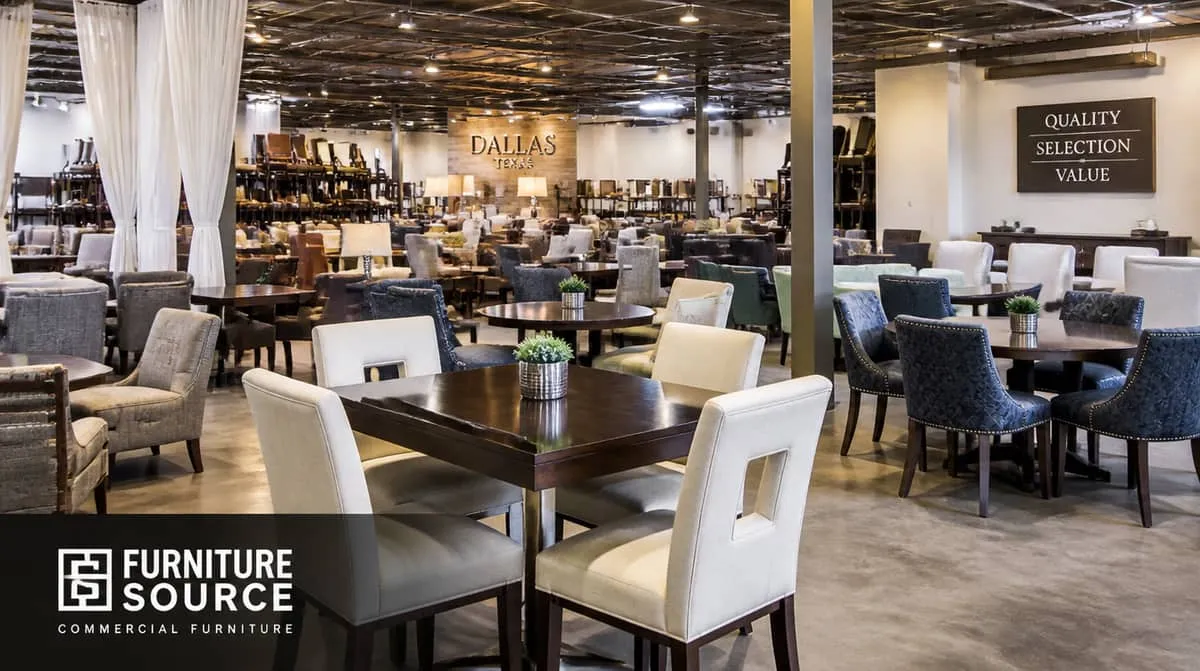
What to check before you place a bulk order
Before committing to the quantity, review the complete table/chair's frame, joints, load and permitted school use without assuming those components always fail first. Check the actual surface/edge care, size fit, loaded stack/nest and cart limits, floor glides, component warranty and assembly. Test the selected sample under the intended room and staff routine.
Getting a quote
Prepare an item schedule by actual size/user group, with quantities, finishes, delivery access and the academic deadline. Submit a furniture request for relevant independent suppliers to review and quote directly. Use chosen inputs in the furniture cost calculator for an initial budget.
Browse table concepts for style references and use the banquet chairs buying guide for handling questions. Neither gallery images nor a banquet-use label establish a model's school-use suitability, size or testing; obtain the exact manufacturer documents.