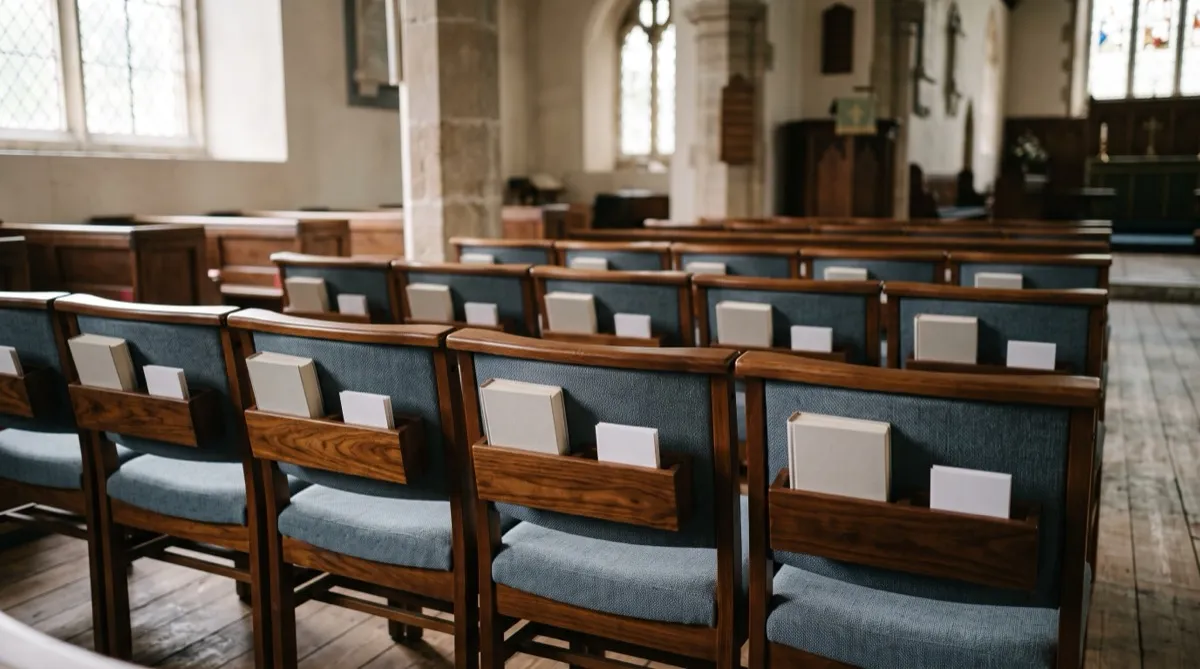
Book racks look like a minor detail until installation day, when the wrong size or mount turns every row into a hymnal-juggling problem. The rack is a small piece of hardware, but it's the thing your congregation touches every single week, and getting it wrong is expensive to fix after 300 chairs are already delivered.
Under-seat vs back-mounted racks
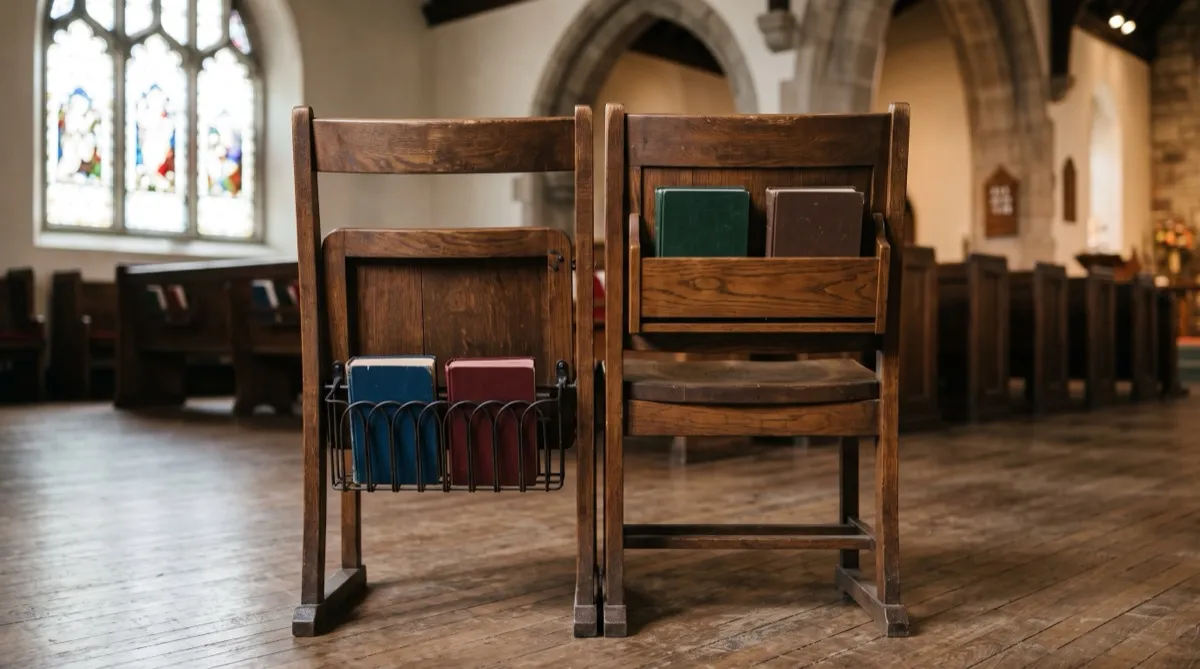
Most church chairs offer a book rack in one of two positions. The under-seat rack sits beneath the seat pan of the chair in front, holding hymnals and Bibles flat and out of sight until needed. The back-mounted rack attaches to the rear of the chair back at roughly waist height, similar to the seatback pocket on an airplane, and keeps materials upright and visible.
Under-seat racks work best in sanctuaries that stack chairs frequently, since the rack rides with the chair and doesn't add depth to the stacked pile the way a bulkier back-mounted unit can. Back-mounted racks are easier to reach without bending and hold more volume, which matters if your congregation keeps a hymnal, a pew Bible, and a bulletin in the same slot every week. If your seating gets struck and restacked for multipurpose use, ask specifically how the rack style affects stack height and interlock, because a rack that catches on the chair behind it will slow your setup crew down every time.
Sizing the rack to what actually goes in it
A rack sized for a slim paperback bulletin will not hold a full pew Bible and a hardbound hymnal at the same time. Before you spec book racks across a full order, gather what your congregation actually places in them. A standard hymnal runs a common trim size, a pew Bible is thicker and heavier, and many churches also want room for a bulletin, a visitor card, and a pencil. Measure your heaviest combination and confirm the rack depth and width against it rather than assuming a generic size will fit.
Undersized racks lead to books sliding out during a hand gesture or a stand-and-sit transition, which becomes a distraction during service and a maintenance headache when materials end up on the floor weekly. Oversized racks add unnecessary cost and can look bulky on a chair that's otherwise designed to be unobtrusive. The right spec threads that needle for your specific materials.
Hymnal sizing vs Bible sizing
Hymnal trim sizes vary by publisher and denomination, and pew Bible dimensions vary even more depending on whether your congregation uses a study edition or a slim pew edition. This matters because a rack cut tight to one hymnal size can be too narrow for a thicker study Bible, and a rack sized generously for a large Bible can let a slim hymnal slide around and rattle.
If a slot must hold a hymnal and Bible together, measure their combined thickness, width, height and weight with any bulletin or pencil included. Sizing only to the thicker book does not establish that both fit simultaneously. Check the complete combination in the sample rack. If hymnals are being phased out, discuss a shallower option with the supplier after confirming the future use.
Card and pencil holders
Many sanctuary chair programs add a small slot or clip alongside the main book rack for a visitor card, an offering envelope, or a pencil. This is a low-cost addition when it's built into the rack tooling from the start, and a much higher-cost retrofit if you decide you want it after the first order ships. If your church runs visitor cards or connection cards as part of the service, spec the card slot now even if you're not certain you'll use it on day one. It's easier to leave a feature unused than to add it to chairs that are already in the sanctuary.
Pencil holders follow the same logic. A small molded cup or clip integrated into the rack assembly costs very little at the tooling stage and becomes difficult to add later without ordering new hardware for every chair in the row.
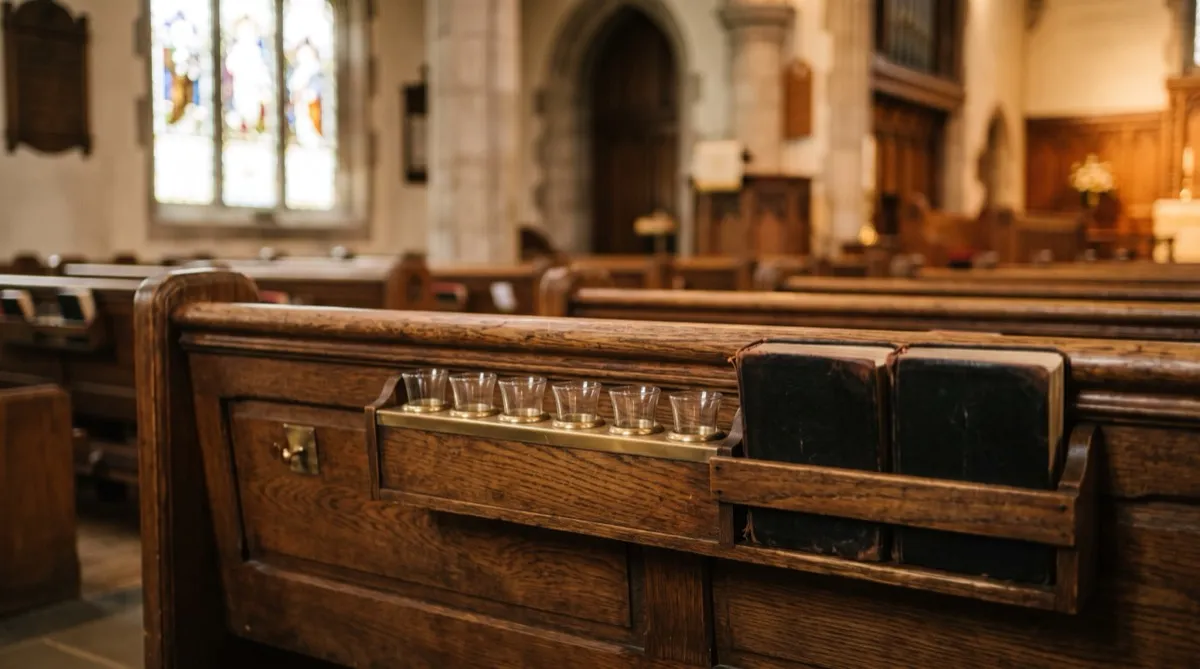
Communion cup holders
Some sanctuary chairs also offer a small recessed cup holder built into the back of the chair, sized for a communion cup, positioned below or beside the book rack. This is worth considering if your congregation practices in-pew communion service, since it keeps the process orderly and avoids cups being set on the floor or balanced on a book rack that wasn't designed to hold them.
Not every congregation needs this feature, and it does add a small amount of cost and complexity to the chair back assembly. If your communion practice happens at the altar rail rather than in the seat, skip it. If it happens in-row, it's worth the modest addition, especially for a chair order you expect to keep in service for a decade or more.
Ordering across a mixed sanctuary
Larger sanctuaries sometimes mix rack styles by section, for example under-seat racks in the main body of the room and back-mounted racks in a balcony or overflow area with different service patterns. This is workable, but flag it clearly on your quote request so the accessory hardware and the row spacing get planned together. Mixing rack styles within a single row is not advisable. It looks inconsistent and complicates any future reorder when you're trying to match an existing style.
If you're ordering in phases (a common approach for larger seating projects), request a small sample chair with your chosen rack configuration before committing to the full quantity. A rack that reads fine in a photo can feel different once a congregant is actually reaching for it mid-service. Confirming fit on a physical sample avoids a costly correction across hundreds of chairs.
The church furniture resources help describe the seating and accessory brief. Submit a furniture request with the row layout, actual book dimensions, rack/mount preference and quantities. Independent suppliers may confirm current models, accessory compatibility, sample terms and quotes; the planning page does not establish an available rack program.
Related reading
Our take
For a phased example of 150 chairs now and 150 more in five years, retain the exact frame, rack, mount, hardware and accessory specification. Ask the supplier about current compatibility, spare hardware and any documented future-availability terms. Tooling, finishes and products can change; the record helps assess a later match but does not guarantee that the same configuration will remain available.
The bottom line: Congregations planning a multi-year, phased chair order should keep a written record of the exact rack style, mount position, and accessory configuration from their first order, since matching a sanctuary's look on a reorder years later depends on documentation, not on the supplier remembering the original spec.