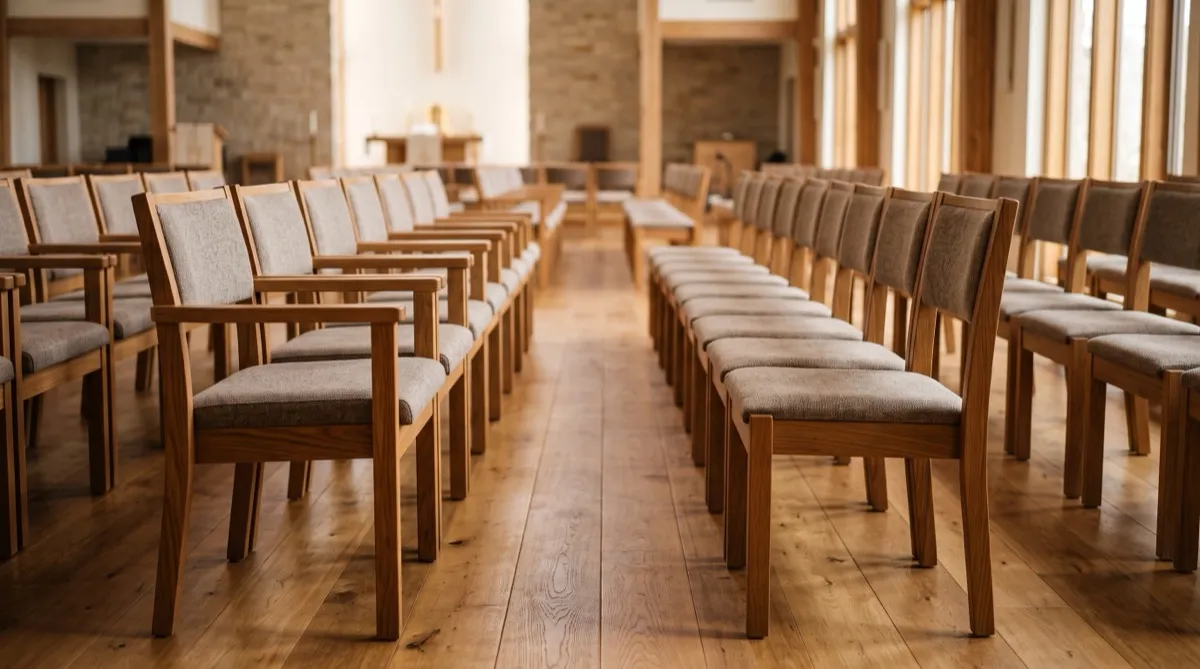
The arms decision isn't one answer for the whole sanctuary. Committees often walk into a chair order assuming it's a single choice, all arms or all armless, when the better answer is usually a row-by-row plan driven by who sits where and how the room actually gets used week to week.
What arms actually do for a congregant
Armrests on a church chair serve two functions that matter more than comfort alone. First, they give a physical push point for standing up and sitting down, which is a meaningfully different experience for an older congregant or anyone with joint or mobility limitations than pushing off a flat seat or a neighboring person's chair. Second, they define personal space in a row, giving each person a clear boundary rather than shoulder-to-shoulder contact with the person beside them.
Ask congregants about standing, sitting and transfer needs, and test both sample configurations under the maker's permitted use. A stable armrest may be useful to some people while restricting others' transfers. This guide supplies no measurement of strain reduction over a service; select from actual user feedback.
The row density tradeoff
Compare the actual armed and armless model widths in the same row plan. A few-percent to ten-percent capacity change is a chosen comparison band, not measured sanctuary evidence. Arms may change the envelope, but the result depends on the selected frames, row geometry and required clear routes.
Do not assume adding arms reduces sanctuary capacity by 8 percent. That is an illustrative comparison figure, not a measured result for the current room. Compare paired layouts using the actual armed and armless widths, row arrangement and applicable clear routes before deciding the capacity effect.
Stacking implications
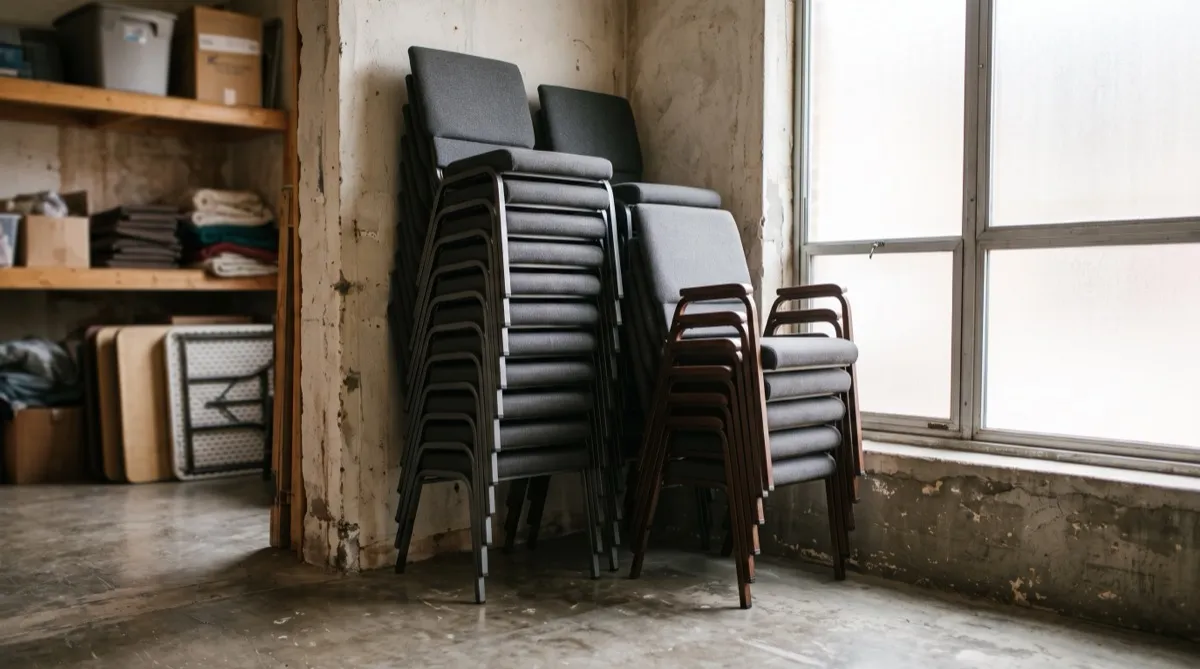
Obtain separate armed and armless configurations' approved stack limits, compatible carts, loaded footprints and handling instructions. Arms alone do not establish taller stacks, lower stability or more reset time. Test the actual storage/reset route with the intended crew before assigning an operating-cost difference.
If your seating gets struck and reset frequently for multipurpose use, weigh that operational cost against the comfort benefit before specifying arms across the full order. A hybrid plan, covered next, often resolves this without giving up either benefit entirely.
A mixed-row strategy that works in practice
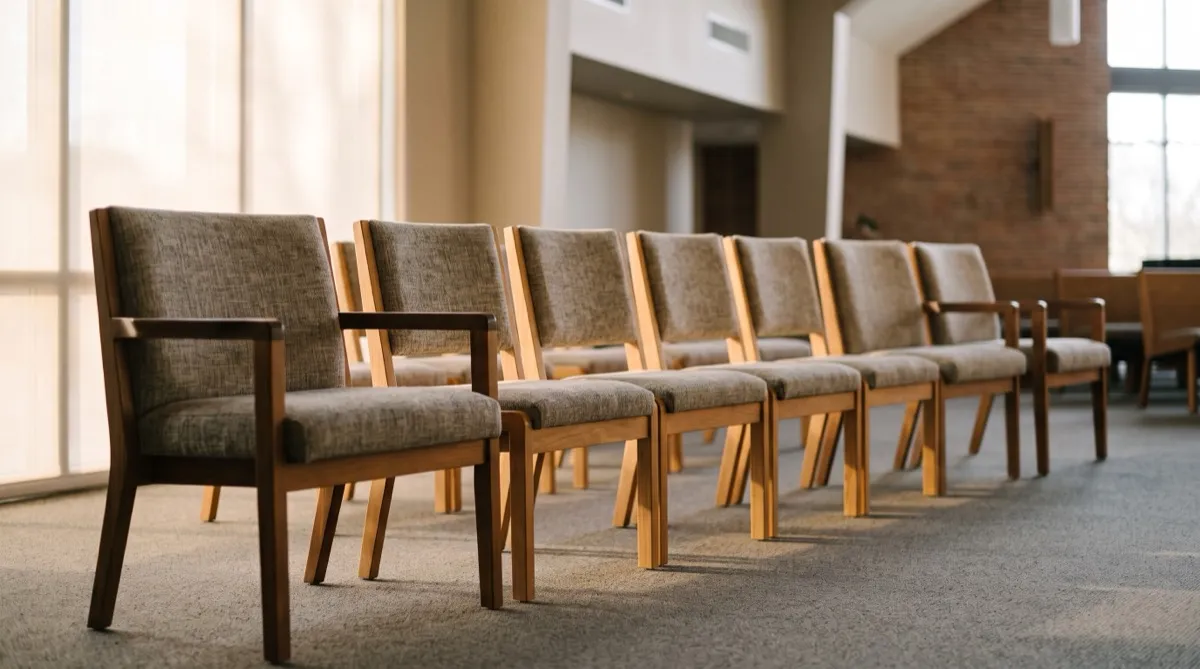
The most common and most workable approach in sanctuaries built for a broad congregation is a mixed order: armed chairs concentrated in the sections where older members and anyone needing extra support tend to sit, typically near aisles and toward the back or a side section with easier access to exits and restrooms, and armless chairs in the main body of the room where density matters more and the average congregant doesn't need the extra support.
This isn't a compromise so much as matching the chair to the actual seating pattern your congregation already has. Most sanctuaries settle into a fairly consistent pattern of who sits where over time, and a facilities committee that pays attention to that pattern before ordering can make a mixed order that serves the room better than an all-or-nothing choice.
Aisle-end chairs are a specific case worth flagging separately. Even in an otherwise armless row, many suppliers offer chairs with an arm on the aisle side only, giving a stabilizing point for the aisle entry and exit without adding width to the interior of the row. This is a small addition that meaningfully improves accessibility at almost no cost to overall row density.
Some committees also mix by function rather than by section. A cry room or family overflow area, where parents are frequently standing to manage young children, benefits from armless chairs that are easier to slide and reposition. A quiet chapel or small prayer room used mostly by older members benefits from arms throughout, since density isn't the concern there and comfort is. Thinking through arms by function rather than defaulting to a single sanctuary-wide rule usually produces a better outcome than either extreme.
Talking it through with the congregation
Facilities committees sometimes treat the arms decision as a purely technical spec question and skip the conversation with the congregation entirely, then get surprised by pushback after the chairs arrive. A short conversation, even an informal one during a board meeting or a bulletin note asking for feedback, surfaces concerns early. Longtime members who've struggled to stand from a flat pew for years will often say so directly if asked, and that feedback is worth having before an order ships rather than after.
Ordering and matching over time
If you're ordering in phases, note your arm-to-armless ratio and placement plan clearly so future orders match the existing layout rather than guessing. Frame finish and upholstery should also match across armed and armless chairs in the same sanctuary so the mixed order reads as an intentional design choice rather than a mismatched patchwork. Request a sample of both configurations before a full order ships, particularly if this is your first time specifying a mixed row, so your committee can sit in both and confirm the plan before it's locked in.
Use church furniture resources to prepare the armed/armless brief. Submit a furniture request with the paired row layouts, congregant needs and quantities. Independent suppliers must confirm actual arm/aisle-arm configurations, separate widths, commercial-use documents and stack limits before approval.