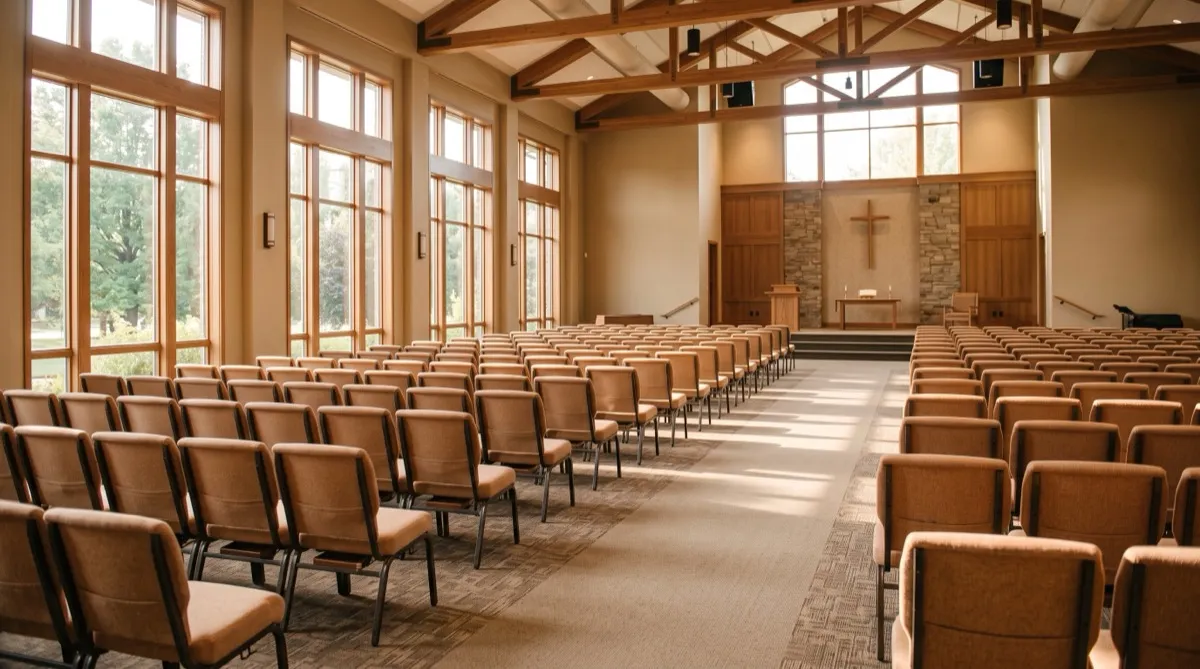
The main sanctuary takes more weekly volume than any other room in a church building. Every other space, the fellowship hall, the classrooms, the lobby, gets used on its own schedule. The sanctuary gets used every week without exception, often multiple times, for the room's primary purpose. That volume is why sanctuary chairs deserve a spec of their own rather than a general "church furniture" order applied uniformly across the building.
Frame construction for weekly volume
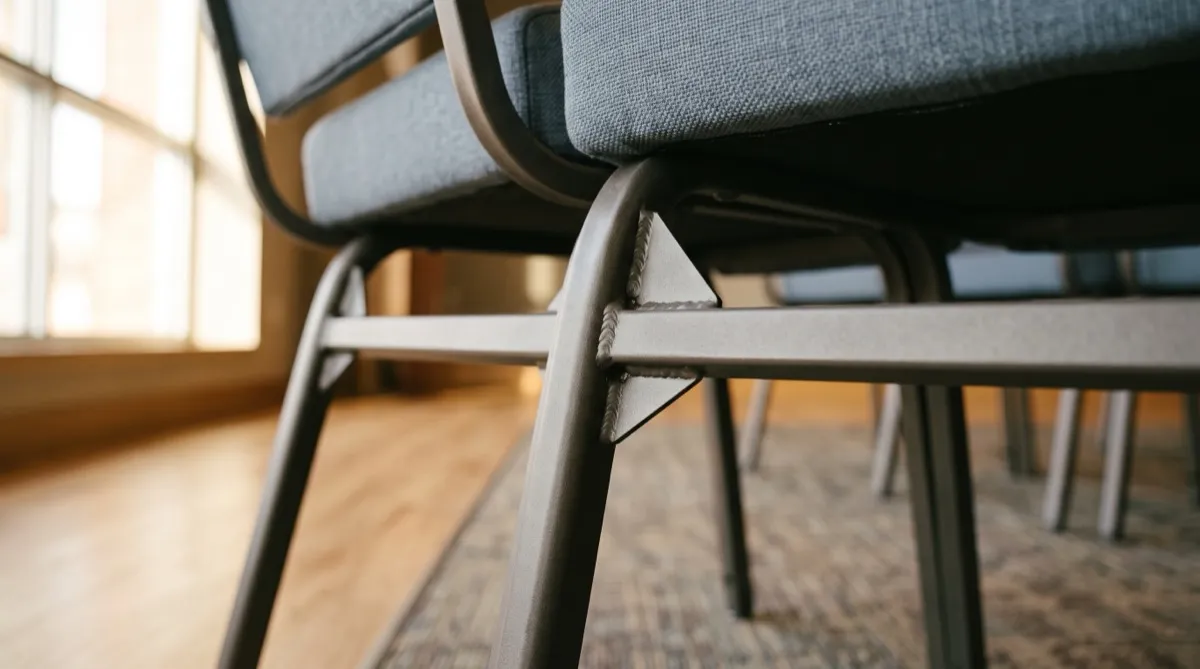
A sanctuary chair goes through a sit-stand cycle dozens of times in a single service, repeated week after week for years. The frame has to hold up to that repetition without loosening. Look for a heavy-gauge steel frame with fully welded joints rather than bolted or riveted connections. Bolted joints work loose over years of cyclical stress and eventually create a wobble or a creak that becomes noticeable and, eventually, distracting during quiet moments in a service.
Ganging or interlocking hardware, which links chairs together in a row for stability and alignment, should be integrated into the frame design rather than added as an aftermarket clip. Integrated ganging keeps rows straight over years of use and stacking, where aftermarket clips tend to loosen or go missing.
Upholstery that holds up to weekly contact
Sanctuary seating gets sat in for extended periods, often an hour or more per service, which is a different demand than a chair that's occupied briefly. Foam density matters here more than it does in lighter-use seating. A higher-density foam holds its shape and support over years of weekly use, where a lower-density foam compresses and flattens within a couple of seasons, especially in rows that see the heaviest attendance.
Fabric choice should account for the room's actual use pattern. A performance fabric rated for heavy cycling handles the accumulated wear of years of Sunday mornings better than a decorative fabric chosen mainly for appearance. Color and texture matter for the room's overall look, but within whatever palette your sanctuary calls for, choose the more durable fabric option available in that palette rather than compromising durability for a marginal aesthetic preference.
Arm options
Whether to include arms, and where, is its own decision that depends on your congregation's age profile and how the sanctuary handles standing and sitting through a service; see our dedicated look at arms versus armless church chairs for the full breakdown. As a general note for sanctuary-wide planning, most facilities committees land on a mixed order rather than an all-or-nothing choice, with arms concentrated where older members and aisle access matter most.
Row layout and spacing
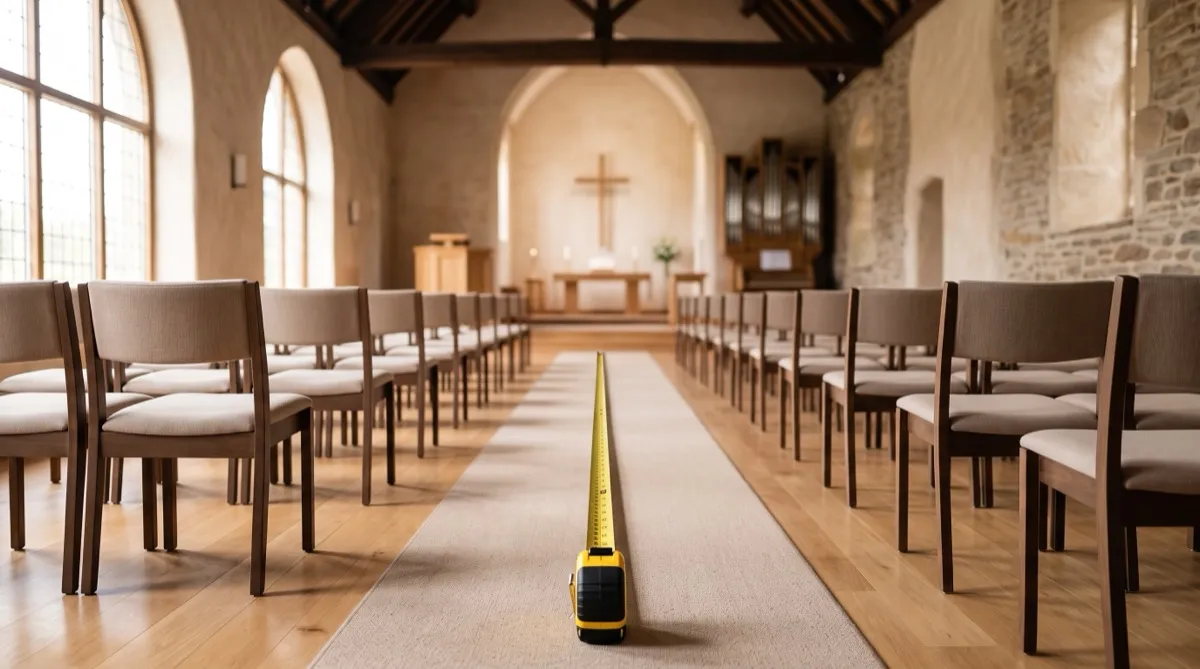
Row spacing in a sanctuary balances two competing goals: comfortable knee clearance for a seated congregant and efficient aisle flow for entering, exiting, and passing during a service. Too tight, and every row disrupts the service when someone needs to leave mid-sermon. Too generous, and the sanctuary loses capacity it may need on high-attendance Sundays.
A workable starting point is to measure your tightest realistic row spacing against an average adult's seated knee clearance plus a margin for coats, bags, and children's activity bags that often sit under a seat during service. Aisle width should account for two people passing in opposite directions without one having to fully stop, since that scenario happens constantly during communion, offering, or a mid-service exit.
Center aisles, side aisles, and cross aisles each serve different flow patterns, and a sanctuary that hosts large events (a wedding, a funeral, a holiday service) beyond its normal Sunday attendance benefits from a layout that can absorb overflow without collapsing the aisle plan. If your sanctuary regularly reconfigures for these larger events, our church seating capacity guide can help you model different row and aisle configurations against your actual floor dimensions before you finalize an order.
What makes this different from a general buying guide
A general church furniture order covers the whole building: nursery furniture, classroom chairs, fellowship hall tables, lobby seating, and the sanctuary itself, each with its own spec priorities. The sanctuary chair spec is narrower and higher stakes, because it's the single largest chair order most churches place, it's the piece of furniture the whole congregation interacts with every week, and it's the hardest and most disruptive to replace once installed if the initial spec was wrong.
That's why it's worth treating sanctuary seating as its own project with its own timeline, sample process, and sign-off, rather than folding it into a broader building furniture order where it can get less individual attention than the volume and visibility of the room actually warrants.
Ordering and samples
Because sanctuary chairs are a large order and a long-term commitment, request a physical sample chair in your intended frame finish and fabric before committing to full quantity. Sit in it for an extended period, not just a quick test, and have a few congregants of different ages and builds do the same. What reads as comfortable in a two-minute showroom test can feel different after an hour-long service, and that difference is much cheaper to catch in a sample than across a full sanctuary order.
Explore our full church furniture program for sanctuary chairs, accessory options, and volume pricing built around weekly-use durability. Request a quote with your row count, current layout, and any arm or accessory preferences so pricing reflects your actual sanctuary rather than a generic estimate.