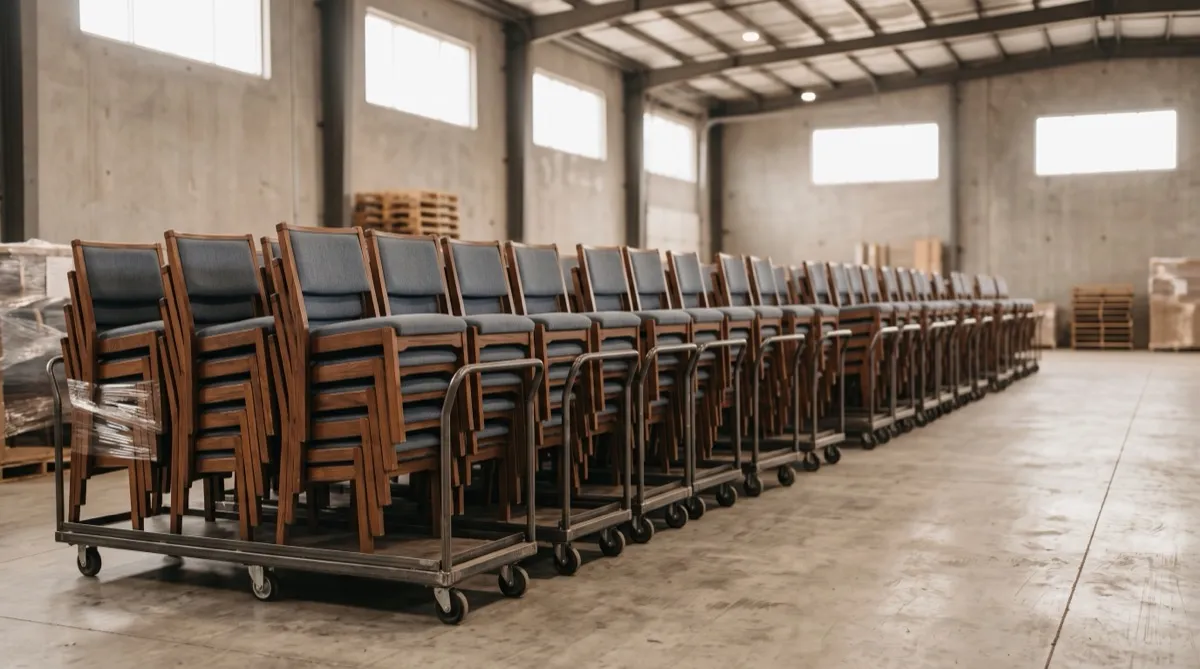
Most churches buying seating at volume are not furnishing one room. A single order often has to cover a main sanctuary that seats 200 to 800, plus a fellowship hall, a youth room, and an overflow space that needs chairs on short notice for a holiday service. Specify each room's operating count, chair configuration, and storage requirements before pricing the package. Ganging hardware, bookracks, and upholstery should be identified on the quote rather than assumed to be included.
This guide covers what "wholesale" actually means for a church seating order, illustrative budget inputs at volume, and the specific features that matter for congregational use.
What buying wholesale church chairs actually means
For a bulk church-chair proposal, identify the actual supplier, exact models, quantity, and included service rather than treating wholesale or contract grade as a construction standard. Obtain frame, joint, load, stack, textile, and warranty documents. Retail and commercial labels alone do not establish a capacity or years-of-service difference.
Illustrative pricing at volume
Church seating overlaps with commercial stacking chair categories. The following are illustrative article budget inputs before freight, not verified current bulk prices:
- Steel-frame stacking chairs (standard sanctuary seating): $45 to $90 per unit
- Aluminum-frame stacking chairs: $70 to $130 per unit; confirm actual model weight and handling in a trial.
- Upholstered pew-style chairs, bookracks and connector options need separate itemized prices; the illustrative ranges do not establish their position within a band or an automatic accessory premium.
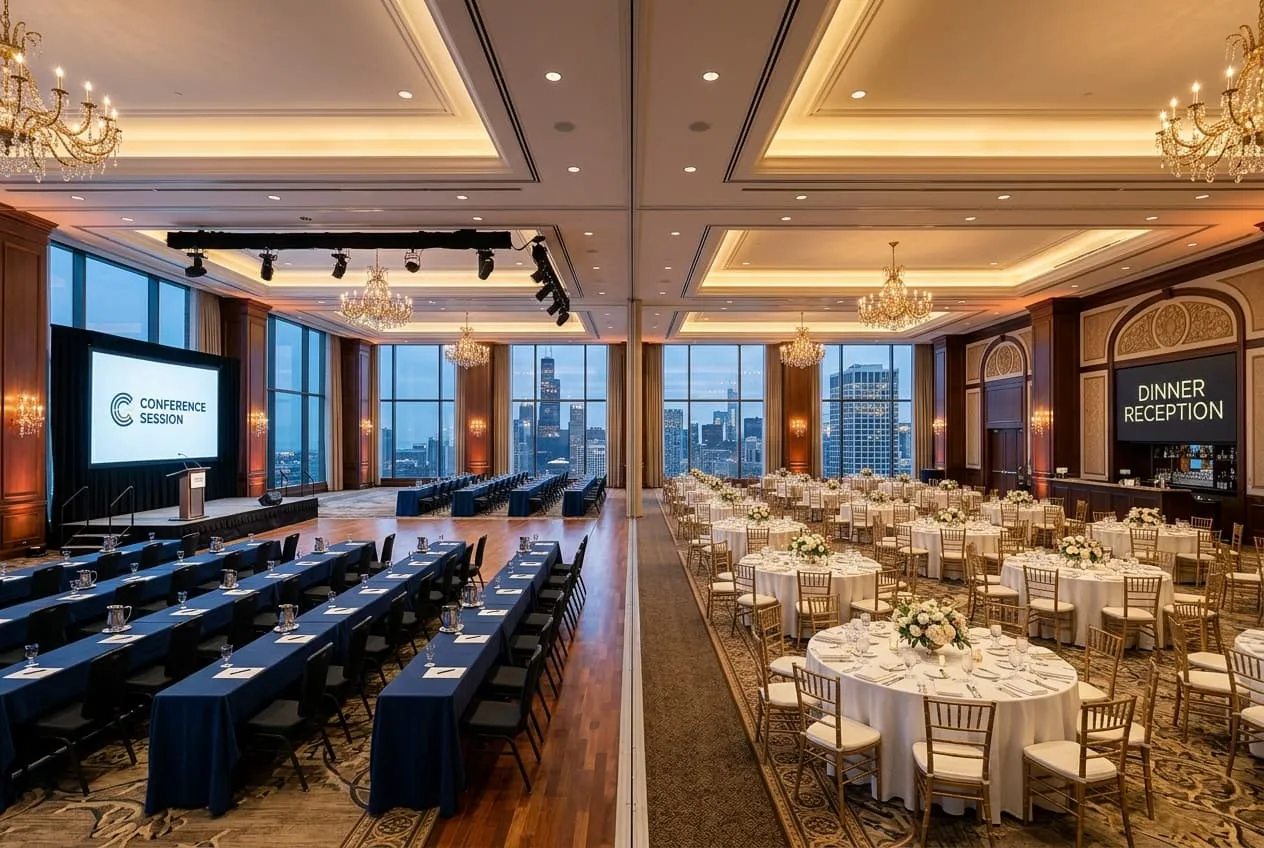
For an undiscounted planning example, a 400-seat sanctuary at $55 per chair comes to $22,000 for chairs alone. Add freight, any ganging accessories, carts, and installation separately. A formal quote with the exact product and quantities confirms the project's actual cost.
Ganging, bookracks, and connectors
This is where church seating diverges from a typical banquet chair order. Most sanctuaries want rows that stay aligned and do not shift when a congregation stands and sits repeatedly through a service. Look for:
- Ganging clips or interlocking connectors that link chairs into secure rows without bolting them to the floor, so the room can be reconfigured for a wedding, concert, or community event.
- Bookracks on the chair back for hymnals or bulletins. Treat the rack and the ganging connector as separate accessories unless the exact model documentation identifies a combined assembly; a rack alone does not establish that neighboring chairs are linked.
- Aisle-end caps or numbered row tags, useful for larger sanctuaries that need to track row and seat counts for capacity planning or event ticketing.
If your fellowship hall or multipurpose room needs the same chairs to convert between rows-facing-forward for worship and round tables for a potluck, confirm the ganging hardware is designed for quick attach and release, not a permanent connection.
Stacking, storage, and setup crews
Identify the actual setup team, chair count, reset window and route. Obtain the chosen chair's approved stack, compatible cart and weight. For an illustrative 150-chair handling comparison, test 18-pound and 28-pound models with the intended team; the figures do not establish fatigue by a particular row, safe carrying or a preferred model.
What to check before placing a bulk order
- Frame gauge and welds. Ask for the actual material, gauge, joint design, test documentation, and maintenance instructions; neither welded nor bolted construction establishes superiority by itself.
- Weight rating. Treat 250 to 300+ pounds only as a hypothetical comparison entry, not a universal minimum or verified safe load. Obtain the exact model's intended-use limit, test basis, and restrictions and assess it against the project requirements.
- Fabric double-rub count. For upholstered seats, the ACT guidance uses 30,000 double rubs for high-traffic woven or knit fabrics and 50,000 for coated fabrics. Confirm the exact textile type and care requirements; the count does not promise years of weekly attendance.
- Ganging compatibility. Confirm the connector style matches across colors and future reorders, since sanctuaries often add chairs in phases.
- Sample first. Request one sample chair before committing to a 200 or 500 unit order. Five minutes can be an initial sample trial, not proof of comfort through a full service; test the actual seating duration, sightlines, handling, and documented stack method.
- Glides or floor protection. Confirm glides that protect hardwood or tile sanctuary floors from scuffing during setup and breakdown.
Freight and lead times
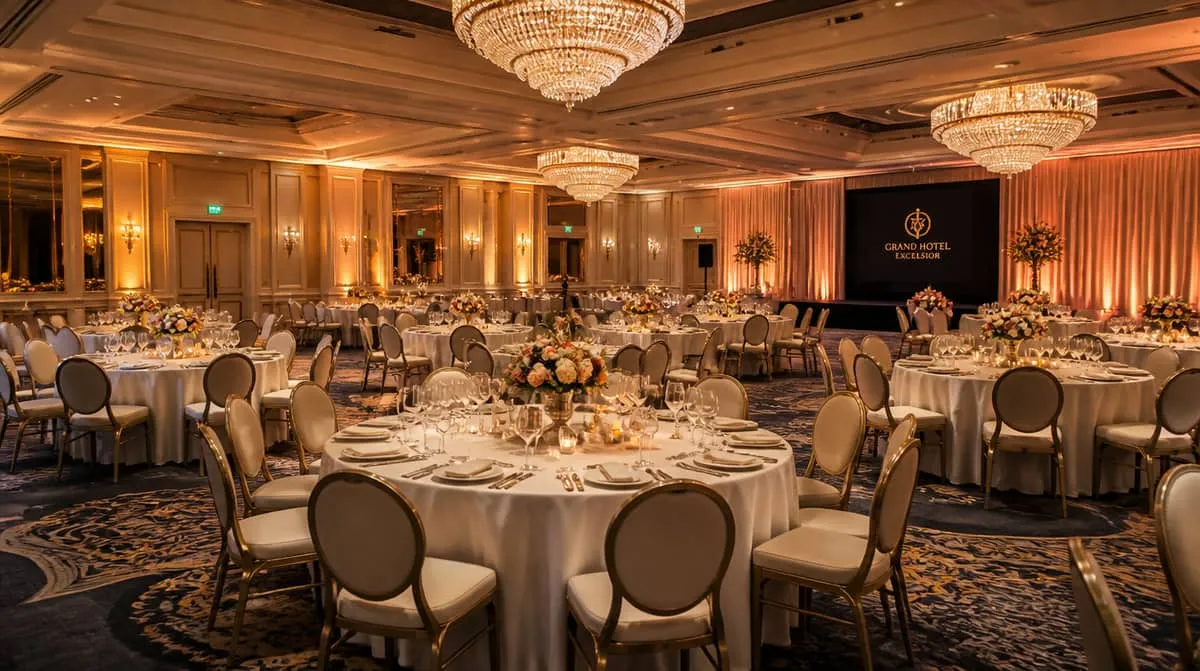
Ask the provider to identify the actual freight mode, packaging, service and charge for the quantity and site. Record the delivery address, dock, liftgate and any limited-access constraints. A few hundred chairs does not establish LTL or full-truckload service, and freight is separate from unit price only if the proposal says so.
For a preliminary calendar, test 2 to 6 weeks for a stock-supported order or 8 to 14 weeks for custom fabric, frame finish, or bookrack configurations. These are illustrative assumptions; confirm actual quantities, accessory availability, approval dates, and delivery milestones before committing a dedication date.
Getting an accurate quote
Because every sanctuary and fellowship hall order differs by quantity, finish, and ganging configuration, the most reliable way to price a church seating project is a direct quote rather than list pricing. Use the furniture cost calculator to build a rough budget first, then submit a request for quote with your chair count, finish preference, delivery zip code, and target timeline. Ask responding independent suppliers to confirm the exact models, included ganging and bookrack accessories, dated product pricing, freight, and delivery scope before approving an order.
Coordinate rooms and delivery phases
Write quantities by sanctuary, chapel, fellowship hall, and overflow room before combining them into one purchase. Shared finishes can simplify reorders, but each room still needs its own comfort, cleaning, and storage checks.
For phased delivery, record the approved frame, fabric, connector, and accessory codes. Confirm whether later phases can match them, who stores early shipments, and which service dates must remain uninterrupted. Keep an approved sample for comparison when each phase arrives.