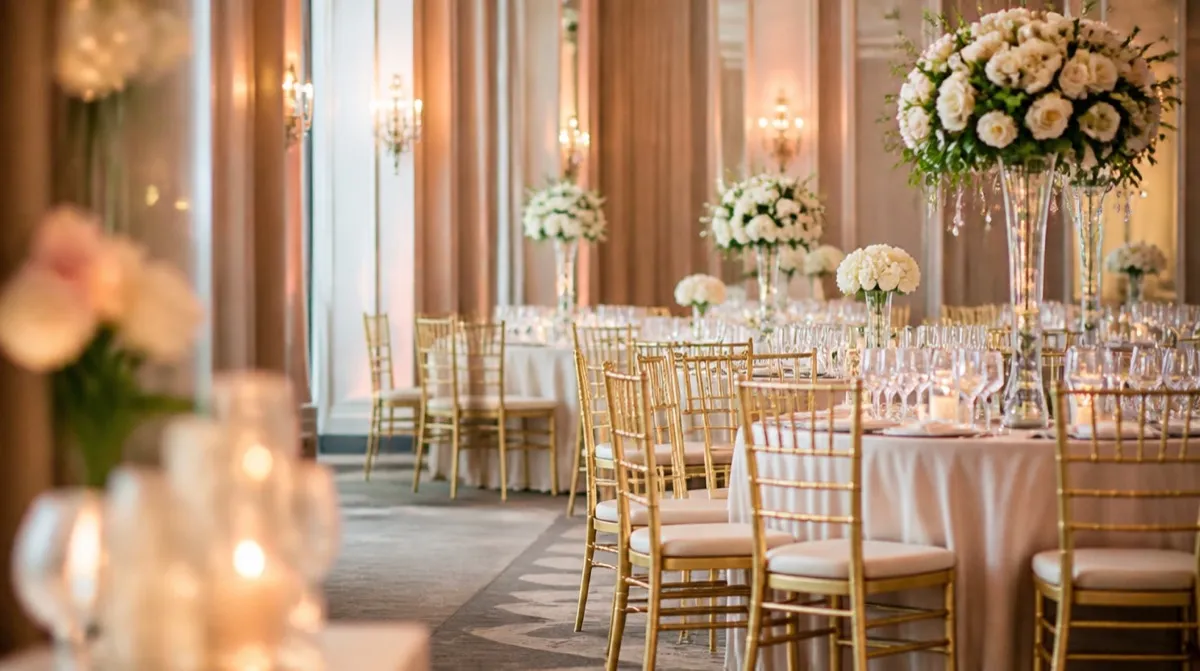
Chiavari chairs are the default choice for weddings, galas, and upscale banquets, and for good reason. The slim, elegant profile photographs beautifully and instantly signals a premium event. But not all Chiavari chairs are built the same. The material (resin, wood, or aluminum) determines how they hold up to constant setup and teardown, how high they stack, what cushions they take, and ultimately whether it makes financial sense for your venue to buy them outright or keep renting. Here is how event venues and banquet operators choose Chiavari chairs that survive the workload.
Why Chiavari chairs dominate events
The Chiavari silhouette has been the event-industry standard for decades because it works in almost any decor, from black-tie ballrooms to garden weddings. The open-back design keeps sightlines clean, the frames gang neatly into rows, and the classic shape pairs with tie-on cushions in any color a client requests.
For a venue, that versatility is the whole point. One chair inventory covers weddings, corporate galas, award dinners, and holiday parties without looking dated. The question is never whether to use Chiavari chairs, it is which material best matches your volume and handling reality.
Resin Chiavari chairs
Resin (often called resin or poly Chiavari) is the workhorse of the high-volume event world. Molded from a single piece of reinforced resin, these chairs resist chipping, shrug off humidity, and survive transport far better than wood. There are no joints to loosen, which is exactly what fails first on wood chairs under repeated stacking.
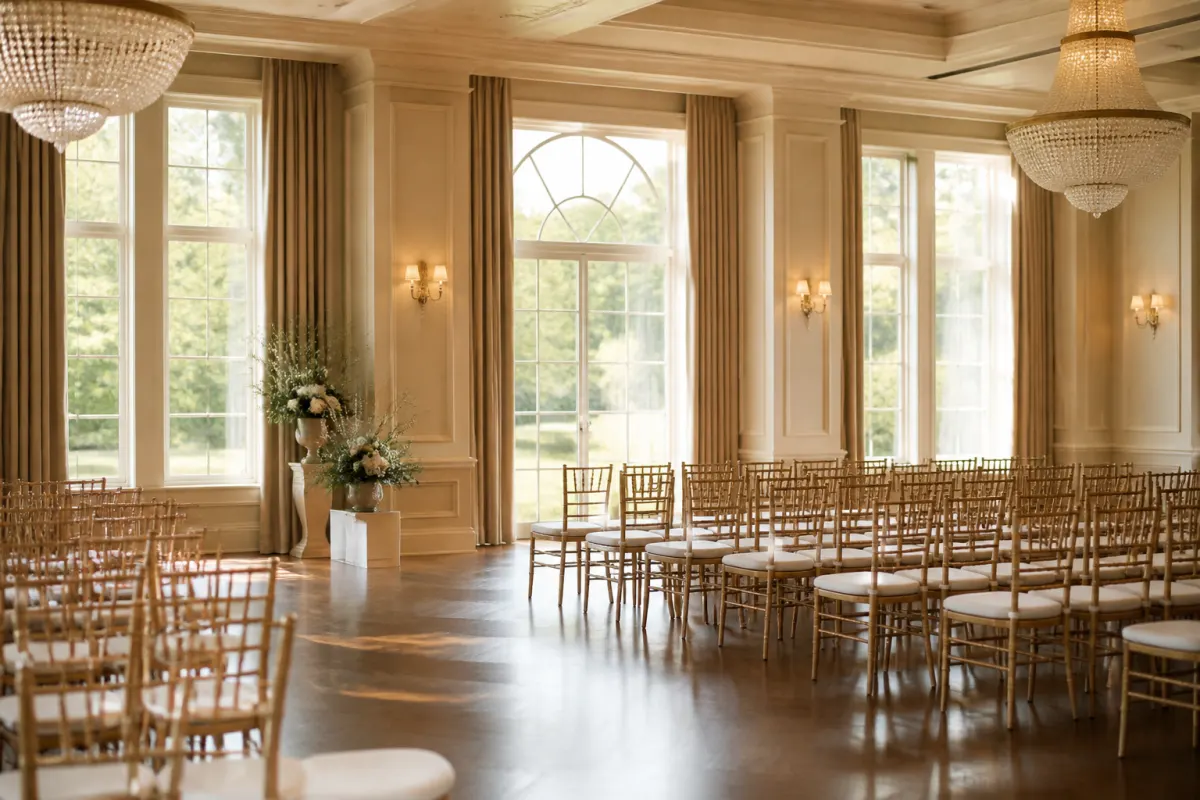
Expect resin Chiavari chairs to run 40 to 80 dollars per unit at volume. They stack high, wipe clean, and handle outdoor and poolside events where wood would warp or crack. For a venue turning chairs over multiple times a week, resin is usually the smart money.
Wood and aluminum Chiavari chairs
Wood Chiavari chairs are the original and still carry a premium, traditional feel that some high-end clients specifically request. The tradeoff is fragility. Wood joints loosen over time under repeated stacking and transport, and the finish chips, so they demand gentler handling and more maintenance.
Aluminum Chiavari chairs solve the durability problem while keeping a metal frame's clean look. They are lightweight for staff to carry, resist corrosion, and hold up to heavy cycling. Both wood and aluminum Chiavari chairs typically run 90 to 180 dollars per unit at volume, roughly double the resin price, so the decision comes down to how much the specific look matters to your clientele versus your handling volume.
Durability and stacking
Whatever the material, spec chairs built for real event abuse. Look for frames rated for tens of thousands of use cycles, reinforced stress points, and floor glides that protect your flooring and keep chairs from catching on carpet.
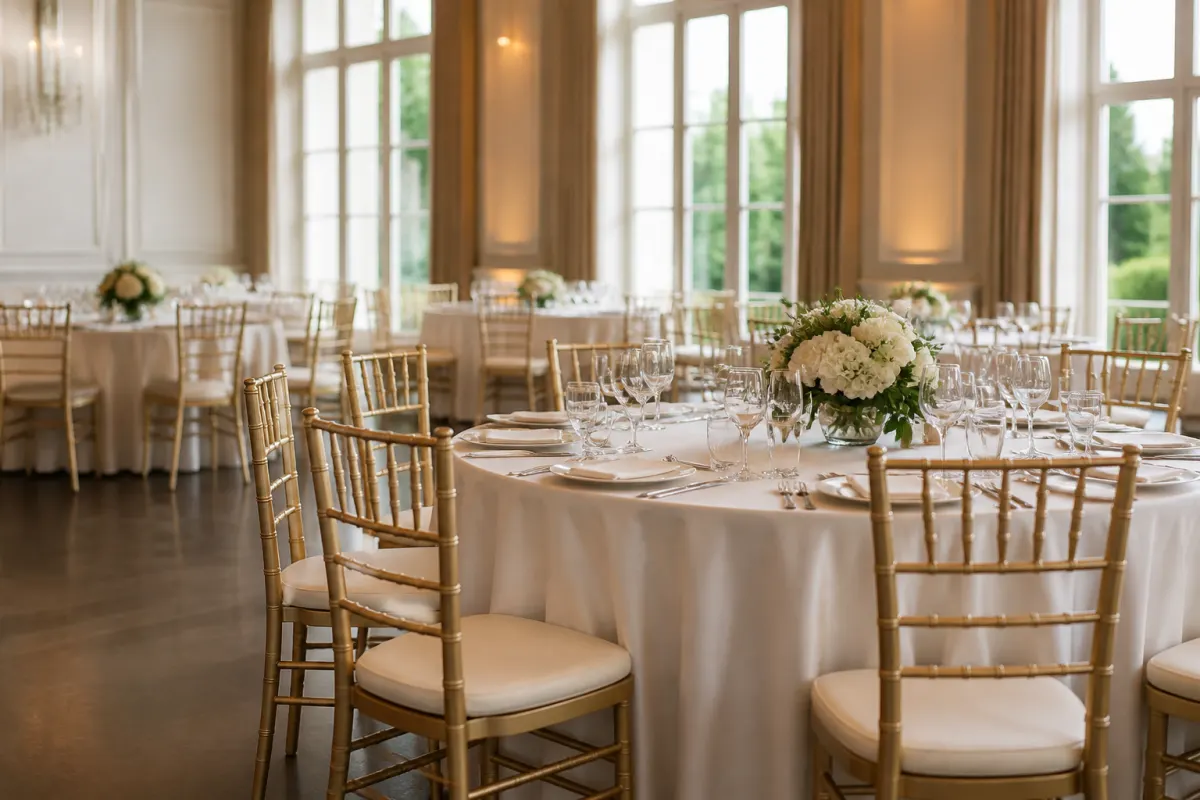
Stacking is a genuine budget factor. Chiavari chairs that stack higher store more inventory in less square footage, which matters when you are warehousing hundreds of chairs between events. Confirm the rated stack height and buy the matching dollies or chair carts up front, because transport and storage equipment is what actually protects your investment during turnover. For a broader look at event seating options beyond Chiavari, see our banquet chairs selection.
Cushions and finishing
Most Chiavari chairs use tie-on seat cushions rather than fixed upholstery, which is a feature, not a limitation. Removable cushions let you change colors per event, replace worn pads without retiring the chair, and clean or swap cushions independently of the frame.
When you order cushions, hold them to commercial standards. Commercial-grade cushion covers should hit 50,000 or more Wyzenbeek double rubs, well above the 10,000 to 15,000 typical of residential fabric, and the fill should use commercial foam in the 35 to 40 ILD range so it keeps its shape through hundreds of events. Cheap cushions flatten fast and undercut the premium look you paid for.
Buy vs rent
The buy-versus-rent math is mostly about frequency. If you are a venue or caterer running events most weekends, buying pays for itself quickly. At roughly 40 to 80 dollars for resin chairs and volume price breaks stepping down at 50, 100, 250, and 500 or more units, a purchased inventory often costs less than a single season of rentals for the same chair count.
Renting still makes sense for one-off oversized events, unusual color requests, or when you lack storage. But if you are renting the same chairs repeatedly, run the numbers. Many venues find the break-even point comes within a year of steady bookings. When you are ready to compare, request a quote with your chair count and material preference to see real volume pricing.