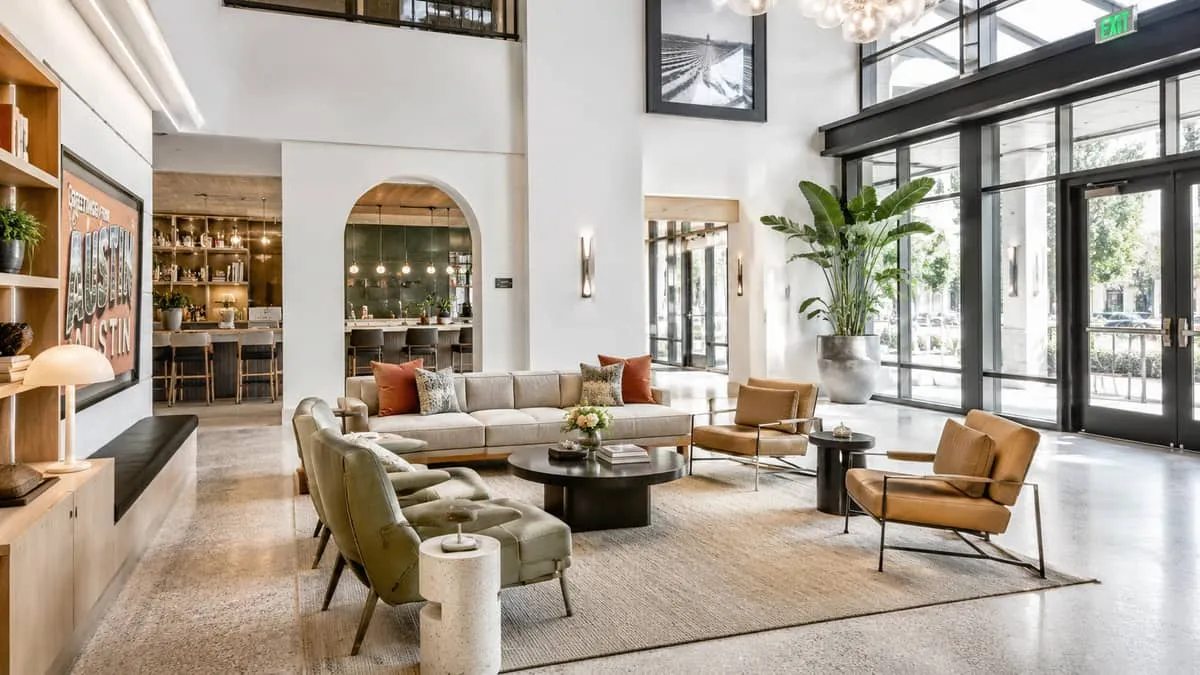
A convention attendee checks into a downtown St. Louis hotel late on a Sunday afternoon, rolling bag in hand, headed to a trade show floor at the America's Center in the morning. By early evening, the same lobby is filling with a Cardinals crowd staying downtown for a weekend homestand at Busch Stadium, and by the following week that same seating area is hosting business travelers in town for meetings at one of the corporate offices out toward Clayton. Three completely different guests moving through the same room across a single week, and the furniture has to read as right for all three.
Why Lobby Furniture Takes More Abuse Than Any Other Category
Hotel lobby furniture sees more total daily use than almost any other piece in the building. A guest room chair might get used by one or two people a night. A lobby chair or sofa gets sat in, leaned on, and used as a staging area for luggage by dozens of different guests over the course of a single day, every day, with no rest period between bookings the way a guest room has. During a busy America's Center convention week or a Cardinals homestand, that use volume climbs sharply.
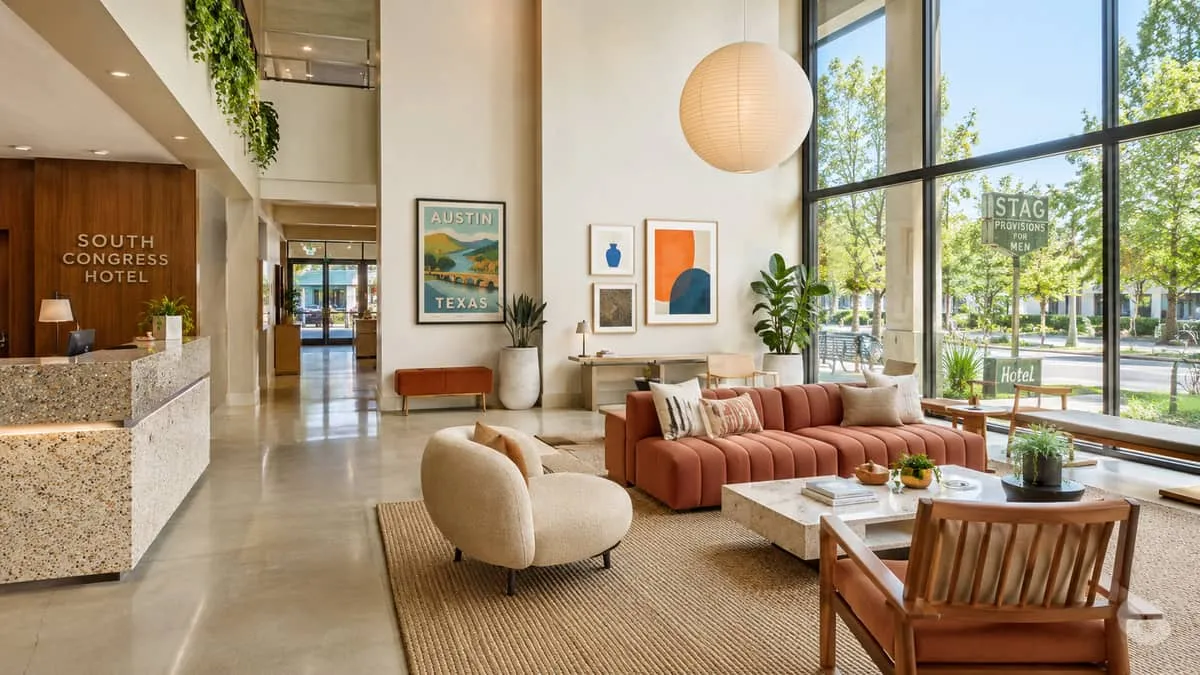
That volume of use demands a different construction standard than a guest room piece. Frame joinery needs to hold up to constant weight shifts and repositioning by housekeeping and guests alike. Fabric needs a high double-rub count rating to survive daily contact without visible wear within the first year. Finishes on tables and casegoods need to resist scuffing from luggage, laptops, and coffee cups far beyond what a residential finish is rated for.
Renovation Timing Around a Busy Convention Calendar
St. Louis' hotel stock has been steadily updating, with renovation activity concentrated downtown and in the Central West End as properties compete for the same convention, medical, and corporate travel dollars. That pace creates real scheduling pressure around furniture procurement.
Contract-grade furniture is built to order, and lead times for standard commercial pieces typically run eight to twelve weeks from confirmed specification. Custom or semi-custom work, COM fabric programs, frame modifications, non-catalog finishes, adds coordination time on top of that. Properties timing a renovation or reopening around a major convention date at the America's Center or a Cardinals homestand need those lead times built into the project schedule from day one, not treated as a detail to sort out once construction is underway.
Working with a supplier who gives clear lead time commitments, understands hospitality projects at your property's scale, and can support a COM program when your design team has a specific material story in mind is worth more than chasing the lowest unit price from a vendor treating a hotel lobby order like a retail transaction. In a market where St. Louis hotels are competing for the same limited pool of convention, medical, and corporate travelers, lobby furniture that confirms a guest's booking decision instead of introducing doubt is a revenue variable as much as a design one.