Pittsburgh's event market has scaled significantly alongside the city's economic transformation. What was once a mid-market convention city with a few large venues and a lot of ballroom capacity has become a genuinely competitive destination for corporate events, academic conferences, and private functions driven by the David L. Lawrence Convention Center's national profile, the CMU and Pitt academic calendar, and a tech sector that generates product launches, investor events, and team gatherings that fill the city's mid-size venues. Banquet and event furniture in this market has to perform at convention scale while meeting the design expectations of an increasingly sophisticated event-planning clientele.
Pittsburgh's Event Venue Landscape
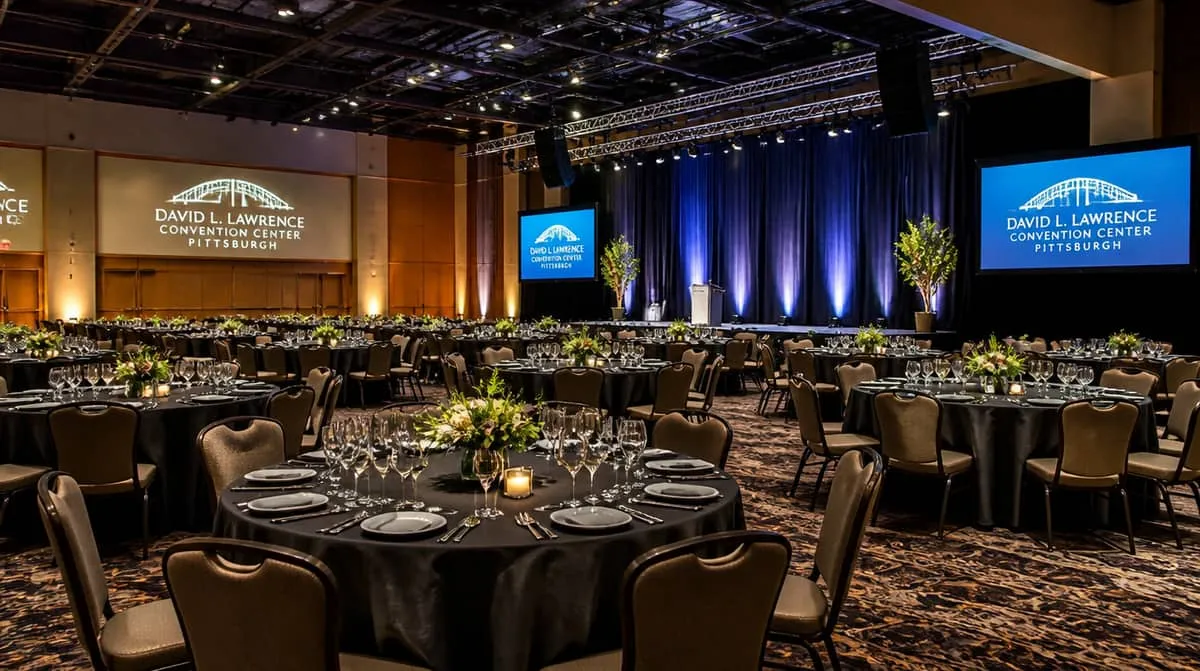
The David L. Lawrence Convention Center on the North Shore is the anchor of Pittsburgh's large-format event market a LEED-certified facility that is among the largest and most sustainable convention centers in the mid-Atlantic. Events at the DLCC range from 500-person corporate conferences to multi-day expos with thousands of attendees, and the venue's own furniture inventory is supplemented by hotel ballroom and pre-function space at adjacent and nearby properties. Hotels in the Downtown and North Shore corridors that serve DLCC overflow need banquet furniture that can be configured quickly, stacked efficiently, and moved between spaces without a dedicated logistics team.
Banquet chairs for Pittsburgh convention-adjacent properties need to meet a specific performance standard: lightweight enough for staff to reposition without assistance, stackable to a height that fits standard storage rooms, and durable enough to withstand the kind of volume that a property running 150 event days per year generates. Frame construction matters here welded steel frames outlast bolted or stapled alternatives in high-cycle banquet environments.
Pittsburgh's corporate event market has grown substantially with the expansion of Carnegie Mellon's robotics and AI programs, Google's Pittsburgh engineering office, Duolingo's headquarters, and Uber's Advanced Technologies Group. Tech-sector events have moved away from the traditional banquet-hall aesthetic and toward more flexible, lounge-forward configurations that require a different furniture mix: fewer rows of stacking banquet chairs, more lounge chairs and sofas in breakout configurations, cocktail tables with barstools for networking zones, and modular seating that can be reconfigured between keynote and workshop formats.
UPMC's event calendar medical conferences, department retreats, donor events, and training programs generates steady demand for mid-size venue furniture in Oakland and the South Side Flats campus area. These events skew toward more formal configurations than tech-sector gatherings, making traditional banquet chairs in neutral upholstery appropriate.
Pittsburgh's private event market weddings, galas, and cultural events has been elevated by venues in converted industrial spaces: the Heinz History Center's Great Hall, the Terminal at Agora, and several former mill and warehouse spaces that have been repositioned as premium event venues. These spaces benefit from banquet furniture with enough design character to not look generic in rooms with genuine architectural distinction.
Design and Specification Standards
Pittsburgh's event venues have moved away from the gold-chiavari-chair-and-white-linen default that dominated the market through the 2010s. The shift reflects the city's broader aesthetic evolution: event clients who want furniture that references the industrial-craft identity of the space rather than imposing a generic event-hall look.
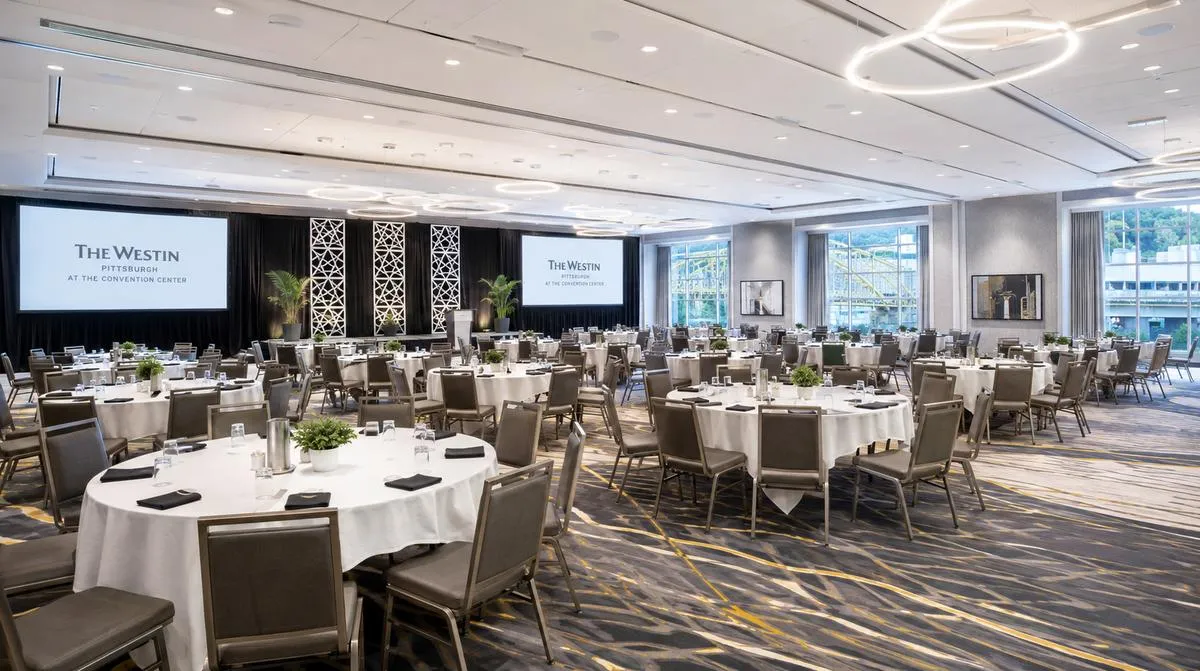
Banquet chairs in dark metal frames gunmetal, matte black, or brushed steel with upholstered seats in charcoal, warm gray, or dark leather-look vinyl fit Pittsburgh venues without requiring a design override. These specifications work in tech-sector events, medical conferences, and private social functions without looking like furniture that was designed for a different city's ballroom.
For cocktail and networking configurations, barstools in matching metal frames provide visual coherence with banquet seating. Upholstered seat backs rather than bare metal improve comfort for extended networking events a consideration that tech clients, who often run evening events after full conference days, particularly appreciate.
Modular lounge configurations for breakout zones require sofas and lounge chairs that can be reconfigured quickly by event staff. Pieces with reasonable weight and simple geometry square arms, clean profiles reconfigure more efficiently than complex-shaped pieces designed for permanent installation.
Procurement and Logistics
Banquet furniture procurement for Pittsburgh venues should account for storage capacity as a spec constraint: pieces that don't stack efficiently create storage problems that compound over time. Specifying stack height and dolly compatibility at the purchase stage avoids discovering the storage problem after delivery.
For large initial orders, phased delivery coordinated with event season late spring, before summer wedding and conference season peaks allows venues to begin using new furniture before the full inventory is in house. Lead times of 8 to 12 weeks are standard for in-stock styles; custom upholstery or finishes add 4 to 6 weeks.
For Pittsburgh properties comparing banquet and event furniture options, project-specific pricing tells you more than any published range. Request a quote and we will scope it to your space and volume.
Related reading
- Banquet furniture cost guide: what venues actually pay
- Banquet chairs: the complete commercial buying guide
- Ballroom furniture guide for event venues
- What is contract furniture
- Hotel furniture supplier guide
- Hospitality furniture supplier guide
- Commercial banquet chairs
- Event lounge chairs
- Bar and cocktail stools
- Commercial furniture in Pennsylvania