Boutique hotels succeed or fail on the coherence of their design story, and no American city right now offers a more distinctive or more genuinely rooted design narrative than Pittsburgh. The city's transformation from steel capital to tech and creative hub has produced an aesthetic vocabulary exposed steel, reclaimed mill wood, honest craft, black metal accents that boutique operators can draw from without fabricating a false history. The furniture choices in a Pittsburgh boutique hotel either honor that vocabulary or reveal themselves as generic product dressed up in industrial costume. Suppliers who understand the difference are worth seeking out before the design phase begins.
Pittsburgh's Boutique Hotel Market
Lawrenceville is Pittsburgh's most fertile ground for boutique hotel development. Butler Street's evolution from post-industrial vacancy to one of the most photographed neighborhood strips in Pennsylvania has made the surrounding area a natural target for design-forward lodging. Guests staying in Lawrenceville are there precisely because they've rejected the convention-center Marriott and the airport Hilton they want an experience rooted in where they actually are. Lounge chairs in the lobby need to look like they belong to this particular building, on this particular block, in this particular city.
The Strip District's boutique hotel potential is anchored by the neighborhood's weekend food market energy and its growing evening dining scene. Properties here draw leisure travelers who are often design professionals, food tourists, or tech-sector visitors from companies like Uber ATG, Google, and Duolingo's Pittsburgh offices. This is a guest who notices furniture quality, recognizes contract-grade construction versus furniture-store product, and will mention both in a review.
East Liberty, adjacent to the CMU and Shadyside medical corridor, supports boutique properties that serve a slightly different mix: extended-stay healthcare travelers, visiting academics, and tech workers on longer project rotations. Furniture in these properties needs to perform across longer occupancy periods guest room pieces should withstand true extended-stay wear, not just transient one-night use.
The North Shore, near Acrisure Stadium and PNC Park, presents a different boutique opportunity: game-weekend properties that can command premium rates but need public spaces bars, lobbies, outdoor areas that can absorb game-day crowd energy without looking trashed by Monday morning. Sofas and lobby seating in these properties need to be upholstered in materials that clean fast and don't show the evidence of high-energy sports crowds.
Furniture Design for Pittsburgh's Boutique Aesthetic
Pittsburgh's design identity for boutique hotels has converged on a set of principles that, done well, are genuinely beautiful and, done poorly, are easily spotted as imitation. The core elements: structural honesty (if steel is used, it should be structural or at least structurally plausible, not appliqué), reclaimed material authenticity (reclaimed wood from verifiable regional sources, not factory-distressed veneers), and palette discipline (charcoal, warm blacks, raw metal tones, amber wood, punctuated by Steelers gold used sparingly and without being on-the-nose).
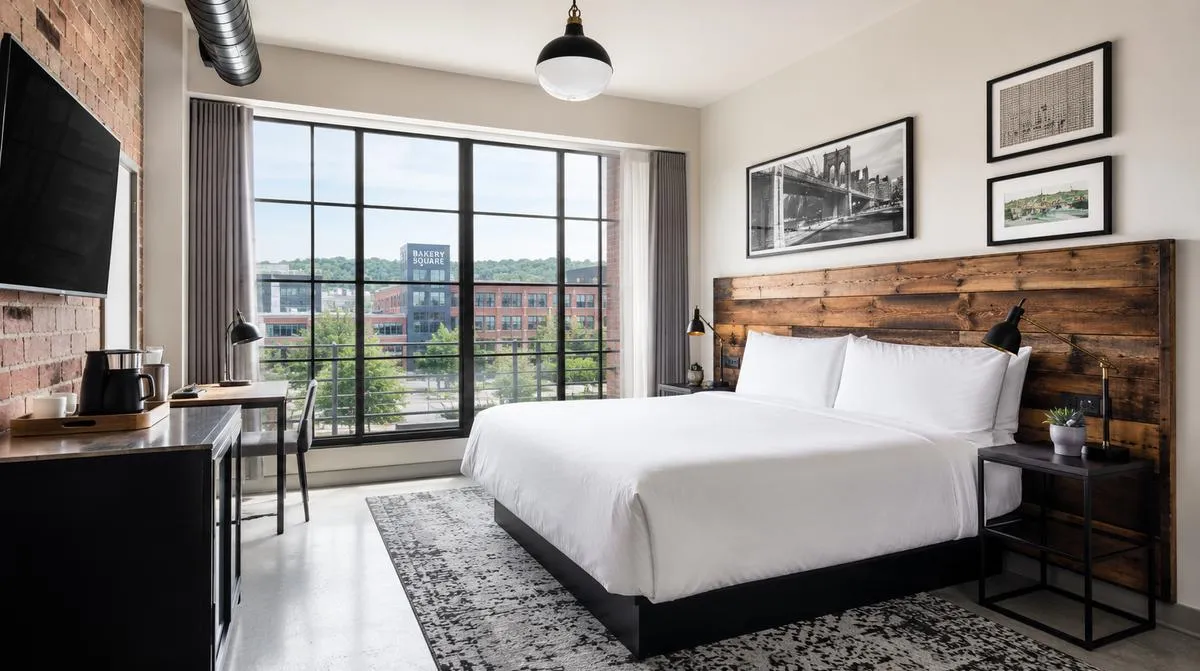
Headboards are the most visible furniture decision in a boutique guest room and carry the most design weight. A steel-framed panel headboard with upholstered insert in a dark performance fabric reads as Pittsburgh in a way that an upholstered button-tufted headboard does not. Reclaimed wood panel headboards especially in white oak or mixed hardwood with visible grain and age connect the guest room to the building's material history.
Public spaces lobby, bar, common rooms benefit from sofas and lounge chairs that mix materials intentionally. A leather sofa with visible stitching and a steel base alongside a wood-arm lounge chair creates the layered material conversation that boutique interiors require. Ottomans in performance leather or waxed canvas provide flexibility for room configurations that shift from quiet check-in mornings to social evenings.
Guest room seating the desk chair, the occasional chair should be specified with the same care as lobby pieces. Boutique guests notice when the room's design logic breaks down at the seating that was clearly afterthought-specified.
Procurement and Project Management
Boutique hotel projects in Pittsburgh frequently involve adaptive reuse of industrial or commercial buildings former warehouses, mill offices, department stores with existing architectural conditions that define rather than limit the design. Furniture specifications need to be developed in dialogue with the building's existing conditions rather than in isolation from them.
Lead times for custom-specified boutique hotel furniture run 10 to 16 weeks. Operators planning Pittsburgh openings should engage furniture suppliers during the design development phase, before construction drawings are finalized, so that furniture dimensions and specifications can be coordinated with finish selections and architectural details from the start. Last-minute specification changes in boutique projects are expensive and often produce the generic results the design was meant to avoid.
Planning boutique hotel furniture for your Pittsburgh project? Share your specs and quantities and we will build pricing around your actual program. Request a quote to get numbers for your space.