Milwaukee's event and convention infrastructure has expanded significantly with the Wisconsin Center's ongoing development, placing the city in direct competition with larger Midwest markets for regional and national convention business. For the hotels and event venues supporting that growth, banquet and event furniture is a long-term capital investment with operational consequences that play out over years of daily use not a category where compromising on specification to save upfront cost makes sense when you're setting and striking the same chairs three hundred times a year.
Milwaukee's Banquet and Event Market
The Wisconsin Center convention complex anchors Milwaukee's convention economy and drives demand for large-format event seating across the city's hotel inventory. Properties positioned to serve Wisconsin Center overflow and to host concurrent breakout events, corporate dinners, and private functions that accompany large conventions need banquet chair inventories that can flex from a 50-person boardroom dinner to a 500-person gala without requiring different furniture categories. Banquet chairs that stack cleanly to eight or ten high, transport efficiently on purpose-built dollies, and present well in both configurations are the operational standard for this market.
Fiserv Forum's event programming extends well beyond NBA basketball. Major concerts, awards events, corporate sponsorship dinners, and special events at the arena generate demand for venue-adjacent catering and event furniture that can be deployed quickly and reset between same-day events. The arena district's proximity to major downtown hotels creates a circuit of event business that moves through multiple venues over a single convention weekend Saturday gala at a lakefront hotel, Sunday awards brunch at a Third Ward event space, Monday corporate breakfast back at the convention hotel.
Milwaukee's corporate market adds a distinct demand layer. The city's concentration of healthcare systems Froedtert, Aurora, Children's Wisconsin and financial services firms headquartered downtown generates consistent corporate event business throughout the year. These clients have expectations shaped by the corporate meeting and events market: rooms that look deliberately set, not like they were prepared in twenty minutes, and chairs that don't visibly wobble or show wear when a healthcare system CEO is seated at the head of a dinner for forty board members.
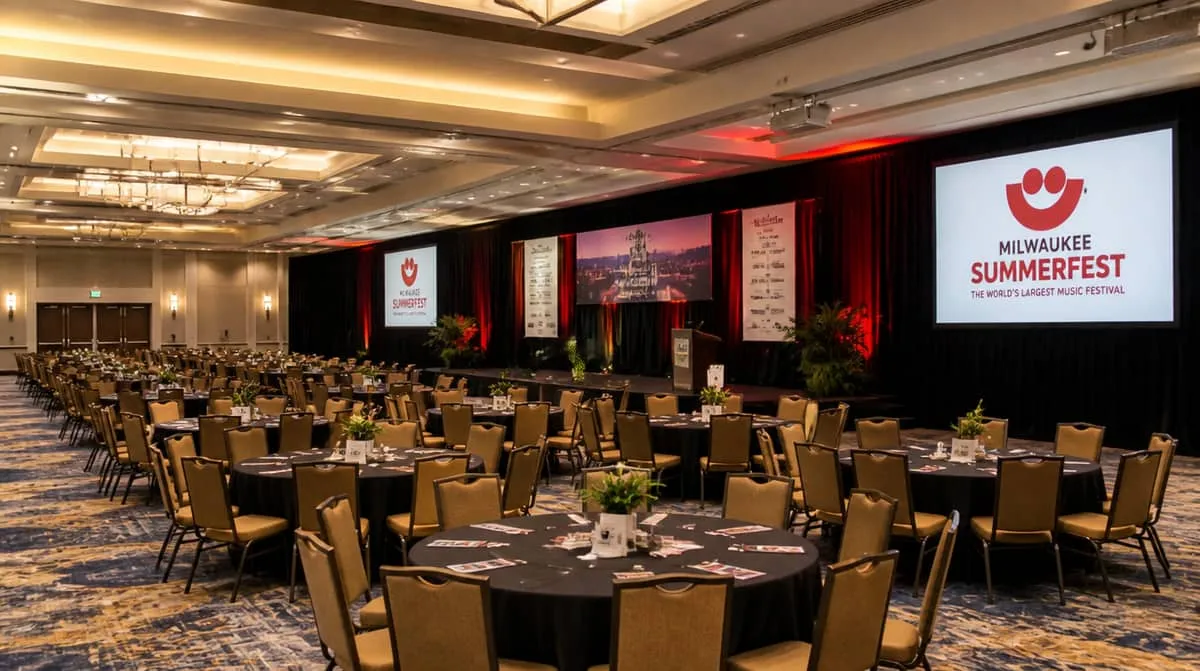
The Historic Third Ward event venue market private event spaces in converted warehouse and loft buildings represents a growing segment with different aesthetic requirements. Banquet chairs in these spaces need to work within the neighborhood's reclaimed-industrial design vocabulary while still meeting the stacking and transport requirements of commercial event operations. Ghost chairs, bentwood crossback chairs, and metal frame chairs in blackened or aged brass finishes are common specifications for Third Ward event spaces because they bridge the design and operational requirements.
Specifying Banquet Furniture for Milwaukee Events
Banquet chair specification for Milwaukee's event market starts with the stacking requirement. A chair that stacks to six high takes 33 percent more storage space than one that stacks to eight or nine which directly limits how many chairs can be stored in a venue's back-of-house area, and how many can be transported on a single dolly load across a hotel's service corridor. For a 300-seat ballroom that also needs to accommodate a 50-seat setup and a 500-seat setup, storage efficiency is a genuine operational constraint, not a secondary consideration.
Frame material is the second specification decision. Steel frame banquet chairs are heavier but more durable under repeated stacking and transport stress. Aluminum frame chairs are lighter which matters when banquet staff are moving 200 chairs between two setups in the same day but need heavier gauge construction to achieve equivalent durability. The minimum specification for commercial banquet chairs in a high-cycling Milwaukee event venue should be 16-gauge steel or 18-gauge aluminum with welded, not bolted, joint construction.
Seat and back padding construction determines how chairs present after a year of use. Foam padding should be high-density molded foam, not loose-fill or fiberfill, which compresses and shifts within months of regular use. Dining chairs used in event contexts where the same chair alternates between a restaurant setup and a private dining room need upholstery fabric rated for food service environments: wipeable, bleach-cleanable, and resistant to the staining that food service creates.
For Third Ward event venues and boutique hotel ballrooms, the aesthetic dimension matters alongside the operational one. Lounge chairs and sofas used in event breakout spaces and cocktail reception areas need to match the building's design vocabulary while holding up to event-frequency use. Performance velvet, performance bouclé, and performance leather alternatives offer the design expressiveness that Third Ward venues need in fabrics that can handle commercial event cycles.
Procurement and Inventory Planning
Banquet furniture procurement for Milwaukee venues benefits from treating inventory as a capacity planning exercise. The question isn't just "how many chairs do we need" but "how many chairs do we need to run our three largest concurrent setups without borrowing from another venue or renting at event rates."
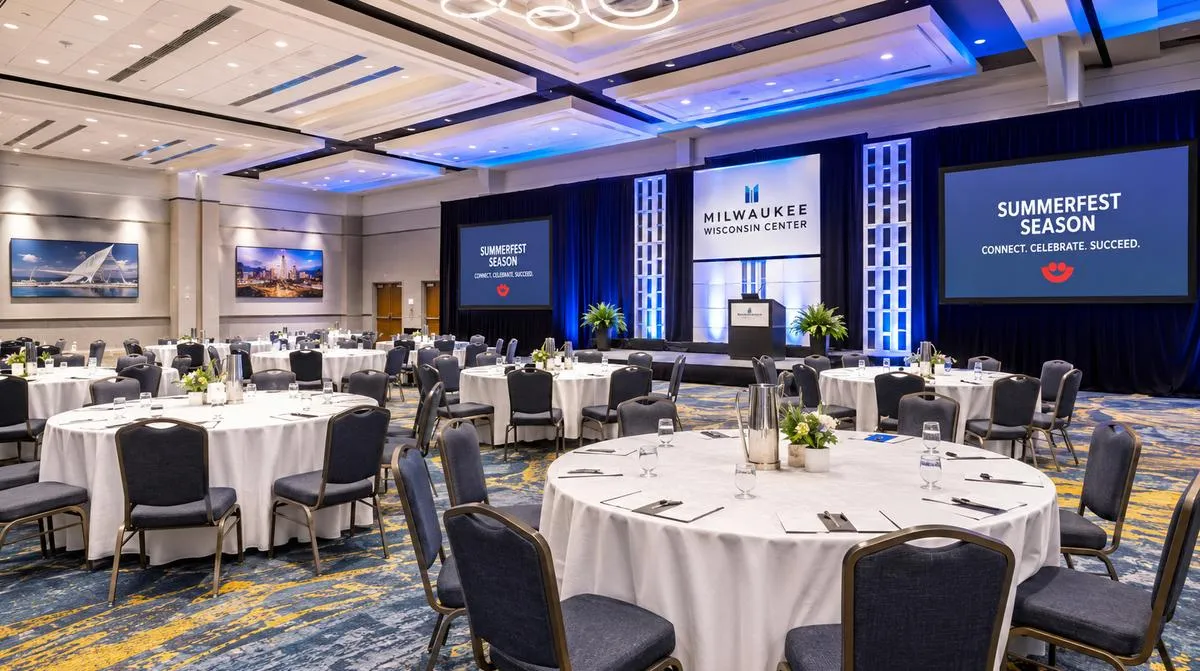
For Wisconsin Center-adjacent hotels, that calculation often reveals that owned inventory is more cost-effective than a rental relationship over three to five years. Rental rates for banquet chairs in Milwaukee's commercial market run $2 to $5 per chair per event; a hotel running 150 events per year can spend $15,000 to $30,000 annually in chair rentals that would be eliminated by a $25,000 inventory purchase that lasts ten years with proper maintenance.
Lead times for commercial banquet chair inventory run six to ten weeks for standard specifications. Custom upholstery colors and custom frame finishes add four to six weeks. Volume orders 200 chairs or more often qualify for manufacturer direct pricing that significantly reduces per-unit cost versus standard distributor pricing.
Every Milwaukee venue has its own volume, layout, and turnaround demands, and banquet and event furniture pricing follows from those specifics. Request a quote and we will scope it to your project.
Related reading
- Banquet furniture cost guide: what venues actually pay
- Banquet chairs: the complete commercial buying guide
- Ballroom furniture guide for event venues
- What is contract furniture
- Hotel furniture supplier guide
- Hospitality furniture supplier guide
- Commercial banquet chairs
- Event dining and side chairs
- Event lounge and breakout seating
- Commercial furniture in Wisconsin