Milwaukee takes its bar culture seriously in a way that has material consequences for furniture. With more than 30 active craft breweries operating alongside the Miller and Coors legacy that shaped the city's industrial identity, plus a dense concentration of cocktail bars in Historic Third Ward and Walker's Point, the city's bar operators are running some of the highest-volume commercial seating environments in the region. Add Fiserv Forum's arena district, where hotel bars and Deer District venues process thousands of guests on event nights, and the furniture spec question becomes less about aesthetics and more about survival.
Milwaukee's Bar and Lounge Landscape
The Deer District surrounding Fiserv Forum is the most operationally intense bar environment in the city. Hotel bars, sports bars, and lounge concepts in the half-mile radius around the arena process enormous volumes on NBA game nights, major concerts, and arena events that draw 18,000 people at a time. In that context, barstools take repeated impact from guests standing and sitting quickly, spills happen at a rate that residential upholstery cannot handle, and furniture is pushed, dragged, and rearranged constantly as crowds move. The spec requirement is unambiguous: commercial-grade steel frames, double-welded joints, footrest reinforcement, and upholstery in vinyl or commercial coated fabric that wipes clean without absorbing.
Historic Third Ward's cocktail bar and lounge corridor operates at lower volume but higher design scrutiny. Operators on Milwaukee Street, Broadway, and the adjoining blocks are selling an experience that the furniture must support. Lounge chairs in a Third Ward cocktail bar need to convey the same deliberate material selection as the back bar. Worn fabric, loose cushion covers, or frames that visibly flex under load undercut the environment the operator spent months designing. This is the segment where upholstery material, frame finish, and cushion construction matter most guests sit for two to three hours, and the seating experience shapes the entire visit.
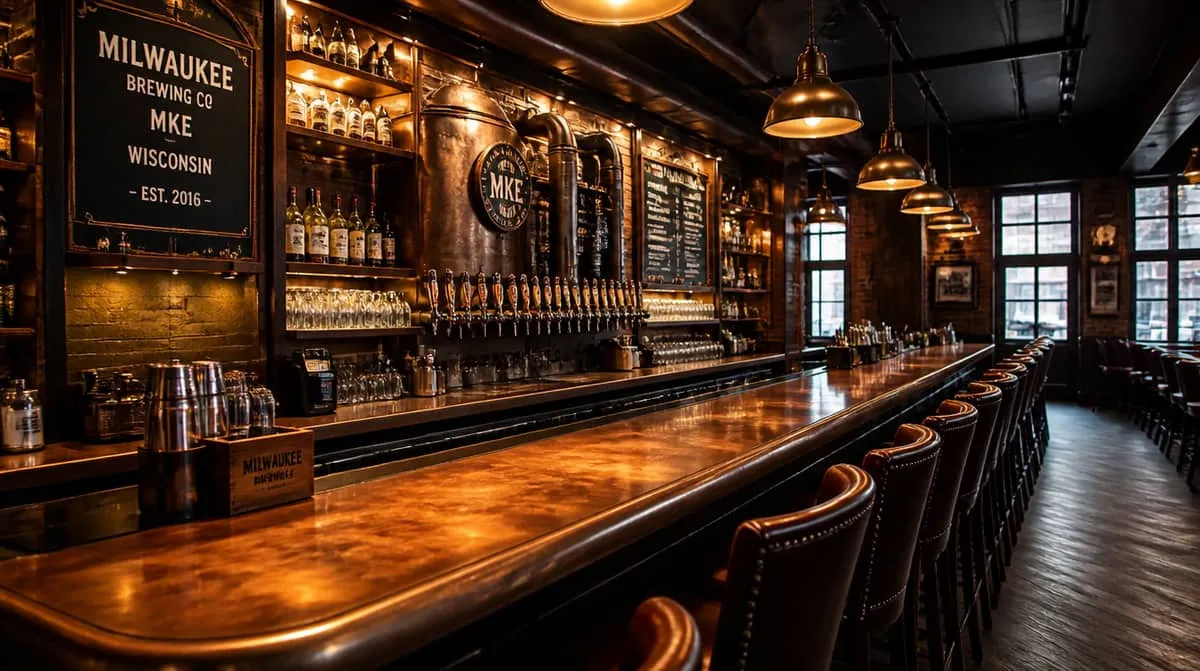
Milwaukee's craft brewery taprooms occupy a distinct category. The city's brewing culture produces spaces that are genuinely industrial former factory buildings and warehouse spaces where the exposed steel and concrete are part of the brand. Barstools with raw steel bases, adjustable footrests, and saddle seats in natural leather or heavy-woven fabric work in these contexts precisely because they don't pretend to be something more refined. The furniture needs to match the room, and the room is often a working industrial space adapted for hospitality.
Summerfest's lakefront grounds and the surrounding hotel corridor add a seasonal dimension. Outdoor and transitional bar seating around the festival grounds needs to handle eleven days of near-continuous use by a crowd of 900,000 over the festival run, then continue serving through the rest of Milwaukee's outdoor season on the lakefront.
Specifying Bar and Lounge Furniture for Milwaukee
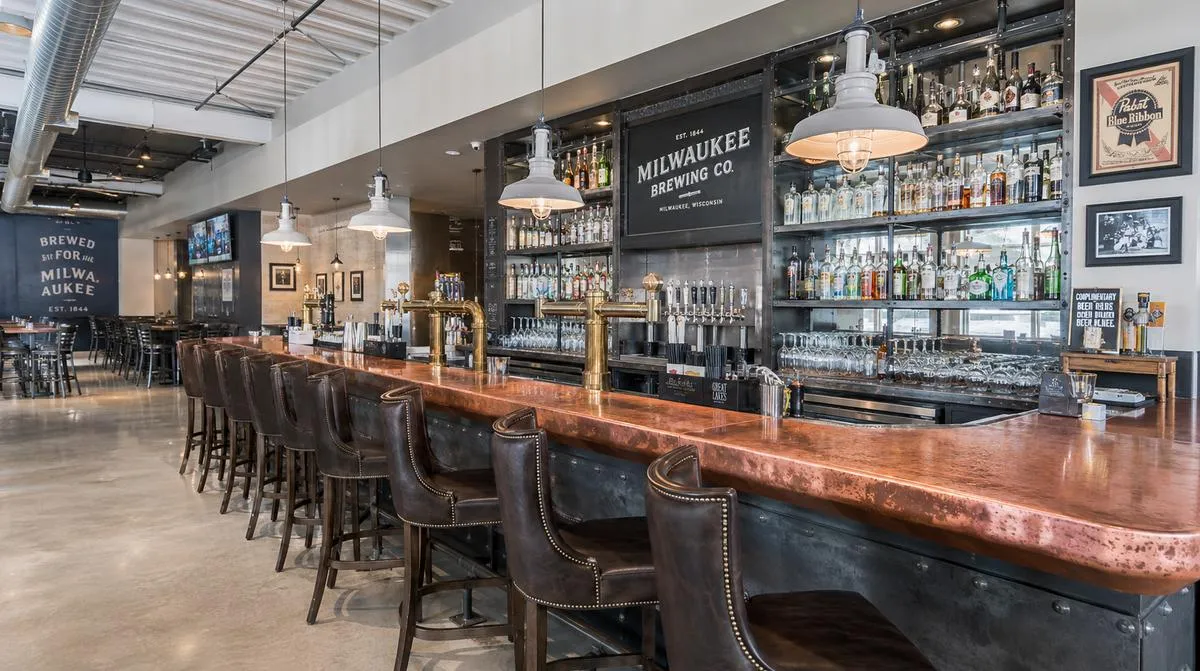
Milwaukee's industrial-lakeside design vocabulary translates directly into bar furniture specification. The city's aesthetic is built on honest material choices aged brass and copper that references the brewing industry, reclaimed wood surfaces with visible grain and texture, blackened steel frames that read as structural rather than decorative. Bar furniture that works in this environment leans into those materials rather than concealing them behind veneer or glossy finish.
For barstool frames, blackened or raw steel is the most versatile choice across Milwaukee's bar types it reads as intentional in a Third Ward cocktail bar, appropriate in a craft brewery taproom, and durable enough for the Deer District arena context. Brass footrest caps and hardware accents add the warmth the beer heritage aesthetic calls for without shifting the piece into a different design register. Seat heights should be specified to match counter heights carefully a common procurement error is ordering 30-inch-seat stools for 42-inch bar counters, which creates an uncomfortable experience that guests notice immediately.
Lounge chairs and sofas in hotel bar and lounge contexts need commercial-grade cushion construction high-density foam cores wrapped in a dacron layer, sewn with reinforced seams, and covered in fabrics rated for 100,000 or more double rubs. The Lake Michigan palette translates well into upholstery: slate grey, steel blue, and warm wheat tones complement aged brass hardware and reclaimed wood table surfaces. Avoid light-colored upholstery in high-volume bar contexts regardless of aesthetic preference performance fabric technology has its limits.
Procurement and Lead Times
Bar and lounge furniture for Milwaukee projects runs on similar lead times to other commercial hospitality categories: four to eight weeks for in-stock contract pieces, twelve to eighteen weeks for custom upholstery or custom frame finishes. The critical scheduling constraint unique to Milwaukee's bar market is the Summerfest and NBA playoff calendar.
Projects targeting a Summerfest-season opening the festival runs in late June and early July need purchase orders placed by late February to ensure installation is complete before the festival drives peak foot traffic to the surrounding area. Arena-district properties planning a refresh should avoid scheduling installation windows around Bucks playoff runs, which can extend into June and create logistical complications for any renovation within the Deer District footprint.
Planning bar and lounge furniture for your Milwaukee project? Share your specs and quantities and we will build pricing around your actual program. Request a quote to get numbers for your space.
Related reading
- Commercial bar furniture buying guide
- What is contract furniture
- Hotel furniture supplier guide
- Hospitality furniture supplier guide
- Commercial barstools
- Bar and lounge seating chairs
- Lounge sofas for hotel bars
- Commercial furniture in Wisconsin
Our take
There is a scheduling asymmetry buried in this market that the guide's own calendar makes visible but never develops. Nearly everything that punishes Milwaukee bar furniture happens between spring and early fall: Bucks playoff runs stretching into June, eleven days of Summerfest crowds, and the whole lakefront outdoor season. The flip side is that Deer District and lakefront operators get a long, quiet winter window that most bar markets never see. Treated deliberately, that window becomes the maintenance season: reupholstery on Third Ward lounge pieces, weld and footrest inspection on arena district barstools, refinishing on taproom seating that took a summer of wear. Operators who book that work for January and February keep every room intact through the months when every seat is occupied.
The bottom line: A solid specification guide for Milwaukee's arena, taproom, and cocktail bar segments. Pair its ordering calendar with a January and February maintenance cycle to get full service life from the pieces it recommends.