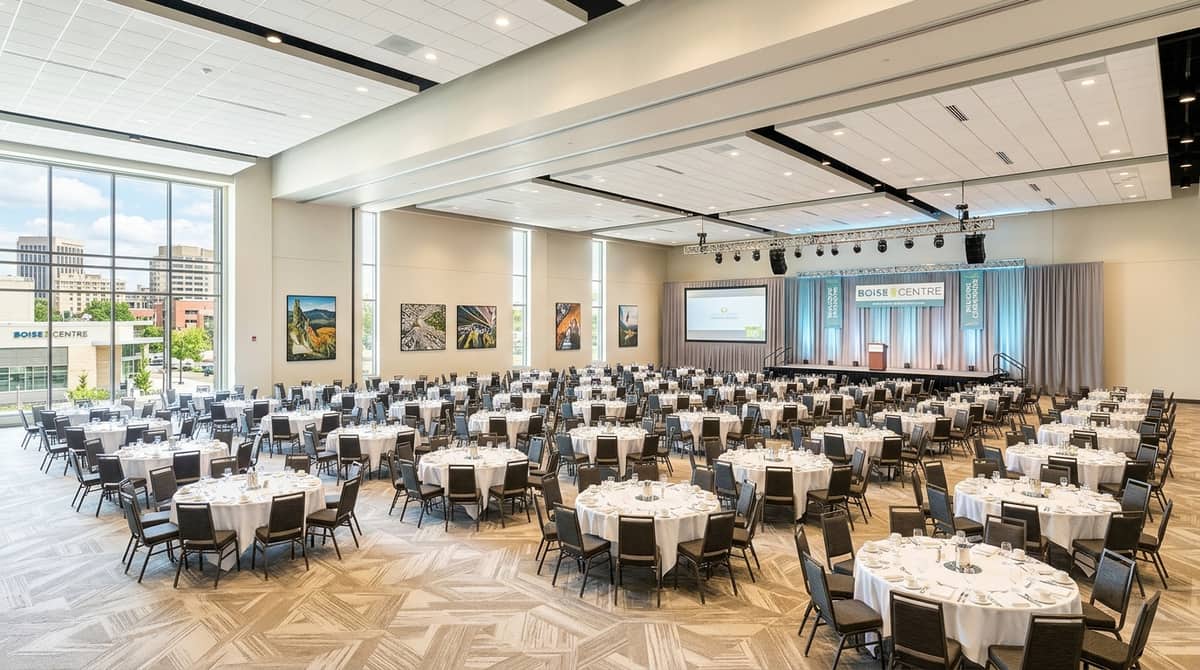
Hartford does not get talked about as an event market the way Boston or New York do, but the volume here is real and it is concentrated. The Connecticut Convention Center anchors downtown with a riverfront exhibit hall that pulls in insurance industry conferences, healthcare symposiums, and statewide association meetings all year long, and the XL Center a few blocks away adds arena-scale event bookings on top of that. Between the two, downtown hotels are running banquet floors that turn over constantly. Add in the wedding and corporate dinner market spread across West Hartford Center, the Farmington River Valley, and the historic estates in Avon and Simsbury, and you get a region where a lot of properties are managing serious event volume without the name recognition of a bigger city. If you run a hotel banquet department, a standalone event hall, or a restaurant with a private dining program anywhere in the Hartford area, your furniture inventory is one of your most consequential operational tools and most properties do not think hard enough about it until a reset takes twice as long as it should or a chair collapses mid-event.
What Hartford's Event Calendar Actually Requires
The volume question is where most Hartford operators get tripped up early. A ballroom in a downtown hotel near the Convention Center might run an insurance industry awards dinner Wednesday night, a nonprofit gala Thursday, and a wedding reception Saturday with a completely different layout each time. That kind of weekly rhythm means your banquet chairs and folding tables are being moved, stacked, dragged, and reset constantly, not occasionally. Furniture that performs fine in a low-volume environment falls apart fast under that pressure.
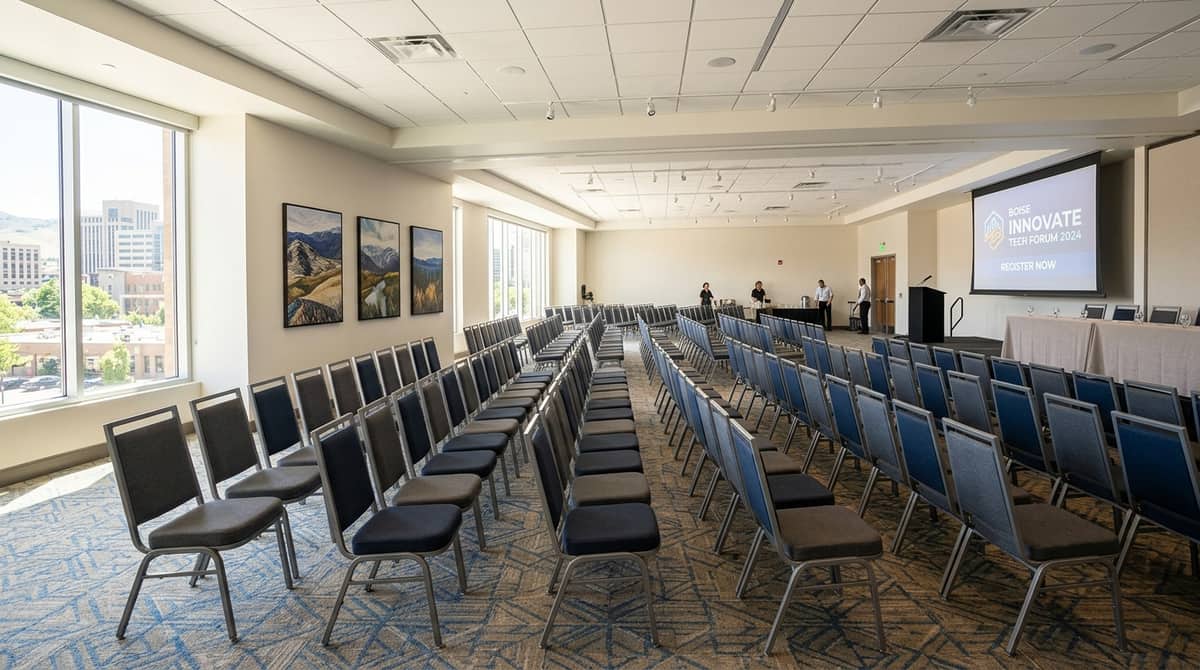
Stackable banquet chairs rated for eight to ten high are the baseline for any Hartford property doing serious volume. The stack rating matters, but so does the dolly system you pair with it. If your staff cannot move a full stack cleanly across a polished ballroom floor or through a service corridor connecting a downtown kitchen to a riverside function room, the rating on the spec sheet does not matter. Chair carts sized correctly for your specific chair model, with rubber wheels that will not mark hardwood or scuff a lobby floor, are worth buying at the same time as the chairs, not as an afterthought six months later when everyone is frustrated.
Folding tables need to match the range of events you book, not just your most common format. Round tables 60-inch or 72-inch work for plated dinners and are the default for most Farmington Valley wedding and gala bookings. Rectangular 6-foot and 8-foot tables are what your crew reaches for when configuring a classroom-style association meeting, a buffet line, or a serpentine cocktail bar during a downtown conference reception. Most properties need both, and the venues that execute room flips efficiently have enough of each format that they are never improvising on the fly.
Chair Spec for Properties from Downtown to the River Valley
The banquet chair is the piece of furniture guests interact with for three or four hours straight. It is also the piece your staff handles hundreds of times a week. Those two sets of requirements do not always point to the same product, and the best commercial chairs are designed with both in mind.
Frame material is the first decision. Steel frames are heavier but absorb impact well, a good choice for high-traffic venues where chairs regularly get stacked by staff moving fast at the end of a long night. Aluminum frames are lighter, which matters if your team is moving large quantities frequently, but they need thicker-gauge metal to hold up comparably. In Hartford's premium wedding corridor, the estates and garden venues around Avon, Simsbury, and the West Hartford Center area, Chiavari chairs remain the dominant spec because they photograph well, clients recognize them, and they convey a level of formality that justifies the price point. For corporate-heavy properties near the Convention Center or serving the insurance and financial firms clustered downtown, durability and reset speed tend to outweigh aesthetics, and a padded steel-frame stacker usually wins the cost-benefit analysis.
Foam density in the seat and back pad is a specification that rarely gets the attention it deserves. Entry-level contract chairs and retail crossover products often use foam that compresses within 18 to 24 months of regular use. Guests notice immediately, a chair that feels deflated communicates the same thing as a stained tablecloth. High-density foam holds its profile through thousands of uses and is worth the premium when you are buying chairs you expect to use for seven to ten years.
Folding Tables: The Operational Backbone
Folding tables are not glamorous furniture, but they are where room flip efficiency gets won or lost. A table with a bad hinge develops wobble, and a wobbling table under a centerpiece during a seated dinner gets noticed by everyone at that table and their entire social network when the photos come out. Commercial-grade folding tables use reinforced steel hinges and, on longer rectangular formats, a center support leg that prevents sag when the table is loaded with chafing dishes, glassware, and place settings.
Surface finish is a practical concern in a New England climate. Hartford winters bring dry, cold air into loading docks and back hallways, while humid summer stretches put moisture into the same spaces during peak wedding season. Event floors that run heavy catering programs are dealing with constant temperature swings between the kitchen, the loading dock, and the climate-controlled ballroom. High-pressure laminate resists warping better than budget veneers, cleans up quickly between events, and does not absorb spills the way some softer surfaces do. If your team is wiping down 60 tables at midnight before a Saturday setup call, surface cleanability is not a minor issue.
For Hartford venues in converted industrial spaces along the riverfront or in the boutique event rooms scattered through West Hartford, uncovered table aesthetics matter more than they do in a traditional hotel ballroom. A table that looks acceptable bare, clean edge profiles, neutral laminate, no visible hardware gaps, gives your room more visual range and lets clients see the space clearly rather than assuming every format requires full linen coverage.
Buying Volume, Managing Storage, and Working with the Right Supplier
Hartford's building stock skews older downtown, which means back-of-house storage is tight at a lot of properties. Newer suburban hotels near the interstate corridors were designed with event operations in mind and typically have dedicated furniture storage bays. Older downtown properties, converted mill spaces, and boutique venues built into historic buildings are often working with whatever square footage is left over after everything else got allocated. If your storage footprint is constrained, that constraint should directly influence your spec, chairs that stack to twelve high occupy significantly less floor space than chairs topping out at six, and over a full inventory that difference is substantial.
Buying commercial furniture from a contract supplier in volume, rather than placing multiple smaller orders from different sources, gives you consistency that shows up in the room. When chairs from two different orders are slightly different shades of the same color, or have frames that do not quite match in weight and profile, it creates a visual mismatch that planners and photographers notice even if guests do not. Specifying a single model and ordering your full program at once, or clearly documenting the model for reorders, keeps your inventory looking intentional for years.
A supplier who knows the hospitality contract space can also walk you through storage footprint before you order, help you think through cart and dolly logistics, and give you honest lead time guidance when you are working toward an opening date or a seasonal renovation. For a Hartford property doing steady convention business, getting furniture on site well ahead of your busiest season is not a luxury, the downtown calendar fills up fast and your banquet program needs to be ready when those groups arrive.