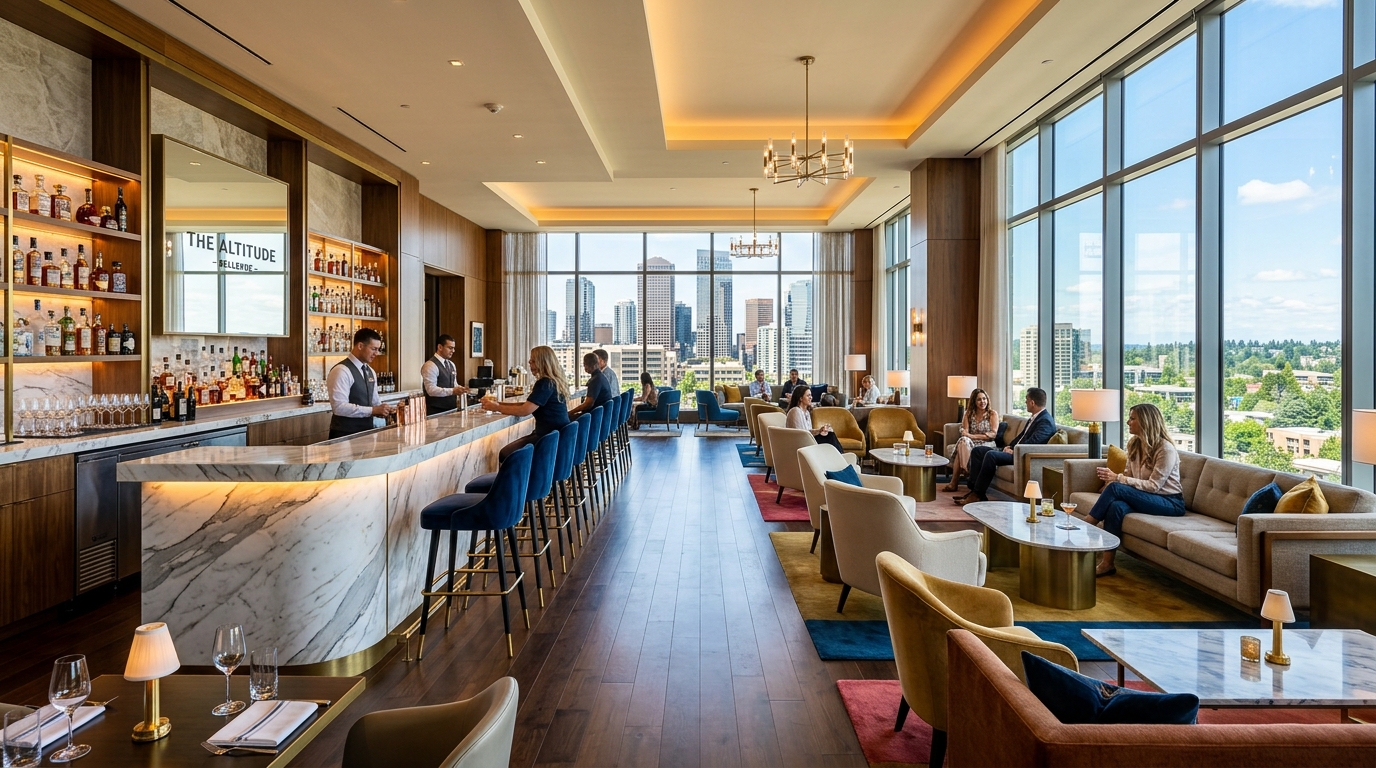
Hartford's bar and lounge market does not announce itself the way a bigger city's does, but it runs on a steadier rhythm than most people expect. Between the Front Street District pulling in a downtown crowd on weekends, the daytime density of the insurance and finance sector filling happy hour seats from Monday through Friday, and the XL Center and Connecticut Convention Center anchoring an events calendar that brings concert, trade show, and hockey crowds through downtown on a rotating basis, the furniture demands on a Hartford venue are more varied than the city's size would suggest. Sourcing bar lounge furniture Hartford operators can depend on means understanding each of these contexts because a stool built for a Front Street cocktail lounge is not solving the same problem as one specified for a West Hartford Center wine bar.
Front Street and Downtown: The Entertainment District Standard
Front Street sits a few blocks from the Connecticut Convention Center and functions as Hartford's closest thing to a purpose-built entertainment district, with restaurant and lounge concepts that draw both downtown workers and visitors staying at the hotels along Columbus Boulevard. The bars here are competing for a crowd that has options in West Hartford and beyond, so the furniture has to read as a deliberate design choice rather than an afterthought.
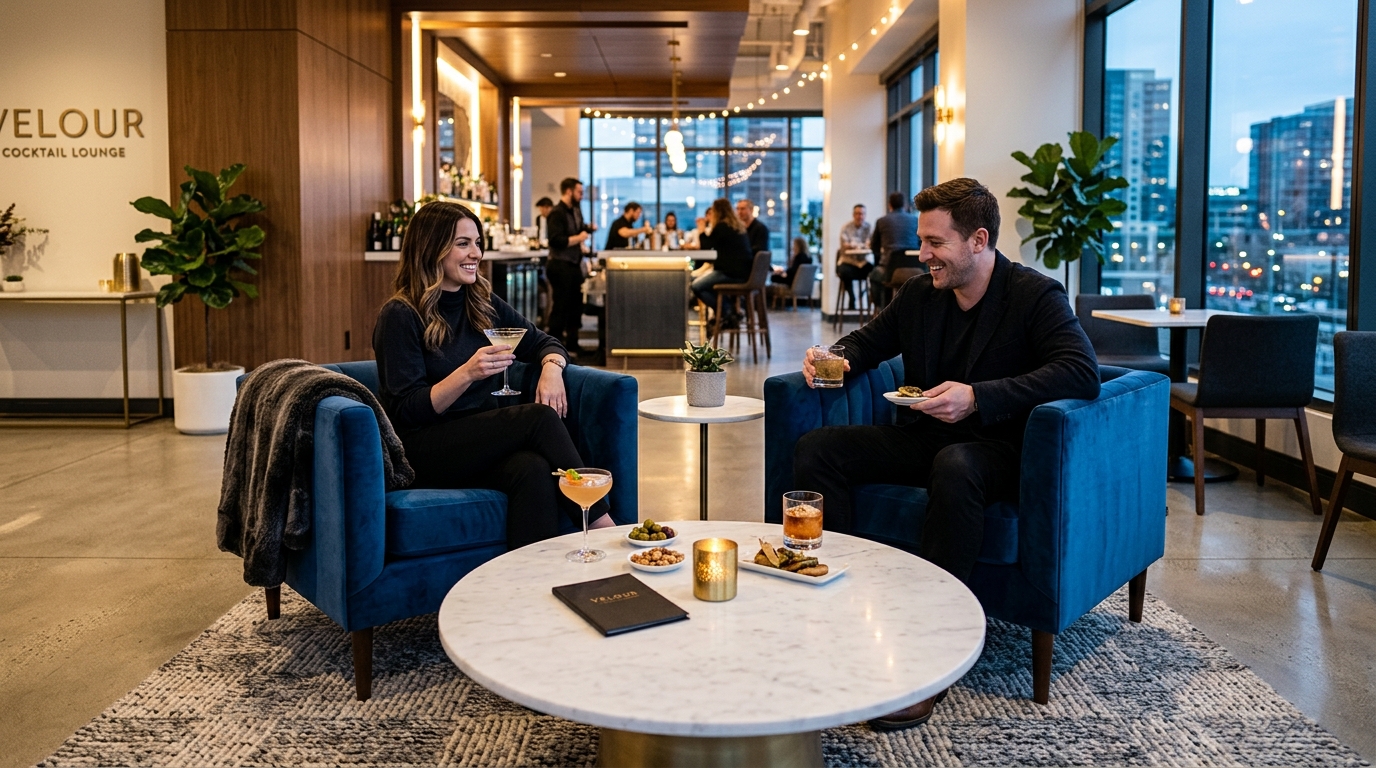
The material spec for a downtown Hartford lounge program starts with frame durability. Fully welded steel or aluminum frames with a powder-coated finish hold up to the daily reset that a high-traffic downtown venue requires, and they resist the salt and moisture that New England winters track in on boots and coats for five months of the year. Upholstery should be a commercial-grade vinyl or performance fabric rated at a minimum of 40,000 double rubs Wyzenbeek, since a Front Street venue near the convention center is seeing enough transient foot traffic that fabric durability determines how the space looks eighteen months after opening, not just on night one.
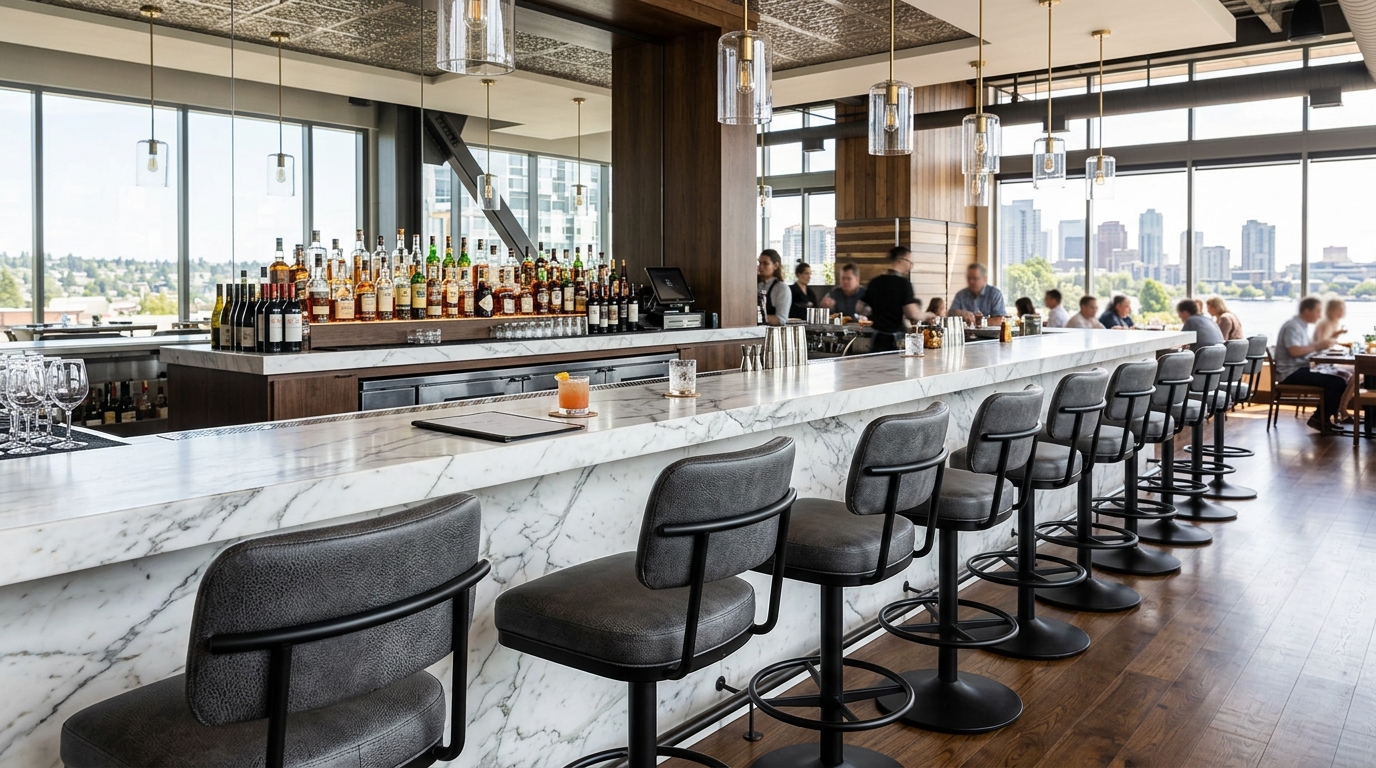
Seat height is a detail that trips up new builds in this corridor as often as anywhere else. Confirm the counter height on your actual bar top before ordering barstools. A 42-inch bar counter needs a 28-to-30-inch seat, while a 36-inch counter-height surface calls for a stool in the 24-to-26-inch range. Downtown Hartford venues frequently mix bar-height and counter-height zones in the same footprint to separate a lively bar rail from a quieter lounge section, and getting the pairing wrong in either zone is an expensive fix once the furniture has already arrived.
West Hartford Center and the Suburban Lounge Market
West Hartford Center, along with the West End and Parkville corridors closer to the city line, represents a different kind of demand entirely. This is where Hartford-area operators are building wine bars, upscale cocktail lounges, and restaurant bar programs aimed at a suburban crowd with real disposable income and high design expectations. A new lounge opening on Farmington Avenue in 2026 is competing with venues in Avon and Simsbury for the same regional clientele, and the furniture is part of how that competition gets won.
Current preferences in this market lean toward curved lounge silhouettes, deep cushioning, and warm neutral or jewel-toned upholstery rather than the stark industrial look that defined an earlier generation of Hartford-area bar builds. Mixed-material cocktail tables that pair a solid wood or stone top with a metal base read as intentional in a way that an all-metal set does not. COM programs are worth raising with your supplier early in the design process for this reason. A custom order-material program lets a designer specify a proprietary fabric on a commercially proven frame, which is how an independent West Hartford lounge achieves a distinctive look without giving up the structural rating a bar program needs.
Table base selection matters more in older buildings than new construction gives it credit for. Many of the storefronts along Farmington Avenue and in Parkville's converted industrial spaces have floors that are not perfectly level, so specify cast iron or heavy powder-coated steel bases with adjustable leveling glides rather than lightweight bases that will rock under a full drink tray.
The Convention and Arena Corridor: XL Center and Beyond
The blocks surrounding the XL Center and Connecticut Convention Center see a different volume pattern than the rest of downtown Hartford. When the arena hosts a UConn basketball game, a concert, or a trade show fills the convention center's exhibit floor, the bars within walking distance take on a surge of business concentrated into a few hours that a neighborhood bar never experiences. Furniture serving this corridor should be specified as infrastructure rather than decor.
Bar stool frames for high-volume event-corridor venues should be minimum 16-gauge steel, fully welded at every leg-to-seat and footrest connection. Bolted joints loosen under the repeated stress of a sold-out arena crowd cycling through in a single evening. Ask your supplier for weld documentation if you are ordering in volume, and confirm that solid bar stock footrests, not hollow tubing, are specified throughout. Hollow footrests dent and work loose within a season under this kind of use.
Replaceability is the other consideration operators near the XL Center underestimate. A downtown bar running 300 to 400 covers on a game night needs individual pieces swapped out without disrupting service when something fails. Specify a primary collection your supplier keeps in stock rather than one that is made to order only, so replacement barstools or tables can arrive on a normal delivery cycle instead of a full production run.
Sourcing Bar Lounge Furniture for Hartford Projects
Hartford's hospitality construction market tends to move in short, concentrated windows tied to a lease signing or an arena-adjacent redevelopment announcement, and the standard 8 to 12 week lead time for custom commercial furniture orders rarely lines up neatly with a fixed opening date. The practical approach for most Hartford-area projects is a blend of in-stock contract inventory for the core seating program, paired with custom or COM orders reserved for the accent pieces where a designer's specific vision matters most.
Build your supplier relationships before an urgent need arises. Know which vendors keep in-stock barstools and bar lounge chairs in the finishes you specify most often, which suppliers run a realistic COM program, and which can fill a partial replacement order without forcing you into a full new production run.
If you are in the early planning stages of a bar or lounge build anywhere in the Hartford area, downtown, Front Street, West Hartford Center, or the neighborhood bar market in Parkville and the West End, request a specification consultation before your layout is finalized. It is far cheaper to catch a seat height mismatch or a clearance problem on paper than after the furniture has already shipped.