
Des Moines punches well above its size when it comes to event volume. The insurance and financial services companies headquartered downtown fill hotel ballrooms with training sessions, board dinners, and annual meetings all year, and the Iowa Events Center campus, anchored by Hy-Vee Hall and Wells Fargo Arena, pulls in agricultural trade shows, regional conventions, and consumer expos that can run several thousand attendees through downtown in a single week. Add in a wedding and gala season that leans heavily on the East Village's converted warehouse spaces and the historic hotel ballrooms along Locust Street, and you get a market where furniture gets used hard and needs to look right doing it. If you run a hotel banquet department, a standalone event venue, or a restaurant with a private dining program anywhere from downtown to the West Des Moines hotel corridor near Jordan Creek, your furniture program is one of the few operational decisions that shows up directly in how a room feels, and most properties don't give it the attention it deserves until a setup takes too long or a chair fails mid-event.
What Des Moines Event Volume Actually Requires
The volume question trips up a lot of Des Moines operators because the market doesn't look like a typical convention city from the outside, but the week-to-week rhythm is intense. A downtown hotel ballroom might run an insurance company's regional training Tuesday, an ag cooperative's annual dinner Wednesday, and a wedding reception Saturday, each with a different floor plan. That schedule means your banquet chairs and folding tables are being broken down, stacked, rolled, and reset multiple times a week, not occasionally between slow stretches. Furniture that would hold up fine in a lower-turnover market wears out fast under that kind of use.
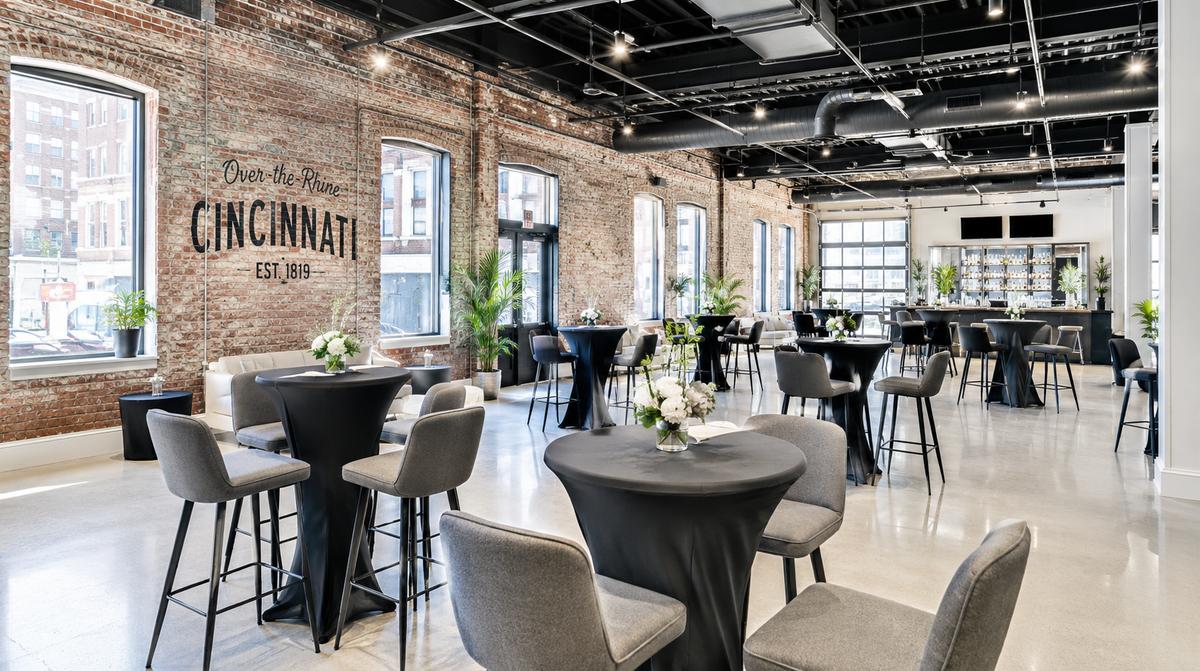
Stackable banquet chairs rated for at least eight high are the baseline for any Des Moines property doing regular event business, and the dolly system you pair with them matters just as much as the stack rating. A chair that stacks well on paper but can't be moved cleanly across a ballroom floor or down a service corridor without staff wrestling the cart isn't actually solving your problem. Buy carts sized for your exact chair model, with wheels that won't scuff polished concrete or hardwood, at the same time you order the chairs.
Folding tables need to cover the full range of formats your venue books, not just the most common one. Round tables at 60 inch or 72 inch are the default for plated dinners and remain the standard for most Des Moines wedding and gala bookings in the East Village and the historic ballrooms downtown. Rectangular 6-foot and 8-foot tables get pulled for classroom-style training setups, buffet lines, and serpentine bars, all of which are common at the insurance and ag industry events that fill the calendar in the fall and early winter. Properties that execute fast, clean flips keep enough of both formats on hand that staff are never improvising with mismatched pieces.
Chair Spec for Properties from Downtown to West Des Moines
The banquet chair is the piece of furniture a guest sits in for three or four hours at a stretch, and it's also the piece your crew handles hundreds of times a week during a busy stretch. Those two requirements don't always line up, and the better commercial chairs are built with both in mind.
Frame material is the first real decision. Steel frames are heavier but take repeated stacking and moving without loosening up, which makes them a strong fit for the convention and corporate side of the market around the Iowa Events Center and the downtown skywalk-connected hotels. Aluminum frames are lighter and easier on staff moving large quantities frequently, but they need a thicker gauge to hold up over years of use. For the wedding and social event venues concentrated in the East Village and in renovated spaces like the historic ballroom properties on Locust Street, a Chiavari chair is still the most requested spec because it photographs well and reads as formal without much extra effort. For the training rooms and trade show floors near the Events Center or the hotel cluster out toward Jordan Creek, a padded steel-frame stacker usually wins on durability and reset speed.
Foam density is the spec that gets skipped most often and matters more than people expect. Budget contract chairs and anything crossed over from retail tend to use foam that compresses noticeably within a couple years of regular use, and guests notice a chair that feels flat the same way they notice a stained tablecloth. High-density foam holds its shape through thousands of sit cycles and is worth paying for on any chair you plan to keep in rotation for seven to ten years.

Folding Tables: The Operational Backbone
Folding tables don't get much attention, but they're where a room flip actually succeeds or fails. A weak hinge develops play over time, and a wobbling table under a centerpiece at a seated dinner gets noticed by every guest at that table before the entrees even arrive. Commercial-grade folding tables use reinforced steel hinges, and on the longer rectangular sizes a center support leg keeps the top from sagging once it's loaded with chafing dishes and place settings.
Surface durability matters in Des Moines for a practical reason: winters are hard on loading docks and storage areas, and tables move between a cold service corridor, a warm kitchen, and a climate-controlled ballroom multiple times in a single event week. High-pressure laminate resists warping through those swings far better than budget veneer, wipes down quickly between setups, and doesn't stain the way softer surfaces do. If your team is breaking down 40 or 50 tables late on a Saturday night before a Sunday brunch setup, a surface that cleans fast is not a minor convenience.
For venues in the East Village or in the newer mixed-use developments downtown, an uncovered table needs to look intentional on its own, since more clients are asking for a partially bare tablescape rather than full linen coverage on every surface. Clean edge profiles and a neutral laminate finish without visible hardware gaps give a room more visual range and let a planner show a space honestly instead of assuming everything needs to be draped.
Buying Volume, Managing Storage, and Working with the Right Supplier
Storage space is tight at a lot of Des Moines properties, particularly the older hotels downtown and the boutique venues converted out of former warehouse or office buildings in the East Village. Newer hotels built with event operations in mind, and the larger properties out near West Des Moines and Jordan Creek, typically have dedicated furniture storage bays sized for a full banquet program. If your back-of-house space is limited, let that drive the spec directly: chairs that stack to twelve high take up meaningfully less floor space over a full inventory than chairs that top out at six or eight.
Ordering commercial furniture in volume from a single contract supplier, rather than piecing together smaller orders over time, keeps your room looking consistent. Chairs from two different production runs can end up slightly different in finish or frame weight, and that mismatch shows up in photos even when guests don't consciously clock it. Specifying one model for your full program, or documenting it clearly for reorders, keeps your inventory looking uniform for years rather than a few seasons.
A supplier who understands the hospitality contract market can also help you plan storage footprint before you place an order, think through cart and dolly logistics for your specific building, and give straight lead time guidance when you're working against an opening date or a fall trade show season. For a Des Moines property that leans on Iowa Events Center business or a heavy fall conference calendar, ordering furniture with enough lead time matters. Those weeks book up a year in advance, and your banquet program needs to be ready the moment those groups arrive.