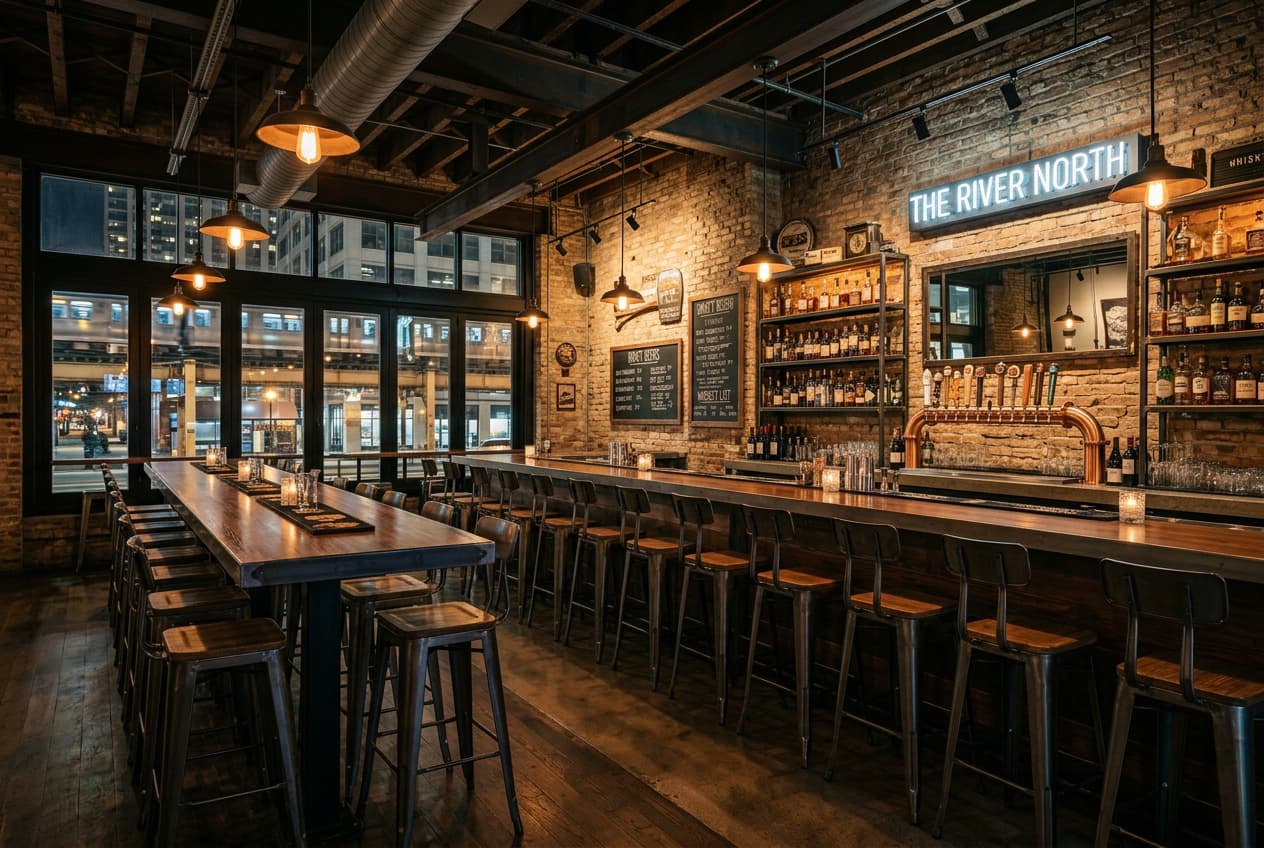
Des Moines has quietly built one of the Midwest's more interesting bar and lounge markets. The East Village has matured from a scrappy arts district into a genuine cocktail destination, the Court Avenue District downtown keeps a dense cluster of bars and restaurants running late on weekends, and the Iowa Events Center along with the Community Choice Convention Center brings a steady wave of insurance-industry conferences, agricultural trade shows, and regional conventions that fill downtown hotel bars on a schedule far more consistent than most cities this size. Sourcing bar lounge furniture Des Moines operators can depend on means understanding each of these contexts, because a stool that performs in a Court Avenue sports bar is not the same stool that belongs in an East Village wine lounge.
East Village and the Design-Forward Cocktail Scene
The East Village, running along Fifth Street and Locust across the river from downtown, is where Des Moines' most design-literate hospitality concepts have landed. These are boutique cocktail bars and small-plate lounges competing on atmosphere as much as drink menu, often occupying narrow storefronts in converted early-1900s buildings with exposed brick and tall windows. Operators here are thinking about visual identity from day one, and the furniture has to hold up its end of that conversation.
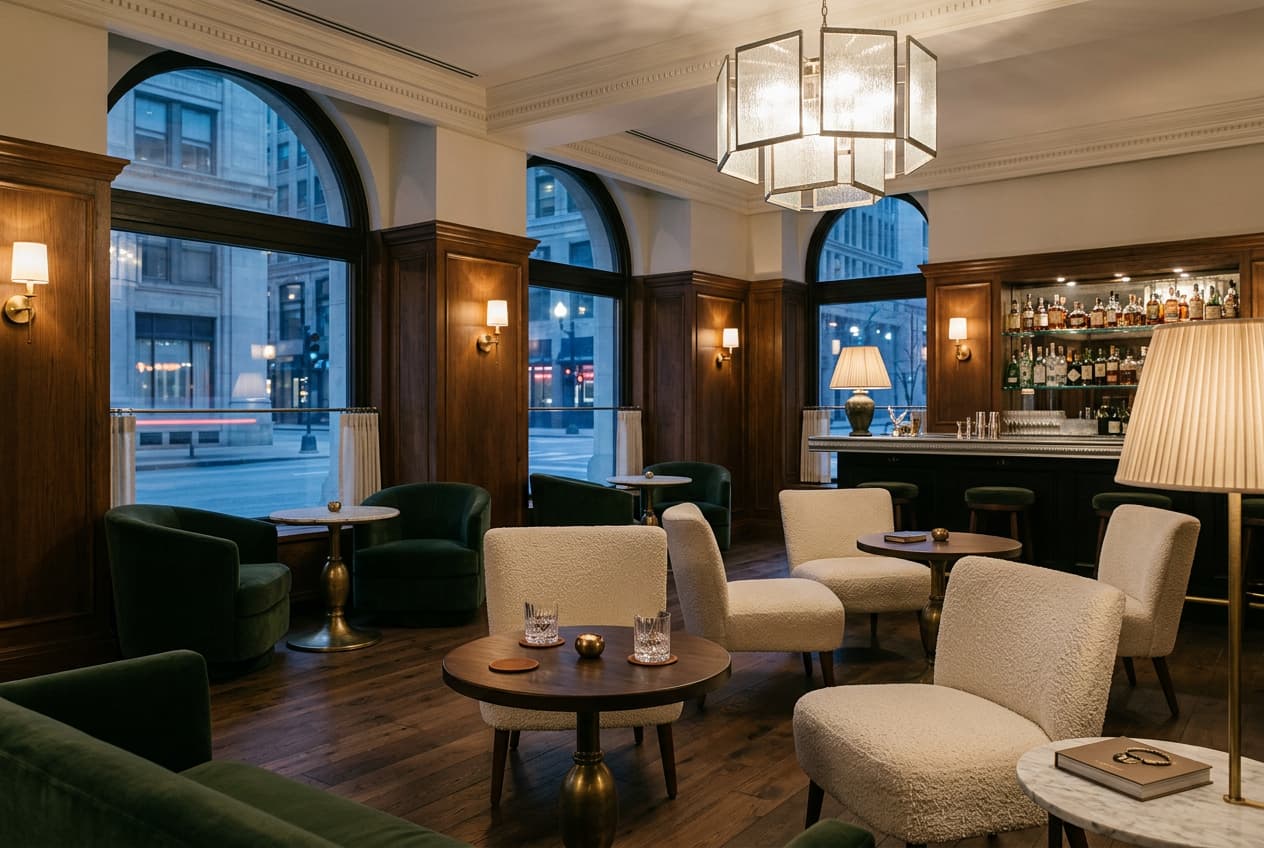
Current preferences in this corridor lean toward curved lounge silhouettes, warm-toned upholstery in rust, olive, and camel, and mixed-material tables that pair blackened steel with walnut or reclaimed wood tops. The exposed-brick-and-Edison-bulb aesthetic that defined East Village openings a decade ago is giving way to something warmer and more considered. Operators opening now are sourcing bar lounge furniture Des Moines design-conscious guests will actually photograph, which means pieces that read as intentional up close, not just at a glance from the sidewalk.
COM programs are worth raising early with these projects. A custom order-material arrangement through your contract furniture supplier lets a designer specify a proprietary fabric on a commercially proven frame, which is how a fourteen-table East Village bar achieves a distinct look without giving up the structural rating a hospitality environment requires. Because these buildings are narrow and often have tight loading access from the alley, confirm delivery logistics and knockdown assembly options with your supplier before finalizing an order. A frame that will not fit through a service door is a problem discovered far too late if nobody asks in advance.
Seat and table pairing is a recurring issue in these converted spaces too. Many East Village buildings have uneven original floors, so table bases need adjustable leveling glides in heavy powder-coated steel or cast iron, not the lightweight plastic-footed bases sold for residential use. A wobbling four-top in a room this size is noticed immediately.
Court Avenue and the Convention Corridor Downtown
Court Avenue and the blocks around it form Des Moines' highest-volume bar district, and it sits within a few minutes' walk of the Iowa Events Center, Wells Fargo Arena, and the downtown hotel corridor along Grand Avenue and Locust Street. When the Community Choice Convention Center or Wells Fargo Arena has a major event, whether that is an insurance industry conference, a state association meeting, or a concert, the surrounding bars and hotel lounges see a spike in traffic that a neighborhood bar never experiences. Furniture in these venues needs to be specified as infrastructure, not just decor.
Bar stool frames for high-traffic Court Avenue and convention-corridor venues should run a minimum 16-gauge steel on structural members with fully welded joints, not bolted connections, at the footrest and every leg-to-seat junction. Bolted frames loosen quickly under the repeated stress of large groups sitting down, shifting, and standing over a long event night. Solid bar stock footrests matter here too. Hollow tube footrests dent and work loose faster than operators expect once a venue is running at capacity three or four nights a week during a busy conference season.
Replaceability is the other priority. A Court Avenue bar running 300 to 400 covers on a big event night will see individual pieces fail, and they need to be swapped without disrupting service. Specify a primary collection your supplier keeps in stock rather than a made-to-order line, so replacement barstools in a matching finish can ship on a short timeline instead of waiting behind a full production run.
Confirm bar and counter height before ordering, too. A standard 42-inch bar counter pairs with a 28-to-30-inch seat height, while a 36-inch counter-height surface needs a stool in the 24-to-26-inch range. This mismatch shows up often in downtown Des Moines buildups where a bar is reconfigured mid-renovation and the original stool order no longer fits the finished counter.
Rooftop and Hotel Lounge Considerations
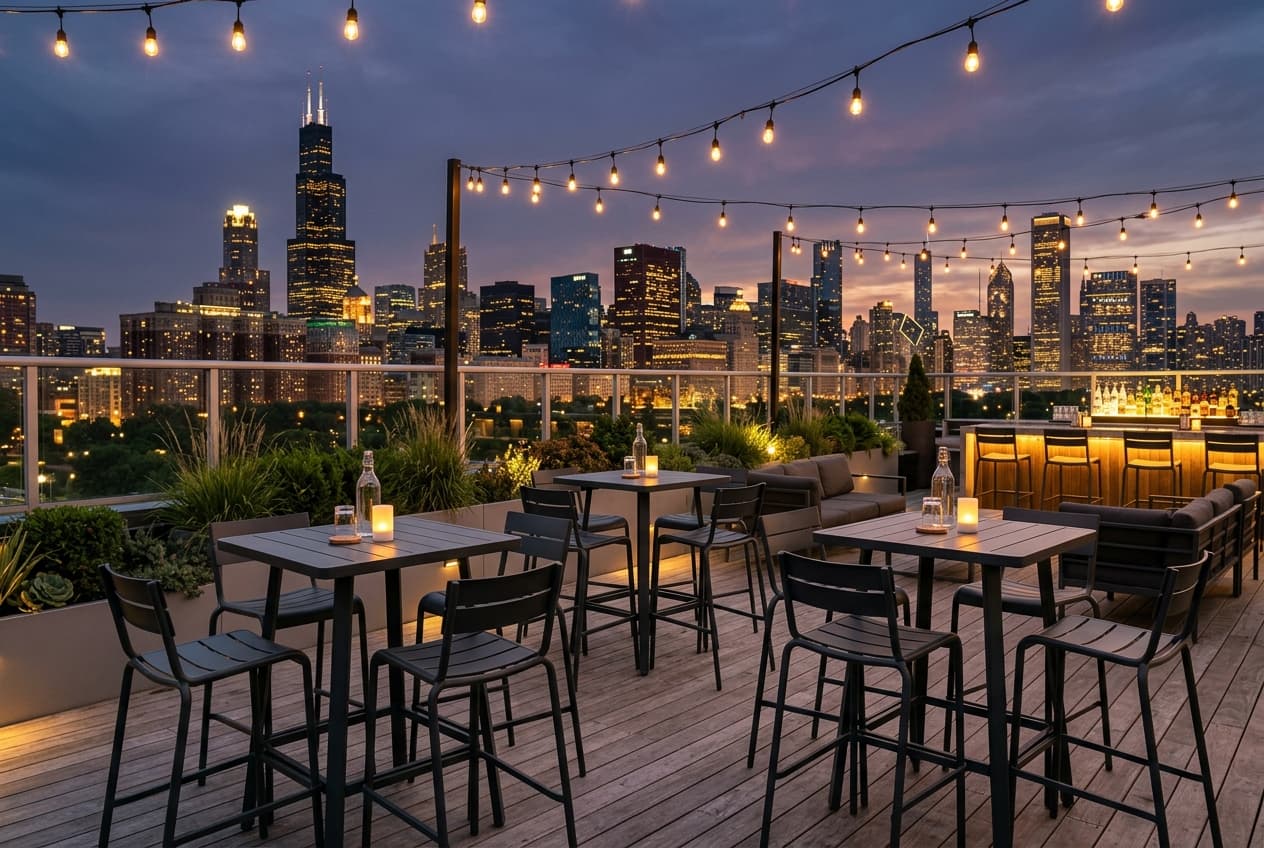
Des Moines has added a handful of rooftop and elevated bar concepts downtown in recent years, tied to the hotel renovation wave along Grand Avenue and the Western Gateway. These spaces are seasonal by necessity given Iowa's winters, but they carry real weight in the warmer months when convention traffic and Drake University events overlap with patio season. For outdoor and semi-outdoor seating, specify powder-coated aluminum frames over steel. Aluminum resists the humidity swings and freeze-thaw cycles that a Des Moines rooftop endures across a full year, even if the furniture is stored indoors from November through March. Upholstery for any outdoor-adjacent seating should be solution-dyed acrylic or a marine-grade vinyl, since fabric intended for interior use will fade and mildew after a single Iowa summer of intermittent exposure.
Sourcing Bar Lounge Furniture for Des Moines Projects
Des Moines' hospitality construction market tends to move in bursts tied to downtown redevelopment cycles and convention calendar announcements. A hotel brand commits to a Grand Avenue renovation, a restaurant group signs a lease in the East Village, and the furniture order lands on a schedule already compressed by construction delays. The standard 8 to 12 week lead time for custom orders rarely fits inside a timeline where the opening date is fixed and the general contractor handed over the space late.
The practical strategy for most Des Moines bar and lounge projects is a blend of in-stock contract inventory for the core seating program with custom or COM orders reserved for accent pieces where design specificity matters most. Build supplier relationships before an urgent need arises. Know which vendors carry in-stock bar stools in the finishes you specify most often, which suppliers run realistic COM turnaround times, and which can fulfill a partial replacement order on short notice during a busy convention week.
If you are in the early planning stages of a bar or lounge build anywhere in Des Moines, whether that is the East Village, Court Avenue, the downtown hotel corridor, or growing suburban nightlife pockets in West Des Moines and Valley Junction, request a specification consultation from your supplier before the layout is finalized. It surfaces the seat height mismatches, material incompatibilities, and clearance problems that are far cheaper to fix on paper than after the furniture arrives.