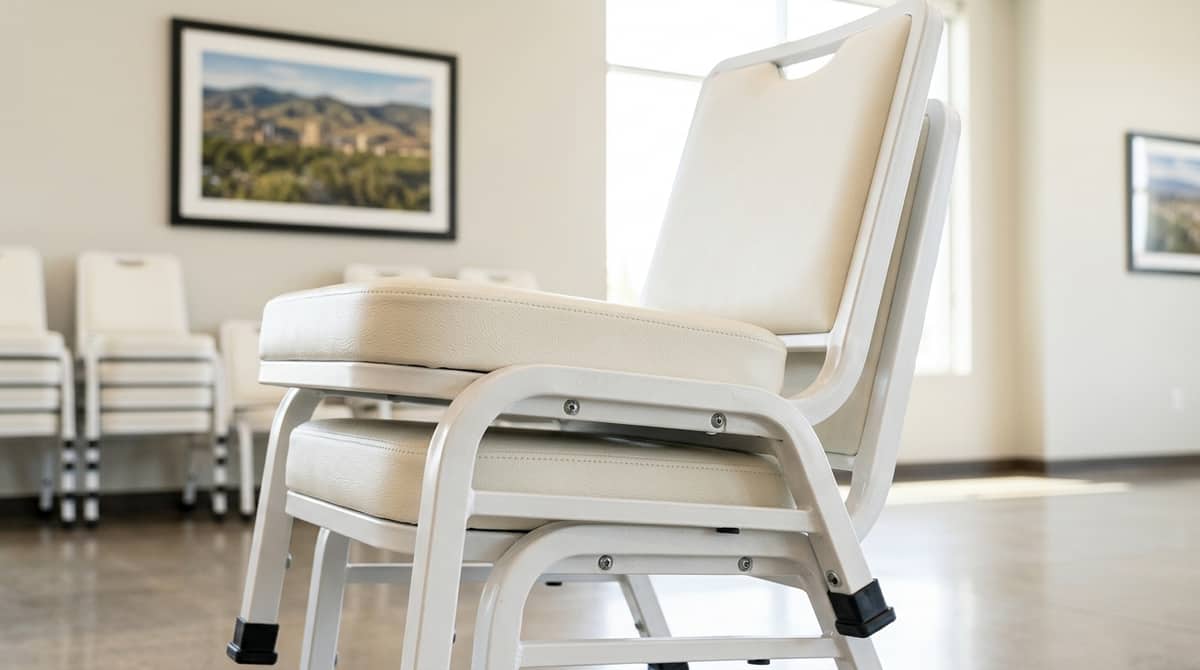
Burlington doesn't run events at Atlanta or Boston scale, and that's exactly what shapes the furniture decisions here. The Sheraton Burlington Hotel and Conference Center and the Hilton Burlington Lake Champlain carry most of the city's conference and corporate meeting business, while the Champlain Valley Expo in Essex Junction picks up trade shows and larger community events that need more floor space than a downtown hotel can offer. Layer in UVM's Davis Center for academic conferences and alumni functions, the farm-to-table wedding barns spread across Shelburne and the Champlain Islands, and the waterfront event spaces along the Burlington bike path, and you get a market that's less about six-figure attendee counts and more about a steady mix of weddings, association meetings, and retreat groups drawn north by the lake and the mountains. If you manage a hotel banquet department, a converted barn venue, or a private event space near the waterfront, your furniture program still has to survive weekly resets, it just has to do it in a market with tighter storage and a more particular aesthetic than the big convention cities.
What Burlington's Event Calendar Actually Requires
The seasonality question is where Burlington operators plan differently than a year-round convention market. Foliage season and summer weekends carry an outsized share of the wedding and corporate retreat business, which means a Sheraton or Hilton ballroom might run a rehearsal dinner Thursday, a full wedding reception Saturday, and a Sunday brunch meeting with three completely different layouts inside one busy stretch. Your banquet chairs and folding tables take that same weekly beating whether the season is at its peak or not, and furniture that's fine for a slow February conference schedule needs to hold up just as well during a July stretch of back-to-back lake wedding weekends.
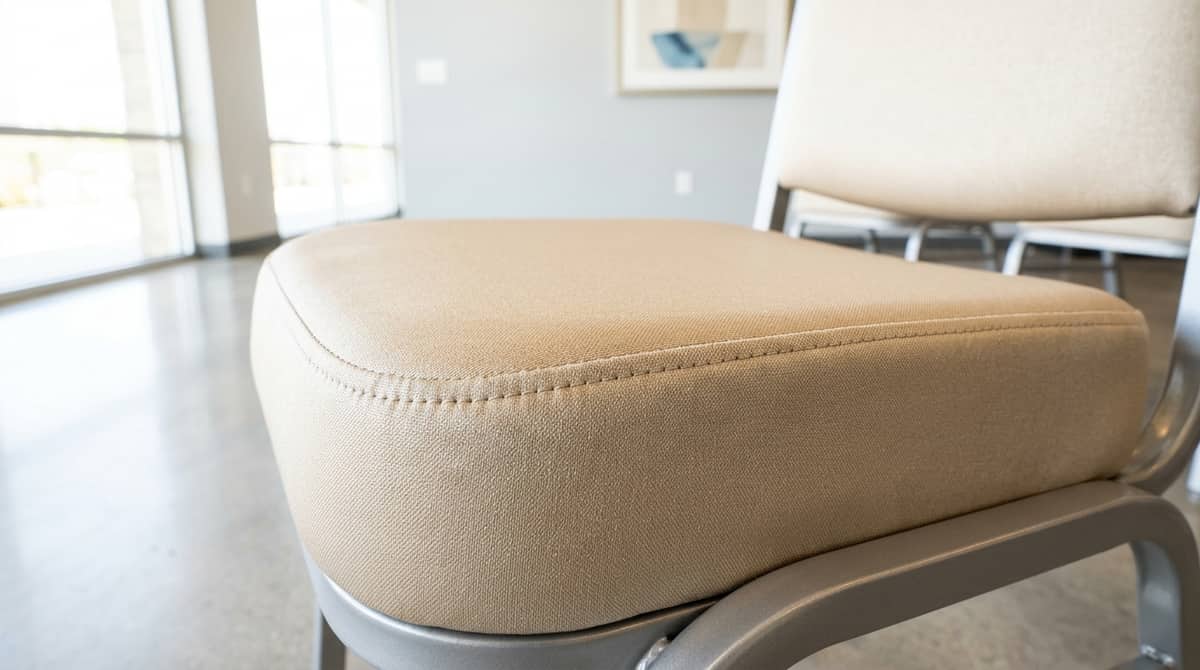
Stackable banquet chairs rated for eight to ten high are still the right baseline even for a market this size, because most Burlington venues don't have the luxury of a huge dedicated storage annex. The dolly system matters just as much as the stack rating. A hotel banquet team moving chairs from a ballroom on the Hilton's lakefront side through a narrow service corridor needs carts sized to the exact chair model, with wheels that won't scuff polished floors or leave marks in a historic building near Church Street.
Folding tables need to cover the format range Burlington actually books, not just the most common one. Round tables at 60 or 72 inches are the default for plated wedding dinners at the barn venues in Shelburne and the Champlain Islands. Rectangular 6-foot and 8-foot tables get pulled for association meetings at the Davis Center, buffet lines at corporate retreats, and farm-table-style seating that's become close to expected at Vermont weddings. Venues that can flip between both formats without renting extra pieces are the ones that keep booking repeat business.
Chair Spec for Venues from the Waterfront to Essex Junction
The banquet chair is the piece of furniture a guest sits in for the entire reception, and it's also the piece your crew handles hundreds of times over a busy weekend. Getting both requirements right at once is the whole job.
Frame material is the first call to make. Steel frames are heavier but take the abuse of nightly stacking well, which matters for a conference hotel running back-to-back meeting groups through the Sheraton or the Hilton. Aluminum frames are lighter and easier for smaller staffs to move in volume, though they need a thicker gauge to hold up over years of use. In Burlington's wedding and farm-venue corridor, a wood or crossback chair with a natural or painted finish tends to be the expected look, since it reads as warm and Vermont-appropriate rather than formal in a way that feels out of place in a barn or waterfront tent. For conference-heavy properties near Church Street or out toward Essex Junction, a padded steel stacker that resets fast between meeting blocks usually wins on cost and durability.
Foam density in the seat and back cushion is a spec line that gets skipped too often. Budget contract chairs use foam that starts to compress within a couple of years of regular use, and a chair that feels deflated tells a wedding planner or meeting client the same thing a wrinkled tablecloth does. High-density foam holds its shape through years of heavy use and is worth paying for on any chair you're planning to keep in rotation through multiple foliage seasons.
Folding Tables: The Operational Backbone
Folding tables don't get much attention until one of them wobbles under a centerpiece during a seated dinner, and in a market where weddings drive so much of the business, that's exactly the moment a client remembers. Commercial-grade tables use reinforced steel hinges and a center support leg on longer rectangular formats so they don't sag once they're loaded with chafing dishes, place settings, and centerpieces.
Surface finish matters in a climate like Burlington's, where humid summers and damp lake-effect weather put real stress on cheaper laminates. High-pressure laminate resists warping and wipes clean quickly, which matters when a crew is turning over 40 or 50 tables late on a Saturday night before a Sunday brunch group arrives. For the barn and waterfront venues around Shelburne and the islands, where linen doesn't always cover the whole table, a clean edge profile and a neutral finish give the room a more intentional look instead of an obviously rented one.
Buying Volume, Managing Storage, and Working with the Right Supplier
Storage is the constraint that shapes almost every Burlington furniture decision. A converted barn venue or a boutique lakefront property rarely has the back-of-house square footage that a purpose-built convention hotel has, so a chair that stacks to twelve high instead of six saves real floor space over a full inventory, and that difference shows up fast when a venue is also storing tables, linens, and a season's worth of decor in the same footprint.
Buying from a single contract supplier in volume, rather than piecing an inventory together from several smaller retail orders, keeps the room looking consistent from one event to the next. Mismatched chair shades or slightly different frame weights are the kind of detail a wedding photographer notices even when guests don't, and Burlington's wedding market runs almost entirely on referrals and photos. Specifying one model for your full program, and documenting it clearly for future reorders, keeps a five-year-old inventory looking as intentional as it did on day one.
A supplier who understands hospitality contract furniture can also help a Burlington property think through storage footprint before an order goes in, work out cart and dolly logistics for a tight corridor, and give honest lead times when a venue is planning around a specific wedding season or a conference calendar. Getting furniture on site well ahead of foliage season isn't optional here, that stretch of the calendar fills up early and a banquet program needs to be ready before the first weekend hits.