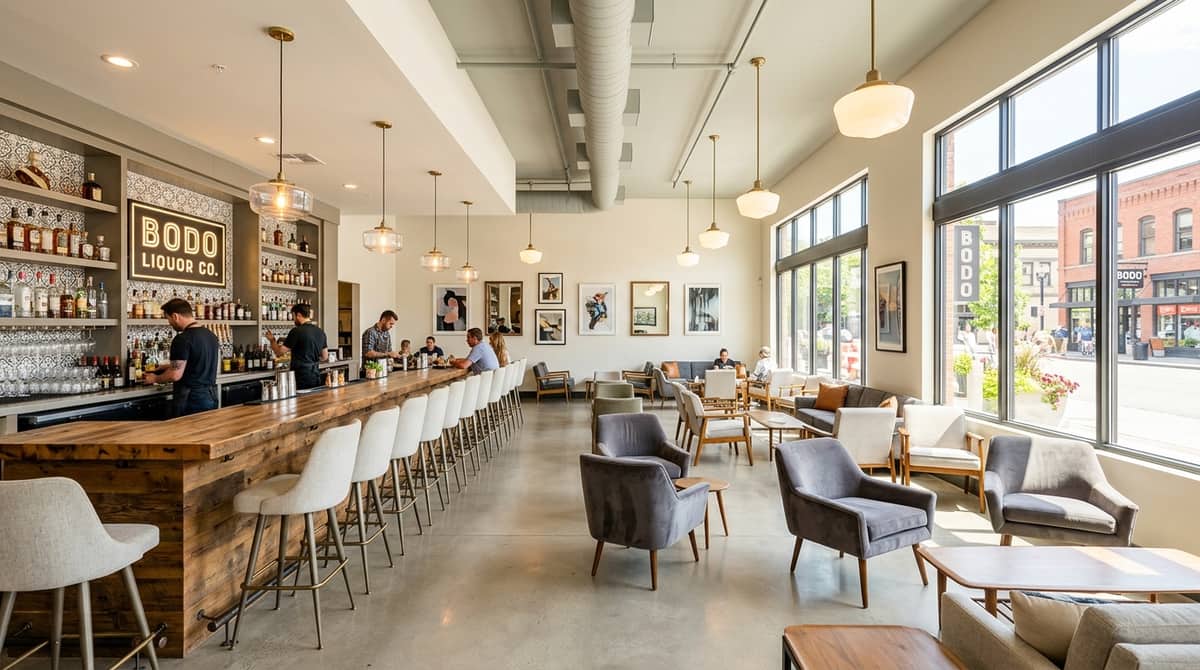
Burlington's bar and lounge market is small in footprint but demanding in detail. This is a city where a single block of Church Street can carry more foot traffic on a Friday night than districts three times its size, where lakefront hotel bars have to hold up to Vermont winters and University of Vermont graduation weekends alike, and where a wave of newer venues in the South End is pushing design expectations well past the old ski-town rustic standard. Sourcing bar lounge furniture Burlington operators can count on means understanding that a stool built for a Church Street Marketplace patio is not the stool that belongs in a Lake Champlain waterfront lounge, and neither one is right for a converted warehouse space in the Pine Street corridor.
Church Street Marketplace and the Downtown Compact Bar Scene
Church Street Marketplace is the commercial heart of Burlington, and it operates at a density that is unusual for a city this size. The pedestrian mall draws heavy foot traffic from spring through the height of leaf-peeping season, and the bars and restaurants lining it depend on outdoor and semi-outdoor seating to capture that volume. Furniture here needs to survive constant repositioning, frequent weather exposure, and a turnover rate that is higher than almost anywhere else in the state.
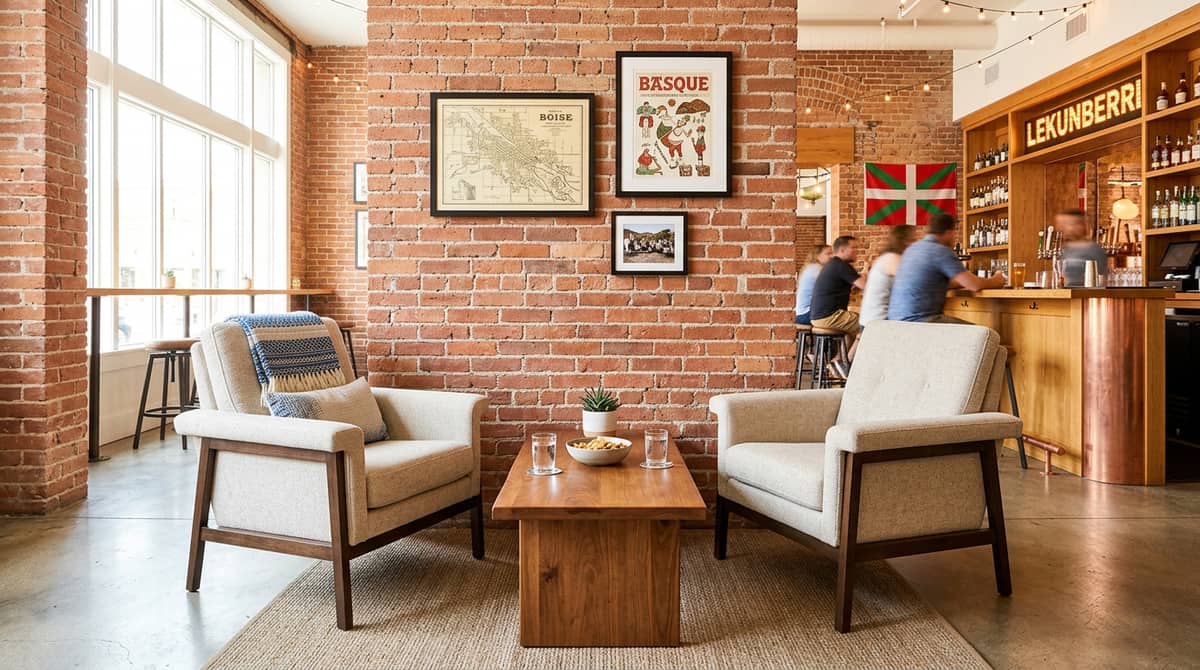
For patio and marketplace-facing seating, powder-coated aluminum frames are the right call. They resist the corrosion that comes from Vermont's salted winter sidewalks tracking indoors and outdoors alike, and they stay light enough for staff to reset tables quickly between the lunch and dinner turns. Skip hollow-tube footrests on any stool going into heavy downtown rotation. A solid bar stock footrest holds up to the constant weight-shifting of a full patio on a warm evening, while hollow tubing dents and works loose within a single busy season.
Upholstery on downtown seating should be rated for real outdoor exposure, not just splash resistance, since Church Street venues frequently leave patio furniture out through unpredictable spring and fall weather. For the indoor bar and lounge area behind the storefront, specify performance fabric at a minimum of 40,000 double rubs Wyzenbeek, since a downtown bar seeing UVM students, ski-season visitors, and conference attendees from the nearby Hilton in the same week puts real wear on upholstered seating. Confirm your counter height before ordering. Standard bar height is 42 inches with a 28-to-30-inch seat, while a 36-inch counter needs a 24-to-26-inch stool. Getting this wrong on a narrow Church Street storefront is expensive to fix, because there is rarely room to store a second set of furniture while the first gets replaced.
The Waterfront and Lake Champlain Hospitality Corridor
Burlington's waterfront district, running from the ECHO Leahy Center down along the bike path toward the marina, has become the city's premium hospitality corridor. The hotel bars and lakeview lounges here are competing on the view, and the furniture has to match that ambition without getting in the way of it. These venues also carry the bulk of Burlington's convention and event business, since the hotels along the waterfront and the meeting space downtown host the UVM-adjacent conferences, ski-industry gatherings, and wedding season that keep the district busy well into October.
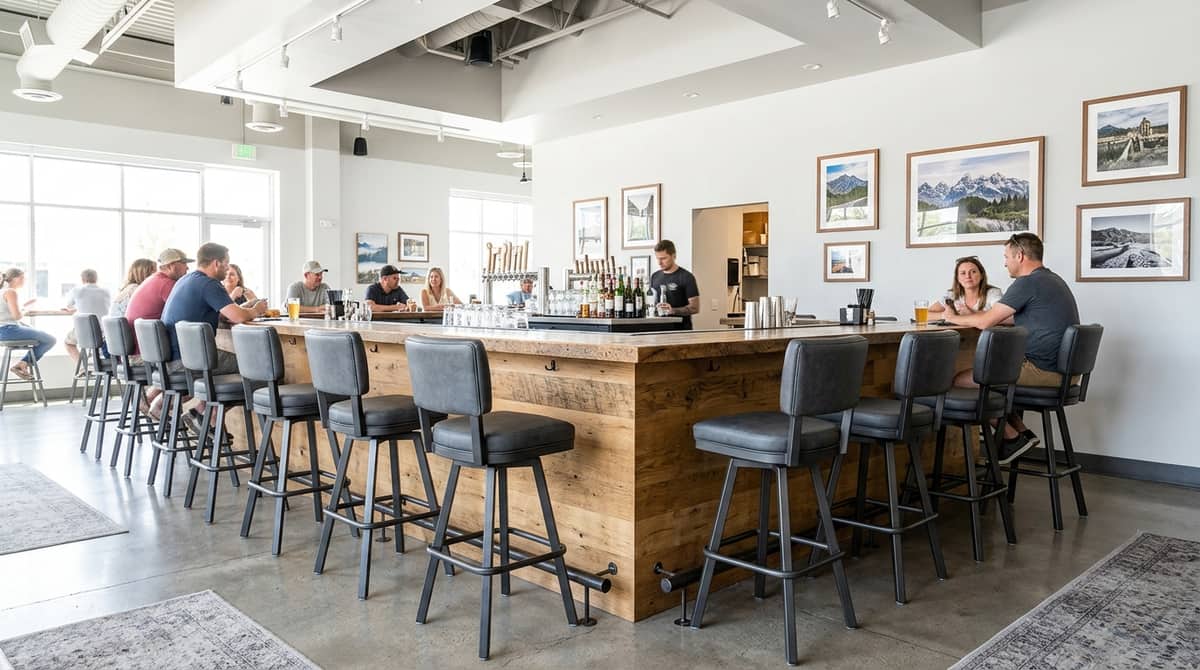
Design preferences on the waterfront lean toward curved lounge silhouettes, warm wood tones paired with black or bronze metal, and upholstery in deep greens, slate blues, and warm neutrals that read as a nod to the Green Mountains without tipping into ski-lodge cliche. This is a shift from the heavier, more rustic furniture that defined Burlington hospitality a decade ago. COM programs are worth raising early with any supplier here, since a custom order-material arrangement lets a designer put proprietary fabric on a proven contract frame, giving a waterfront property a distinct look while keeping the structural rating a high-traffic lounge actually needs.
Table bases matter more than operators expect in this district. Waterfront patios and event spaces are frequently reconfigured for private functions, weddings, and conference receptions, so specify cast iron or heavy powder-coated steel bases with adjustable leveling glides. Older waterfront buildings and converted mill spaces rarely have perfectly level floors, and a rocking table at a lakeview dinner is the kind of flaw that guests remember.
The South End and Pine Street: Burlington's Design-Forward New Wave
The South End Arts District, centered on Pine Street and the surrounding warehouse blocks, is where Burlington's newest bars and lounges are opening, and the design bar there has risen quickly. Former manufacturing spaces converted into taprooms, cocktail bars, and event venues are drawing a crowd that expects a considered interior, not just a good drink list. Concrete floors, exposed brick, and high ceilings define the shell, and the furniture needs to hold its own inside that architecture.
Mixed-material tables that pair reclaimed-look wood tops with heavy steel bases fit this district well, along with lounge seating in richer, saturated upholstery that contrasts against the neutral industrial backdrop. Structural weight matters here too. A converted warehouse bar in the South End can see the same kind of concentrated weekend volume as a downtown venue, so frames should be built to genuine contract specification, with fully welded joints at every leg-to-seat connection rather than bolted assemblies that loosen over time. Any credible contract furniture supplier should be able to document weld construction on request.
Sourcing Bar Lounge Furniture for Burlington Projects
Burlington's hospitality construction calendar is short and weather-driven. Most build-outs aim to open before the summer tourist season or ahead of the fall foliage rush, which means the standard commercial furniture lead time of 8 to 12 weeks for custom orders often has to be compressed into a schedule set by Vermont's brief prime construction window. A late spring groundbreaking with a June opening date does not leave room for a furniture order that slips.
The practical approach for most Burlington projects is to lean on in-stock contract inventory for the core seating program, whether that is a Church Street patio, a waterfront lounge, or a South End taproom, and reserve custom or COM orders for the accent pieces where a specific look matters most. Build a relationship with a supplier before the need is urgent. Know which vendors keep in-stock barstools in the finishes Vermont venues use most often, which suppliers run realistic COM turnaround times, and which can fill a partial replacement order without a full production run.
Confirmed lead times, in writing, are what separates a Burlington opening that hits its date from one that slips into the season it needed to catch. If you are planning a bar or lounge build anywhere from downtown Burlington to the waterfront, the South End, or the surrounding Winooski and Essex corridor, request a specification consultation before your layout is locked. It is far cheaper to correct a seat height mismatch or a clearance problem on paper than after the furniture has arrived.