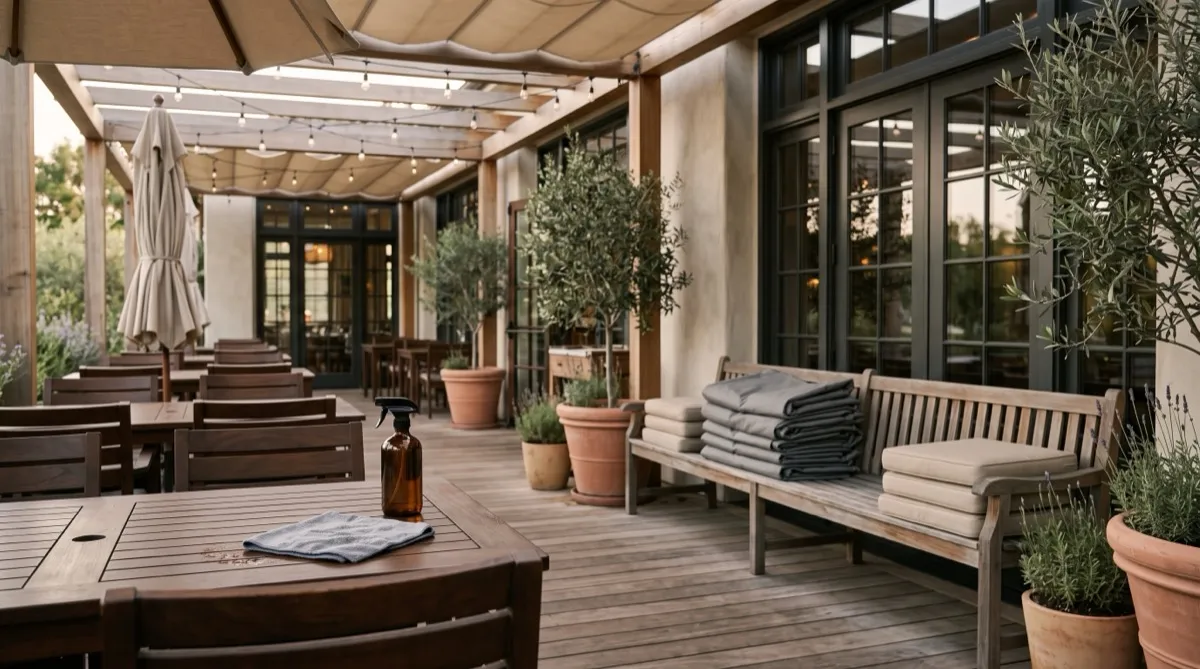
Outdoor furniture needs a maintenance routine that fits its materials and exposure. A seven-to-ten-year holding period and a three-year replacement scenario can be compared in a budget, but those chosen scenarios do not establish what maintenance alone will achieve. Record the maker's care instructions and give someone responsibility for inspections, cleaning, and taking damaged pieces out of service.
Why maintenance matters more outdoors
Outdoor exposure adds moisture, sunlight, and, depending on the site, salt or freeze-thaw conditions to ordinary wear and cleaning. The effect depends on the frame, finish, resin, fabric, drainage, and construction. Inspect for corrosion, coating damage, cracking, and trapped water using the maker's criteria; a general material label does not establish which failure will occur or how fast.
Daily maintenance
Use closing procedures to check spills, dirt, standing water, and visible damage. Clean and dry with the approved method; trapped water may affect finishes or joints, but it does not automatically make every coated frame rust. Follow the exact umbrella's closing, securing, and wind instructions, and remove or store cushions as its assembly instructions and conditions require.

Weekly and seasonal cleaning
Weekly, go beyond the surface wipe down. Use the frame and fabric makers' approved cleaners and tools, and rinse and dry as directed. Check coating damage, loose hardware, worn glides, and cracked weave. For teak or another wood finish, confirm whether the maker recommends natural weathering or a particular treatment; oiling or sanding should not be a default for every product.
Seasonally, inspect joints, footrests, frame connections, and upholstery for damage before it grows into a service issue. Use the exact product's repair and care instructions. If an approved finish program calls for treatment once or twice a season, put that specified interval on the calendar; exposure and the coating system can require a different schedule.
Material specific care
For aluminum furniture, inspect both the frame and its coating. Aluminum does not develop iron rust, but that does not make it immune to corrosion or coating damage. Clean and repair chips with the maker's approved method, especially where salt or pool chemicals contact the furniture.
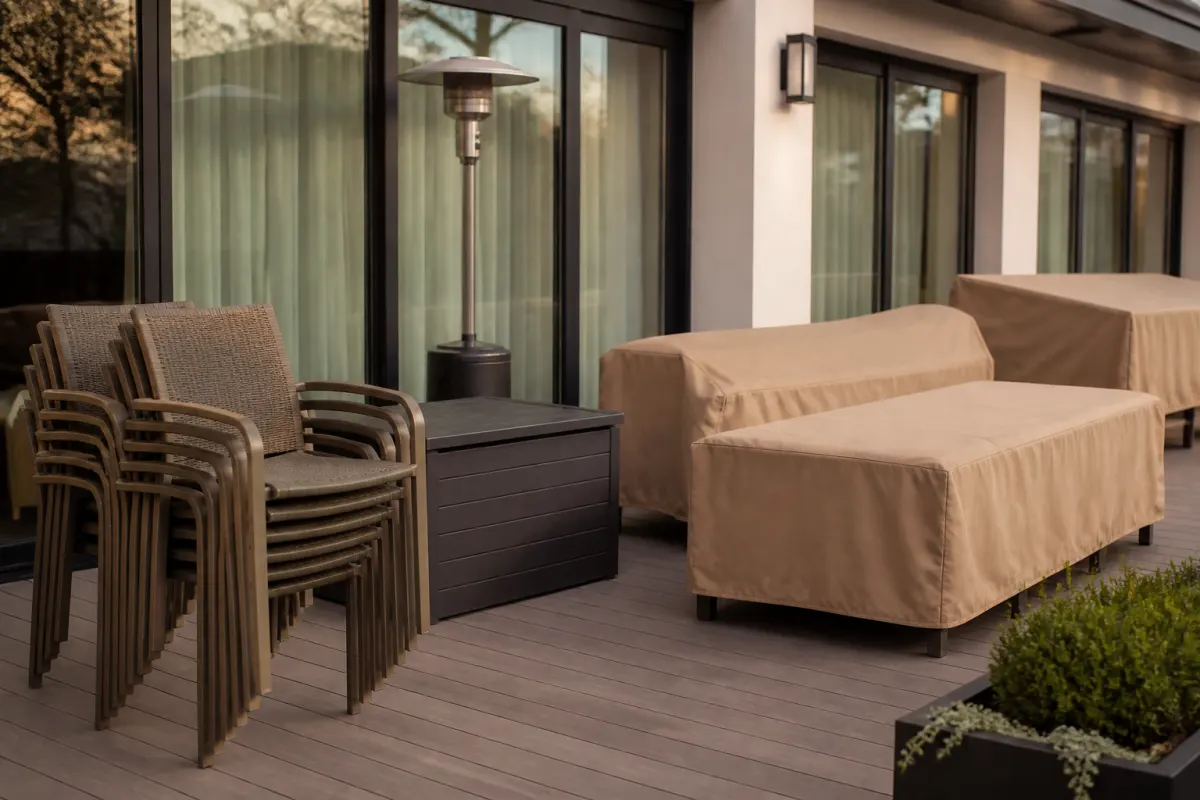
For teak and other hardwoods, agree on the intended finish and follow the selected maker's cleaning and treatment instructions. Natural weathering and a maintained color are different care programs. Do not assume periodic sanding or oiling is appropriate for every wood piece or finish.
For resin wicker, obtain the selected weave and frame's outdoor exposure limits, care instructions, and repair options. Inspect armrests, corners, and other contact points for cracking or looseness. A UV-stabilized label alone does not establish a service life or remove the need for inspection.
For cushions and outdoor fabric, follow the exact textile and assembly cleaning and drying instructions. Indoor/outdoor suitability is product specific, so do not compare every residential fabric with a generic marine-vinyl or acrylic category. Build removal, drying, and storage into staff tasks when the maker and exposure call for them.
Winter and off season protocol
Plan shutdown tasks around the selected products' temperature, drainage, snow-load, cover, and storage instructions. Clean and dry pieces before storing them, and use a suitable dry space for components whose instructions call for indoor storage. Water freezing in a confined space can create damage, but this guide does not establish how often it cracks furniture welds or which material fails first.
Building the schedule into operations
Put the care tasks in a closing checklist and maintenance calendar with named owners and completion records. Daily, weekly, and seasonal headings are an organizing example; set actual intervals from the product instructions, exposure, and observed condition. Include a process for taking damaged pieces out of service and arranging approved repair.
If your program includes teak or another hardwood alongside aluminum, our teak versus aluminum comparison breaks down the tradeoff in more detail.
When maintenance is not enough
Care cannot establish outdoor suitability for a product whose intended use or exposure limits are unknown. If wear appears earlier than expected, review the actual specification, use, cleaning, storage, and any damage with the supplier rather than assuming one cause. Check the product's approved repair and replacement procedure before returning a damaged piece to service.
Browse illustrative outdoor concepts, table concepts, and stool concepts for design direction. These are not verified product specifications or stock listings. Request a quote with climate, quantities, and care capacity for relevant independent suppliers to confirm actual products, ratings, prices, and dates.