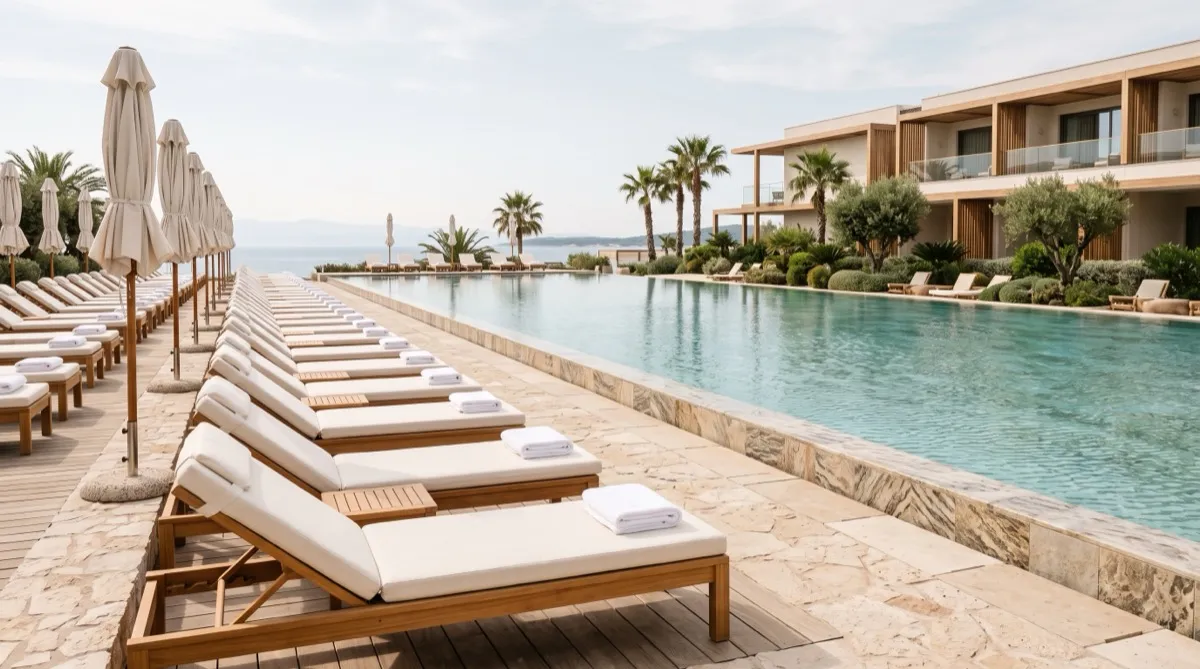
A pool furniture brief should describe sun, pool-water exposure, sunscreen, cleaning products and handling. These conditions can differ substantially from indoor use, but they do not establish a universal eighteen-month failure or decade-long indoor life.
Why pool furniture fails faster than any other category
Evaluate environmental exposure and mechanical use together for each proposed item.
Ask for the actual frame, fastener, finish and seating-surface documentation, including permitted UV, chlorine or saltwater exposure and care instructions. Resin, aluminum, stainless or marine-grade labels alone do not establish a complete assembly's suitability or predict when it will fail.
Record observed peak occupancy and handling frequency. Request the recline mechanism, wheels and other moving components' use limits and maintenance instructions.
The core pieces of a pool furniture program
Chaise lounges need a documented frame, seating surface, recline system and handling plan. Confirm loads, exposure limits, cleaning and any stacking or nesting instructions for the exact model.
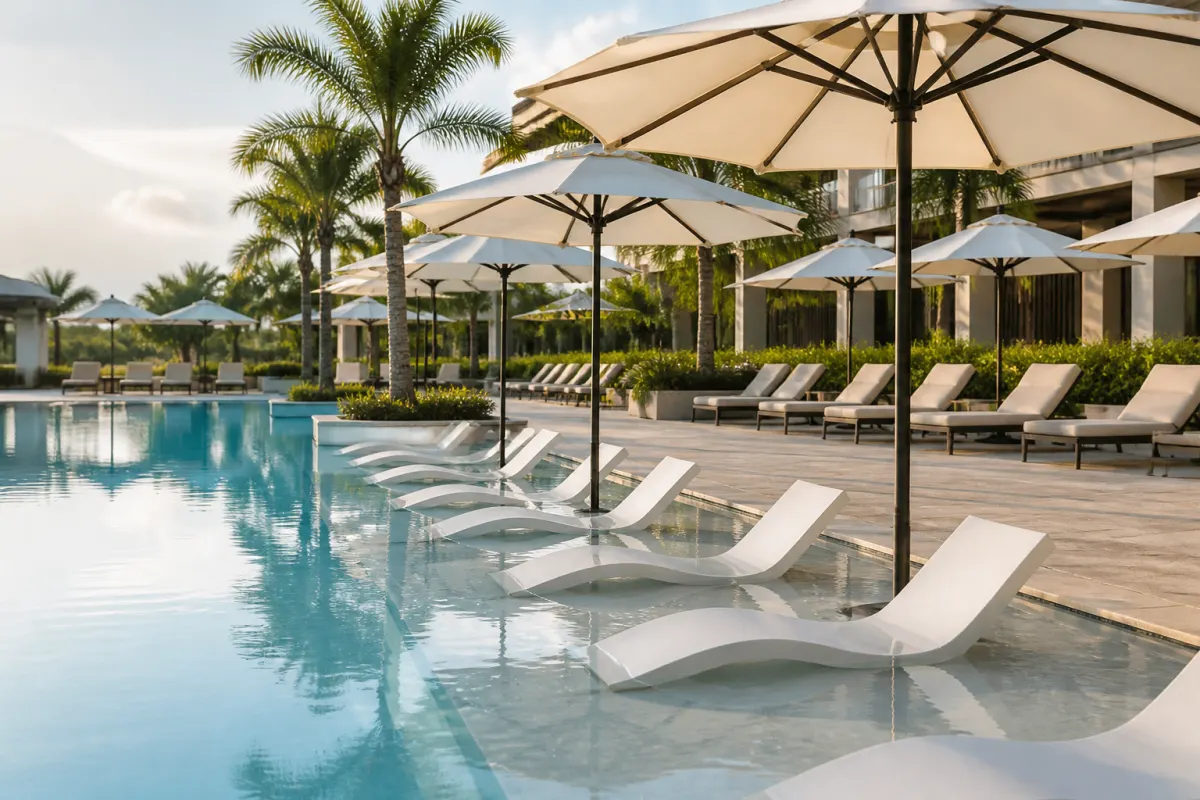
In-pool ledge loungers require explicit manufacturer approval for the pool type, water depth and installation. Follow its filling, ballast and placement instructions; ordinary splash exposure does not establish suitability for submersion.
Deck chairs and side tables provide seated and belongings space beyond chaises. Confirm their actual outdoor-use, load, cleaning and stacking documentation rather than treating a wicker or solution-dyed label as sufficient.
Cabana and daybed furniture should be planned per intended group, footprint and cover. Confirm cushions, canopy use, access and weather handling for the actual assembly.
Umbrellas and shade structures need a compatible base or anchoring system and documented wind-use and closure instructions. Coordinate placement with circulation and the project's installation requirements.
Material choices that hold up
For aluminum frames, review the complete assembly including fasteners and coating. Aluminum does not form iron rust, but corrosion resistance and pool exposure remain product-specific. Obtain the manufacturer's written care and exposure limits.
Compare slings, straps and cushions by drainage, drying, cleaning and replacement instructions for the actual product. None is automatically maintenance-free, and a covered cabana does not guarantee cushions remain dry.
For resin items, request intended-use and exposure documentation, care instructions and inspection guidance. Price or resin terminology cannot predict cracking within a year.
Quantity planning: how many pieces per pool
Set quantities from the usable deck layout and observed or forecast demand. One chaise per 1.5 to 2 guest rooms can be a scenario to test, not an established rule. Check circulation, accessible use, shade and storage with the project team.
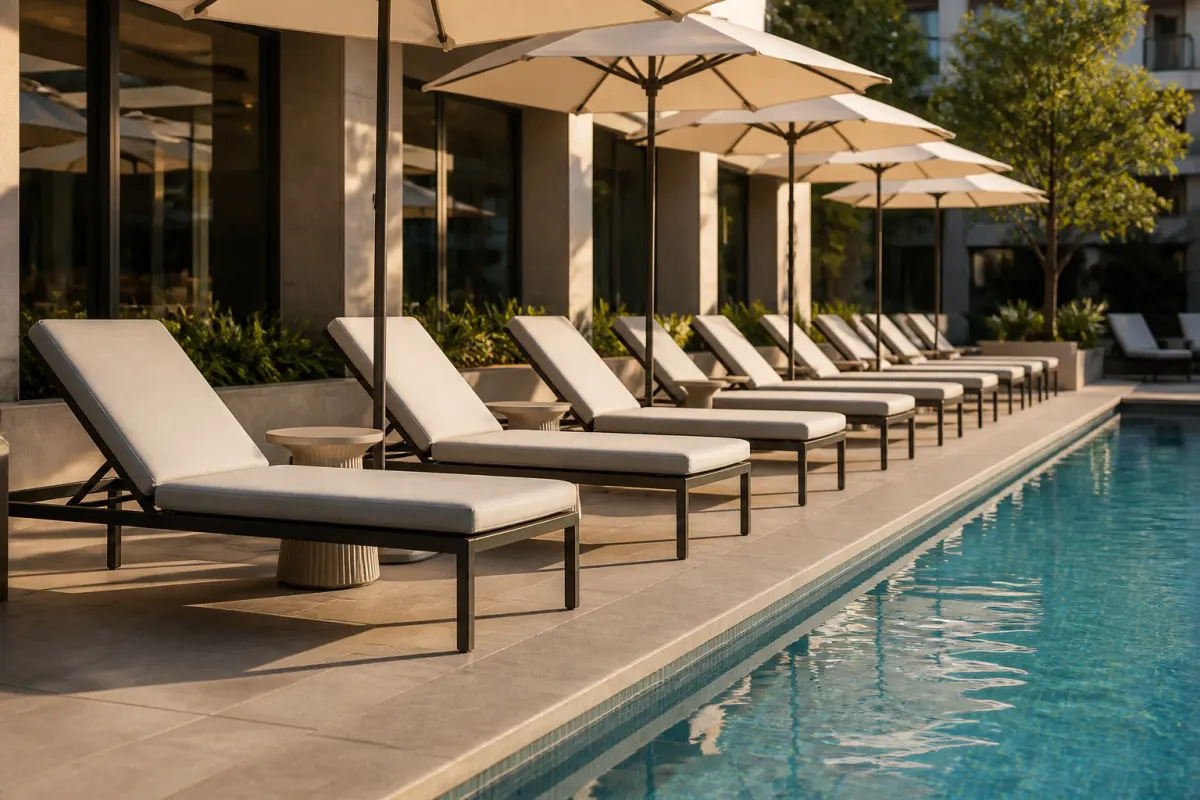
Don't forget the shoulder pieces. Every deck needs a handful of extra chairs and small tables that aren't part of the main chaise grid, for groups that don't want to lie down, for families with small kids, for the guest who just wants to sit in the shade with a book.
Storage and seasonal handling
Obtain the actual storage footprint, stacking limits, covers and handling instructions before ordering. Do not assume chaises safely stack four or five high.
In year-round operation, follow the manufacturer's maintenance and inspection schedule. Rotation or shading may be part of the plan, but no measured lifespan extension can be promised without evidence.
Buying in volume for a resort program
A coordinated program can simplify finish and component matching. Compare current itemized quotes and reorder terms; a single full-deck order does not guarantee a lower price.
Confirm approval, production, freight and delivery milestones for each configuration; custom pool furniture has no universal ten to fourteen week window. Request a quote with the deck layout, exposure, quantities and opening date so independent suppliers can propose documented options.
Related reading
- Restaurant patio tables guide
- Teak vs aluminum outdoor furniture
- Winterizing commercial patio furniture
- Get a quote
Our take
Include sunscreen and self-tanner exposure in the cleaning questions for the actual sling, strap and finish. Obtain approved products and methods, test a sample as directed and compare colors under the site lighting. Darker colors or degreasers cannot be assumed to preserve the appearance or compatibility of every product.
Cleaning check: Obtain written sunscreen-stain and routine-care instructions for each proposed seating surface and finish.