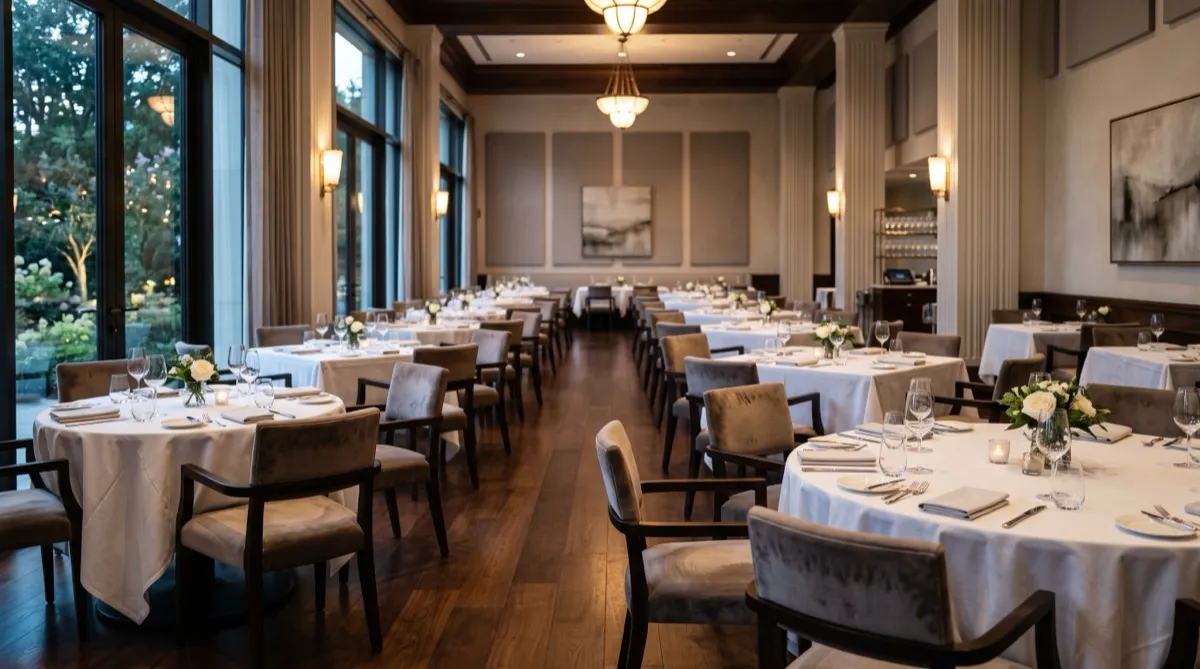
Use the restaurant's actual meal lengths, checks, table turns, service tasks, and layout to compare furniture. Ninety-minute-to-two-hour meals are trial scenarios, not a universal steakhouse pattern. Comfortable seating and stable tables belong in the specification, but furniture alone does not establish a check premium or high margin.
Check average changes the furniture math, not just the price point
Model furniture spend alongside the operation's selected covers, turns, checks, repairs, and replacement cases. One-or-two turns a night is a scenario to test with records. Neither a steakhouse label nor higher checks automatically justifies heavier, more expensive pieces; compare the exact suitable products and total ownership costs.
Furniture replacement timing depends on the selected pieces, use, cleaning, repairs, and the operator's records. A longer meal does not by itself prove a longer furniture life. Compare suitable products and model repair/replacement scenarios for the actual operation rather than assigning a lifespan from service style.
What seat pitch works for a two-hour steakhouse cover?
Test 24 to 26 inches of table-edge allocation per seat against a 20 to 22-inch comparison scenario using the actual chairs and place settings. These are comfort targets, not universal minimums. Draw chair pull-out and circulation separately; a 36-inch aisle scenario does not establish every required accessible, service, or exit clearance. Include guests and the service team in the sample layout review.
Trial arms, back support, usable seat dimensions, cushion construction, and the ease of sitting and standing for the intended meal length. Obtain the exact foam density, firmness, support, and relevant performance information separately; a higher-price or higher-firmness label alone does not establish comfort or longer service. Compare complete seating samples with the visitors the restaurant serves.
Table stability for tableside service
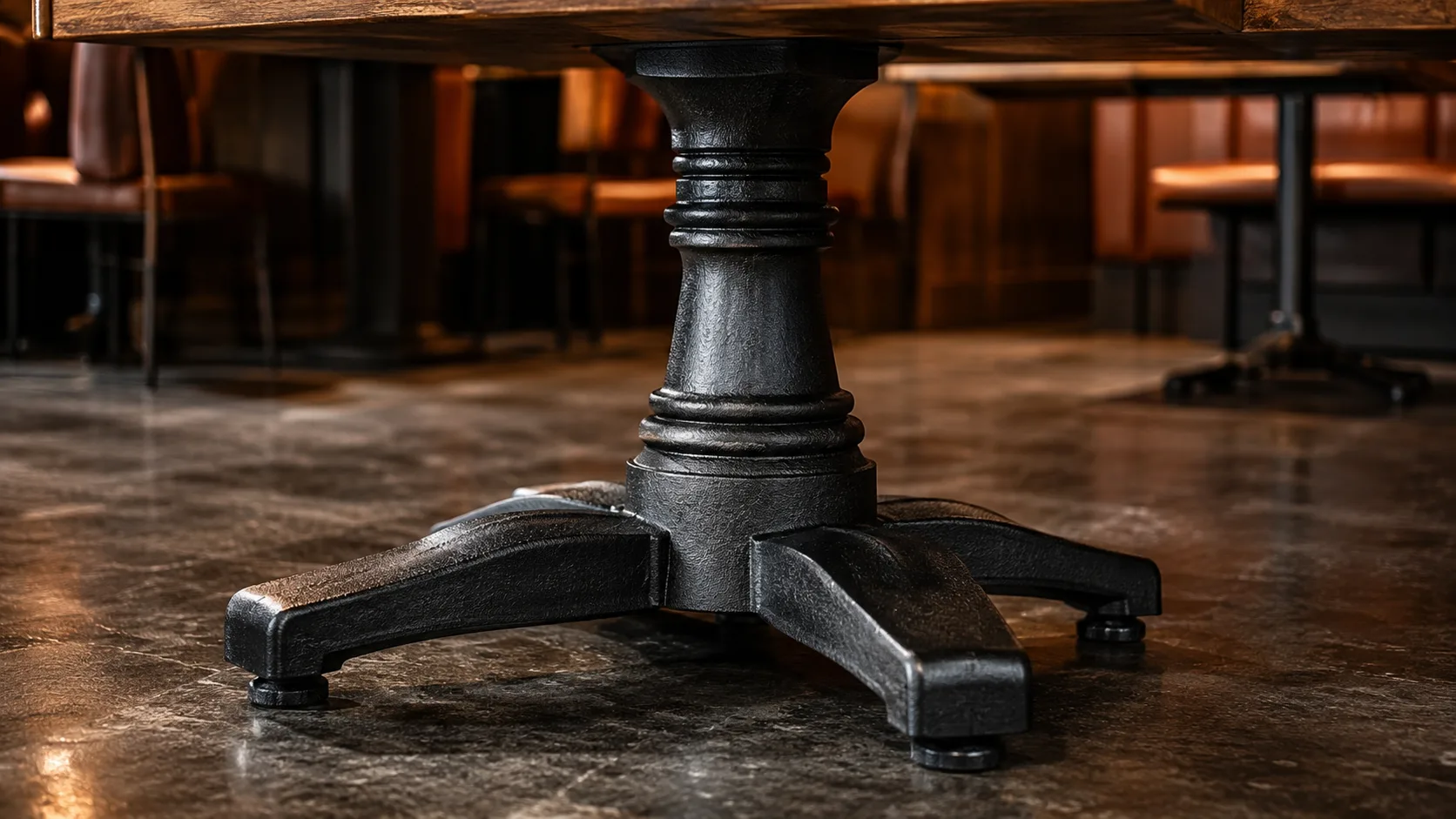
List actual tableside tasks such as carving, wine service, and shared dishes. Compare maker-approved top/base combinations using complete geometry, attachment, floor contact, loads, and permitted use. Pedestal and four-leg designs are options to assess; base material or a wide footprint alone does not establish adequate support or stability.
Compare wood, veneer, laminate, and solid surface samples with the design brief, documented wear and cleaner limits, approved care, and repair options. Follow the selected finish's instructions rather than assuming wood needs resealing on a fixed interval or laminate and solid surface are maintenance-free.
Private dining rooms carry their own furniture program
If the program includes a private or semi-private room, give it a separate item schedule and occupied layout. Six-to-twenty-person arrangements are trial scenarios to verify with the exact furniture and routes. Check approved joining, reset procedures, storage, and product documentation alongside appearance. The restaurant lounge seating guide covers related questions where a pre-dinner zone is included.
How fine dining furniture differs from general chair selection
Use the commercial dining chair guide to compare frame and material options. For a steakhouse or fine-dining room, test the proposed chair through the expected length of a meal, including reaching the table, standing and moving past occupied seats. Include the service team in the sample review.
Our contract dining chairs guide is a useful companion for the frame and foam specifications that carry across both ends of the market, casual and fine dining alike, before you narrow in on the upscale-specific choices above.
Ordering, minimums, and lead time
Confirm minimum quantities, finish approval, and dated order milestones for the exact dining and private-room program. A smaller order does not necessarily have a shorter or longer production queue. Use the revenue per seat calculator to compare selected seats, turns, and average checks; verify geometric capacity and circulation on the dimensioned room plan separately.
Browse illustrative dining-chair concepts, review the restaurant furniture planning program, or request a quote with seat counts, meal-length trials, service tasks, and finish direction for relevant independent suppliers to review. Concept listings are design references; suppliers confirm actual intended use, dimensions, documentation, prices, and availability.