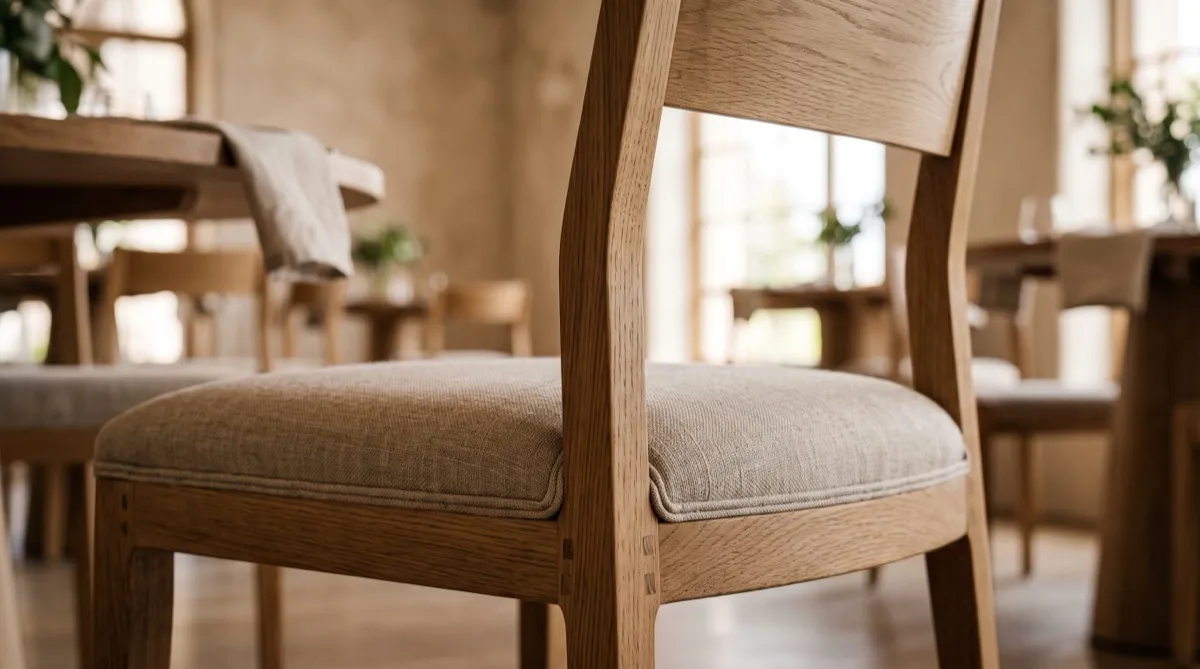
A dining chair in a restaurant gets sat in, pushed back, dragged across the floor, and stacked for cleaning, sometimes hundreds of times a day, every day, for years. A dining chair in a home does a fraction of that work. The two can look nearly identical across a table, same silhouette, same finish, same fabric pattern, and still have completely different service lives once they're in commercial use. Contract dining chair specs exist because that gap is real and it's measurable.
Frame construction and joint tests
Review the complete frame and joints against the exact model's intended use and test documentation. Welded connections, screws, dowels and adhesives are construction details, not a universal pass/fail classification. Do not infer a months-to-wobble forecast from joint type alone; obtain the maker's assembly, inspection and maintenance instructions.
Frame gauge matters as much as joint type. Ask for the actual tubing or leg thickness spec, not just a general "commercial grade" label, since two chairs with visually identical frames can differ meaningfully in wall thickness and therefore in how much repeated load they tolerate before fatigue sets in.
Request the exact model's test report, including the named standard and edition, test loads, conditions, date and result. A vague BIFMA-aligned claim is not enough to identify what was tested, and simulated cycles do not establish a number of real service years. Review the intended use and loading conditions rather than inferring them from a static weight limit alone.
Upholstery specs that actually matter
Obtain the actual upholstery test method and result. The 30,000 Wyzenbeek double-rub example is a test reference, not a guarantee that a lower result wears out in one season or that a higher result lasts a stated number of years. ACT's abrasion guidance explains why abrasion results do not directly predict service life. Also check cleaning compatibility, seam construction and the maker's intended application.
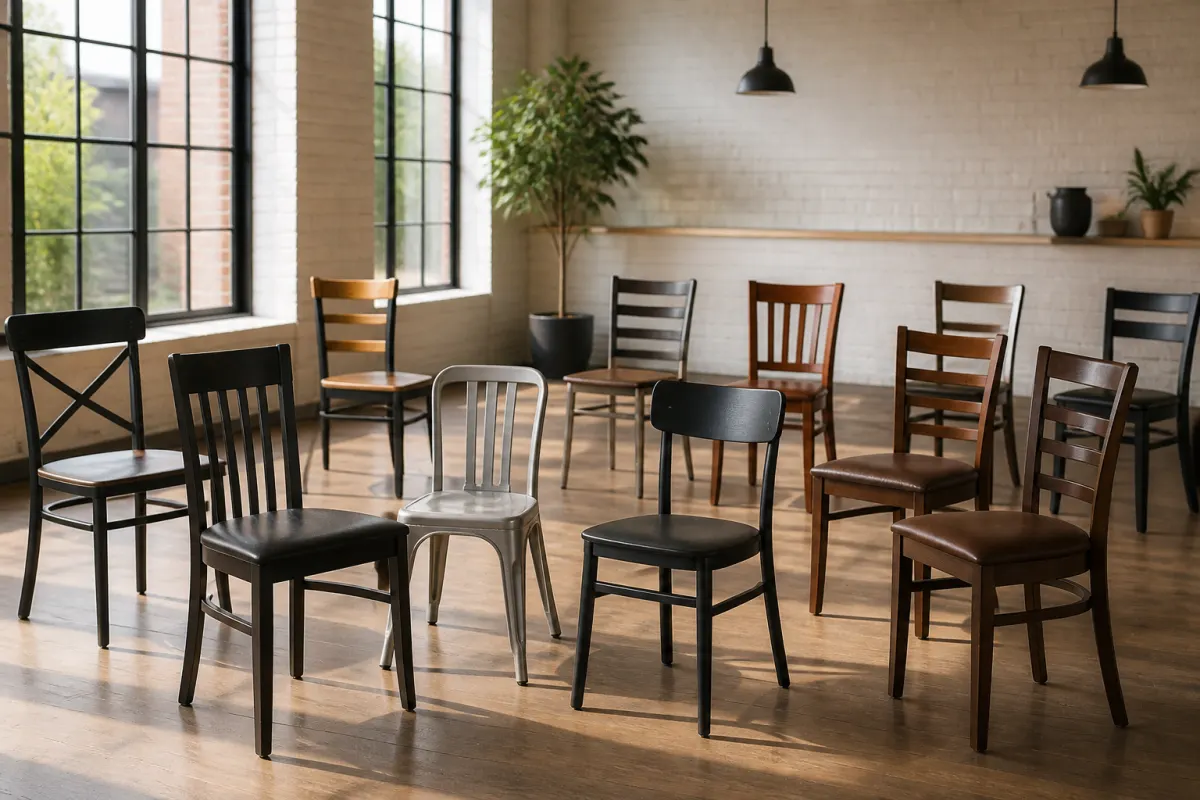
Vinyl is the other common choice for restaurant dining chairs, particularly in higher-volume, faster-turn concepts, because it wipes clean and resists staining better than fabric under constant food and beverage contact. The choice between fabric and vinyl is partly aesthetic and partly operational, a fine-dining concept may prioritize fabric's look and feel, while a high-volume casual concept often prioritizes vinyl's cleaning speed. Either way, the spec sheet should list the material's durability rating explicitly, not just the color and pattern.
Stacking and storage
Many restaurant concepts need chairs that stack for off-hours cleaning, private events, or seasonal storage. Stacking chairs need reinforced frame points at the stack contact areas, since repeated stacking and unstacking puts concentrated stress on specific points of the frame that a non-stacking design never experiences. A chair not engineered for stacking will show frame damage at those contact points faster than the rest of the frame wears, even if the general construction is otherwise solid.
If stacking is part of your operational plan, confirm the chair is rated and reinforced for it specifically, rather than assuming any chair can be stacked occasionally without consequence.
What a real spec sheet should show
A complete contract dining chair spec sheet lists frame material and gauge, joint construction (welded versus fastened), fabric or vinyl grade with the double-rub rating, overall and seat dimensions, weight capacity, whether the chair is rated for stacking, and finish options. If a supplier's spec sheet is missing several of these, ask directly rather than assuming the gaps mean the answer is simply "yes, it's fine." A supplier confident in the product's construction will have these numbers ready.
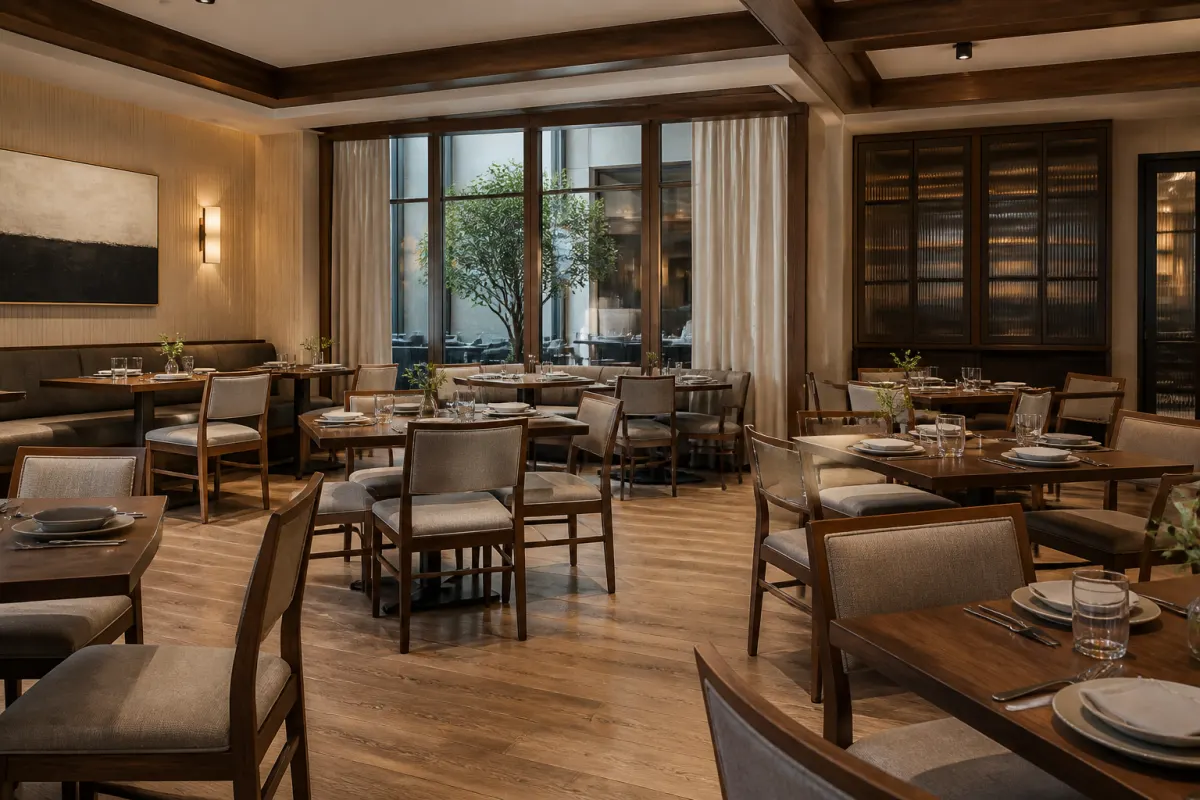
Compare actual supplier model documents and samples before a volume order. The contract furniture buyers guide provides a framework; the dining-chair concepts are visual references, not published test reports or proof of frame/fabric specifications.
Matching chairs to concept and volume
The right dining chair spec also depends on concept and turn rate. A fine-dining room with lower daily seat turns can support a more delicate-looking design with less aggressive fabric ratings than a fast-casual concept doing several hundred covers a day. Match the spec to how hard the chairs will actually work, not just to the room's aesthetic, since under-specifying for a high-volume concept is the most common way restaurant operators end up replacing dining chairs earlier than expected.
Finish and maintenance considerations
Finish choice affects long-term maintenance load as much as it affects initial appearance. Powder-coated metal frames resist scratching and chipping better than painted wood frames in a high-contact dining environment, and they're easier for a cleaning crew to wipe down consistently without special products. Wood frames can work in concepts where the aesthetic calls for it, but they generally need more careful handling and a maintenance routine that accounts for finish touch-ups over time.
Ask a supplier what maintenance the finish actually requires under daily commercial cleaning, not just how it looks new. A chair that needs specialized cleaning products or careful handling to preserve its finish adds an ongoing operational cost that's easy to overlook at the point of purchase but shows up clearly in a facilities budget within the first year.
Ordering in the right volume
Contract dining chair orders typically carry minimum order quantities tied to production efficiency at the factory level. If a project is likely to expand, a second dining room, a renovation phase two, ordering the full anticipated volume upfront, or at least confirming the exact frame and fabric spec so a later reorder matches precisely, avoids the common problem of a follow-on order arriving in a slightly different fabric dye lot or finish tone than the original room.
Getting the spec right before you order
Submit a furniture request with the concept type, anticipated use, chair quantities, finishes and delivery requirements. Independent suppliers may identify actual models and provide the frame, upholstery and stacking documents needed for your approval.
Compare a wood, metal, or hybrid order
Inspect the actual joints and finish on a sample from each construction type. For wood, ask about the joinery and whether the finish can be repaired or refinished. For metal and hybrid designs, identify which glides, seats, and other wear parts are replaceable.
When supplying more than one dining room, keep the approved sample and product codes, and split quantities and delivery requirements by location. A plan for repairs and matching additions belongs in the comparison alongside the initial quote.
Related reading
Our take
Keep the model's specification after delivery: it identifies compatible glides, maker-approved stack heights, maintenance instructions and the actual warranty scope. Post the stack limit where staff can see it and train the team on the permitted handling method. Following instructions helps manage use and inspection, but does not guarantee a service life that a cycle or abrasion test cannot predict.
The bottom line: Buy on the spec sheet, then run the room on it. The stack rating, glide type, and warranty terms in that document are operational instructions, not just purchasing data.