San Diego's restaurant market operates at an intensity that surprises operators coming from other West Coast cities. The combination of year-round outdoor weather, a dense convention calendar, heavy leisure tourism, and a local population that eats out at unusually high rates creates a dining environment where tables rarely go empty for long. That means restaurant furniture chairs, barstools, dining tables, booth seating takes far more annual abuse than the spec sheets of residential or light-commercial pieces are built to handle.
San Diego's Restaurant Districts and Their Furniture Demands
The Gaslamp Quarter is the highest-volume test for restaurant furniture in the city. Multi-level venues, rooftop bars, and ground-floor dining rooms along Fifth Avenue and the surrounding blocks operate at capacity during Comic-Con, Padres home games, and major convention weeks. A 200-seat restaurant in the Gaslamp might turn tables four or five times on a Saturday night every chair cycled in and out that many times, every table surface wiped and reset repeatedly. Dining chairs for these environments need commercial-grade frames, reinforced corner blocks on any wood construction, and upholstery that cleans without delaminating or absorbing moisture.
Little Italy has evolved into one of San Diego's highest-profile restaurant corridors, with a mix of authentic Italian concepts, modern American, and wine bars that attract both tourists and a discerning local following. The aesthetic here leans European casual warm tones, bistro silhouettes, simple materials executed well. Dining chairs in classic cross-back or Tolix-inspired metal profiles work well in these settings, but they need proper floor glides to protect the tile and polished concrete floors that dominate the neighborhood's dining rooms.
North Park and South Park have become San Diego's craft food and beverage heartland dense concentrations of craft breweries, farm-to-table concepts, ramen shops, and neighborhood bistros. The aesthetic is relaxed industrial: reclaimed wood tables, mismatched seating, exposed concrete. But operators in these neighborhoods are still running commercial volumes, and furniture that looks appropriately casual still needs contract-grade construction underneath the patina.
La Jolla's fine dining strip Prospect Street and the blocks surrounding it serves the biotech executive, defense industry management, and high-net-worth resident population that lives in the area. These operators are buying lounge chairs, sofas for cocktail lounge areas, and bar seating at a higher price point and need pieces that hold their appearance over years, not months.
Design Aesthetic and Furniture Specifications for San Diego Restaurants
California coastal contemporary dominates San Diego's design vocabulary, but it expresses differently by neighborhood and concept. In hotel restaurants and La Jolla fine dining, it means light wood tones, woven textures, natural linen upholstery, and furniture profiles that feel relaxed without being casual. In the Gaslamp and Little Italy, there's more tolerance for bolder material choices blackened steel frames, darker leather, concrete tabletops but the overall palette still favors warm neutrals over stark contrast.
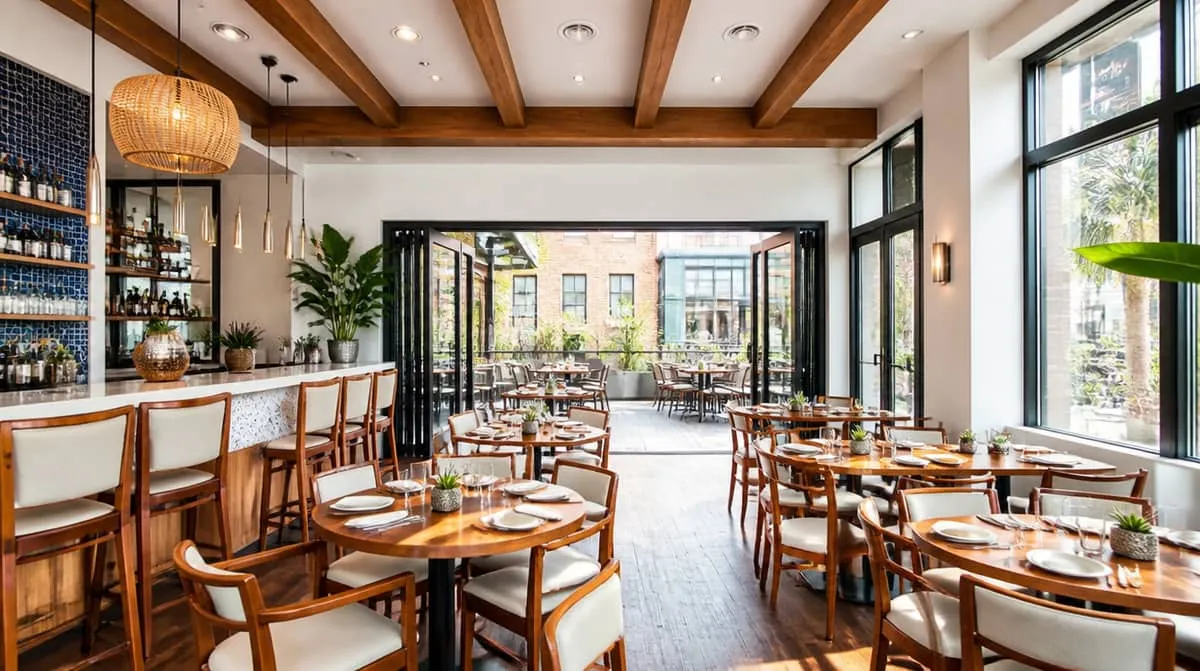
For outdoor dining specifically, San Diego's year-round climate means patio furniture operates in a commercial capacity essentially every day of the year, which almost no other U.S. market can claim. Marine-grade aluminum frames, solution-dyed acrylic upholstery, and UV-stable powder coatings are baseline requirements, not upgrades. Salt air from the coast accelerates corrosion on any unprotected metal, and restaurant operators who discover this after purchasing indoor-grade pieces for exterior use end up replacing their entire patio program within 18-24 months.
Barstools are a major specification item for San Diego's bar-forward restaurant culture. The craft brewery scene, the rooftop bars of the Gaslamp, and the cocktail lounges attached to hotel restaurants all drive high barstool volume. Specify swivel bases with locking mechanisms or fixed bases depending on the volume of the bar program high-turnover venues generally prefer fixed-height stools that don't require readjustment between guests.
Procurement and Lead Times for Restaurant Operators
Restaurant furniture procurement timelines in San Diego typically run 8-14 weeks for custom production and 3-5 weeks for in-stock commercial pieces. For restaurant operators planning a new opening or full renovation, ordering furniture before the general contractor finishes the space is standard practice but coordinate delivery timing so pieces aren't staged in an unfinished interior where dust, drywall compound, and construction traffic can damage finishes.
For operators doing partial refreshes replacing patio seating or reupholstering booth backs phased delivery tied to the restaurant's schedule (typically closed on Monday mornings in San Diego) minimizes revenue disruption. Request COM (customer's own material) upholstery services if your existing booths need recovering to match new seating additions rather than a full replacement. It's consistently the most cost-effective approach for booth back panels and banquette cushions.
Pricing for restaurant furniture in San Diego depends on quantities, finishes, and your delivery window, so a project-specific quote beats any list figure. Request a quote to get yours.