San Diego may be the most bar-friendly major city in California. The combination of year-round outdoor weather, a dense entertainment district in the Gaslamp Quarter, a nationally recognized craft brewery scene, resort bars operating at full capacity twelve months a year, and a young military and tech workforce that drives weeknight bar traffic creates a bar and lounge market unlike anywhere else in the state. For operators in this market, furniture isn't a background decision it's a core element of the experience, and it needs to perform commercially from opening day through thousands of service cycles without visible deterioration.
San Diego's Bar and Lounge Landscape
The Gaslamp Quarter is the highest-volume bar corridor in the city. Multi-story venues with ground-floor bars, mezzanine lounges, and rooftop decks are common, and they fill to capacity during Comic-Con, Padres games, and the regular weekend leisure tourism that San Diego's climate sustains year-round. Barstools in Gaslamp venues are cycled through thousands of sits per week during peak periods. Operators need commercial-grade frames steel or solid hardwood with reinforced footrests and upholstery with double-stitched seams and vinyl or performance fabric faces that wipe clean after spilled drinks without absorbing staining.
Little Italy's bar scene skews more sophisticated wine bars, craft cocktail lounges, and aperitivo-style venues that attract a different demographic than the Gaslamp's nightlife crowd. The furniture aesthetic here tends toward warmer, more European-influenced profiles: upholstered lounge chairs in cognac leather or warm-toned boucle, marble-top cocktail tables, banquette seating with brass rail details. But even in a 40-seat wine bar, commercial use patterns accumulate fast and operators who buy residential-grade furniture because it looks appropriate at the price point regret it within a year.
North Park and South Park are the center of San Diego's craft brewery taproom culture. Venues like Stone Brewing's Liberty Station location and the dozens of neighborhood taprooms that have opened in the past decade have created a distinct furniture aesthetic: reclaimed wood communal tables, industrial barstools in blackened or raw steel, mismatched lounge chairs that create a living-room-in-a-brewery feel. The casual, curated aesthetic is intentional but the commercial volume these taprooms see means the furniture underneath the patina needs contract-grade bones.
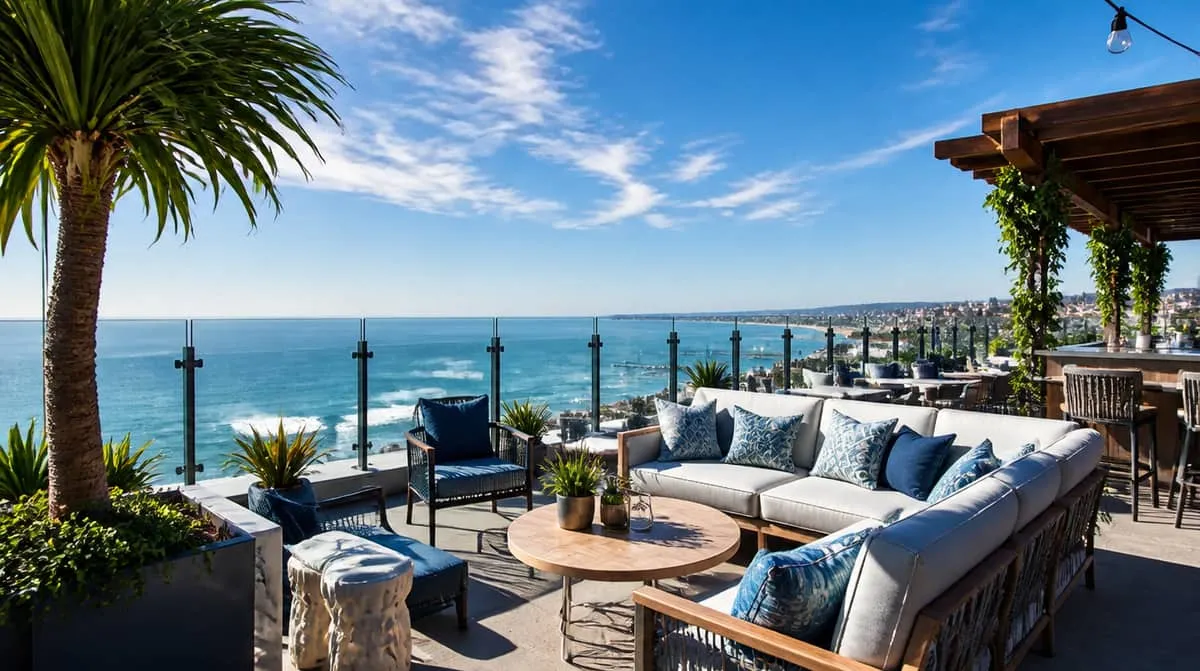
Resort bars along Coronado Island, Mission Bay, and La Jolla represent the premium end of the San Diego bar furniture market. Pool bars, beach bars, and marina-side cocktail lounges at properties like the Hotel del Coronado and Mission Bay resort clusters operate outdoors or semi-outdoors essentially year-round. Every piece needs marine-grade construction aluminum or stainless hardware, powder-coat finishes rated for coastal salt air, solution-dyed fabrics. The barstools and ottomans at these venues are in direct sun and salt air for 10-12 hours a day, 365 days a year.
Design and Specification Standards for San Diego Bars
San Diego bar and lounge aesthetics follow the California coastal contemporary framework but with deliberate material contrasts that give each venue character. The palette foundation bleached woods, warm neutrals, woven textures, marine-influenced tones provides a backdrop, but successful venues layer in statement materials: hammered copper bar tops, lava-stone cocktail table surfaces, rope and rattan accent elements that evoke coastal craft traditions.
For barstools, the swivel-versus-fixed decision matters operationally. High-volume venues with rapid turnover generally prefer fixed-height stools at a consistent bar height they don't need adjustment between guests and there are no swivel mechanisms to maintain. Cocktail lounges and destination bars where guests linger tend to prefer swivel stools for comfort on longer visits. Specify footrest heights carefully for your bar counter height; the wrong footrest-to-bar-top ratio is one of the most common comfort complaints in bar environments.
Lounge chairs and sofas in cocktail lounge zones should be specified at slightly lower seat heights than dining chairs 16-17 inches rather than 18-19 inches to create the relaxed, settle-in posture appropriate for cocktail hour seating. Upholstery in lounge zones benefits from performance velvet or treated leather that cleans without leaving tide marks after moisture contact.
Procurement Considerations for San Diego Bar Operators
Bar furniture in San Diego is frequently replaced on accelerated cycles compared to hotel guestroom or dining room programs the combination of high-volume use, outdoor exposure in many venues, and the aesthetic turnover expectations of a trend-sensitive market mean operators should plan for 4-6 year refresh cycles rather than 8-10 year hotel schedules.
For rooftop and outdoor venues, budget replacement upholstery into the operating model from year one. Even properly specified outdoor fabrics on a sun-exposed San Diego rooftop will need recovering at the 3-4 year mark. Specifying frames and upholstery as separates rather than integrated fixed-upholstery pieces makes this lifecycle management practical.
Pricing for bar and lounge furniture in San Diego depends on quantities, finishes, and your delivery window, so a project-specific quote beats any list figure. Request a quote to get yours.