San Diego's boutique hotel segment has expanded rapidly as the city's traveler profile has shifted. The defense and biotech corporate traveler, the Comic-Con attendee, the weekend leisure guest from Los Angeles all of them have demonstrated a clear preference for independently operated, design-forward properties over flag-branded boxes. That preference puts enormous pressure on boutique operators to deliver interiors that are photographable, distinctive, and durable enough to hold their appearance through the city's relentless occupancy cycles.
Where San Diego Boutique Hotels Are Concentrated and What They Need
The Gaslamp Quarter remains the most competitive boutique hotel corridor in the city. Properties here are trading on proximity to the Convention Center, Petco Park, and the entertainment district, which means occupancy spikes during Comic-Con, Padres playoff runs, and major conventions are extreme and the furniture takes corresponding punishment. Boutique operators in the Gaslamp need lounge chairs and lobby sofas that read as design-intentional while being built to contract spec underneath. A lobby chair that looks great in a press photo but shows accelerated wear after 18 months of Comic-Con crowds is a branding liability.
Little Italy has become a destination for lifestyle and design hotel concepts aimed at the creative and tech professional traveler. Properties here lean into the neighborhood's European character warm textures, artisanal materials, a sense of casual sophistication. Guestroom furniture programs typically center on platform beds with headboards in linen or boucle upholstery, bedside tables in cerused oak or walnut, and upholstered lounge chairs with leg designs that read as contemporary European.
North Park and South Park have seen a wave of small boutique properties often under 50 rooms designed for the local-experience traveler who wants to feel embedded in the neighborhood rather than insulated from it. These properties typically have tighter FF&E budgets, which makes the cost-per-year-of-use calculation critical: a chair that costs 30% more but lasts three times as long is the right buy, and operators who understand contract-grade construction make better decisions.
Beach corridor properties Pacific Beach, Mission Beach, Ocean Beach operate in the most demanding environment from a materials standpoint. Salt air, sand, sun exposure in rooms with large west-facing windows, and guests who come directly from the beach all contribute to faster furniture degradation. Marine-grade frames, UV-stable upholstery, and moisture-resistant case goods finishes aren't optional in these locations.
Design Standards for San Diego Boutique Hotels
California coastal contemporary is the dominant aesthetic language in San Diego boutique hotels, but the best properties layer in local specificity that distinguishes them from generic coastal styling. The core palette bleached woods, whitewash finishes, rattan and wicker accents, natural linens, sand and ocean tones is consistent, but execution varies widely.
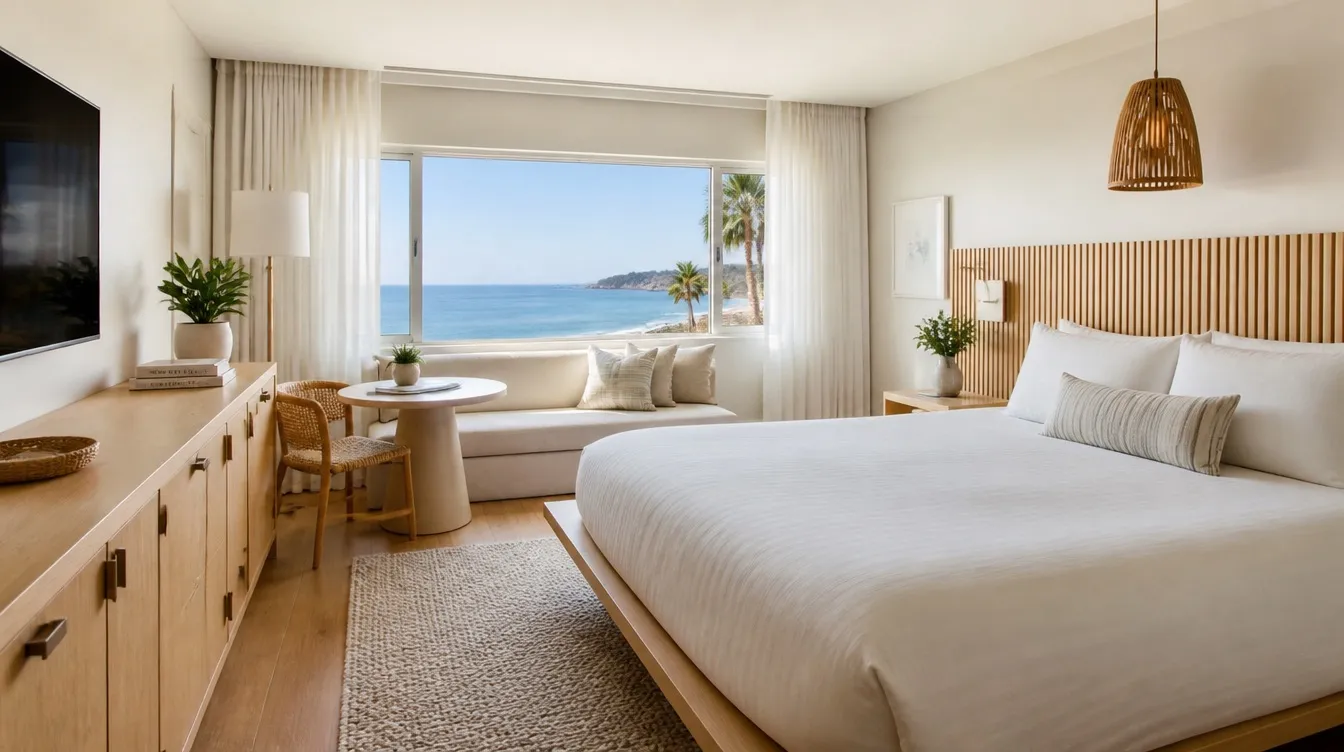
For guestroom programs, the most successful San Diego boutique hotels are specifying headboards in statement upholstery bouclé, textured linen, or even cane-panel inserts with bedframes in light-toned wood or painted finishes rather than the dark walnut that dominated the previous decade. Bedside ottomans and bench seat at bed-foot are common elements in rooms at the $200+ ADR tier, and they need to be specified in fabrics that clean easily given guest use patterns.
Common area and lobby design in San Diego boutique hotels increasingly blurs the indoor-outdoor boundary. Properties with courtyard access, rooftop terraces, or ground-floor patios are specifying all-weather versions of their indoor lounge chairs and sofas for exterior use so the design language reads seamlessly whether a guest is inside or outside. This requires careful coordination between indoor and outdoor product lines at the specification stage.
Custom millwork and furniture is more common in the boutique segment than in branded flags, which means lead times are longer and the specification process requires more design collaboration. Operators who engage a supplier early before finalizing design drawings tend to get better outcomes than those who hand over a finish board at the last minute and ask for a miracle on timeline.
Procurement for Boutique Hotel Projects
Boutique hotel FF&E procurement runs 10-16 weeks for custom production. Given that most boutique projects involve a higher proportion of custom or semi-custom pieces than a flag conversion, operators should build lead time into their project schedule before construction completion rather than treating furniture as a last-mile item.
For properties in the Gaslamp Quarter or near the Convention Center, delivery scheduling needs to account for event blackout periods trying to receive a full FF&E shipment during Comic-Con week is impractical. Work with your supplier to schedule delivery during a clear window and arrange temporary storage if the construction schedule is running close to an event peak.
Every San Diego venue has its own volume, layout, and turnaround demands, and boutique hotel furniture pricing follows from those specifics. Request a quote and we will scope it to your project.