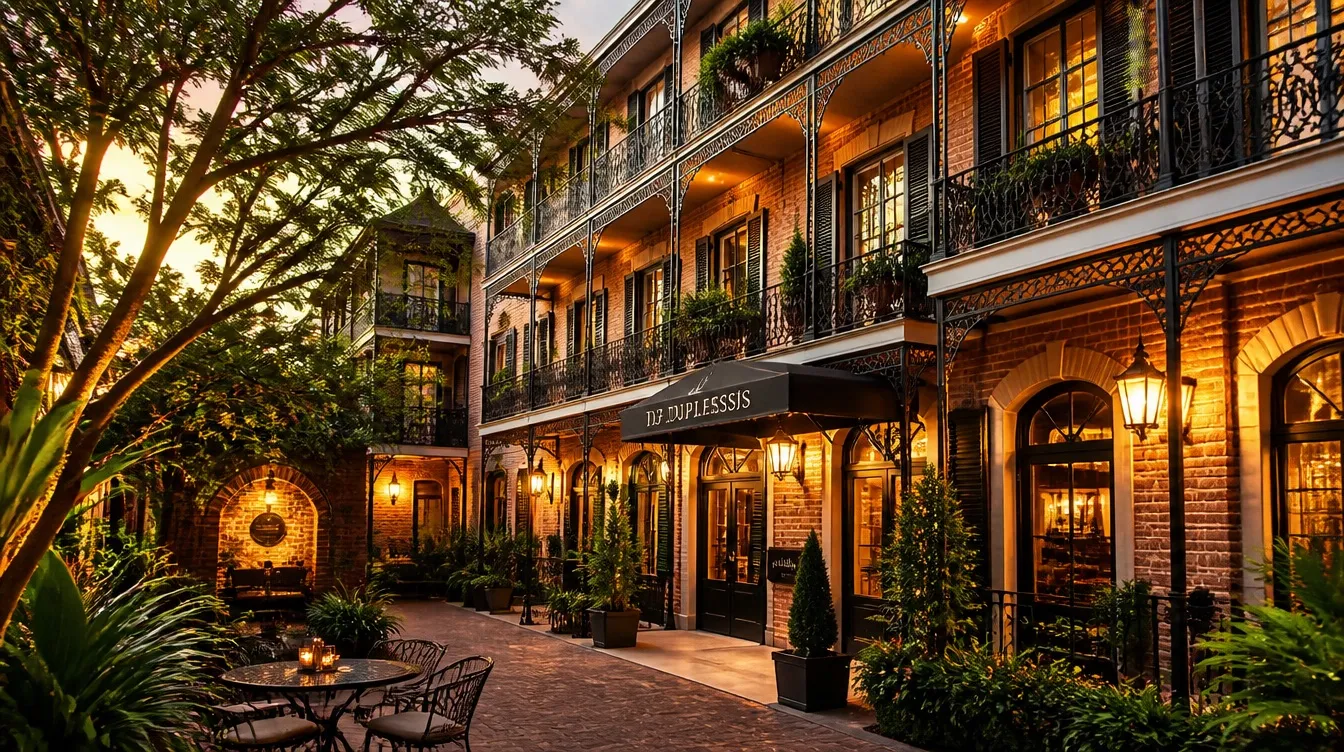
No American city takes its restaurants as seriously as New Orleans. This is not a market where F&B is an amenity attached to hotels or an amenity attached to tourism. It is the culture itself. Magazine Street sustains a dining corridor that runs from the Garden District to the Warehouse District, anchored by neighborhood institutions that have been running the same service model for decades. Frenchmen Street in the Marigny is where the music and the meal overlap in ways that put furniture through a late-night intensity most dining concepts never approach. The French Quarter concentrates some of the most recognized restaurant names in the country inside buildings where the architecture sets an expectation that every piece of furniture has to meet. If you are opening or renovating a restaurant in New Orleans, your furniture program is a genuine operational and aesthetic commitment one that requires a supplier who understands what this market actually demands.
Volume and the Long Service
The most distinctive feature of New Orleans restaurant furniture wear is not the number of covers it's the duration. Diners in this city stay. A table at a Garden District institution runs two hours minimum. A corner table at a Warehouse District wine bar on a Friday night runs longer. Late-night covers on Frenchmen Street after a set ends can push into the early morning. The cumulative time a single chair spends occupied in a New Orleans restaurant is significantly higher than comparable concepts in markets where the turn expectation is tighter.
That extended contact time makes comfort a durability issue, not just a hospitality one. Dining chairs with undersized seat depth or insufficient foam density generate the kind of guest discomfort that surfaces in reviews even when guests cannot articulate the cause. A seat depth of 17 to 18 inches with a slight backward pitch holds a diner for three hours without punishment. ILD foam ratings in the 35 to 45 range for padded seats maintain their profile through years of service. Below that threshold, compression becomes visible within 18 months and the chair communicates exactly what you do not want to communicate to a table that has committed to an evening.
Frame construction matters across the same time scale. Double-dowel and corner-block joinery in wood-frame chairs separates pieces that hold their tolerance through years of New Orleans service from those that begin loosening after the first hard Mardi Gras season. Request documentation on joint construction before you approve any wood-frame chair for a high-volume application. Welded steel frames with a powder-coated finish are the appropriate choice for barstools and high-tops in environments where the stool takes the rotation and leaning stress of a full bar service welds at the leg-to-footrest junction are the first point of failure on inadequately specified pieces.
The New Orleans Aesthetic and What It Requires of Furniture
New Orleans has a design vocabulary that is specific, coherent, and unforgiving of generic hospitality furniture. Magazine Street bistros and Garden District dining rooms operate against a backdrop of antebellum architectural character high ceilings, wide-plank floors, tall windows with shutters, plaster crown molding that makes institutional seating look immediately wrong. Frenchmen Street venues live in the space between a music club and a restaurant, which means the furniture needs the visual warmth of a real room, not a concept space.
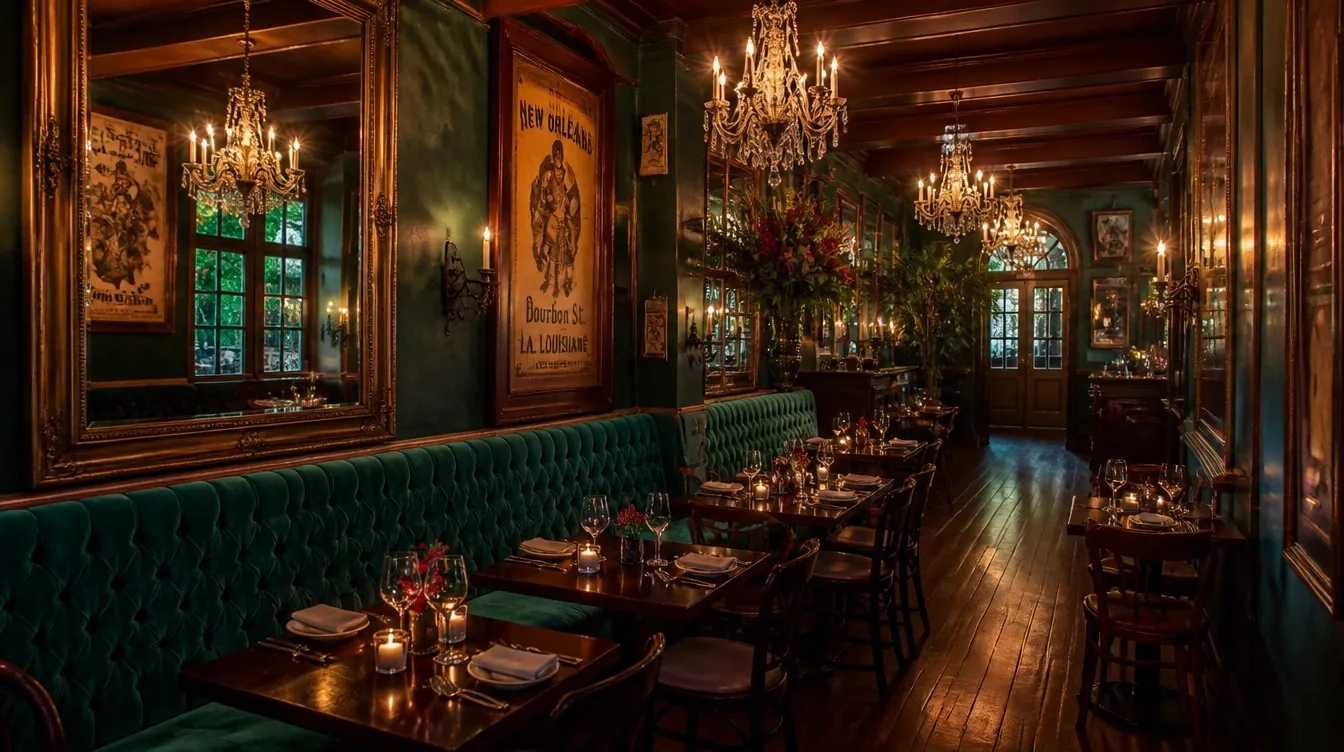
The French Quarter's restaurant corridor is the most demanding context of all. Institutions like Antoine's and Galatoire's have set an expectation of dark mahogany finishes, white linen, and formal upholstery that runs through the entire Quarter dining culture as a baseline. Even the more casual Quarter restaurants operate against this backdrop. Dining chairs in dark walnut or ebony-stained hardwood with upholstered seats in burgundy, bottle green, or deep sapphire performance fabric hit the right register. Tufted banquette backs in jewel-toned velvet specified in commercial grades above 50,000 Martindale cycles create the visual warmth that makes a French Quarter dining room feel intentional rather than assembled.
The Warehouse District restaurant scene operates at a more contemporary pitch, informed by the gallery culture of the neighborhood. Deep tones remain this is still New Orleans but executed with cleaner lines, exposed concrete and brick providing architectural context, and furniture that conveys design literacy over historical reference. Steel-frame dining chairs with a blackened or oil-rubbed finish, paired with dark marble or solid wood table tops on cast iron or steel bases, work with the material register of a converted warehouse without trying to impose French Quarter historicism.
Outdoor and Semi-Outdoor: Magazine Street to the French Quarter
Restaurant outdoor dining in New Orleans is not a seasonal amenity. The subtropical climate makes outdoor seating operable for most of the year, and Magazine Street's sidewalk tables, the French Quarter's courtyard dining, and the Garden District's gallery-front terraces are all genuine revenue spaces that operate under sustained humidity and heat exposure.
Powder-coated aluminum frames are the correct choice for outdoor restaurant chairs in New Orleans. Steel will rust under sustained Gulf South humidity despite powder coating; aluminum does not, and for staff handling chairs across a busy Magazine Street lunch service, the lighter weight matters operationally. Minimum 60-micron powder coat thickness holds better against the combination of humidity, UV, and cleaning chemical exposure that outdoor commercial furniture faces in this climate.
Outdoor seat cushions require solution-dyed acrylic fabric Sunbrella being the category standard not printed polyester that fades within a season of New Orleans sun exposure. Cushion foam should be open-cell or quick-dry specified, because afternoon rain events during the warm months are frequent and a cushion that holds water is out of service for hours in a busy lunch-to-dinner transition.
Tables for outdoor New Orleans restaurant applications should use compact laminate or HPL tops rather than tempered glass in high-volume contexts. Glass tops in a busy French Quarter courtyard take the kind of physical contact from service trays, glassware, and general outdoor activity that produces chips and scratches quickly. Laminate finishes rated for outdoor use hold up through years of commercial cleaning and UV exposure without the maintenance overhead.
Barstools and the Frenchmen Street Standard
Frenchmen Street is where the late-night F&B program overlaps with live music in a way that creates a specific furniture challenge. A barstool in a Marigny music venue is occupied for a full set by a guest who is also holding a drink, navigating the social dynamics of a crowded room, and not particularly focused on furniture etiquette. The result is rotation stress, footrest wear, and the kind of lateral loading that inferior stool frames fail under predictably.
Barstools for Frenchmen Street venues and French Quarter bar concepts need welded steel frames with footrest tubing at a minimum 1.5-inch diameter. Seat height coordination against bar or high-top height is a specification detail that is easy to get wrong and expensive to correct after delivery measure the finished bar height, subtract 10 to 12 inches for clearance, and specify seat height from that number rather than from a standard catalog dimension. Upholstery on barstools in these environments should be commercial vinyl or performance leather in dark tones that show less wear and clean quickly between service periods.
Finding the Right Supplier for a New Orleans Restaurant
The right commercial furniture supplier for a New Orleans restaurant understands both the durability requirements of a subtropical, high-volume market and the aesthetic register of a city with one of the strongest design traditions in American hospitality. Those two requirements point toward the same sourcing discipline: contract-grade product, specified correctly for the climate and the use case, in materials and finishes that contribute to rather than undercut the design intent.
Ask prospective suppliers specifically about experience with Gulf South climate applications. Ask whether they carry solution-dyed outdoor fabrics and UV-rated frame finishes as standard. Ask whether they can source COM upholstery for the specific velvet or performance leather you have selected for a custom concept. Ask about lead times against your opening date and whether they can manage phased delivery if you are opening in stages. The answers to those questions tell you more about a supplier's actual capability than any catalog will.
Pricing for restaurant furniture in New Orleans depends on quantities, finishes, and your delivery window, so a project-specific quote beats any list figure. Request a quote to get yours.