Baltimore's restaurant scene is shaped by two forces that rarely coexist so cleanly in one city: a deeply rooted Chesapeake Bay food culture built on crab houses, raw bars, and waterfront dining, and an increasingly sophisticated dining corridor that has turned neighborhoods like Fells Point, Federal Hill, and Station North into regional dining destinations. Operators in both categories face the same commercial furniture challenge pieces that hold up to aggressive service volumes while looking intentional in rooms where the visual identity is half the product. Getting that balance right starts at the specification stage.
Baltimore's Restaurant Market and Furniture Demand
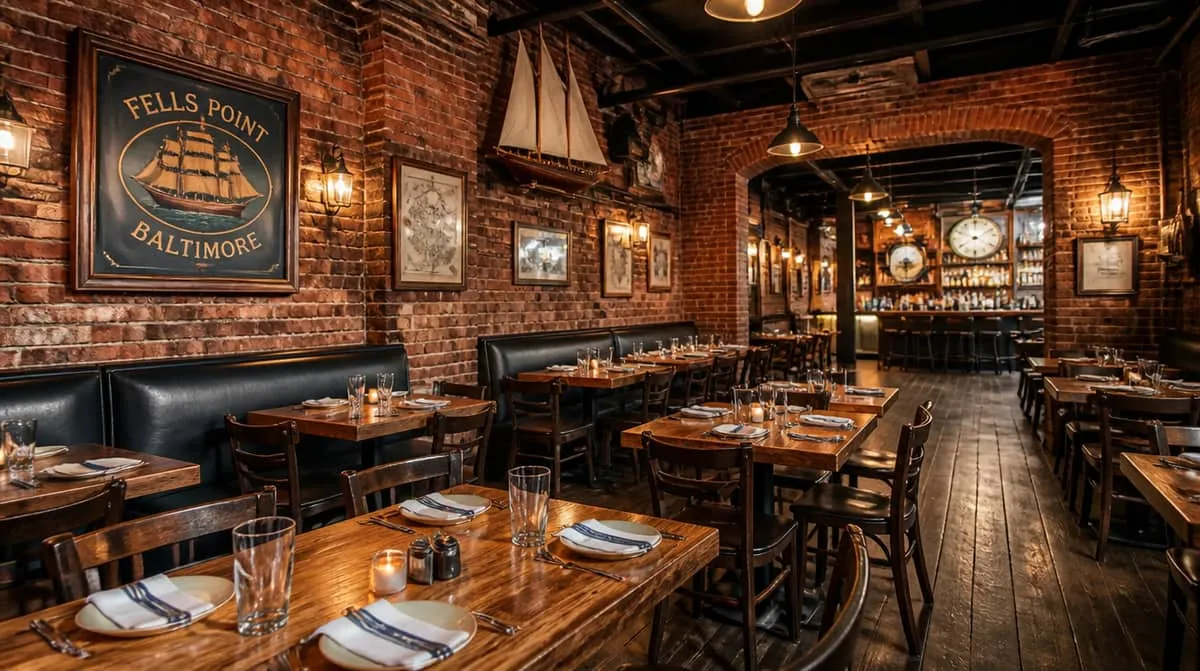
Fells Point is the city's most concentrated dining district. The neighborhood's cobblestone streetscape and centuries-old rowhouse architecture set a visual expectation that dining rooms inside those buildings need to match. Exposed brick, low ceilings, uneven floors, and irregular room shapes define the physical environment. Furniture in Fells Point restaurants can't rely on clean sightlines and even lighting to carry it each piece needs to look credible up close, under candlelight, in a room where the building itself is the primary design feature.
The Inner Harbor waterfront adds a different dynamic. Hotel restaurants, seafood institutions, and tourist-facing casual dining concepts compete at high volume with tight turns. Dining chairs in these environments need to be stackable or nestable where possible, commercially rated for 250+ lb static load, and finished in materials that clean fast between covers. A polished chrome or brushed steel frame with a solid seat pad in a commercial-grade vinyl or easy-clean fabric is a workhorse specification that holds up through a 300-cover service.
Federal Hill's bar-restaurant hybrid operations neighborhood restaurants that transition into late-night bar business present a mixed-use specification challenge. Seating needs to be comfortable enough for a two-hour dinner but durable enough to hold up when the kitchen closes and the room shifts to standing-room bar volume. Height-adjustable configurations, barstools with footrests rated for frequent mounting and dismounting, and tables with commercial-grade bases that don't wobble under casual leaning all become real spec considerations here.
The healthcare and convention visitor segment matters for hotel restaurants specifically. Guests dining at Johns Hopkins-area hotels or Convention Center properties aren't always in Baltimore by choice they're there for medical appointments, conferences, or federal contractor work. Hotel restaurants serving these guests need furniture that communicates quality without pretension, and comfort without fussiness.
Design Aesthetic for Baltimore Restaurants
Baltimore's restaurant design vocabulary is rooted in the same brick-and-harbor language that defines the city's architecture. The Chesapeake Bay palette deep navy, oyster grey, weathered cedar, aged brass shows up across dining rooms from waterfront crab houses to Station North tasting menus. Furniture specifications should pull from this palette rather than fight it.
For crab houses and casual waterfront concepts, the winning combination is durable and unpretentious: solid wood tables in a medium oak or pine finish, dining chairs in bentwood or ladder-back with a wood stain that reads warm but not precious, and bench seating along walls to maximize covers. These concepts need furniture that looks lived-in from day one and only gets better as it ages not furniture that starts chipping or fading in the first season.
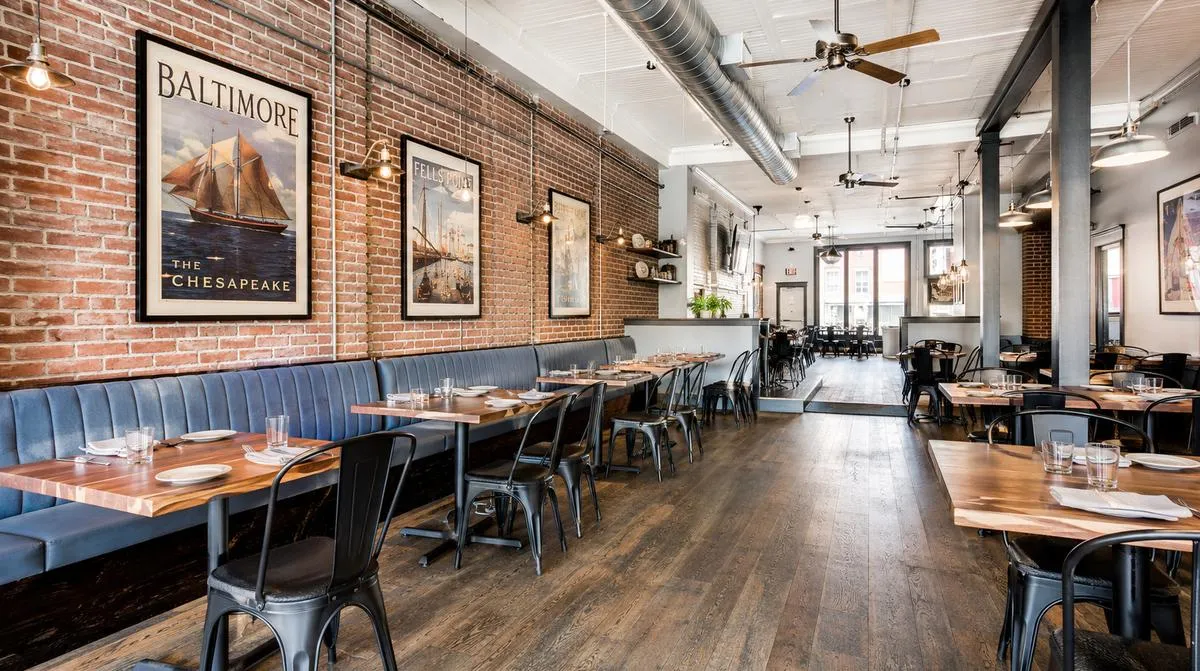
For elevated dining rooms in Fells Point and the Inner Harbor hotel corridor, the specification steps up in complexity. Upholstered dining chairs with tight-back cushions in a channel-stitch or ribbed textile, tables with marble-look or solid wood tops on brushed metal bases, and banquette seating in a performance leather or Crypton-grade fabric that handles spills without showing them. The aged brass and weathered steel accent palette ties the room back to Baltimore's maritime industrial heritage without being literal about it.
Outdoor dining on the waterfront introduces UV and moisture resistance as mandatory specs powder-coated aluminum frames, solution-dyed acrylic cushion fabric, and resin or teak tops that don't require seasonal storage.
Procurement for Baltimore Restaurants
Restaurant furniture procurement in Baltimore typically follows one of two paths: a full opening package for new concepts, or a refresh of high-wear seating during annual closures. For new openings, the critical constraint is construction coordination furniture delivery should align with the final two weeks of interior finish work, not arrive before millwork and flooring are complete.
Lead times for commercial dining chairs and tables run six to twelve weeks from order confirmation. Custom upholstery and COM (customer's own material) specifications add two to four weeks. Phased delivery is possible for large dining rooms: back-of-house and ancillary seating can often arrive ahead of primary dining room pieces without disrupting the installation sequence.
Baltimore's narrow streets in Fells Point and the brick-paved alleys around the Inner Harbor require advance logistics coordination. White-glove delivery with furniture assembly on-site prevents the damage that occurs when pieces are moved through tight doorways unboxed.
Every Baltimore venue has its own volume, layout, and turnaround demands, and restaurant furniture pricing follows from those specifics. Request a quote and we will scope it to your project.