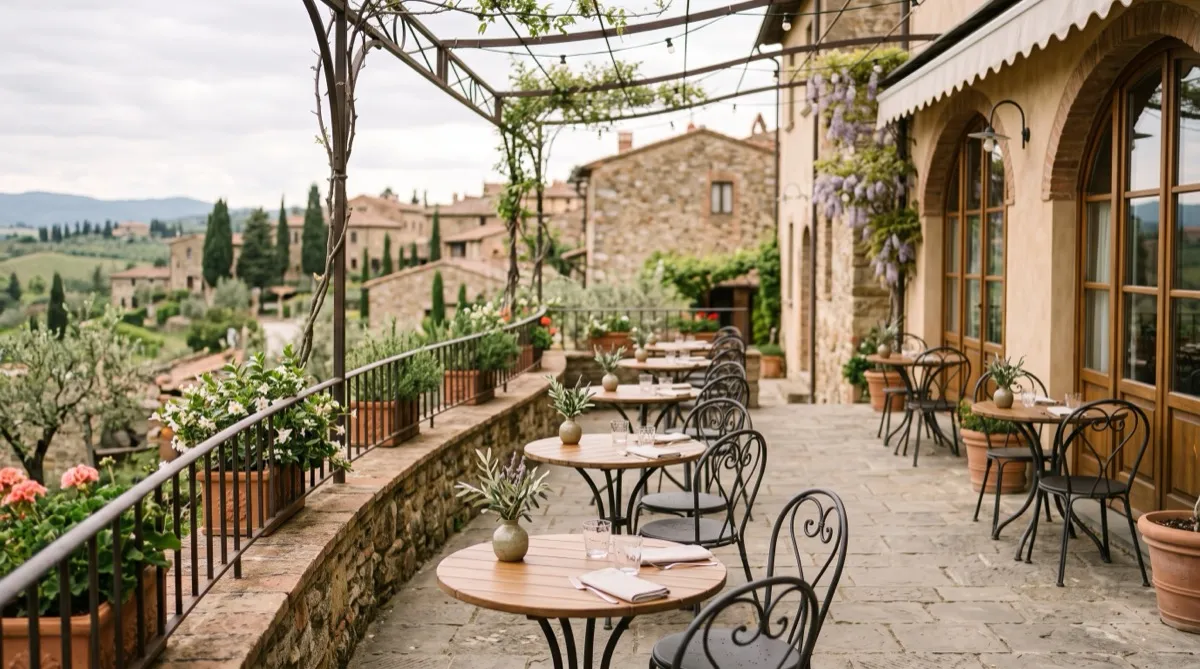
A small bistro table with two or four chairs is one layout option for a café or patio. Check the actual footprint, exposure and operating tasks; a residential label or photograph cannot predict a one-year failure.
Why the classic French bistro look holds up commercially
French-bistro silhouettes appear in many constructions. Obtain the exact frame, finish, fastener and seating-surface specification and outdoor-use documentation. Style or cast aluminum does not inherently qualify the complete set for the site.
Compare the actual assemblies, tests and care terms rather than inferring tube gauge, welding or a month-eight failure from appearance or a retail label.
Footprint math per set
A 24 to 28 inch table with two chairs and 16 to 20 square feet can be an early layout scenario. Check actual occupied chairs, pull-out, circulation and required clearances; the scenario is not a universal usable footprint.
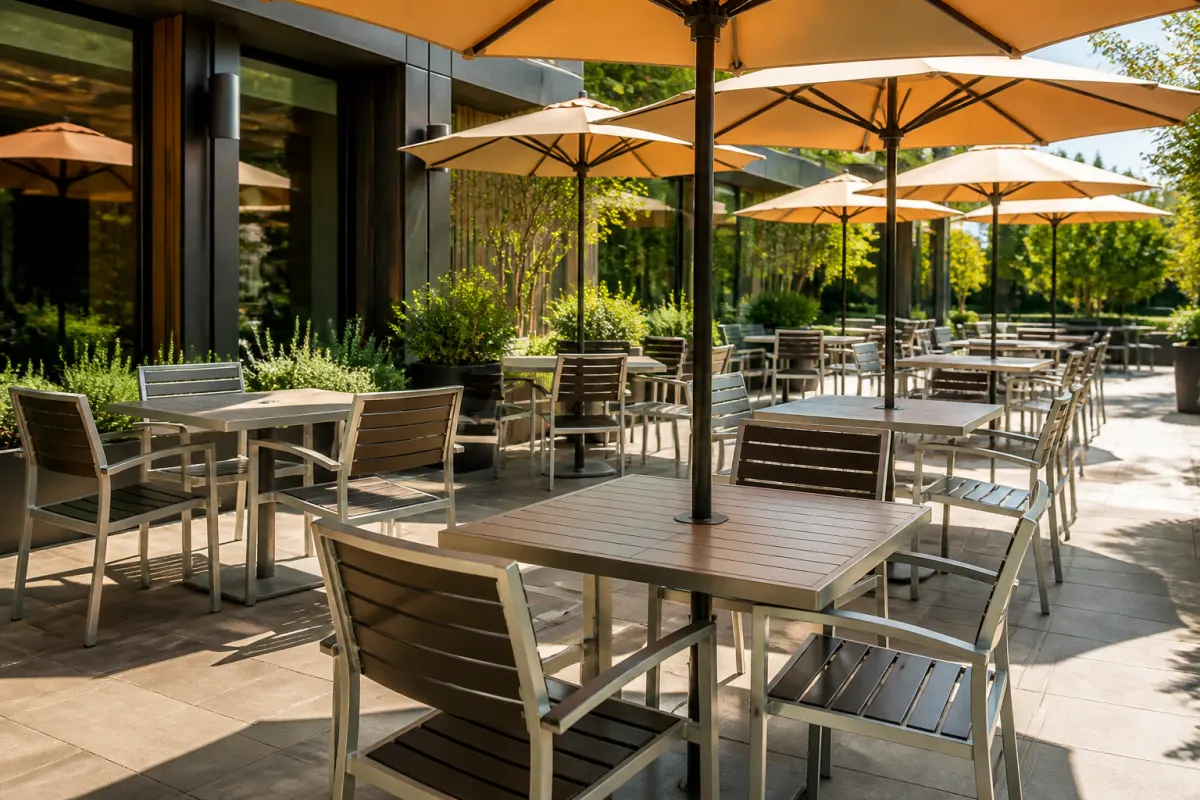
Measure the permitted usable area and confirm sidewalk requirements with the local authority and project team. Do not infer a legal pedestrian-path width from a generic three-to-four-foot rule. Trial the proposed set within the reviewed layout.
A 30 to 36 square-foot four-top scenario must also be tested against actual dimensions and circulation. Compare two- and four-seat arrangements with expected party sizes rather than assuming a set simply doubles the footprint.
Weather resistance that actually matters
Frame material. Review the complete frame, coating and hardware documentation. Aluminum does not form iron rust but is not universally corrosion-proof or the lowest-maintenance assembly. Follow manufacturer instructions for steel or iron coatings and any damage.
Tabletop material. Confirm permitted sun, water, loads and cleaning for the exact top. Mesh or perforations may affect drainage but do not guarantee no warping or standing water in every assembly.
Chair seats. Trial drying, comfort and cleaning and confirm any cushion storage instructions. A slatted seat does not guarantee reuse within minutes after rain, and nightly cushion removal is product-specific.
Securing furniture overnight
Plan overnight storage and security with the operating team and site permissions. Options may include indoor storage or approved locking arrangements, but follow the manufacturer's handling instructions and protect surfaces. Furniture weight does not make theft impractical or guarantee security.
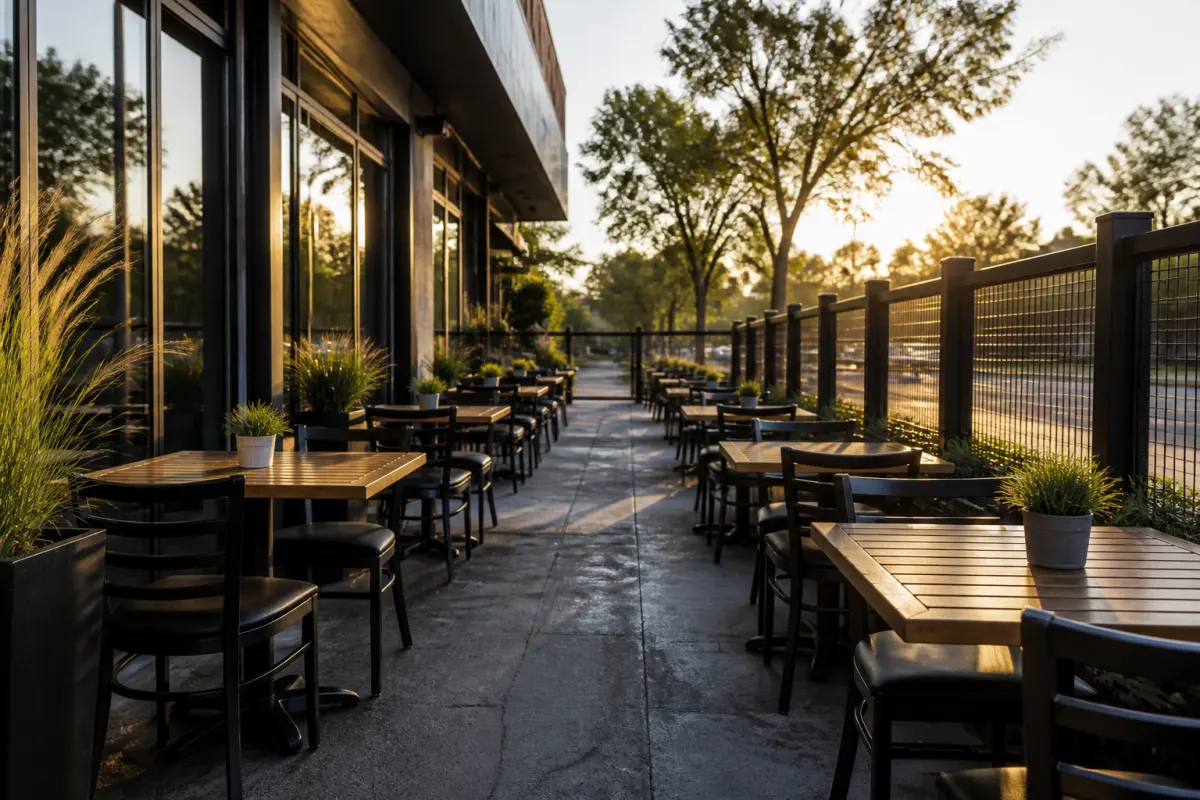
Stackable bistro chairs solve two problems at once here: faster nightly storage labor and less footprint used per chair when stacked, which matters if your indoor storage space for the night is tight.
Ordering in the right unit
Bistro sets are typically priced and ordered as coordinated sets (table plus matching chairs) rather than components, which keeps finish and style consistent across your patio. If you're scaling a location or opening several, order enough matched sets in one purchase to keep your patio looking uniform rather than filling gaps later with a slightly different finish run.
Lead times and volume
Confirm stock allocation, custom approvals, production and freight milestones, and compare actual quantity quotes. No universal ten to fourteen week window or full-season pricing advantage is established.
Request a quote with the reviewed area, set dimensions, exposure, quantities and storage requirements so independent suppliers can document proposals.