
A sidewalk cafe program is a different piece of the outdoor furniture puzzle than a fenced patio. Fenced patio furniture can live outside all season and only comes in for winter. Sidewalk furniture often comes in every single night, gets stacked or wheeled indoors, and goes back out again the next morning. That daily cycle is the spec problem, and most operators only discover it after buying furniture that was never built for it.
Why sidewalk programs are their own category
Think about what a chair or table goes through on a sidewalk footprint versus a fenced patio. It sits on a public right of way, which usually means a permitted, measured area with a required clear path for pedestrians. It gets moved twice a day by staff who are busy and not being careful. It sits closer to street level, catching more dust, exhaust residue, and splash from passing traffic than a set-back patio would. And because the footprint is small and often shared with a neighbor's program, every piece has to be compact enough to fit the permitted line without crowding the walkway.
None of that is true of a rooftop or backyard patio that stays set up for months. Sidewalk furniture needs to be light enough to move by hand daily, stackable or foldable for nightly storage, and durable enough to survive being handled roughly by staff on a closing shift who want to get home.
What to spec for sidewalk seating
Compare chair weight, permitted outdoor exposure and the maker's carrying/stacking limits for the actual storage route. Aluminum does not develop iron rust, but its coating, hardware and complete assembly can still weather or corrode. Four to six stacked chairs is a storage example, not a universal approved stack or proof that one person can carry two.
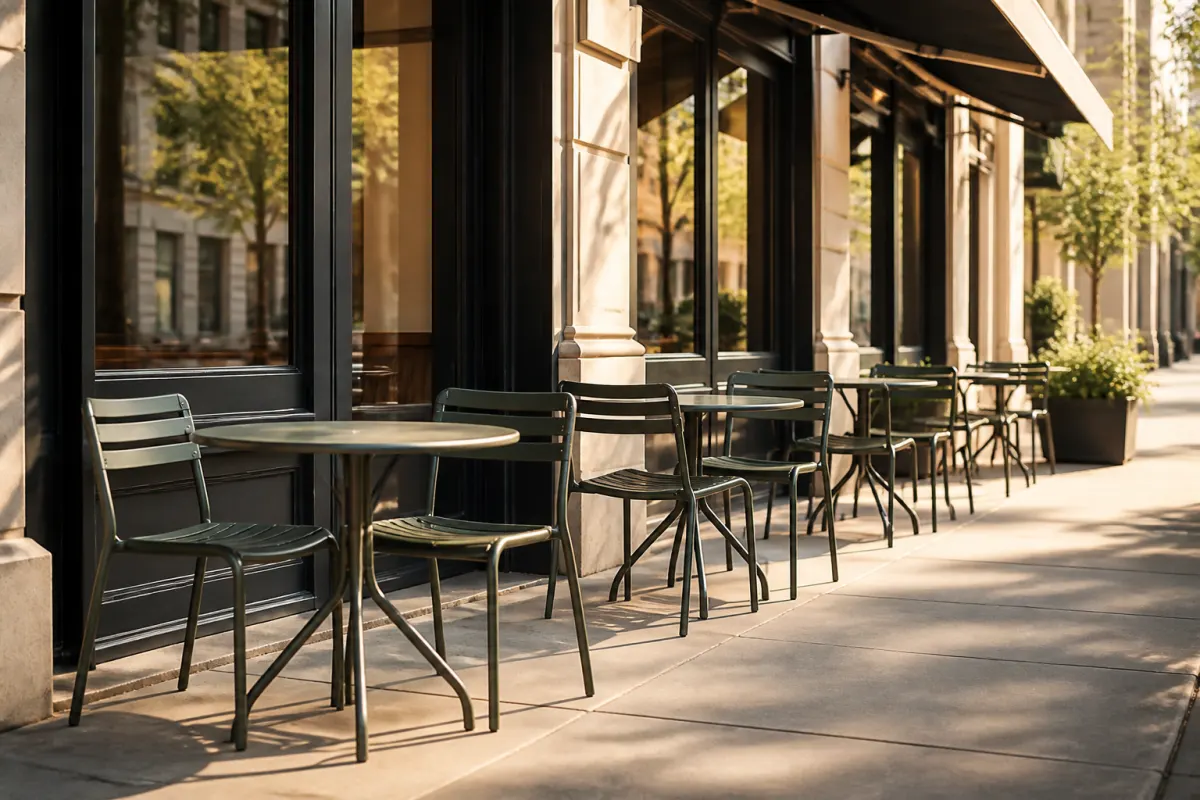
Check the exact table assembly's permitted outdoor use, top/base pairing, leveling and wind limitations. A weighted round base does not automatically outperform every four-leg design or make a table safe in gusts. Test the actual handling route and follow the maker's weather/stowage instructions. The 28 to 30-inch table range is a starting fit example; the permit's actual footprint and access rules govern placement.
Obtain the exact umbrella/shade assembly's approved base or anchoring, ballast, placement and wind/stowage instructions for this permit and location. A base that accepts the pole is not proof of approval. This guide supplies no study ranking underweight bases as the most common cause of umbrella incidents.
The teardown routine
Design a nightly teardown procedure around the maker's limits and the real route. Train staff to use approved carrying, stacking and carts instead of assuming a commercial label permits dragging or careless handling. Inspect contact points and joints; the routine alone does not establish a one-season failure forecast.
Build the routine around the maker's marked stack limits, permitted carrying and compatible carts. Test the actual table-folding and daily storage route with staff, and inspect contact points and joints. Dragging may damage an assembly, but this guide supplies no measured ranking of the fastest way to loosen every table base.
Permits and footprint, in general terms
Most cities that allow sidewalk cafe seating require a permit that defines the exact footprint, a minimum clear path width for pedestrians, and often specific furniture placement rules like distance from the curb or from a building entrance. Requirements vary widely by city and change over time, so check your local code before finalizing a layout rather than assuming a neighboring business's setup is compliant for your permit.
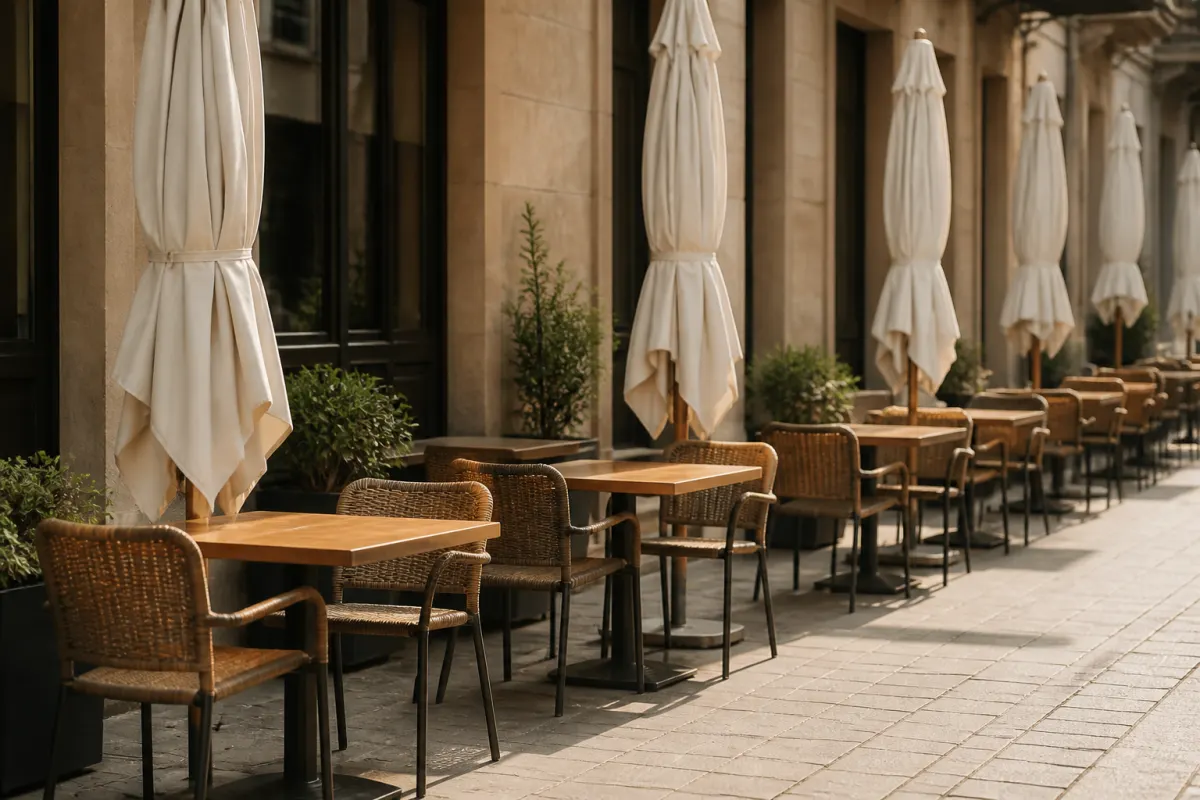
What stays consistent across most jurisdictions is the underlying logic. The permitted footprint is usually smaller than operators expect once you measure it, so furniture needs to be sized to fit efficiently rather than assumed to fit. Measure your actual footprint before ordering, not after the furniture arrives and does not work.
Weight, wind, and staying put
Furniture on an open sidewalk faces more wind exposure than a courtyard patio protected by walls or landscaping, especially on a corner lot or a street that funnels wind between buildings. Lightweight furniture that is easy to carry daily can become furniture that tips or slides in a gust, which is a liability problem as much as a furniture one.
The fix is not heavier furniture across the board, since that defeats the daily-carry requirement. It is choosing the right weight in the right places: heavier table bases that still allow a hand-cart or dolly for moving, and chairs that are light but stable in their footprint rather than top-heavy. If your location catches consistent wind, factor that into the spec conversation before you order, not after the first storm scatters your seating.
Sourcing a sidewalk program
Treat 10 to 14 weeks as a provisional custom-order scenario. Submit a furniture request with the permitted layout, daily storage route, outdoor exposure, quantities and finish brief. Relevant independent suppliers must confirm actual model approvals, handling limits, stock, minimums and delivery dates.
Getting the footprint right before you order
Measure the permitted footprint, actual daily storage positions and staff time for setup/teardown before selecting quantities. Use observed operating records when judging covers or labor effects. The restaurant seating capacity calculator provides an initial area scenario; check the actual occupied furniture layout and permit requirements separately.
Related reading
Our take
Inspect cosmetic wear at contact points during the actual stacking and move-in trial. Finish performance depends on the selected coating and assembly, not a universal powder-coat-versus-painted-steel ranking. Ask the maker which touch-up or refinishing procedures are compatible, and compare sample textures under the intended lighting rather than promising that a matte finish hides every chip.
It is a small point, but on a sidewalk footprint the furniture is at street level and closely scrutinized by every passer-by, so cosmetic decline reads faster there than on a set-back patio.
The bottom line: Spec the exact sidewalk models for their approved daily handling, exposure and storage routine. Verify the table/base assembly and maker-approved finish repair, and test the occupied layout inside the permitted footprint.