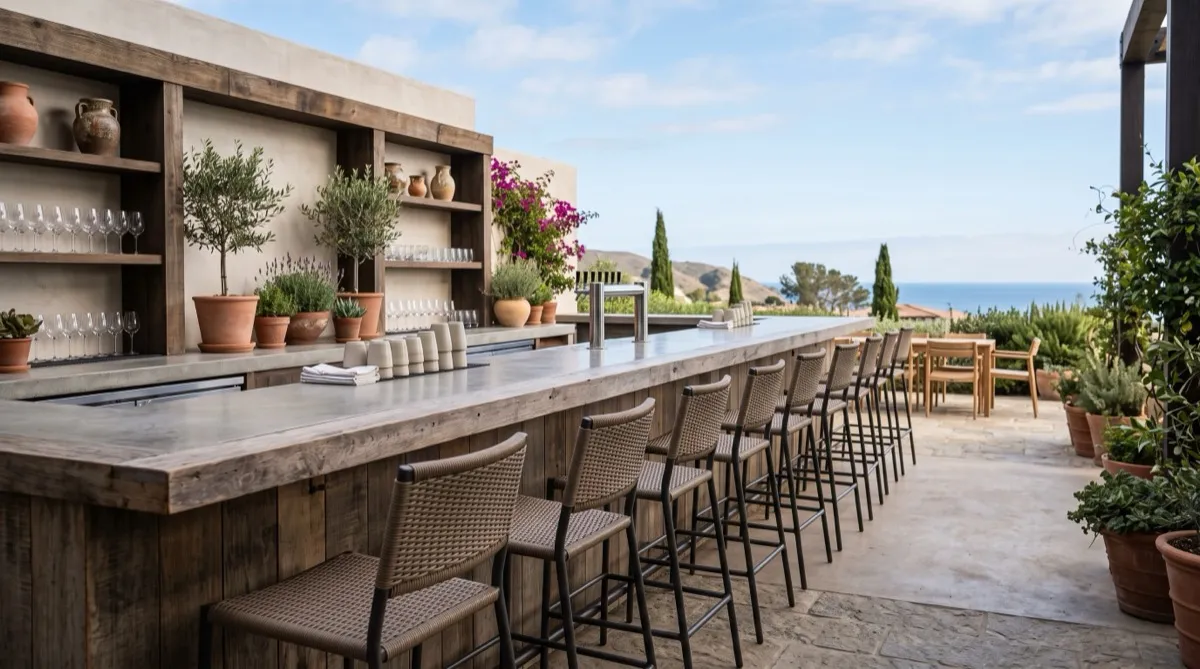
Outdoor stools may face spills, sun, rain, humidity or salt exposure alongside repeated handling. Record the actual conditions rather than predicting a universal one-year replacement for a wrong frame.
Why outdoor bar stools fail early
Inspect and specify the complete frame, footrest, fasteners, finish and seat. Use maintenance records and the proposed model's documentation to identify the parts that need attention at your venue.
Request the actual product's exposure limits, care and storage requirements. Coating, resin and cushions vary; their labels do not establish a single-season corrosion or one-to-two-year cracking deadline.
The frame decision
Review aluminum as one frame option together with coating and fasteners. Aluminum does not form iron rust, but that does not make the assembly corrosion-proof or safe across every climate. Oxford Garden's aluminum care guidance illustrates why the actual manufacturer's maintenance instructions matter.
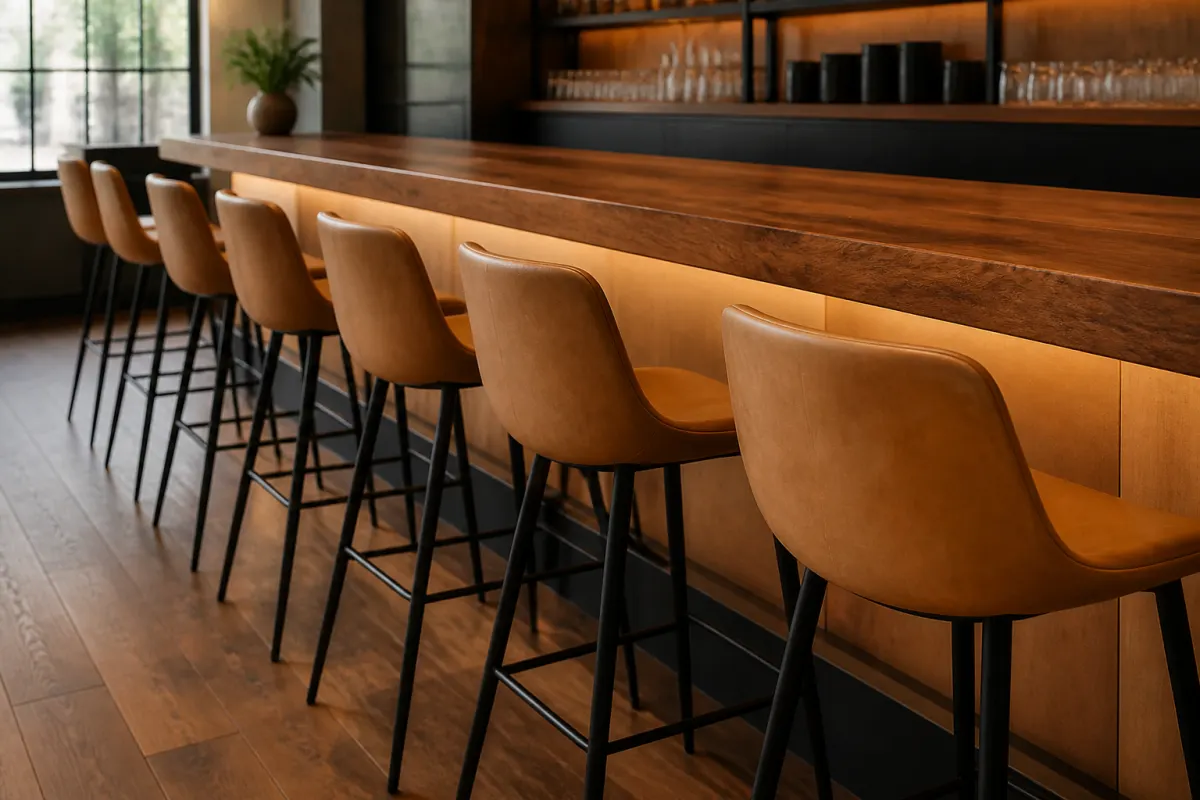
For teak or another wood, obtain the actual finish, cleaning and storage instructions. Oiling and sanding must not be assumed suitable for every finished product.
For iron or steel, request the exact exterior-use and coating documentation and repair instructions. Marine-grade terminology alone does not establish compatibility with the site.
For woven-look seats, confirm the actual weave, supporting frame, exposure limits and care. A resin or UV-stabilized label alone cannot establish the complete stool's service life.
Footrests and welds are where stools actually fail
Confirm the footrest's permitted use, loads, construction and relevant test evidence for the complete stool. A separately welded ring does not establish years of safe patio use or superiority over every other design.
Counter height versus bar height outside
Outdoor programs often mix both heights across a single patio, and getting this wrong creates an awkward guest experience even when the furniture itself is correctly spec'd.
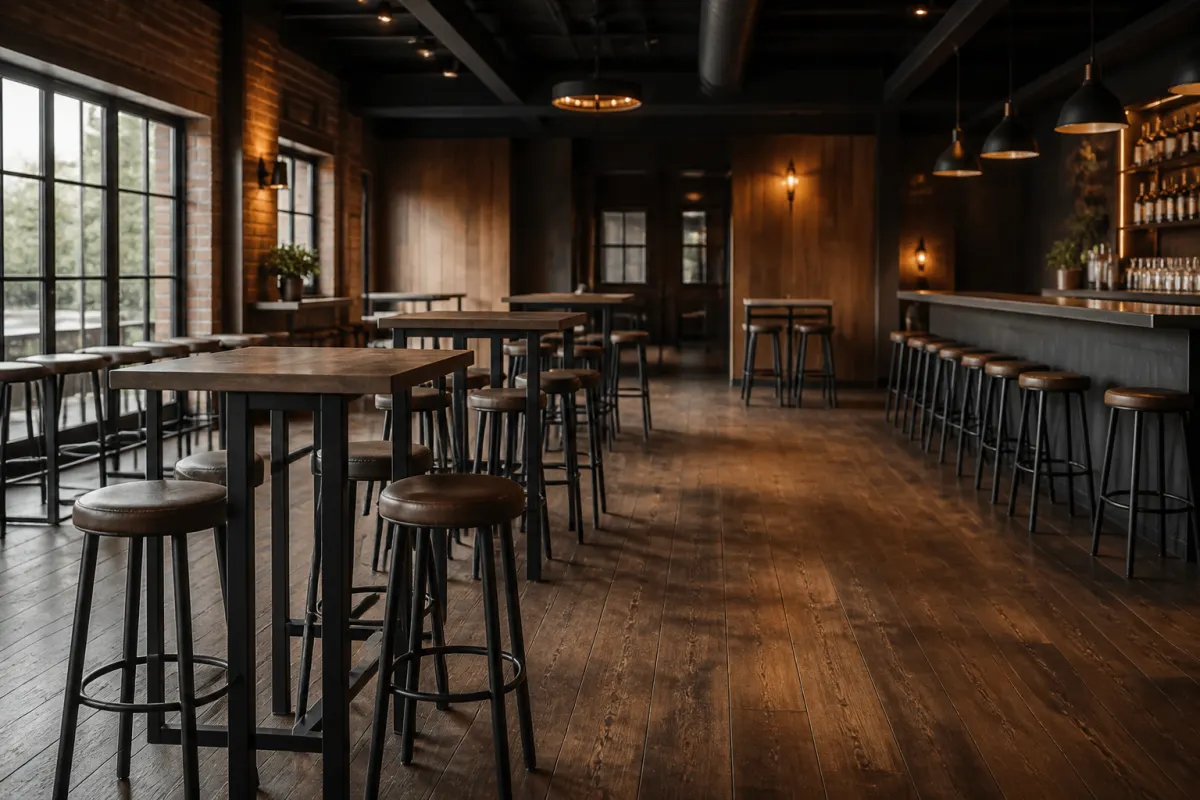
Counter-height examples often pair 24 to 26 inch seats with 34 to 36 inch surfaces. Measure the actual top and underside and trial seat fit; do not confuse that surface height with a typical lower dining table.
Bar-height examples often pair 28 to 30 inch seats with a surface around 42 inches. Trial the actual stool, footrest and underside clearance at the outdoor bar or high table before specifying the zone.
Mixing heights within the same cluster of tables looks unintentional and creates spacing problems. Decide the zone first, then pick the height for that zone, the same way you would inside.
Stacking and off season storage
If stacking is needed, obtain the exact limits, equipment and handling instructions. Four or five high and a two-hour-to-twenty-minute reset are not verified performance figures for an unspecified stool.
Follow the actual product's seasonal storage and cover instructions. Confirm space and staffing for frames and cushions; aluminum cannot automatically remain outdoors year-round under any cover.
Cushions, or no cushions
Compare hard and cushioned seats with a trial and the documented cleaning, drying and storage requirements. A solution-dyed cover or quick-dry label alone does not establish the complete cushion's exposure limits.
Spacing and layout on the patio
Lay out stool widths, occupied seats, chair pull-back and required circulation on the actual patio. 24 to 30 inches per stool and 36 inches behind a row can be initial examples, not a complete accessibility or service-clearance rule. Use the restaurant seating capacity calculator for a planning scenario, then obtain the project team's reviewed layout.
Sourcing and lead times
Confirm origin, availability, custom feasibility and supplier minimums for the actual order. Obtain separate approval, production and freight milestones, then compare them with your installation date.
Browse outdoor and counter stool options and bar height stools as concepts. Request a quote with patio drawings, climate, quantities and target dates so independent suppliers can document suitable models.
Related reading
- Metal versus wood bar stools for commercial use
- Teak versus aluminum outdoor furniture
- Patio layout and capacity guide
- Get a quote
Our take
Check seat heat and drainage on the proposed model under expected site conditions. Compare finish, shade and the actual seat geometry; lighter colors or perforations do not guarantee a cool seat or reopening within minutes after rain.
Site check: Trial afternoon seat temperature and drainage alongside the documented exposure, cleaning and storage limits.